
Rethinking Sustainable Packaging: Advancing Recyclability, Material Innovation, and Circularity
As the global packaging industry moves towards a circular economy, the challenge is no longer simply to make packaging recyclable, but to ensure that it can be recycled without compromising product protection, functionality, aesthetics, or commercial viability. With evolving regulations, growing demand for recycled materials, and increasing pressure on brands to reduce their environmental footprint, packaging manufacturers are exploring innovative materials and designs that can make circular packaging solutions more practical and accessible at scale.
At EPL, this transition is taking shape through the development of recyclable tube formats, greater integration of post-consumer recycled (PCR) materials, and innovations designed to improve material efficiency. Platforms such as Platina, r-Platina, and Platina Plus demonstrate efforts to balance recyclability with the performance requirements of products across personal care, oral care, beauty, and cosmetics. The company's approach also extends to life-cycle assessment, supplier engagement, customer partnerships, and manufacturing capabilities that support the commercial adoption of new packaging technologies.
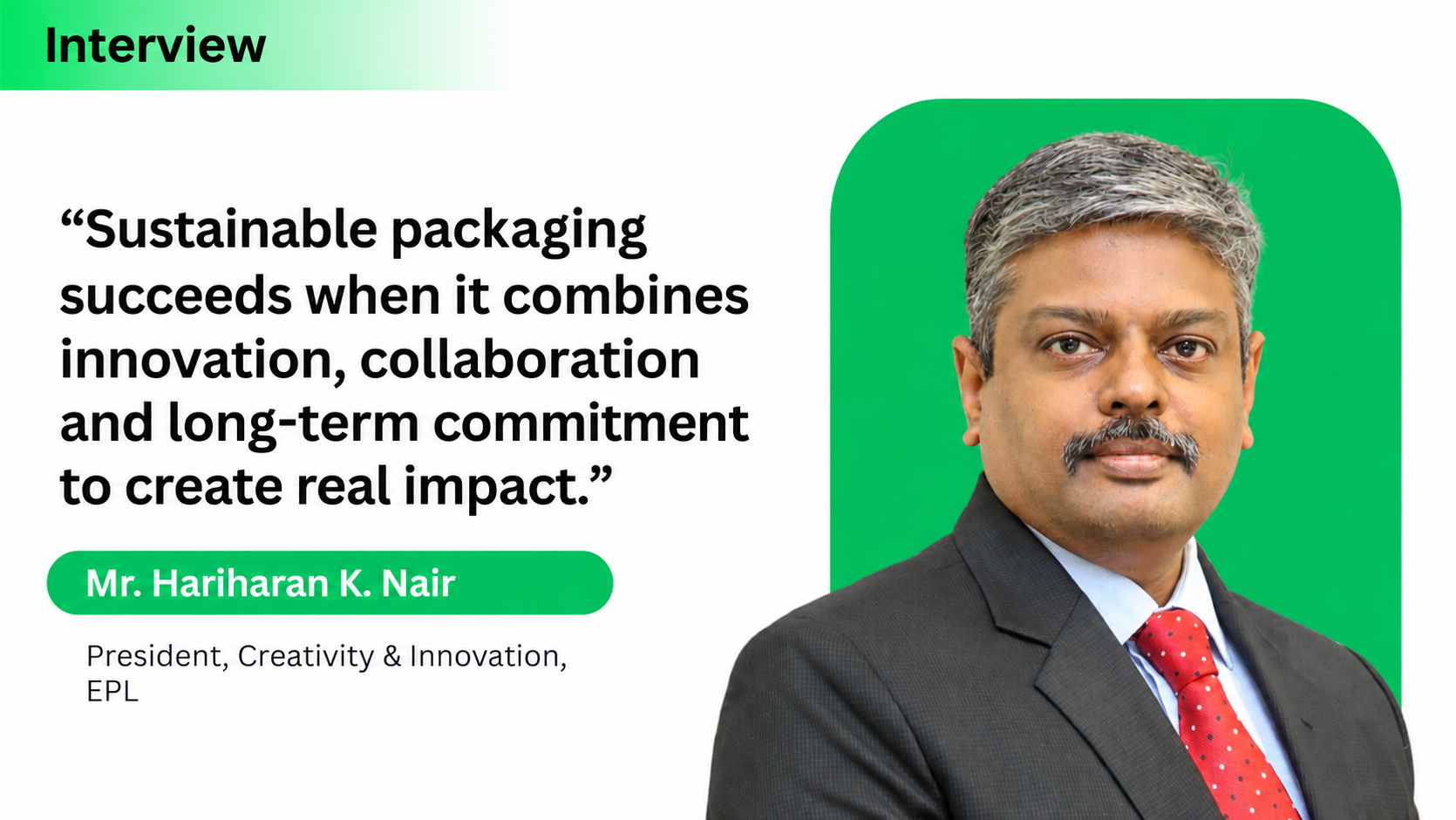
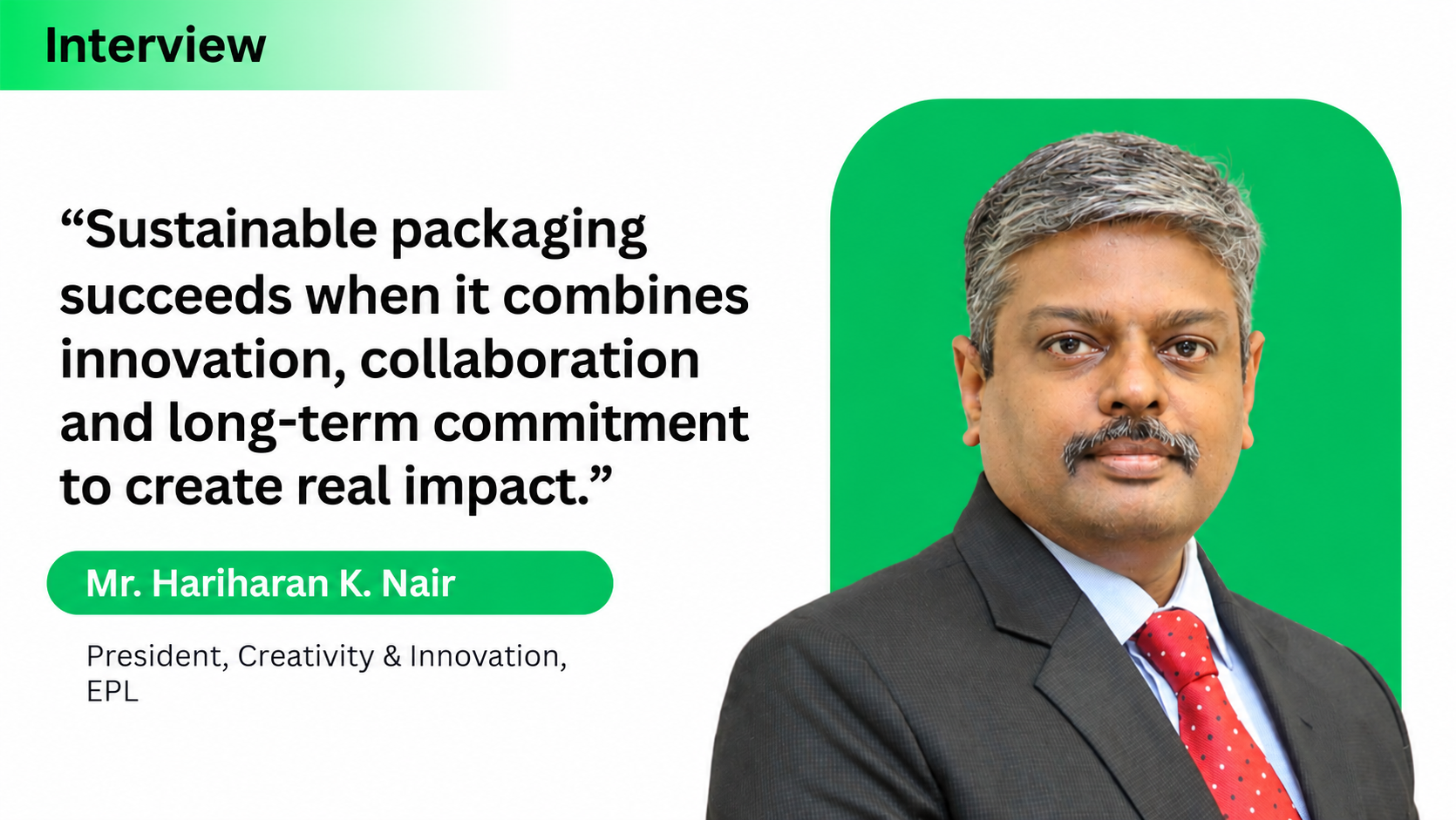
In this exclusive interview with TheCSRUniverse, Mr. Hariharan K. Nair, President, Creativity & Innovation at EPL, discusses the key drivers shaping sustainable packaging and the challenges of scaling recyclable formats. The conversation explores material innovation, reducing dependence on virgin plastic, the influence of regulations such as the EU's Packaging and Packaging Waste Regulation (PPWR), and the role of collaboration in bringing new solutions to market. He also shares insights into EPL's progress towards its 2030 ambitions, its approach to measuring environmental performance, and the innovations that could help make recyclable packaging an industry standard rather than a premium alternative.
Scroll down to read the full interview and discover how material science, design, and collaboration are shaping the next generation of packaging:
Q. What is driving the growth in sustainable packaging, and what challenges remain in achieving the 60% target by 2030?
A. At EPL, the growth in sustainable packaging reflects sustained investment in product innovation, manufacturing capabilities and customer partnerships. Recyclable tubes accounted for 39% of tube sales in FY26, up from 33% in FY25. Our Platina and r-Platina platforms are designed to combine recyclability with product protection and visual appeal, helping brands advance their sustainability commitments. The next phase involves expanding recyclable formats, increasing the integration of post-consumer recycled (PCR) materials and improving material efficiency. Scaling these solutions requires packaging to meet different product requirements while remaining commercially viable. Our long-term ambition is to transition the tube portfolio towards sustainable formats.
Q. How does EPL balance recyclability with product protection, shelf life, aesthetics and cost?
A. Packaging must protect the product throughout its intended use while meeting recyclability goals. Our product development work therefore carefully considers sealability, barrier properties, chemical resistance, migration dynamics, aesthetics and haptics. Platina Plus uses an optimised EVOH barrier structure designed to protect against oxygen and flavour transfer while maintaining compatibility with the HDPE recycling stream. This illustrates how material design can address product-specific protection needs alongside end-of-life considerations. Performance requirements differ by application, so a recyclable structure must be evaluated against the contents it will hold and the functionality customers require across their intended packaging applications and market conditions.
Q. Which technologies are helping EPL reduce virgin plastic use, and what technical gaps remain?
A. Our sustainable packaging portfolio uses different approaches to reduce dependence on virgin resources. The r-Platina range incorporates 60%+ PCR in a lightweight laminate structure, while Etain contains up to 40% PCR HDPE. Organic Green Maple Leaf incorporates up to 50% biogenic carbon from renewable sources. Material efficiency is another priority. Platina Plus enables tube-weight reduction through its lightweight laminate structure, while NeoSeam technology reduces material use vs. co-extruded tubes and without compromising on functionality The technical challenge is to integrate these approaches while maintaining barrier properties, chemical resistance, stiffness and product stability. EPL’s innovation priorities include scaling high-PCR integration and developing recyclable structures compatible with the HDPE recycling stream.
Q. How are changing expectations in the Beauty and Cosmetics segment influencing EPL’s packaging innovation?
A. Beauty and Cosmetics is a key growth opportunity for EPL as brands seek packaging that combines premium aesthetics, functionality and sustainability. The segment recorded 29.3% year-on-year growth in FY26, while Personal Care and Beyond accounted for 53% of total revenue. We are strengthening our capabilities through extruded tubes, applicator solutions, advanced printing and specialised commercial teams. Our Platina ME platform combines a metallic finish with recyclability, while Platina Vision offers transparency for appearance-focused products such as skincare and serums. Investments in digital and speciality printing also support differentiated finishes. These capabilities help brands create distinctive shelf presence while responding to growing expectations for more sustainable packaging.
Q. How is the EU’s Packaging and Packaging Waste Regulation (PPWR) influencing EPL’s packaging strategy?
A. As regulations such as PPWR accelerate the shift towards recyclable packaging and higher recycled content, EPL is already developing solutions ahead of these evolving requirements. Our innovation strategy focuses on recyclable tube structures, increased use of post-consumer recycled materials, and platforms designed for circularity. A strong example is our r-Platina range, incorporating more than 60% PCR content and achieving RecyClass Class A certification, demonstrating performance that goes beyond emerging regulatory expectations. We are further strengthening this portfolio through HDPE-compatible platforms and customer-specific solutions that enable the transition to more circular packaging.
Q. What does it take to move recyclable packaging from development to commercial adoption?
A. Moving a packaging innovation into commercial use requires more than demonstrating recyclability. It must also meet product protection, manufacturing and brand requirements. EPL’s Platina range has been developed to combine compatibility with the HDPE recycling stream with the performance and appearance required by customers. Independent assessments by APR and RecyClass support the recyclability credentials of applicable formats. Our customer applications show how these solutions are being used commercially across categories and markets, including oral care and beauty. EPL’s manufacturing network of more than 21 facilities across 11 countries are upgraded to support the scale-up of sustainable packaging solutions.
Q. How does EPL measure the environmental benefits of its sustainable packaging solutions?
A. We measure our sustainability progress through indicators such as sustainable packaging sales, recycled material use and material efficiency. In FY 2025–26, sustainable packaging accounted for 39% of our tube sales, while recycled input materials totalled approximately 566 tonnes. To evaluate environmental impacts, we have conducted a cradle-to-gate life cycle assessment of recyclable-ready polymeric barrier-layer tubes, covering products that contribute 40% of our total sales volume. We also focus on reducing material consumption through design improvements. Our Slim Cap Project, for instance, is estimated to reduce emissions by 3090 kgCO₂e / MT of material saved.
Q. How important are partnerships with brands, suppliers and research institutions in making sustainable packaging commercially viable?
A. Collaboration with customers and suppliers plays an important role in developing packaging that meets product performance requirements while improving material efficiency and recyclability. In India, our work with Colgate-Palmolive involved transitioning oral care packaging from aluminium barrier laminate to recyclable plastic barrier laminate using thin-gauge structures. The development process required balancing product protection, flavour retention and material efficiency. Across our supply chain, we engage suppliers through sustainability assessments and responsible sourcing practices. In FY 2025–26, all strategic suppliers signed EPL’s Supplier Sustainability Code of Conduct and completed sustainability assessments, integrating sustainability considerations into supplier engagement and sourcing processes.
Q. How does EPL identify and prioritise technologies that are both commercially viable and environmentally meaningful?
A. Our product development integrates polymer science, engineering, conversion technologies and customer requirements to develop packaging solutions for diverse applications. We evaluate critical performance parameters, including barrier properties, sealability, chemical resistance, aesthetics and migration requirements. Our work also focuses on developing recyclable structures, increasing recycled content and reducing material use without compromising functional performance. Collaboration with customers helps us adapt technologies to specific application needs. Our innovation capabilities are reflected in our intellectual property portfolio. During FY 2025–26, we filed 23 patent applications and received 27 patent grants, taking our global portfolio to 154 granted patents.
Q. What changes will shape sustainable packaging by 2030, and what will it take to make recyclable packaging the industry standard rather than a premium option?
A. By 2030, sustainable consumer packaging will be shaped by the wider adoption of recyclable mono-material structures, higher recycled-content integration, material efficiency and evolving regulatory requirements. At EPL, our priorities include expanding Code 2-compatible recyclable tube platforms and accelerating the use of high-PCR materials at scale. Our current portfolio includes Platina and r-Platina, with r-Platina incorporating 60% or more PCR HDPE and achieving RecyClass Class A certification. Recyclable tubes represented 39% of tube sales in FY26, up from 33% in FY25. Making these formats standard will require continued product innovation, manufacturing investment and customer collaboration. Packaging must remain functional, protect product quality and meet brand expectations while supporting circularity.