
Making Rural Water Services Sustainable: How Digital Infrastructure Can Drive Lasting Impact
India’s rural drinking water journey is entering a crucial phase. While initiatives such as the Jal Jeevan Mission have significantly expanded household tap-water access, the challenge now lies in ensuring that these connections translate into reliable, safe and sustainable water services. Achieving this requires more than infrastructure creation; it calls for stronger local institutions, effective governance, community participation and systems that support long-term service delivery.
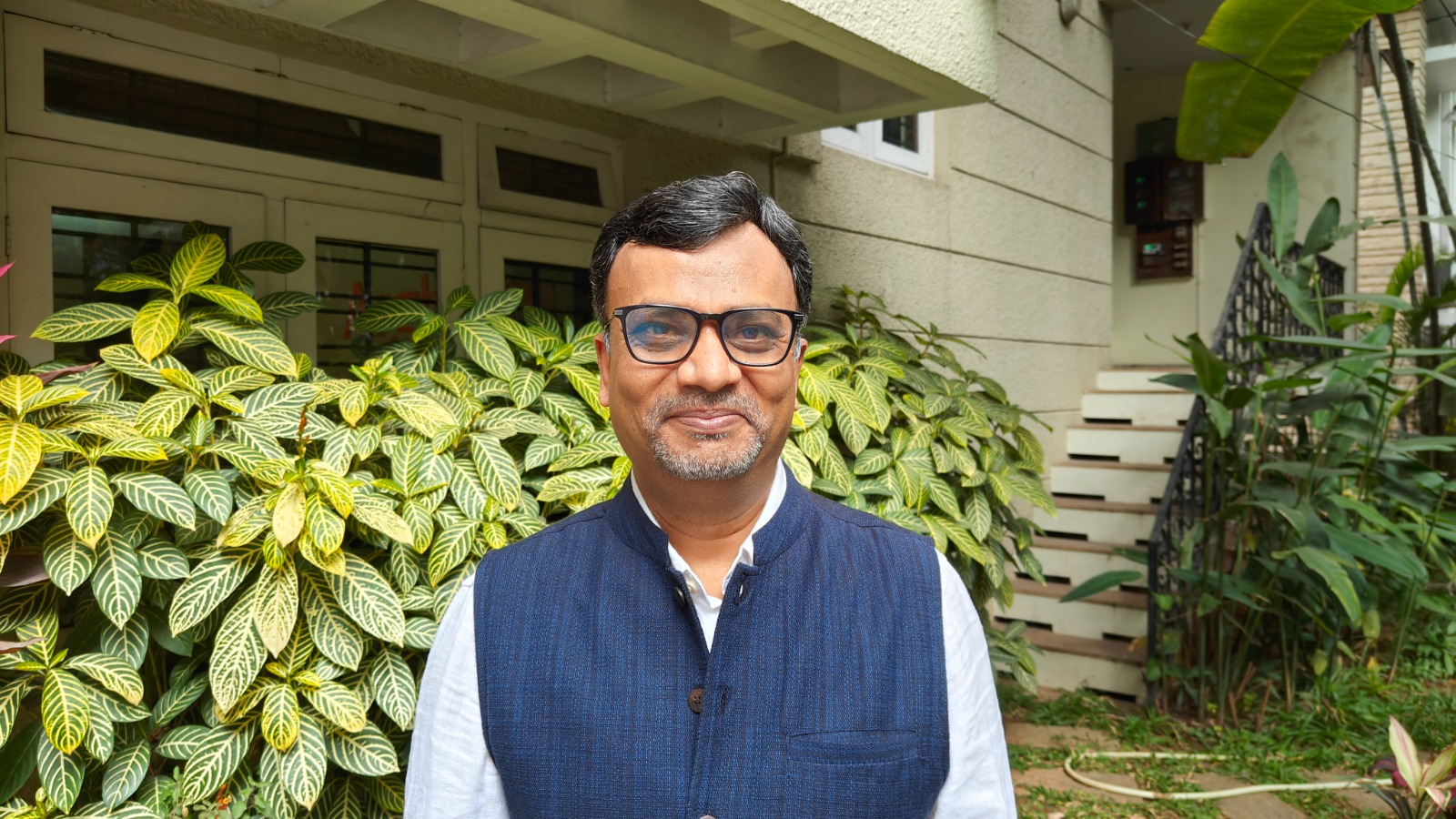
In this interview with TheCSRUniverse, Manu Sharma, COO, Arghyam, discusses how philanthropy and Corporate Social Responsibility (CSR) can move beyond funding physical infrastructure to strengthening the systems that sustain essential public services. He highlights the growing role of Digital Public Infrastructure (DPI) in improving transparency, accountability and decision-making in rural water management, while emphasising the importance of open-source, interoperable solutions that allow States to retain control over their data.
Drawing on Arghyam’s work in the water sector, Sharma also explores how innovations such as JalSoochak, collaborative partnerships and reliable data systems can strengthen grassroots institutions and improve service outcomes. He further shares his perspective on how CSR and philanthropic capital can help build scalable, inclusive and government-led solutions as Jal Jeevan Mission 2.0 shifts the focus from infrastructure creation to sustained service delivery.
Scroll down to read the full interview:
Q. How should philanthropy and CSR evolve from supporting access to essential services towards strengthening the systems required to sustain them? In the context of rural drinking water, what role can philanthropic capital play in ensuring that infrastructure continues to deliver reliable and equitable services over time?
A. The Mission has put a tap in most rural homes, and sustaining that supply for years is now the real challenge. Providing and sustaining an essential service like drinking water is the government’s responsibility. Where philanthropic capital adds most value is in trying out and building the working models that keep that service delivering, approaches designed to run inside government programmes rather than as standalone pilots that end with the grant. A successful solution is one the government can adopt and scale. This also changes how impact should be read. The first test is whether a model works consistently and can hold up at scale. Reach becomes meaningful only once that is proven, because the households and people covered while a model is still being proved are its test group, not its impact. The real measure is whether the system keeps delivering safe water reliably over time, and at scale.
Q. Domestic water security depends as much on governance, institutional capacity and community participation as on physical infrastructure. How can CSR partnerships move beyond funding water-related assets to strengthen the local institutions responsible for their operation, maintenance and accountability?
A. Institutions are what sustain a service, and they work only when they have the right funds, functions and functionaries, with capacity building, simple processes and clear accountability built into the system rather than bolted on later. Philanthropy’s part is not to pay for these year after year. It is to try out new models that let these institutions function well at a reasonable scale, which the government can then take forward, as it has with programmes like the ASHA worker scheme and the mid-day meal scheme. A CSR partnership that designs and demonstrates such a model does far more lasting good than one that funds another asset.
For rural drinking water, that means strengthening Panchayati Raj institutions and Village Water and Sanitation Committees, and empowering frontline workers and communities. Much of this rests on trust, and trust is built on reliable information. This is where a CSR partnership can leave a lasting asset: digital public goods that generate dependable data and present a single, shared view of how schemes are performing, so every stakeholder sees the same picture and can act on it. That is what turns infrastructure into reliable service.
Q. Digital public infrastructure is increasingly being viewed as an enabler of effective public service delivery. What principles should guide philanthropic investments in digital solutions to ensure that they address systemic development challenges rather than create isolated technological interventions?
A. Fund the foundation, not immediate citizen-level impact. The guiding principle is to back solutions that are open source, interoperable and built to solve critical problems at scale, not one-off tools tied to a single project. An investment like this should not be judged on household impact in its first year, because that is not its job. It is a foundation that others, government, civil society and markets, build on over time. Pushed to show quick returns, it shrinks into one more standalone application, the very fragmentation we want to avoid. That asks funders for patience: back the shared, open foundation first, give it time, and let citizen impact follow from what gets built on it.
Q. How can CSR and philanthropic organisations encourage collaboration between governments, civil society, research institutions and technology providers to develop scalable, open-source solutions for rural water management? What would meaningful collaboration look like beyond funding and implementation partnerships?
A. No single actor, government, community, researcher or company, can design these solutions and embed them in the water system alone. Each holds a piece the others lack. The role that philanthropy is best placed to play is that of a catalyst and convener: not another implementer or only a funder, but the neutral party that keeps the shared foundation steady so everyone builds toward the same thing. Beyond funding and implementation, meaningful collaboration means co-creating the standards of a digital infrastructure that is open, interoperable and built for the public good. It also means contributing what these partnerships uniquely produce. CSR and philanthropic programmes generate a great deal of data, often at a granular, field level. Making that data trusted, and then investing in making it public, turns it into a shared asset that future programmes can build on instead of starting from scratch.
Q. With Jal Jeevan Mission 2.0 placing greater emphasis on the sustainability of rural drinking water services, how can digital public infrastructure help shift the focus of development programmes from measuring infrastructure creation to evaluating service reliability, water quality and long-term community outcomes?
A. A digital foundation does not, by itself, shift the focus to service delivery. That shift is a policy choice, and JJM 2.0 has already made it. What the foundation does is make the shift workable. Because the building blocks are open, a solution proven in Tamil Nadu can be used in Himachal Pradesh without rebuilding it. That is what moves attention from how much was built to whether it is actually delivering, because the information to see reliability, quality and outcomes finally flows in a common language.
Q. The policy paper by Arghyam and SPM-NIWAS proposes an open, interoperable digital architecture built around common standards and APIs rather than another standalone platform. How can this approach help States overcome fragmented information systems while retaining autonomy over their data, and what lessons does it offer for digital transformation across other development sectors?
A. The architecture lets each state decide what it shares and what it keeps private. The solutions are open; the data they generate stays under the state’s control. That distinction, open tools and owned data, is what lets states take part without giving anything up. The wider lesson is that trusted, reliable data is what makes good decisions possible, and a foundation like this lifts the efficiency of almost any public system. Many programmes have struggled not in their purpose but in their execution, and dependable data is what begins to close that gap.
Q. Arghyam’s work emphasises the potential of digital tools to strengthen monitoring, accountability and decision-making in rural water systems. How can access to timely, reliable data empower Village Water and Sanitation Committees to participate more meaningfully in local governance, and what safeguards are necessary to ensure that digitalisation does not exclude communities with limited technological access?
A. Timely, reliable data lets a Village Water and Sanitation Committee govern rather than only react. Today it often learns a pump has failed when a household complains. With a daily view of its own scheme, it can see trouble early and follow up. The key safeguard is to design around the rural citizen’s actual point of contact, which varies. Not everyone has a smartphone, so a solution must accept several forms of input. These are things to settle at the planning stage, not patch in later.
Q. The 2024 functionality assessment found that 76% of household tap connections were functional against criteria covering water quantity, quality and regularity. What does this finding reveal about the gap between infrastructure delivery and sustained public service outcomes, and which measurable indicators should governments and philanthropic partners prioritise to assess progress under Jal Jeevan Mission 2.0?
A. A tap connection and a working supply are not the same thing, and the 2024 assessment showed the gap: of the connections checked, about 87% got water regularly, 80% got water in adequate quantity, and 76% got water that was safe to drink. Some of this is delivery being the next stage of the work, within a reasonable time and budget, but the gap is real. It also shows what to measure: regularity, adequacy and quality, tracked continuously rather than certified once, alongside source health and a scheme’s financial sustainability.
Q. Arghyam’s open-source AI tool, JalSoochak, reportedly achieves over 92% accuracy in reading water meter photographs under challenging field conditions. How can such locally relevant innovations be integrated into public water systems to improve operational efficiency, and what evidence should funders seek to establish their cost-effectiveness, scalability and long-term value for communities?
A. An innovation helps when it plugs into the public system rather than sitting beside it. JalSoochak turns an ordinary phone into a sensor: a worker photographs the bulk flow meter, an AI model reads it with over 92% accuracy, and the reading flows into the national system through a standard interface, with no new hardware. Being open source, the model and its data become a shared asset. Funders should look for adoption at scale, accuracy that holds in the field, affordability, and whether the tool leaves behind a public good rather than a locked system.
Q. States differ considerably in their digital readiness, institutional capacity and ability to maintain technology-led systems. How should philanthropic funding be structured to support a phased and context-sensitive adoption of digital public infrastructure, while ensuring that investments in capacity building, system maintenance and community participation receive as much attention as technology deployment?
A. Every state starts from a different place, so the funding must too. We carried out an As-Is study of how states manage this work and built a Digital Maturity Model from it, now a tool a state can use to see where it stands. That starting point should shape both how much is invested and how long a state is given, with capacity building, maintenance and participation funded as seriously as technology. One part should not be slow, though: the shared foundation of common standards and registries, which every state builds on, needs to be built with urgency.



.png)