Social Stock Exchange: Can India Build a New Financing Pathway for Social Impact?
India’s Social Stock Exchange offers non-profits a potential route to diversify funding and build public trust. Experiences shared at SICA’26, however, point to the need for greater investor awareness, stronger CSR participation and a more accessible fundraising process.
For many non-profit organisations in India, securing sustained funding remains a persistent challenge. Philanthropy, government grants and corporate social responsibility (CSR) support continue to be important sources of finance, but accessing these funds can involve considerable effort and uncertainty. Could the Social Stock Exchange (SSE) offer another route for organisations seeking to finance their work?
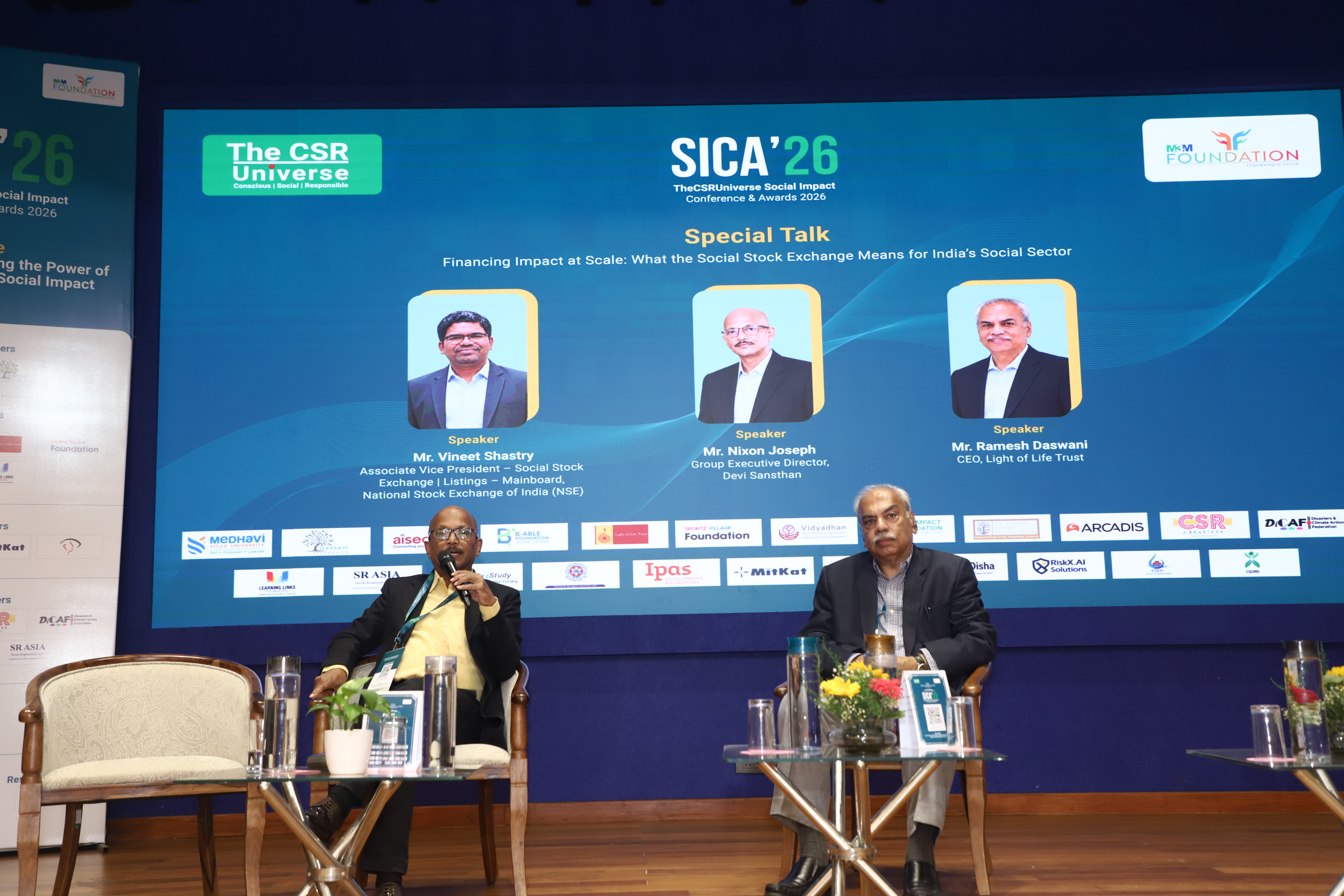
This question was explored during the special session, “Financing Impact at Scale: What the Social Stock Exchange Means for India’s Social Sector,” at the Social Impact Conference & Awards 2026 (SICA’26). Vineet Shastry, Associate Vice President, Listings for Main Board and Social Stock Exchange at the National Stock Exchange (NSE), outlined the framework and its intended benefits. Nixon Joseph, Executive Director of Devi Sansthan and Ramesh Daswani, CEO of Light of Life Trust, shared their experiences of taking their organisations through the listing process.
Together, their perspectives presented both the promise of a regulated fundraising platform and the practical challenges that non-profits may encounter when trying to use it.
A regulated route to fundraising
Shastry described trust as the currency of stock exchanges and explained how the infrastructure of capital markets could be used to support social impact. The SSE is intended to connect eligible social organisations and donors through a framework that places greater emphasis on transparency, disclosures and accountability.
He made an important distinction between registration and listing. Registration brings a non-profit organisation onto the exchange, while listing is the fundraising stage and relates to a defined project, with a specified budget, timeline and intended outcomes.
The process involves preparing a fundraising document that sets out information such as the project’s beneficiaries, duration, costs, risks and the organisation’s governance arrangements. Shastry said the draft document is made publicly available for a 21-day consultation period before the subsequent approval and fundraising stages.
The objective is not simply to introduce another layer of compliance. According to Shastry, the standardised documentation can help organisations respond to the reporting requirements of different donors without repeatedly preparing different sets of information. Once an organisation has learnt the process, he suggested, subsequent listings may become easier to undertake.
The framework also requires listed organisations to report on fund utilisation quarterly and undergo an annual impact assessment by a suitably certified impact assessor. These requirements are intended to make information about the use of funds and the results of a project more accessible to those supporting it.
Shastry said that 16 projects had been listed on the NSE by March 2026, raising close to ₹46 crore. He also referred to a pipeline of projects expected to be listed. He pointed to the reduction of the minimum contribution to ₹1,000 as one of the changes intended to widen participation in social giving.
For non-profits that struggle to reach donors beyond their existing networks, the prospect of greater visibility through a regulated platform could be significant. However, visibility alone does not guarantee that a fundraising issue will attract sufficient support.
Devi Sansthan: The challenge of finding investors
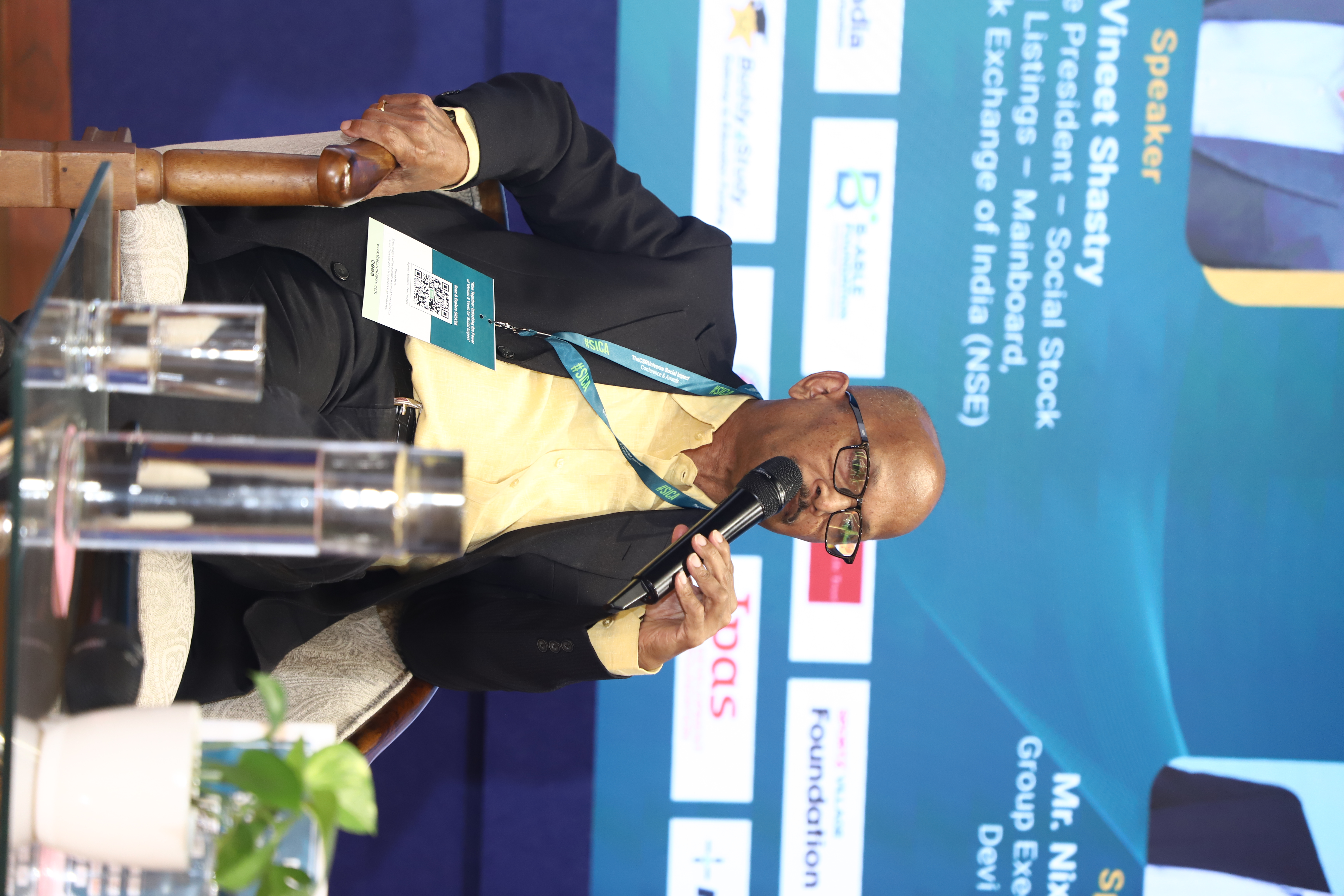
Nixon Joseph shared the experience of Devi Sansthan, which took its project to the Social Stock Exchange at the Bombay Stock Exchange. The organisation’s issue sought to raise ₹1.1 crore for foundational literacy and numeracy in government schools in Ranchi district.
Joseph found the registration process manageable, particularly for organisations with sound governance, appropriate policies and well-developed projects. Drawing on his 36 years in the banking sector, he completed the registration without engaging a consultant or manager for that stage.
The more difficult part was raising the money.
Joseph said awareness of the SSE and its zero-coupon, zero-principal bonds remained limited, including among bankers, CSR donors and potential investors. In some instances, investors who wanted to participate encountered difficulties because their banks or securities brokers were unfamiliar with the instrument or the process for subscribing to it. Others were reluctant to use demat accounts or engage with the stock market.
He reported that Devi Sansthan’s issue achieved 75% subscription, allowing it to proceed, but argued that the experience exposed gaps in the surrounding ecosystem. The organisation had to reach out to potential investors and CSR donors while navigating a fundraising process that, in his view, involved substantial paperwork and a short window for mobilising support.
Joseph also questioned whether the process was sufficiently adapted to the realities of non-profit fundraising. Preparing documentation on a scale comparable to a corporate issue, he argued, can be burdensome for an organisation whose primary work is delivering social programmes.
His conclusion was not that non-profits should avoid the SSE. He said he would consider another issue, but called for greater investor awareness, more support from CSR donors and improvements in the process. Without wider participation from banks, brokers and other stakeholders, he cautioned, the platform would struggle to grow.
Light of Life Trust: Preparing the right project
Ramesh Daswani’s experience highlighted a different set of challenges: the time needed to prepare a suitable project, the importance of financial records and the uncertainty surrounding investor commitments.
Daswani described a journey of approximately three years towards listing Light of Life Trust on the SSE. The organisation had to assemble its documentation, including audited financial statements and a social audit, before progressing through the process.
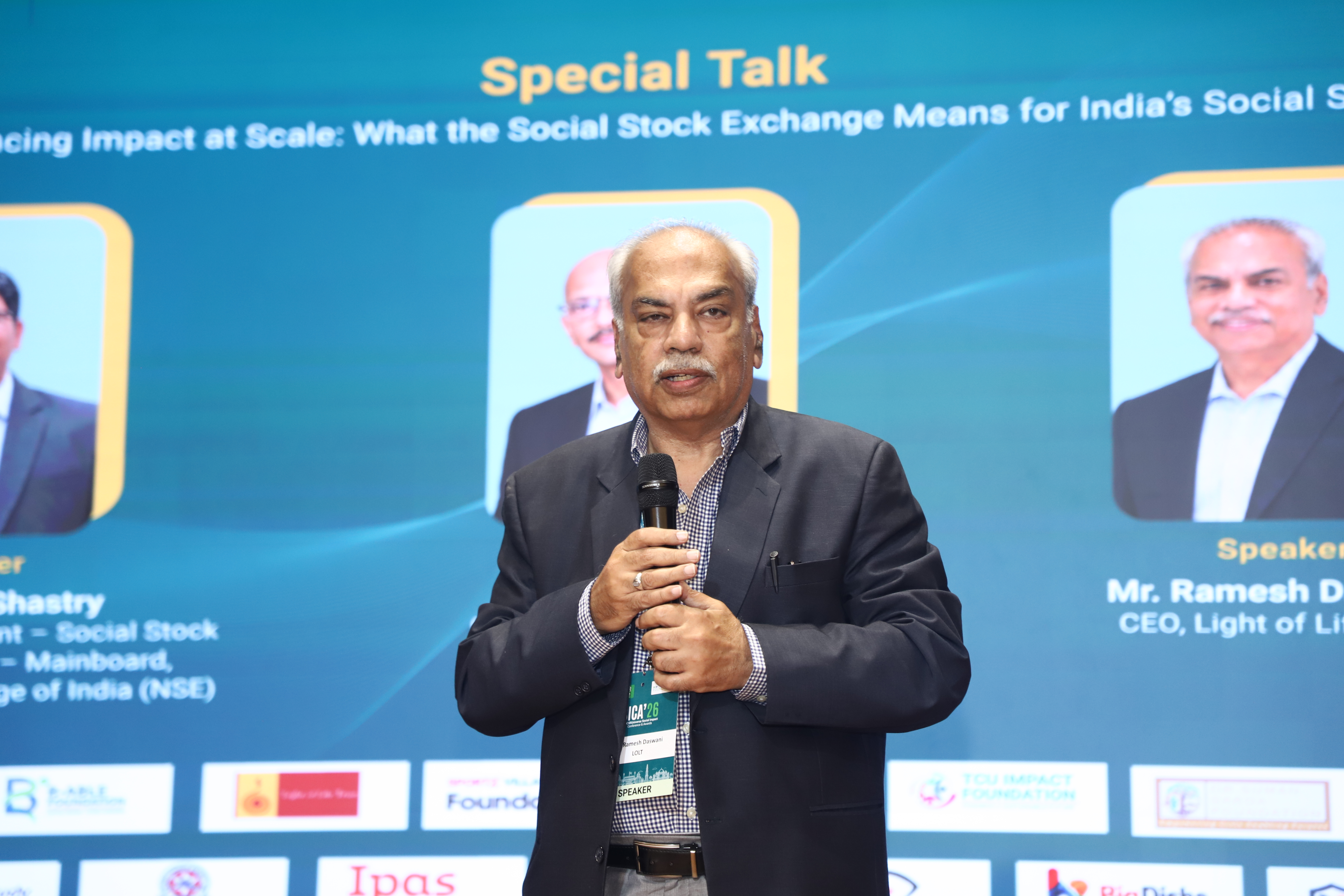
One of the early obstacles was identifying a project that met the requirements for fundraising. Daswani had initially hoped to raise money for existing programmes facing funding gaps. He said he was advised that the listing needed to support a new programme or a new geography, rather than reimburse expenditure on an existing programme. The organisation therefore had to identify and develop a suitable project.
Fundraising presented another challenge. Daswani had expected investors to respond quickly to the proposed issue, but realised that reaching demat account holders and securing commitments in advance would be important. If the issue did not attract sufficient subscriptions, the organisation risked losing the opportunity to raise funds after investing considerable time and effort in preparation.
Light of Life Trust had planned to launch its issue in March 2026. Daswani said market uncertainty prompted some prospective investors to advise postponement. Delaying the issue meant updating and auditing the organisation’s financial statements and completing the relevant compliance requirements again.
The organisation subsequently launched an issue of approximately ₹1.5 crore and, according to Daswani, crossed the 75–80% subscription mark.
His advice to other non-profits was practical: ensure that audited accounts and compliance records are in order; develop a clearly documented project; consider whether the proposed issue size justifies the time and effort involved; and secure substantial commitments from donors and other supporters before the fundraising window opens.
He also called for greater recognition of non-profit issues among securities brokers and financial intermediaries. In his experience, the relatively small size of such issues can make them less attractive to market participants accustomed to corporate offerings.
What role can CSR play?
Both Joseph and Daswani pointed to the potential role of CSR donors in supporting SSE-listed projects. They referred to the provision they understood to permit CSR participation in eligible listed instruments, subject to the applicable conditions and board approval.
For companies already supporting non-profit partners, this presents a question worth exploring: could the SSE help those organisations reach additional donors, while giving CSR teams another route to support clearly defined projects?
Shastry outlined three possible avenues for corporate participation: helping existing non-profit partners register on the platform, supporting projects that are already listed, and exploring the mechanism through eligible contributions. He argued that the platform could help organisations gain visibility and credibility beyond their existing funding relationships.
Yet the experiences shared by Joseph and Daswani suggest that the availability of a route to participation is not enough. CSR teams and prospective investors need to understand how the instrument works, how they can subscribe and what information is available to assess a project. Banks and brokers also need to be familiar with the process if interested donors are to move from intent to participation.
The speakers’ accounts also point to the importance of planning. Non-profits considering a listing need to assess their governance and documentation, develop a project that meets the applicable requirements and plan how they will reach prospective supporters within the issue period.
From promise to practical access
The Social Stock Exchange offers a framework through which non-profits can present defined projects to a wider pool of potential supporters, with greater emphasis on disclosure and reporting. The experiences shared at SICA’26 suggest, however, that its value will depend on how accessible and workable the fundraising process becomes for both organisations and investors.
Joseph’s experience highlighted limited awareness and procedural challenges. Daswani’s journey demonstrated the time required to prepare a suitable project and the importance of securing investor commitments. Shastry outlined the rationale for standardised disclosures and the potential for the platform to widen access to social giving.
These are complementary perspectives, rather than evidence that the same process will work equally well for every organisation. The SSE may offer a useful additional route for some non-profits, but it does not remove the need for strong governance, a well-defined project, fundraising preparation and sustained donor engagement.
For the platform to become a meaningful part of India’s social sector financing landscape, non-profits, CSR teams, investors, banks, brokers and the exchanges will all have a role to play. Greater awareness and a better understanding of the instrument are essential, alongside continued attention to the practical difficulties raised by organisations that have already completed a listing.
Ultimately, the test will be whether the Social Stock Exchange enables more credible social organisations to access additional funding and gives donors the confidence to support projects whose objectives, budgets and outcomes are clearly disclosed.



.JPG)