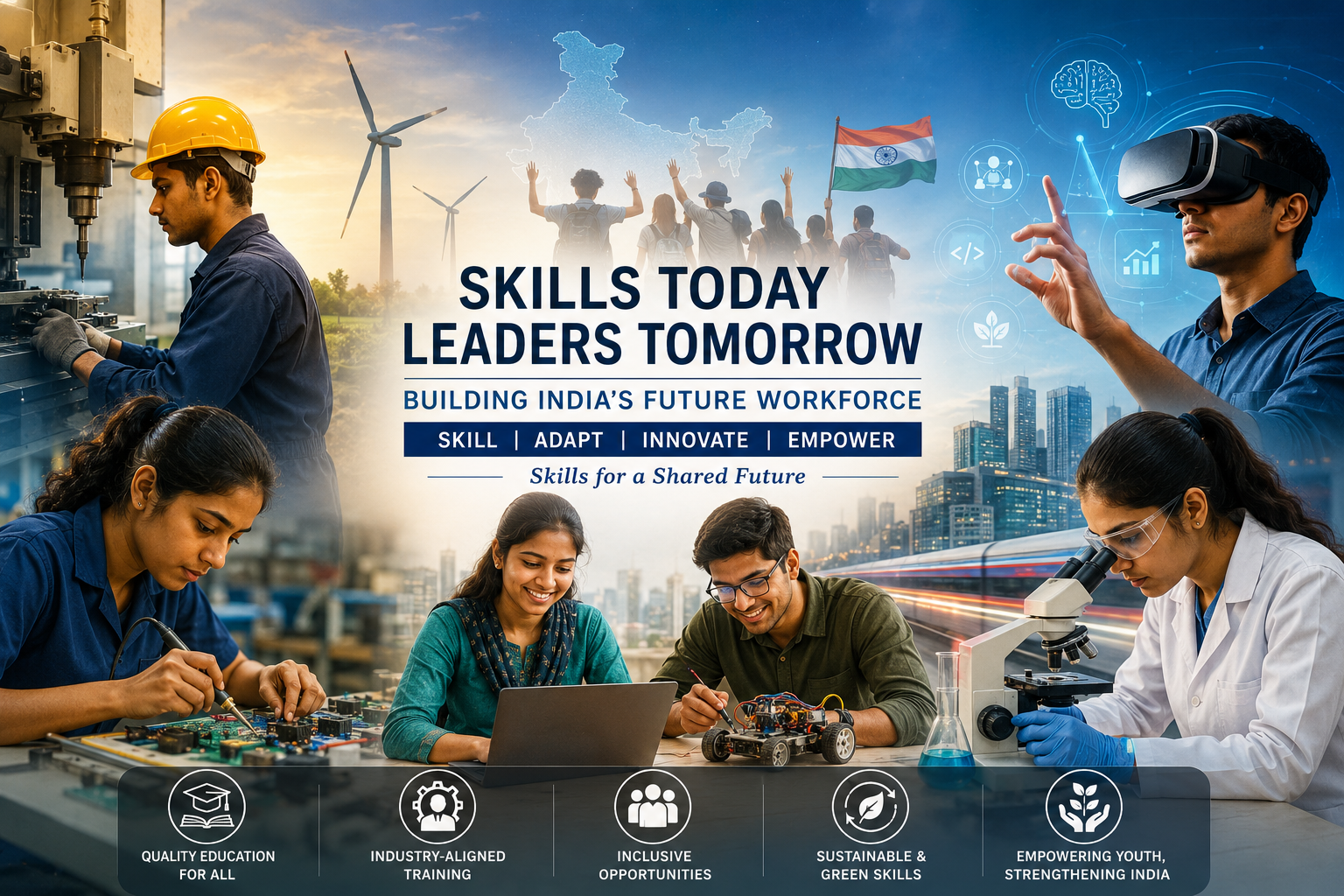

Building India’s Future Workforce: Why CSR Must Lead the Shift from Skilling to Sustainable Livelihoods
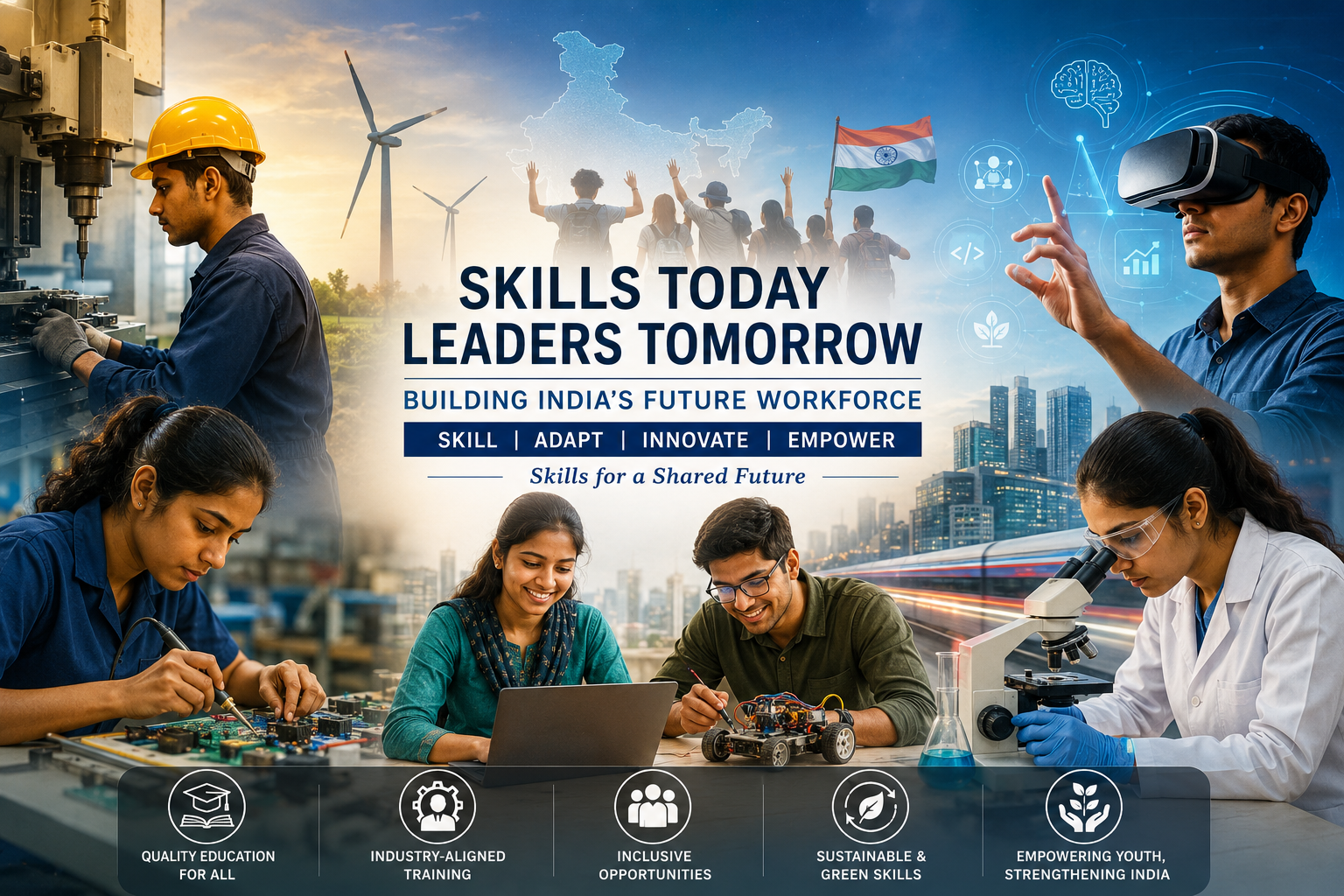
India stands at a defining moment in its demographic journey. Home to one of the world’s largest youth populations, the country possesses an unprecedented opportunity to transform its demographic dividend into sustained economic growth and global competitiveness. Yet, this opportunity is accompanied by an equally pressing challenge: ensuring that millions of young Indians are equipped with skills that remain relevant in an economy increasingly shaped by artificial intelligence, digitalisation, climate transition, advanced manufacturing and rapidly evolving business models.
According to the Ministry of Skill Development and Entrepreneurship (MSDE), more than 1.64 crore candidates have been trained or oriented under the Pradhan Mantri Kaushal Vikas Yojana (PMKVY) since its launch, while the Government’s Skill India Mission continues to expand access to vocational education and industry aligned training. At the same time, the India Skills Report 2026, prepared by ETS in collaboration with the Confederation of Indian Industry (CII), All India Council for Technical Education (AICTE) and the Association of Indian Universities (AIU), reports that India’s employability has risen to 56.35 per cent, signalling steady progress while also highlighting the need to prepare millions more young people for an economy increasingly driven by technology, automation and sustainability.
With nearly 65 per cent of India’s population below the age of 35, the country is expected to remain one of the world’s youngest major economies for decades to come. The national conversation, therefore, is no longer centred solely on creating employment opportunities. It is increasingly about preparing young people for careers that may not exist today but will shape tomorrow’s economy.
This year’s World Youth Skills Day, being observed under the theme “Skills for a Shared Future,” reflects that changing reality. According to the United Nations and UNESCO-UNEVOC, the 2026 theme underscores the importance of equipping young people with technical, digital, entrepreneurial, green and social-emotional skills while fostering collaboration among governments, educators, industries and communities to build more inclusive and resilient labour markets.
Across sectors, organisations are recognising that conventional vocational training alone is no longer sufficient to prepare young people for rapidly evolving labour markets. Industry leaders are instead calling for an ecosystem that combines technical competencies with workplace readiness, continuous learning and exposure to emerging technologies. Increasingly, Corporate Social Responsibility (CSR) is emerging as a strategic enabler of this transition, moving beyond funding isolated training programmes to building inclusive pathways from education to employability and from employability to sustainable livelihoods.
Conversations with leaders from Honeywell Technologies India, Hinduja Foundation and iVP Semi, alongside examples from Medhavi Foundation, Tata STRIVE and Quest Alliance, reveal a common message: India’s skilling challenge is no longer about numbers alone. It is about relevance, accessibility, collaboration and the ability to equip young people with capabilities that remain valuable throughout their professional lives.
The employability paradox: When qualifications are not enough
India’s education system continues to produce millions of graduates every year, yet employers across industries consistently point to a disconnect between academic qualifications and workplace readiness. The challenge extends beyond technical knowledge to practical application, communication skills, digital confidence and the ability to adapt to rapidly evolving technologies.
For Arppna Mehra, Vice President, Human Resources and CSR at Honeywell Technologies India, one of the most significant structural gaps lies in the disconnect between educational curricula and emerging industry requirements. She notes that while sectors such as artificial intelligence, automation, data analytics and sustainability are expanding rapidly, educational institutions often struggle to keep pace with these transformations. The challenge is further compounded by unequal access to quality skilling opportunities, particularly for learners in Tier II, Tier III and rural India, where exposure to industry, advanced digital learning and mentorship remains comparatively limited.
The nature of recruitment itself is also changing. Employers increasingly prioritise demonstrable skills, adaptability and problem solving abilities over academic credentials alone. This shift requires skilling ecosystems to move away from one time interventions and instead promote continuous learning, upskilling and reskilling throughout an individual’s career. As the shelf life of skills becomes shorter, the ability to learn continuously may prove as valuable as any qualification itself.
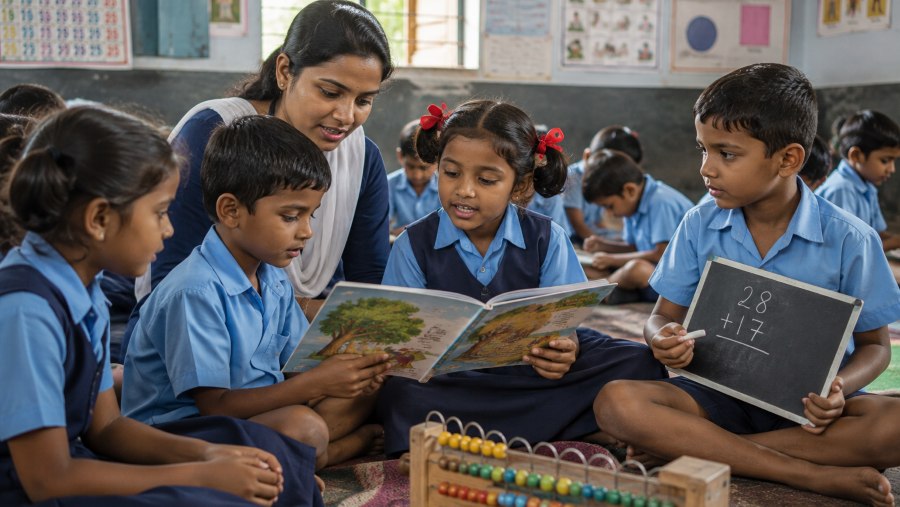
.jpg.jpg) Recognising this disconnect, several organisations are redesigning the relationship between education and employment instead of treating them as separate stages.
Recognising this disconnect, several organisations are redesigning the relationship between education and employment instead of treating them as separate stages.
Medhavi Foundation, through Medhavi Skills University, has adopted apprenticeship embedded degree programmes that integrate higher education with industry led learning. Rather than limiting students to classroom instruction, the university enables them to pursue recognised academic qualifications while gaining practical workplace experience through apprenticeships and work integrated learning. Its Work Integrated Skill Based Higher Education (WISE) model allows students to earn while they learn, combining academic instruction with industry immersion so that graduates enter the workforce with both qualifications and practical experience. According to the organisation, Medhavi Foundation has trained more than 5.5 lakh young people through collaborations with 22 state governments, six central ministries, over 300 industry partners and more than 50 CSR partners, reflecting a growing emphasis on employment linked education rather than certification alone.
Raman Kalyanakrishnan, CEO of Hinduja Foundation, believes India’s employability challenge reflects a deeper structural mismatch between education, industry expectations and the realities faced by young people entering the workforce. He observes that graduates often require what he describes as an “industry facing finishing layer” that develops workplace competencies through apprenticeships, live projects and practical exposure. At the same time, school dropouts and vulnerable youth require entirely different approaches that integrate technical skills with foundational literacy, numeracy, digital confidence, communication and professional behaviour.
His argument also extends to the way success itself is measured. Enrolment numbers and certification volumes, while important, provide only a partial picture of impact. Employment quality, retention, career progression and income growth offer far more meaningful indicators of whether skilling interventions are creating lasting economic mobility.
The challenge is particularly relevant at a time when labour markets themselves are undergoing profound transformation. Sectors such as renewable energy, electric mobility, climate adaptation, sustainability reporting, AI enabled services and advanced manufacturing are creating entirely new categories of employment. Many of these roles did not exist a decade ago, while others are evolving faster than conventional training systems can accommodate.
This ecosystem approach is also evident in organisations working beyond traditional vocational education. Tata STRIVE combines technical training with employability skills, digital literacy, entrepreneurship, career counselling and industry partnerships, helping learners transition more effectively into the workforce while creating opportunities for underserved communities, women and persons with disabilities.
Similarly, Quest Alliance has focused on embedding future skills, digital fluency, computational thinking and career readiness within school and higher education ecosystems. Working alongside state governments, educators and industry partners, the organisation supports teachers and institutions in preparing young people with critical thinking, collaboration and problem solving capabilities that remain relevant in an increasingly technology enabled workplace.
Collectively, these approaches point towards an important shift in thinking. The question for policymakers, educators and employers is no longer simply whether young people can find jobs, but whether they are being equipped with the capabilities needed to navigate careers that will continue evolving throughout their professional lives.
From vocational training to future-ready capabilities
The future of work is being reshaped simultaneously by artificial intelligence, climate action, automation, advanced manufacturing and digital transformation. Consequently, the definition of employability is expanding well beyond conventional vocational training.
Industry increasingly expects workers to possess multidisciplinary capabilities that combine technical expertise with communication, analytical thinking, creativity, resilience and digital fluency. Employers are looking not only for coders, technicians or machine operators, but for individuals capable of collaborating, adapting and solving problems in increasingly complex environments.
Honeywell Technologies India’s Mehra believes CSR initiatives must evolve accordingly. Rather than focusing exclusively on vocational courses, organisations should build complete livelihood ecosystems that integrate technical education with mentorship, internships, entrepreneurship opportunities and industry exposure. Equally important, she says, is designing programmes that remain inclusive by addressing barriers faced by girls, first generation learners and rural communities through locally relevant content, flexible learning models and sustained community engagement.
The same philosophy underpins Medhavi Skills University’s WISE model, where education and employment progress simultaneously rather than sequentially. Through apprenticeship embedded degree programmes, industry designed curricula, blended learning and workplace immersion, students develop competencies while actively participating in the workforce, demonstrating how industry itself can become an extension of the classroom.
From vocational training to future-ready capabilities
Building future-ready skilling ecosystems is not without challenges. As industries evolve rapidly, curricula require continuous updating, trainers themselves need regular capacity building and organisations must develop better mechanisms to evaluate long-term outcomes rather than measuring only the number of beneficiaries trained. Indicators such as sustained employment, career progression, continued learning and income enhancement are increasingly becoming more meaningful measures of programme effectiveness.
Hinduja Foundation’s Raman Kalyanakrishnan echoes this broader vision by emphasising that CSR should help create complete livelihood ecosystems rather than isolated training initiatives. In his view, successful skill development programmes require career counselling, mentoring, placement support, workplace experience and close alignment with verified industry demand. Apprenticeships, in particular, represent one of the most effective mechanisms for connecting education with employment while enabling companies to contribute meaningfully to India’s evolving skilling ecosystem.
The same philosophy is reflected in Medhavi Skills University’s “Industry as Campus” model, which reimagines the workplace as an extension of the learning environment. Rather than separating education from employment, students pursue apprenticeship-linked degree programmes that combine classroom learning with structured workplace experience. By allowing industries to actively participate in curriculum design and practical training, the model seeks to reduce the disconnect between graduate capabilities and employer expectations while ensuring that learning remains relevant to evolving market needs.
 Tata STRIVE similarly advocates an integrated approach to workforce development. Its training centres work closely with industry partners to continuously update curricula, ensuring that learners acquire both technical expertise and workplace competencies demanded by employers. Alongside sector-specific training, the organisation places significant emphasis on communication, financial literacy, digital skills and entrepreneurship, recognising that long-term employability depends as much on adaptability and life skills as on technical qualifications.
Quest Alliance approaches the challenge from an earlier stage in the education continuum. Working with state governments, schools, higher education institutions and employers, the organisation equips teachers to integrate future skills, digital technologies and career awareness into everyday learning. By strengthening educators alongside students, Quest Alliance aims to create learning environments where problem solving, collaboration and digital confidence become integral to the education process rather than supplementary interventions.
Another recurring theme across industry perspectives is collaboration. None of the leaders view government, industry or civil society as independent actors capable of solving India’s skilling challenge alone. Instead, they advocate stronger partnerships that bring together employers, educational institutions, implementation agencies and local communities to create pathways that remain relevant across diverse geographies and changing labour markets.
From classrooms to careers: Building ecosystems, not isolated interventions
If there is one theme that consistently emerges across industry perspectives, it is that meaningful skilling cannot end with a certificate. Training programmes must ultimately translate into employability, sustained livelihoods and long-term career progression. This requires an ecosystem where government, industry, educational institutions and communities work in tandem, ensuring that young people are supported not only while acquiring skills but also as they transition into the workforce.
Honeywell Technologies India has sought to institutionalise this philosophy through Saksham, its flagship education and skilling initiative that prepares young people for a future driven by technology, sustainability and innovation. Aligned with this year’s World Youth Skills Day theme, the programme focuses on strengthening STEM education, advancing research and innovation and expanding access to future-ready skills for youth and women.
One of its most significant collaborations is the IIT Bombay–Honeywell Centre of Excellence for Future Skills and Innovation, established to equip students with industry-relevant capabilities in sustainability reporting, sustainable finance, energy security, sustainability infrastructure and policy. According to Honeywell Technologies India, the initiative aims to reach more than 100,000 students by 2030, creating a pipeline of professionals capable of supporting India’s green and digital transitions.
Honeywell Technologies India’s Mehra believes that future employability will depend not merely on access to education but on access to relevant education. Preparing students for emerging sectors before demand peaks, she argues, is essential if India hopes to remain competitive in a rapidly evolving global economy.
The company is also investing much earlier in the education lifecycle. Through its partnership with Ladli Foundation Trust, Honeywell Technologies India is transforming 12 government and government aided girls’ schools across Maharashtra, Delhi, Haryana and Karnataka by 2029. According to the company, the programme is expected to benefit more than 12,000 students through STEM laboratories, smart classrooms, digital learning infrastructure, teacher development and life skills education, with nearly 5,000 girls in Delhi alone expected to benefit.
The organisation believes that infrastructure by itself cannot deliver meaningful outcomes. Rather, sustained impact comes from combining quality education with mentorship, industry exposure and continuous guidance that enables first-generation learners and underserved communities to convert newly acquired skills into long-term employment and social mobility.
The same emphasis on strengthening complete learning-to-livelihood pathways is reflected in the work of Hinduja Foundation, which has adopted a systems-based approach instead of creating parallel interventions.
Its flagship programmes, Road to School and Road to Livelihood, conceptualised and spearheaded by Ashok Leyland, work alongside governments, implementation partners and local communities to strengthen foundational education while preparing students for life beyond school. Career counselling, aptitude assessments, financial literacy, communication skills and digital literacy are integrated into the curriculum to help young people make informed career decisions before they enter the job market.
Complementing these efforts are initiatives across the wider Hinduja Group ecosystem. Earlier this year, IndusInd Nippon Life Insurance, part of IndusInd International Holdings Limited, launched a youth employability programme in partnership with government institutions to address state-specific skill gaps through industry-aligned training in digital technologies, artificial intelligence, communication and financial literacy. Meanwhile, Gulf Oil Lubricants India’s Kushal Mechanic programme focuses on strengthening the capabilities of mechanics who have acquired their skills informally but often lack formal certification or structured technical training.
According to Hinduja Foundation, these initiatives have strengthened the foundational literacy and numeracy of nearly five lakh school students while supporting approximately 1.3 lakh young people across 12 states through employability and livelihood interventions.
For Kalyanakrishnan, the lesson is straightforward. Sustainable impact is achieved by strengthening existing education and skilling systems instead of building independent structures. When schools, governments, communities and employers share responsibility for preparing young people, the outcomes extend beyond first-time employment to long-term resilience in an evolving labour market.
A comparable systems approach can be seen in the work of Medhavi Foundation, which has built an integrated education-to-employment ecosystem spanning skill development, higher education, apprenticeships and workforce development. Through Medhavi Skills University, learners pursue apprenticeship-embedded degree programmes that combine academic learning with paid workplace experience, enabling them to earn while they learn. The foundation also works closely with employers, government departments and CSR partners to co-design training programmes, ensuring that curricula remain aligned with emerging industry requirements.
Beyond higher education, Medhavi Foundation supports learners through multiple stages of the employability journey, from career counselling and skill development to apprenticeship facilitation and workforce readiness. Its collaborations with government agencies, corporate partners and educational institutions reflect a shared responsibility model in which employers become active participants in preparing future talent rather than simply recruiting graduates after they complete their education.
Tata STRIVE reinforces this approach through its extensive network of industry partnerships across manufacturing, healthcare, hospitality, retail, banking and service sectors. By aligning training programmes with employer requirements and combining technical instruction with life skills and placement support, the organisation seeks to improve not only access to employment but also the long-term employability of young people navigating a rapidly changing economy.
Quest Alliance complements these efforts by strengthening the education ecosystem itself. Its work with educators, schools and state governments focuses on integrating future skills, digital learning and career readiness into mainstream education, enabling young people to build confidence, adaptability and problem-solving capabilities well before they enter the workforce. The organisation’s emphasis on teacher capacity building further reinforces the idea that sustainable workforce development begins with strengthening learning systems rather than delivering standalone training programmes.
Collectively, these examples illustrate how India’s skilling ecosystem is evolving beyond fragmented interventions. Increasingly, organisations are investing in integrated pathways that connect education, apprenticeships, industry exposure, mentorship and employment into a continuous learning journey. This shift reflects a growing recognition that sustainable livelihoods are created not through isolated programmes but through collaborative ecosystems that support learners throughout their educational and professional lives.
Preparing talent for India’s manufacturing ambitions
While much of India’s skilling discourse centres on improving employability at scale, certain strategic industries require an entirely different level of workforce preparedness. Few sectors illustrate this challenge more clearly than semiconductors, where specialised technical expertise, advanced research capabilities and hands-on manufacturing experience are becoming essential to India’s industrial ambitions.
As India accelerates investments under the India Semiconductor Mission and seeks to establish itself as a global hub for semiconductor design and manufacturing, the conversation around skilling is becoming increasingly specialised. Industry leaders argue that financial incentives, infrastructure and policy support alone will not be sufficient to build a globally competitive semiconductor ecosystem. Equally important is the development of a highly skilled workforce capable of supporting sophisticated chip design, fabrication, testing and packaging operations.
For Raja Manickam, Founder and CEO of iVP Semi, developing technology and developing talent are inseparable objectives. He believes India’s semiconductor ambitions have exposed significant shortages in hands-on product development and manufacturing expertise. Semiconductor fabrication requires specialised exposure to cleanroom environments, sophisticated equipment and highly disciplined manufacturing processes that cannot be replicated through conventional classroom instruction alone.
He also emphasises the need to strengthen Industrial Training Institutes (ITIs), polytechnics and engineering institutions that continue to serve as the backbone of India’s technical workforce. According to Manickam, India’s expanding semiconductor ecosystem is expected to require nearly 300,000 skilled professionals over the coming years, making industry-led talent development a national priority.
To address this challenge, iVP Semi is working closely with academic institutions to bridge the gap between engineering education and industrial application. Through the TN-100 Chip Varsity Project, undertaken in partnership with the Government of Tamil Nadu, the company is helping establish chip design centres across engineering institutions with the objective of enabling 100 indigenous chip designs while training nearly 5,000 students annually using industry-standard electronic design automation tools, mentorship and project-based learning.
The company has also partnered with SRM Institute of Science and Technology, IIT Bombay and IIT Bhubaneswar to strengthen semiconductor research, innovation and product development. Rather than relying exclusively on theoretical instruction, these collaborations immerse students in real engineering challenges, enabling them to develop practical competencies that closely mirror industry requirements.
For Manickam, this model represents the future of technical education itself. Employers increasingly seek graduates who have demonstrated their capabilities through projects, internships, apprenticeships and collaborative problem solving rather than academic qualifications alone. As emerging sectors become more knowledge intensive, experiential learning is rapidly becoming as valuable as formal education.
The semiconductor sector, therefore, serves as a powerful example of a much broader transformation taking place across India’s workforce landscape. Whether in electronics, renewable energy, artificial intelligence, electric mobility or advanced manufacturing, the demand is steadily shifting towards professionals who possess both deep technical expertise and the ability to continuously learn as technologies evolve.
Collectively, the initiatives undertaken by Honeywell Technologies India, Hinduja Foundation, Medhavi Foundation, Tata STRIVE, Quest Alliance and iVP Semi demonstrate that India’s skilling ecosystem is becoming increasingly interconnected. While each organisation addresses different aspects of the education-to-employment continuum, they share a common objective: ensuring that learners are equipped not merely for today’s jobs but for careers that will evolve throughout their professional lives.
CSR’s next chapter
The conversations around World Youth Skills Day point towards a significant evolution in the role of Corporate Social Responsibility.
For many years, CSR-led skilling initiatives primarily focused on expanding access to vocational training and increasing the number of beneficiaries certified each year. While these efforts have undoubtedly contributed to improving access to education and employability, the expectations placed on CSR today are far more ambitious. Increasingly, organisations are expected to build resilient learning ecosystems that prepare young people for careers shaped by technological disruption, sustainability transitions and changing business models.
This evolution is also changing how impact itself is measured. Enrolment figures and certification numbers, though important, no longer provide a complete picture of success. Employment quality, career progression, income enhancement, entrepreneurship and lifelong learning are emerging as more meaningful indicators of whether skilling initiatives are creating lasting economic mobility.
Equally significant is the growing recognition that skill development cannot exist in isolation. It must begin with strong foundational education, incorporate digital and future-ready competencies, provide opportunities for practical learning and apprenticeships, facilitate meaningful industry exposure and continue supporting learners as technologies and labour markets evolve.
The organisations featured in this discussion illustrate that transition from different perspectives.
Honeywell Technologies India is investing in STEM education, sustainability and future skills to prepare students for emerging industries. Hinduja Foundation is strengthening education-to-livelihood pathways through collaborative, systems-based interventions that integrate schools, communities, governments and employers. Medhavi Foundation is redefining higher education through apprenticeship-embedded degree programmes that combine academic learning with workplace experience. Tata STRIVE is helping bridge the gap between technical training and sustainable employability by integrating life skills, entrepreneurship and industry partnerships into its programmes. Quest Alliance is embedding future skills, digital fluency and career readiness within mainstream education, strengthening both learners and educators. Meanwhile, iVP Semi demonstrates how industry itself can become an active partner in developing specialised talent for sectors that are expected to shape India’s next phase of industrial growth.
Taken together, these examples underscore an important shift in the CSR landscape. Rather than operating as standalone initiatives, skilling programmes are increasingly becoming collaborative platforms where governments, educational institutions, industries, implementation partners and communities contribute complementary expertise. CSR is emerging as the bridge that connects these stakeholders, enabling young people to move more seamlessly from education to employment and from employment to long-term career growth.
As India aspires to become a global manufacturing hub, a leader in digital innovation and a knowledge-driven economy, the country’s demographic dividend will ultimately be measured not by the size of its youth population but by the quality, adaptability and resilience of its workforce.
The India Skills Report 2026 makes it evident that employability is improving, while the United Nations’ theme for this year’s World Youth Skills Day reminds policymakers, educators and industries alike that building a shared future requires shared responsibility. Preparing young people for tomorrow’s economy will demand stronger partnerships, continuous innovation and sustained investment in skills that remain relevant across changing industries and technologies.
Corporate Social Responsibility has a defining role to play in that journey. Its next chapter lies not in supporting isolated training programmes but in strengthening interconnected ecosystems that integrate education, apprenticeships, industry, technology and lifelong learning. The organisations investing in these ecosystems today are not simply creating employment opportunities. They are helping shape a workforce capable of driving India’s long-term economic competitiveness while ensuring that growth remains inclusive, sustainable and centred on human potential.





.JPG)