From Infrastructure to Human Capital, Building a More Inclusive India
India’s development story is often told through the lens of infrastructure, investment and economic growth. But lasting progress also depends on whether communities, particularly those in rural and tribal regions, have the education, skills and opportunities to participate in that growth. This makes the intersection of business leadership, education and community development an important conversation for India’s next phase of development.
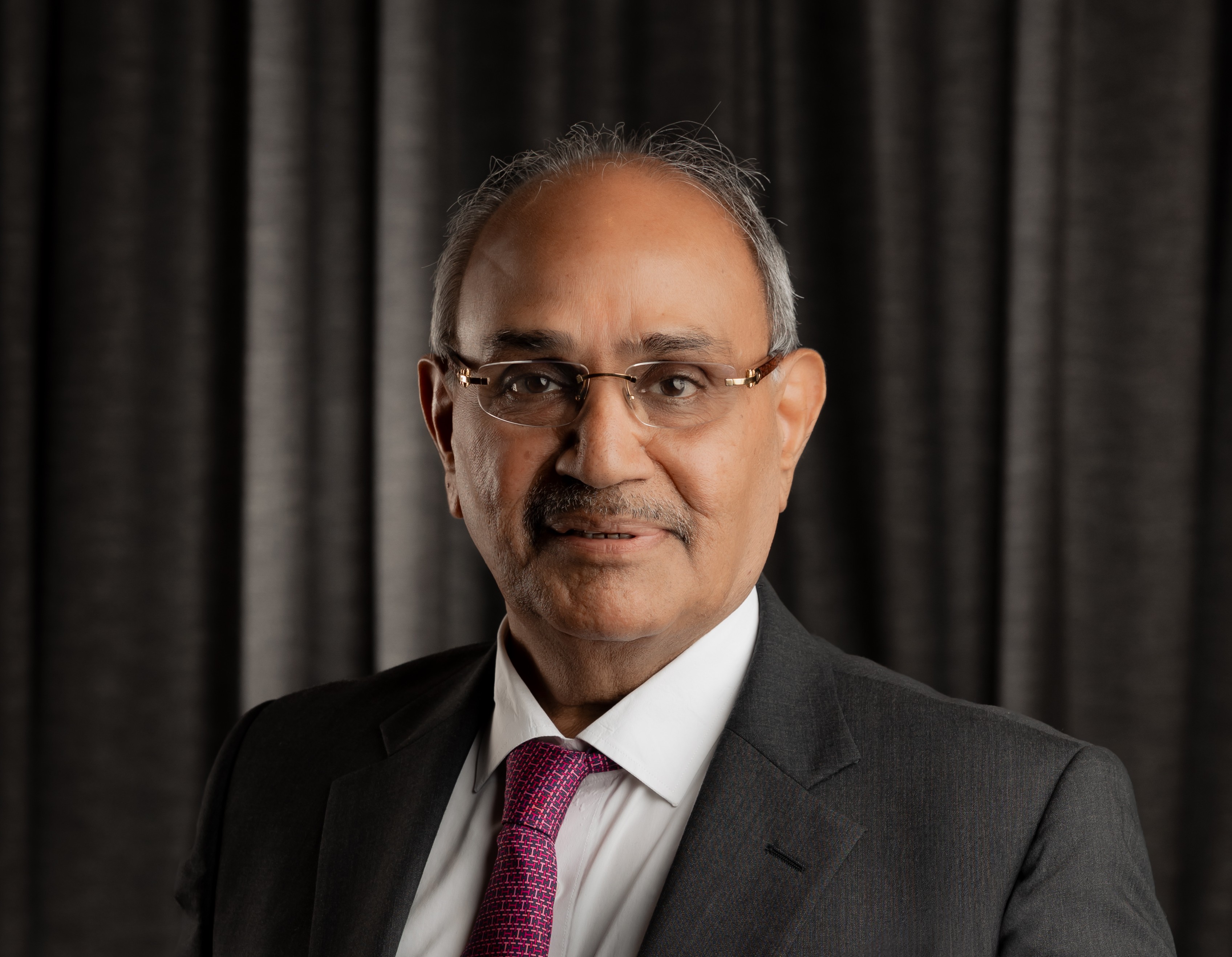
In this interview, Sajan Kumar Bansal, Chairman & Managing Director, Skipper Limited, who has spent over four decades building an infrastructure business while also being deeply involved in education and community development, reflects on his decades-long engagement with underserved communities and his association with the Ekal movement and Friends of Tribals Society. Drawing on his experience in both industry and social development, Bansal discusses why education must go beyond access to encompass skills, livelihoods and aspiration, and why CSR initiatives need to focus on community ownership and measurable, lasting outcomes. He also shares his perspective on the role businesses can play in building human capital and ensuring that India’s growth becomes more inclusive and leaves fewer communities behind.
Read the full interview to explore his perspectives on education, inclusive development, community-led change and the role of business in shaping a more equitable India.
Q&A
Q. While leading a successful infrastructure business, you have remained actively involved in education and community development for decades. What inspired this long-standing commitment to social causes, and how has it influenced your approach to leadership?
A. My father arrived in Kolkata as a teenager, alone and with little more than the courage to start over. Through grit, resilience, and hard work, he built a business from nothing, navigating the challenges of the Licence Raj and teaching me what true perseverance looks like.
When I joined the family enterprise, those lessons stayed with me. They also led me to ask a deeper question: what does it mean to give back in a way that creates lasting impact? Over time, I realized that while charity offers immediate relief, education transforms lives. It equips individuals with the tools to shape their own futures and creates opportunities that extend across generations.
That belief has guided me both in business and beyond. Just as strong infrastructure depends on strong foundations, lasting national progress depends on ensuring that no community is left behind. If tribal communities remain excluded from quality education, our aspirations as a nation will always remain incomplete.
This conviction lies at the heart of my work with Friends of Tribals Society. I believe that investing in people—especially those whom history has overlooked—is not separate from nation-building; it is fundamental to it. Education is the foundation on which individuals, communities, and nations rise together.
Q. Having worked closely with tribal and rural communities over the years, what have these experiences taught you about India's development journey and the challenges that still need attention?
A. My experiences with tribal and rural communities have strengthened my conviction that the development narrative of India is inspiring, but incomplete. The country has seen vast improvements in infrastructure, technological developments and economic development, but the rewards of these advances have not been felt uniformly.
One of the most significant things I have learned is that development isn't just economic. Quality education, healthcare, livelihoods and mobility into a new social class are also essential.
At the same time, I have seen tremendous resilience, wisdom and self-reliance in these communities. The challenges are not about lack of capability, but about limited access and inadequate institutional support. However, the task of bridging these divides through long-term interventions, engagement of local communities and community ownership cannot be neglected in India's path of inclusive development.
Q. Education has been at the heart of your social work. Why do you believe education is one of the most effective ways to create lasting change in underserved communities?
A. Education is one of the most effective means of bringing about social change because of its intergenerational effects. It impacts not only the future of an individual child, but that of a whole family and community.
Education creates opportunities for people in underserved areas by giving them knowledge, confidence and the power to make informed decisions. It further supports the employability, gender equity, health and active social engagement.
Most importantly, education brings about aspiration. It enables children in remote and marginalised communities to think beyond the present and to have access to the instruments for achieving their dreams. This is why investing in education is one of the most lasting and resilient mechanisms of social change that one can employ.
Q. You have been associated with the Ekal movement for many years. Looking back, what changes have you seen in the communities where Ekal has worked, and what has stayed with you the most?
A. Many communities to which I have had the privilege of serving over the years have seen incredible changes. Some of the visible changes include improved literacy rates, higher enrolment for children in formal education, an improved health and hygiene awareness and women's increased involvement in the community.
The most positive is the growth of self-confidence among community members. Once the families which saw education as irrelevant and out of reach, now actively seek to educate their children and hope for a better future for them.
What has stayed with me the most is the exceptional willpower of children and communities despite challenging circumstances. Their enthusiasm to learn, often in environments with marginal resources, serves as a convincing reminder that opportunity and not ability is often the missing link.
Q. Alongside infrastructure and economic growth, why is investment in education, skills, and community development essential for India's long-term progress?
A. Clearly, infrastructure and economic development are of paramount importance to the development of a nation. But the world of physical infrastructures is not enough for sustaining long-term development without strong human capital.
India's demographic dividend can prove to be the biggest asset of the nation only when the population is provided with quality education, relevant skills and opportunities. Education and skill development investments have the potential to improve productivity, facilitate innovation and equip communities to contribute effectively to a changing economy.
Likewise, community development provides for the inclusiveness and social sustainability of growth. Economic growth and human development go hand in hand and this is the best way in which a nation can progress.
Q. Many of the communities you have worked with face limited access to opportunities. What strengths have you seen in these communities, and how can CSR initiatives build on them?
A. The most uplifting qualities of tribal and rural communities are their resilience, sense of community, traditions and values, and traditional knowledge systems. These communities have a tremendous strength and an amazing resiliency and ability to adapt and persevere.
These strengths can provide a strong foundation for CSR programmes to have a lasting impact, rather than imposing external solutions. Programmes should be developed with active community involvement and adapted to the local context and culture.
There is a lot of potential in these communities that can be unleashed through interventions in education, livelihood improvement, skill building, women empowerment and entrepreneurship. The first step is to give communities agency and let them be partners in development and not passive beneficiaries.
Q. Based on your experience, what can businesses do to support education in a way that creates lasting impact for communities?
A. When we started Ekal, the pivotal question was not how to build more schools—it was how to bring education to places where conventional schools would never work. This shift in thinking taught me that businesses can be genuine gamechangers in the education system, but only if they're willing to adopt a long-term, ecosystem approach rather than a quick-fix mindset. Many organizations focus solely on infrastructure—the buildings, the classrooms—but that's only one piece of the puzzle. Real impact requires investment across the entire ecosystem: teacher training, digital learning, curriculum support, vocational education, and community engagement. These interconnected elements are what transform lives, not bricks and mortar alone.
Our One Teacher, One School model works because we invested in identifying and training educated youth from within communities, earning the trust and acceptance that an outsider simply cannot build. But beyond that, we learned that building strong partnerships with trusted grassroots organizations, local institutions, and government is essential for scaling impact. These partnerships enhance effectiveness because they are rooted in local knowledge and credibility. However, businesses must shift their focus from interventions to outcomes and continuity—measuring not what you did, but what changed and whether it lasts.
Finally, and critically, education programmes must be directly connected to life skills and employability. A young person today needs to be prepared not just for today's world, but for a future that is constantly changing. If education doesn't equip them with practical skills and pathways to decent livelihoods, we have failed them. When businesses commit to this holistic, long-term approach—investing across all dimensions while partnering locally and focusing on sustainable outcomes—that's when education truly becomes transformational for communities.
Q. As India moves towards its long-term development goals, what social challenges do you believe require the most urgent attention?
A. If I had to prioritise, I would say quality education, employability, and equitable access to opportunity are the three areas that need our immediate and continued attention. We have made real progress as a country, but geographical disparities persist, particularly in rural and tribal areas, and that gap cannot be allowed to widen as India moves forward.
Alongside this, nutrition, healthcare access, gender inclusion, and digital connectivity need specific, sustained focus. None of these exist in isolation from each other, and none of them can be solved by any one sector alone. It will take genuine collaboration between government, businesses, civil society, and communities themselves to make inclusive development real rather than aspirational.
One lesson from our own journey has stayed with me. As more children gained access to education, their horizons expanded and their ambitions grew. Yet in many villages, opportunities did not keep pace with those aspirations. Education should not become a pathway that compels young people to leave their roots behind; it should empower them with the freedom to choose their future.
That is why I believe the next chapter of development must focus on linking education with livelihoods. Our goal should be to create ecosystems where talent can flourish locally, where young people can build meaningful careers within their own communities, and where progress strengthens rather than empties our villages. When education creates opportunity, and opportunity creates hope, we do more than transform individual lives—we unlock the potential of entire communities and, ultimately, of the nation itself.


.png)