
From Packaging Responsibility to Circularity: What Will It Take to Make India's Beverage Industry More Sustainable?
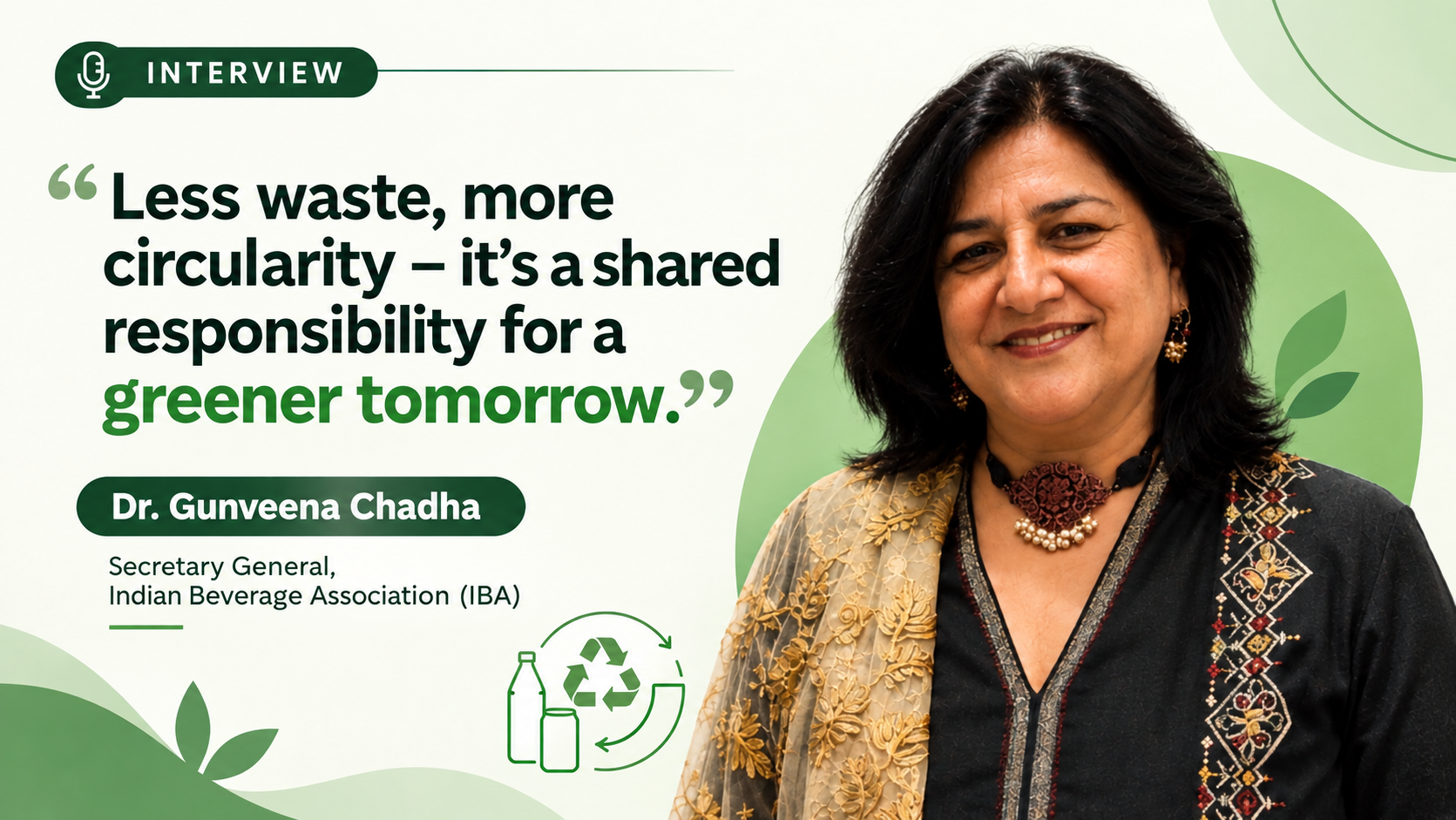
India’s expanding beverage market brings with it a growing responsibility to address packaging waste, resource consumption and the environmental costs of production. As circular economy principles gain prominence in policy discussions, the focus is increasingly shifting from regulatory compliance to building systems that can deliver measurable improvements in resource efficiency, waste recovery and recycling. The BRICS New Delhi Declaration’s emphasis on Extended Producer Responsibility (EPR), eco-design and sustainable waste management adds an important dimension to this conversation, particularly for industries with significant packaging footprints. For India’s non-alcoholic beverage sector, this presents both an opportunity and a challenge: translating commitments into effective collection systems, greater use of recycled materials and stronger accountability across the value chain. In this interview with TheCSRUniverse, Dr Gunveena Chadha, Secretary General, Indian Beverage Association (IBA), discusses the industry's progress, persistent implementation gaps, the role of policy and consumer participation, and the priorities that will shape its transition towards a more circular and resource-efficient future.
Read the full interview below.
Q. India’s beverage industry is growing alongside rising consumption and increasing concerns around packaging waste. How can the sector balance growth with its environmental responsibilities and make sustainability an integral part of its business practices?
A. India’s non-alcoholic ready-to-drink beverage (NARTD) industry is integrating sustainability into its growth strategy through lightweight packaging, resource-efficient operations and stronger recycling systems. By going beyond regulatory compliance and adopting circular practices, the sector aims to reduce its environmental footprint. Achieving this requires continued collaboration among industry, government and consumers.
The NARTD beverage industry recognises that growth and sustainability must advance together. As consumer demand rises, the sector is increasingly investing in packaging innovation, circular economy partnerships and efficient use of resources to reduce environmental impact across the value chain. This includes expanding the use of recyclable materials, increasing recycled content in packaging, improving collection and recovery systems, and supporting infrastructure that enables waste segregation and recycling at scale. Water stewardship, energy efficiency and lower-emission manufacturing are also becoming central priorities as companies work to build more resilient and responsible supply chains.
Making sustainability integral to business practices will require strong collaboration among industry, government, recyclers and consumers. Clear policy frameworks, investment in recycling infrastructure and wider adoption of Extended Producer Responsibility (EPR) mechanisms can help accelerate systemic change. At the same time, consumer awareness and participation remain essential to improving collection and recycling outcomes. Sustainability can no longer be treated as a parallel initiative; it must be embedded into product design, operations, sourcing and long-term business strategy. By combining innovation with collective action, India’s beverage sector can continue to meet growing demand while contributing meaningfully to environmental progress and circularity.
Q. The BRICS New Delhi Declaration places emphasis on circular economy, EPR and sustainable waste management. What opportunities does this create for India’s beverage industry, and how can these commitments translate into measurable outcomes?
A. The BRICS Declaration reinforces the importance of a circular economy and provides strong opportunities to accelerate circularity through knowledge-sharing, packaging innovation and collaboration on recycling technologies. Its emphasis on Extended Producer Responsibility (EPR), eco-design and sustainable waste management practices aligns with ongoing industry initiatives. These efforts can strengthen recovery infrastructure, improve traceability and encourage greater use of recycled materials. This can encourage greater investment in recycling infrastructure, packaging innovation and the use of recycled content, while also supporting the formalisation of the waste value chain and creating livelihood opportunities for waste workers and recyclers.
To translate these commitments into measurable outcomes, collaboration across industry, government and civil society will be essential. Clear and achievable targets for collection and recycling, improved traceability and reporting systems, and investments in circular infrastructure can help drive accountability and progress. With a balanced approach that combines policy support, innovation and shared responsibility, the beverage industry can help advance India’s circular economy ambitions while delivering tangible environmental and economic benefits.
Q. How much progress has the beverage industry made in reducing its packaging footprint through lightweighting, redesign and recycling? What key challenges remain?
A. The NARTD beverage industry has made significant progress in reducing its packaging footprint through lightweighting, redesign and a greater focus on recyclability. Companies are using less material in packaging, improving transportation efficiency, increasing recyclable formats and incorporating more recycled content. Many are also supporting collection and recovery systems as part of their broader sustainability and EPR commitments.
At the same time, challenges remain in scaling up these efforts across India. Recycling infrastructure and waste collection systems are uneven across regions, while consumer awareness and waste segregation need improvement. The industry is challenged to balance sustainability goals with affordability, product safety and supply chain realities. Continued collaboration among industry, government, recyclers and communities will be critical to achieving long-term circularity and measurable environmental impact.
Q. While EPR has encouraged companies to take greater responsibility for packaging waste, its success depends on effective collection and recycling systems. Where are the biggest gaps in implementation, and how can industry and government work together to address them?
A. Fragmented waste collection and inadequate source segregation remain significant challenges. Industry and government can address these gaps by strengthening collection networks and infrastructure. Standardised municipal procedures across the country and closer coordination with local authorities can also make EPR implementation more efficient.
Q. What is the industry's approach to increasing the use of recycled materials and exploring alternative packaging? What are the key barriers to making these solutions viable at scale?
A. The beverage industry is increasingly focused on expanding the use of food-grade recycled materials, especially recycled PET approved by the Food Safety Authority, as part of its commitment to circular packaging solutions. These recycling processes are already approved by European and American authorities for their safe use as food-contact materials. Companies are also exploring alternative packaging formats and material innovations that can help reduce dependence on virgin resources while maintaining product safety, quality and consumer trust.
However, scaling these solutions remains challenging. One of the key barriers is the limited availability of food-grade recycled material at the quality and volumes required for large-scale beverage production. While collection, segregation and recycling infrastructure continue to grow, there is still room to further enhance these aspects to ensure enough food-grade recycled material is made available for the entire industry. Addressing these challenges will require coordinated action across industry, government, recyclers and consumers to build a stronger and more efficient circular economy ecosystem.
Q. What steps can the industry take to ensure greater transparency and traceability in waste collection and recycling?
A. Digital platforms can track plastic waste from collection to processing, creating audit-ready records and improving traceability. Partnerships with Producer Responsibility Organisations (PROs), digital weight verification and reliable reporting can strengthen accountability.
Q. How can beverage companies encourage responsible disposal and waste segregation among consumers?
A. Companies are encouraging responsible disposal by making waste segregation convenient and accessible through clear packaging instructions, collection points and community initiatives. Sustained engagement and awareness campaigns are essential. Collaboration with local governments, waste collectors and civil society can help make responsible disposal a regular consumer habit.
Q. What opportunities does the proposed BRICS knowledge-sharing network offer, and what are IBA's sustainability priorities for the next three to five years?
A. The proposed BRICS knowledge-sharing network offers opportunities to exchange best practices and accelerate packaging and recycling innovation. Over the next three to five years, priorities include lightweight packaging, stronger digital collection networks and expanded food-grade r-PET manufacturing. Collaboration among industry, government and consumers will remain essential to advancing circularity.