
How General Mills Is Putting Its ‘Standing for Good’ Vision into Practice in India
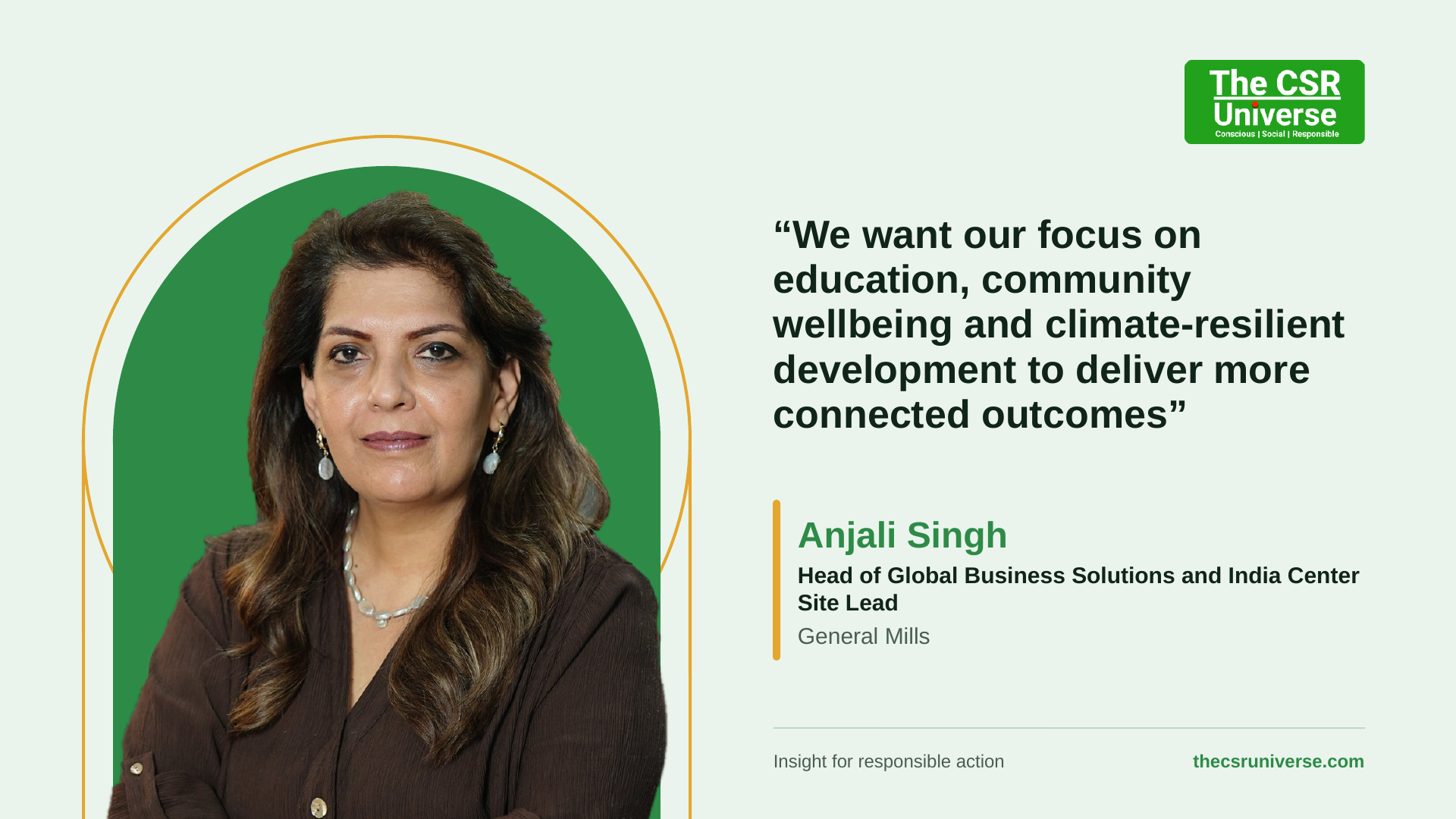
A company's relationship with the communities around its operations cannot be defined by philanthropy alone. Its impact is also shaped by how it responds to local development needs, supports livelihoods and takes responsibility for the natural resources on which communities and businesses depend. For global food company General Mills, these concerns come together under its Standing for Good framework, which focuses on people and the planet. In India, this translates into work across girls' education and employability, food security, community wellbeing, water conservation and sustainable agriculture. But how does a company ensure that these interventions address local priorities and continue to deliver value over time? In this interaction, Anjali Singh, Head of Global Business Solutions and India Center Site Lead, General Mills, discusses the company's approach to community investment, the importance of local partnerships and farmer participation, and the need to measure development outcomes beyond project activities and beneficiary numbers.
Read the full interview below:
Q. As businesses increasingly look beyond conventional philanthropy towards sustained development outcomes, how does General Mills view its role in addressing social and environmental challenges in India, and how does its Standing for Good framework inform this approach?
A. A food company is only as strong as the communities and natural resources that sustain it. Investing in their future is fundamental to our own.
At General Mills, Standing for Good is how we put that belief into practice. For 160 years, we've worked to make sure the “G” in our logo stands for Good. The framework has two deeply integrated pillars: Standing for People, which includes hunger relief, education support and belonging; and Standing for Planet, which includes regenerative agriculture, climate action and recyclable or reusable packaging. Globally, in fiscal 2025, that meant $83.2 million in charitable giving, 27 million meals enabled through food donations and more than 800,000 acres engaged in regenerative agriculture programming.
In India, this translates into three focus areas: education and employability, community wellbeing, and climate-resilient development. We take a focused, long-term approach, often working with communities around our operations. By listening to local needs, building trusted partnerships and staying engaged over time, we aim to support progress that lasts.
Q. How does General Mills identify the development needs of communities around its operations and translate these into interventions that are locally relevant and sustainable beyond the period of corporate support?
A. We work with local institutions, our partners and community members to identify specific development needs and determine where our support can make the greatest difference. The needs differ from one community to another, and our response must reflect that.
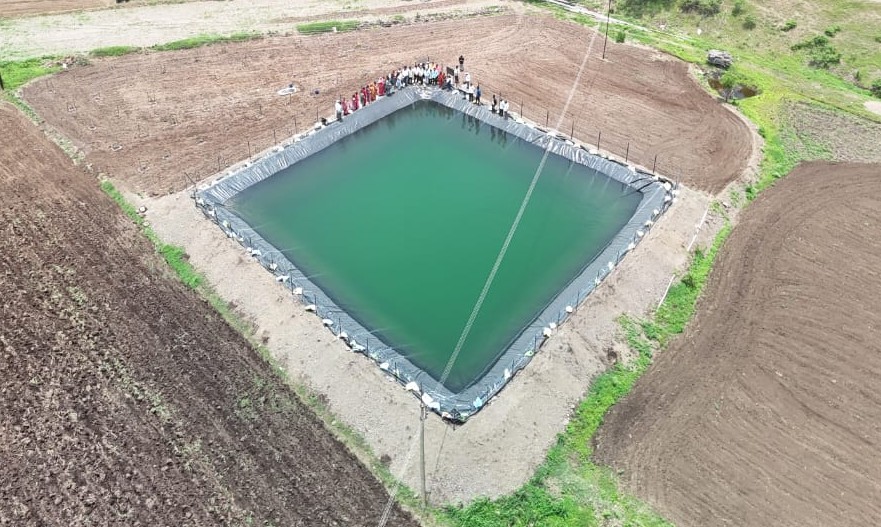
In one village, the priority may be water. In another, it may be restoring a school or helping girls get to class. Near our Nashik manufacturing facility, for example, we have supported farm ponds in the Sinnar region to help strengthen irrigation and agricultural resilience.
We also think about sustainability from the design stage. We ask what will continue to deliver value when our support ends, whether that is a water conservation asset a community can maintain or a skill a young woman can use throughout her working life. The goal is to strengthen local capacity so that progress can continue without depending on our funding.
Q. How are General Mills' scholarships, mentorship and vocational training initiatives for girls designed to address the barriers that often prevent them from progressing from education to employability and economic participation? Would you like to share a success story?
A. Our aim is to help young women turn education into economic opportunity. That means addressing the barriers along the way, from financial constraints to limited guidance and access to the skills employers seek.
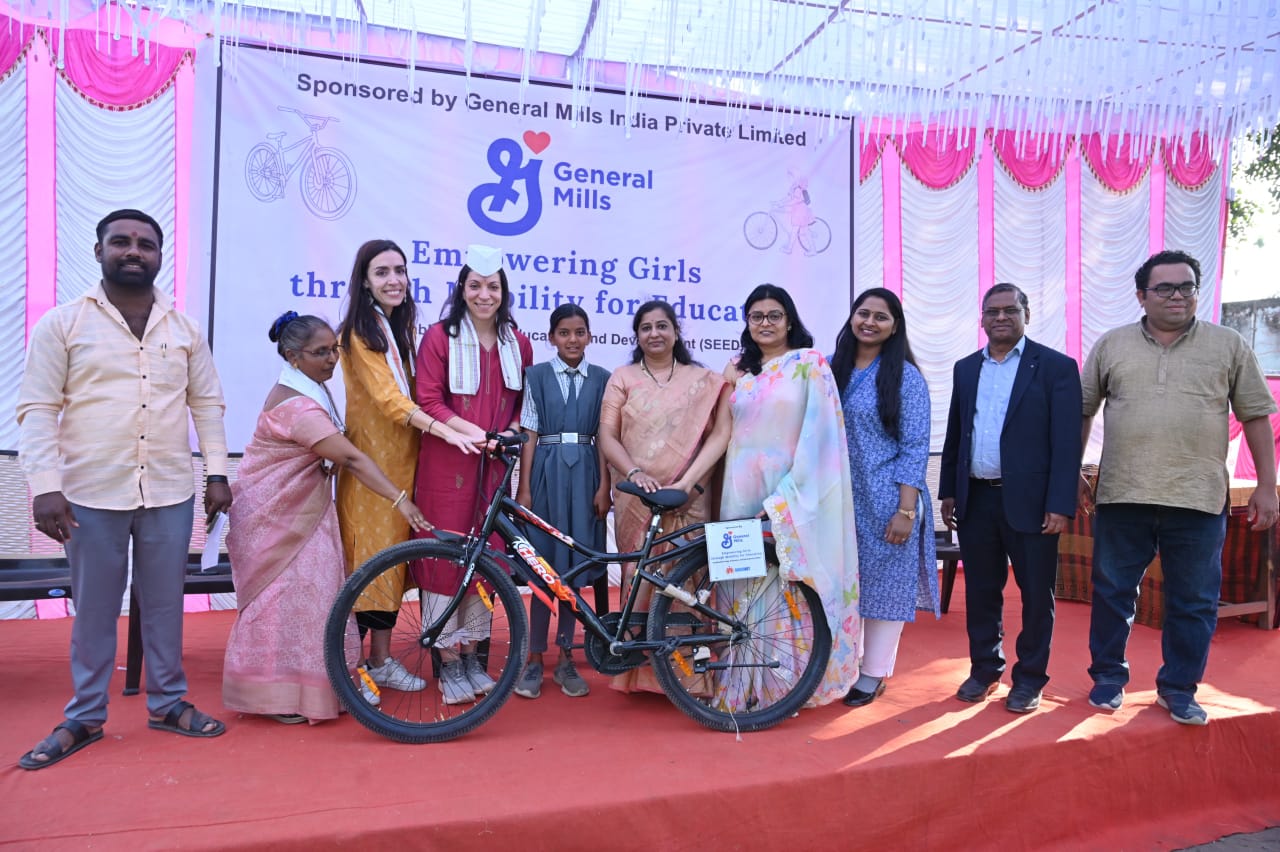
Scholarships help reduce financial barriers to continuing education. Mentorship provides guidance as young women consider their options, while vocational training helps prepare them for employment. We also recognise that practical barriers matter. Our support has included cycles for girl students, because access to education can depend on something as basic as being able to reach the classroom.
One encouraging outcome is that four participants from a programme we supported in fiscal 2026 have since joined the workforce. For us, that transition from learning to earning is an important measure of progress. The goal is not simply to help girls complete their education or training, but to expand their choices and strengthen their ability to participate in the economy.
Q. How are General Mills' initiatives in regenerative agriculture, water conservation and farmer capability-building designed to strengthen community resilience, and what role do local needs and participation play in ensuring their long-term impact?
A. Strengthening rural livelihoods means investing in both the land and the people who farm it. Our focus is on better water management, healthier soils and farmers' ability to adapt to changing conditions. Our global commitment to advancing regenerative agriculture provides direction, but local conditions must shape the response. In India, our work includes check dams, soil and water conservation, and farmer capability building in sustainable agricultural practices.
Around our two manufacturing facilities in Malegaon MIDC, Sinnar near Nashik, we identified water stress as a key challenge for local farming communities. In response, 40 farm ponds have been constructed, creating 4 lakh cubic metres of water storage capacity to support irrigation and local agriculture.
Farmers must help shape this work from the outset. Their experience informs which measures suit their land and what support they need, while training helps them make informed decisions. Ultimately, for a practice to last, it has to make sense to the farmer.
Q. How does General Mills assess the long-term impact of its community initiatives, from school restoration and access to essential facilities to environmental conservation, beyond measuring activities undertaken and beneficiaries reached?
A. We look at whether an initiative continues to serve the community after the work is completed. School restoration and solar lighting are two areas we have supported. For a school, the test extends beyond the building to whether it continues to meet the needs of the students and teachers. For solar lighting, installation is the starting point; continued functioning and usefulness to the community are what matter over time. Staying engaged with partners and communities helps us understand what is working and where further support or a different approach may be needed. 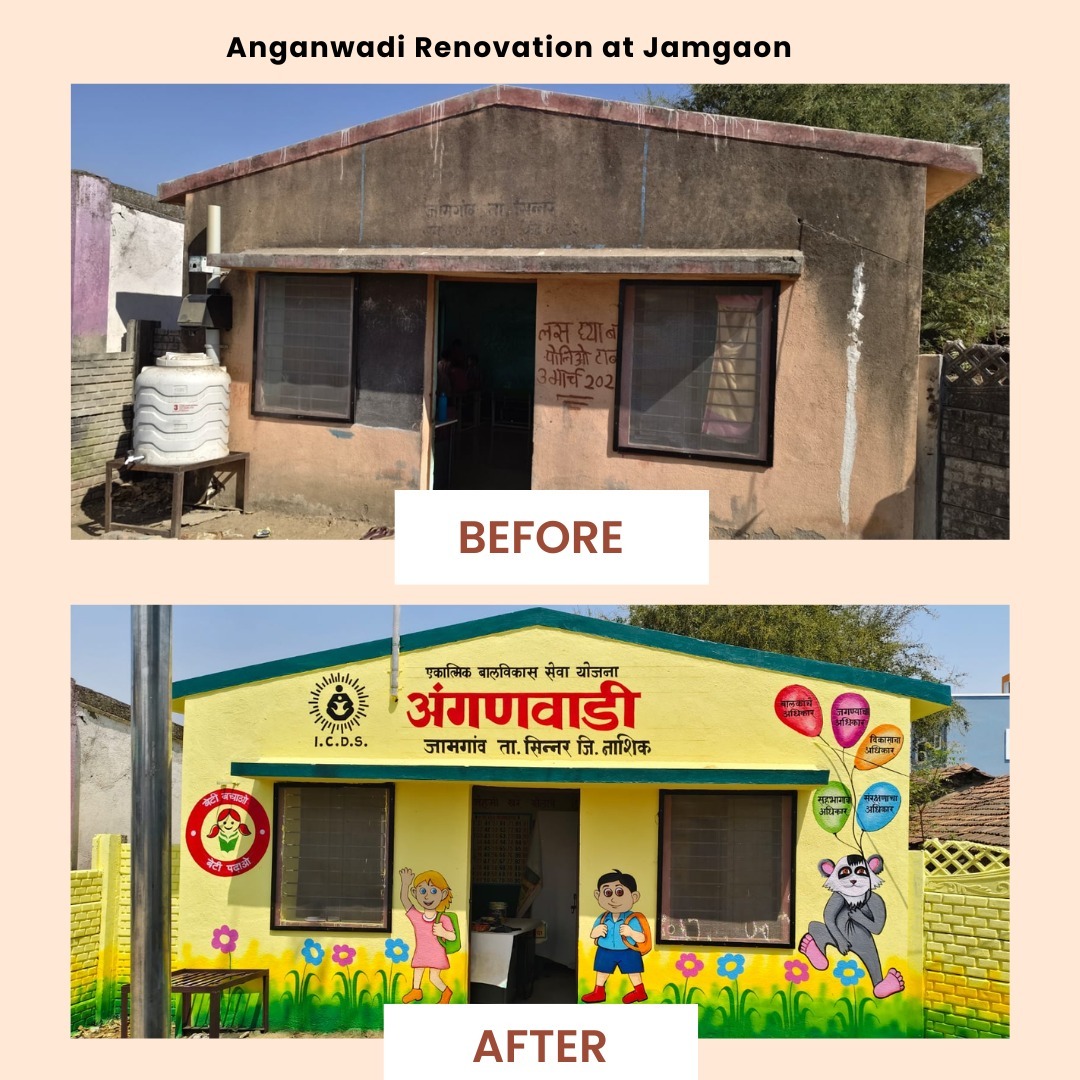
Environmental work calls for the same rigour, but a longer horizon. Changes in soil and water conditions need to be assessed across seasons, not just at project completion. Reporting on what we have delivered should inform future investment, help strengthen effective interventions and guide changes where needed.
Q. What role do local organisations, community institutions and development partners play in implementing these initiatives, and how does General Mills ensure that these partnerships strengthen community capacity and ownership over the long term?
A. We look to local organisations and development partners for trusted relationships, sound judgement and an understanding of how communities work. They help shape priorities, navigate practical constraints and connect our contribution with existing local strengths.
General Mills brings resources through charitable giving, food donations and employee engagement. Our partners bring the knowledge and expertise to put those resources to work in ways that are locally relevant.
Community ownership grows when people have a meaningful role in decisions and responsibility for carrying them through. We want schools, local organisations and community institutions to help set priorities, manage resources and maintain what has been created from the outset. That requires space for local leaders to exercise judgement and support to build their capabilities. Over time, those institutions should be equipped to make their own decisions, respond to new needs and carry the work forward independently.
Q. What key lessons have emerged from General Mills' India initiatives in integrating community development, food security and environmental sustainability, and how are these informing its priorities for future social impact efforts?
A. Each investment can create the conditions for further progress. Water conservation can strengthen agricultural livelihoods and food security, while education gains value when it opens a route to employment. Our experience in India reinforces the importance of planning around these connections and giving initiatives time to mature. It also calls for discipline in where we stay invested, using what we learn to deepen work that shows promise.
Looking ahead, we want our focus on education and employability, community wellbeing and climate-resilient development to deliver more connected outcomes. This supports General Mills’ global Standing for Good commitment to people and the planet, including our priorities in regenerative agriculture and water stewardship.
Our new manufacturing plant in Nashik, which opened in February this year, reflects our long-term investment in the region. We bring that same long-term perspective to our social impact efforts, with priorities that can evolve as the region and its communities develop.


.png)