
How MEIC is Connecting Employee Engagement with Community Needs
For companies, the challenge of creating meaningful social impact is not just about identifying the right causes or committing resources. It is also about building an organisational culture in which employees see community engagement as a shared responsibility, rather than an activity that sits outside their everyday work. This calls for more than volunteering opportunities; it requires leadership, continuity and a genuine understanding of community needs.
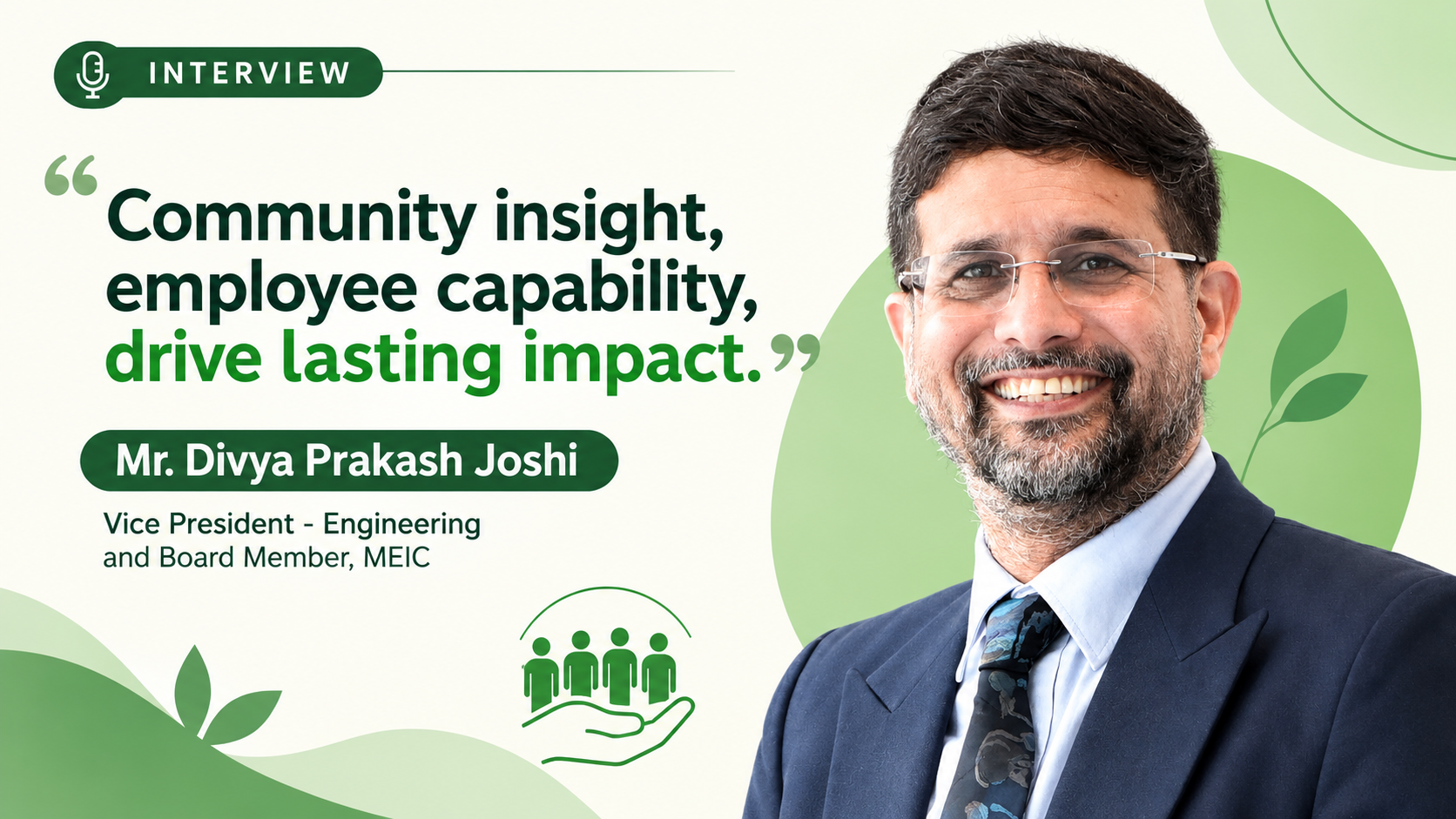
At Medtronic Engineering and Innovation Center (MEIC), this thinking informs initiatives in women's health, early childhood development and education. Through programmes such as Project W-CORE, Project Buniyaad and Project 6, the organisation is connecting employee participation with community priorities. In this conversation with TheCSRUniverse, Mr. Divya Prakash Joshi, Vice President - Engineering and Board Member, MEIC, discusses how employee engagement can move beyond volunteering to become a sustained part of an organisation's social impact approach.
Read the full interview below:
Q. Medtronic’s community engagement model places employees at the center of its social impact efforts. What led MEIC to adopt this approach, and how has it shaped the way employees engage with the communities around them?
A. At Medtronic, community engagement is rooted in the sixth tenet of our Mission—to maintain good citizenship as a company. At MEIC, we bring this to life by listening to local needs, working with community partners and creating meaningful opportunities for employees to contribute. Putting employees at the centre makes the Mission personal: they can see the need, take part in the response and understand how their contribution connects to a larger community effort.
This approach has evolved as MEIC has grown and deepened its roots in Hyderabad over the past 15 years. What began as opportunities to volunteer has developed into a more structured model that connects employees’ time, interests and skills with priorities identified alongside community partners. It gives people different ways to participate while keeping the engagement grounded in what communities need.
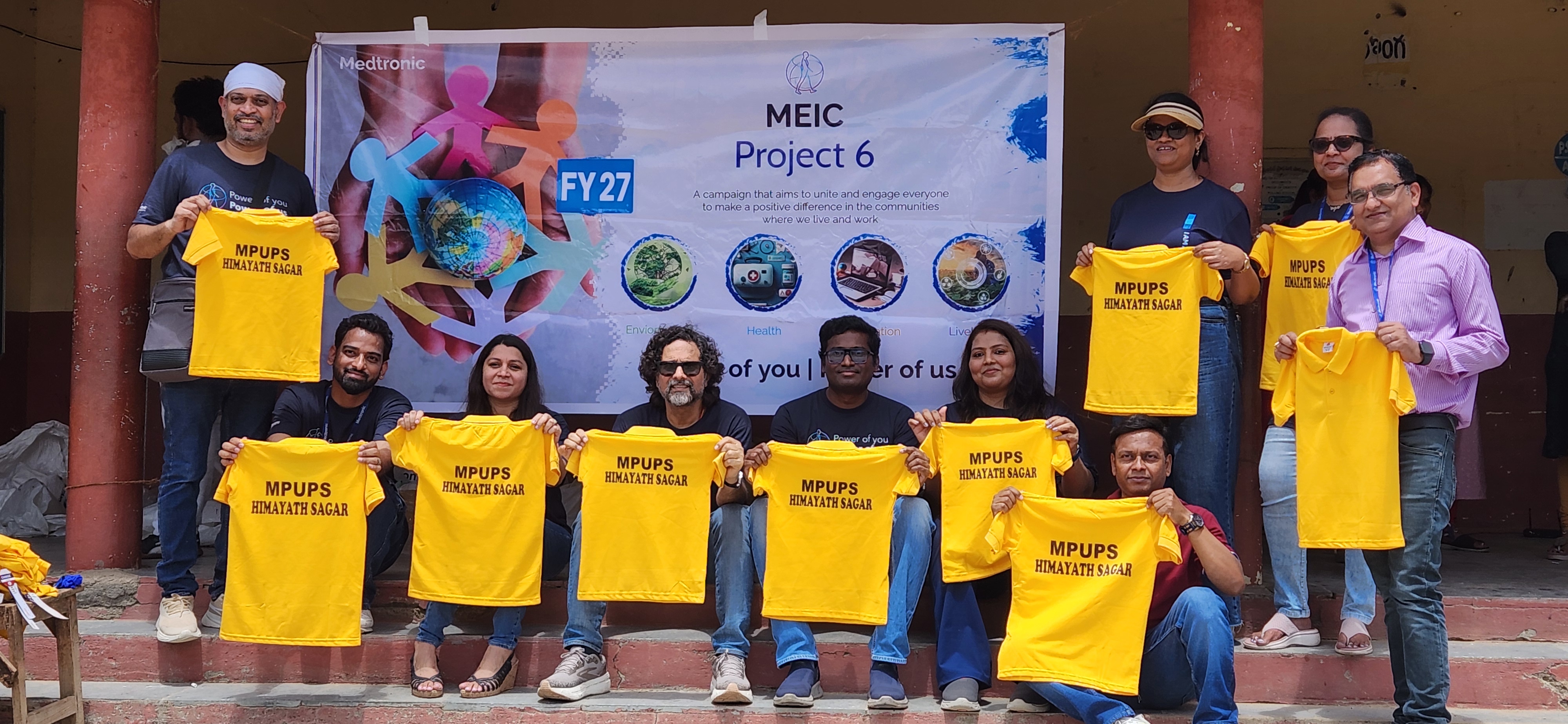
Our Annual Volunteering programme provides the structure for this engagement, and Project 6 is one example of it in action. This year, more than 400 employees came together to support nearly 200 students through hands-on learning, learning resources, student well-being initiatives and improvements to the school environment. Experiences like these help employees move from simply taking part in an activity to building a closer understanding of the community and a shared sense of ownership for the contribution they make.
Q. Medtronic’s Mission calls for “good citizenship as a company.” How does MEIC translate this value into meaningful action at the employee and organisational level?
A. For us, good citizenship comes to life in how we show up for our communities. At MEIC, that happens in two connected ways: through programmes we support with community partners, and through employees who contribute their time, interests and skills.
At an organisational level, we contribute to work across preventive healthcare, women’s health, early childhood development, education, environmental sustainability and community infrastructure in partnership with our CSR and community partners.
Those partnerships are important because they keep the work grounded in local needs and help direct our contribution towards strengthening awareness, access and capacity over time.
Alongside this, our Annual Volunteering programme gives employees different ways to get involved. Over the years, that has included creative-learning and education activities, mentoring, seed-ball making, tree plantation, water conservation, support for student health and well-being, and improvements to school infrastructure. The breadth matters because people can contribute in ways that feel relevant to them, while still responding to priorities identified with the community.
So, it is really the combination of sustained partnerships and active employee participation that enables us to bring good citizenship to life in a meaningful way.
Q. Through initiatives such as Project W-CORE and Project Buniyaad, MEIC is working across areas such as women’s health and early childhood development. How does MEIC identify the community needs where it can create the greatest impact?
A. It starts with listening. We work with our CSR partner to understand local priorities, identify where the gaps are and determine where our contribution can be most relevant. W-CORE and Buniyaad show how that approach translates into action in women’s health and early childhood development.
Through community health camps implemented with our CSR partner, W-CORE combines awareness, counselling, and breast and cervical cancer screening. It has reached more than 1,800 women and enabled vigilance around personal care.
Buniyaad supports foundational needs across 10 Anganwadi centres, combining infrastructure improvements with health and developmental screenings for approximately 429 children, nutrition awareness for mothers and capacity building for 55 Anganwadi teachers.
In both cases, community needs guide the priority, our CSR partner brings local knowledge and implementation expertise, and MEIC contributes to the effort. That collaboration helps keep the work relevant and grounded in local realities.
Q. How does MEIC ensure that employee volunteering goes beyond one-time activities and contributes to sustained outcomes for the communities it works with?
A. It comes back to continuity. We do not see employee volunteering as a series of standalone events; we connect it to the broader community engagement journey and look at how each activity can build on what is already underway.
Project 6 is a good example of how that journey begins each year. This year, it brought together more than 400 MEIC employees to support nearly 200 students through hands-on learning, learning resources, student well-being initiatives and improvements to the school environment. That scale of participation creates a strong collective start and gives employees a clear connection to the contribution they are making.
As I mentioned earlier, our partners bring the local knowledge and continuity that help sustain the work. Together, we use that understanding to shape the focus of our Annual Volunteering programme for the year. Project 6 provides the collective kickoff, and the journey continues through an employee-led model, with opportunities across education, environmental sustainability, health and well-being, community infrastructure and support for vulnerable groups.
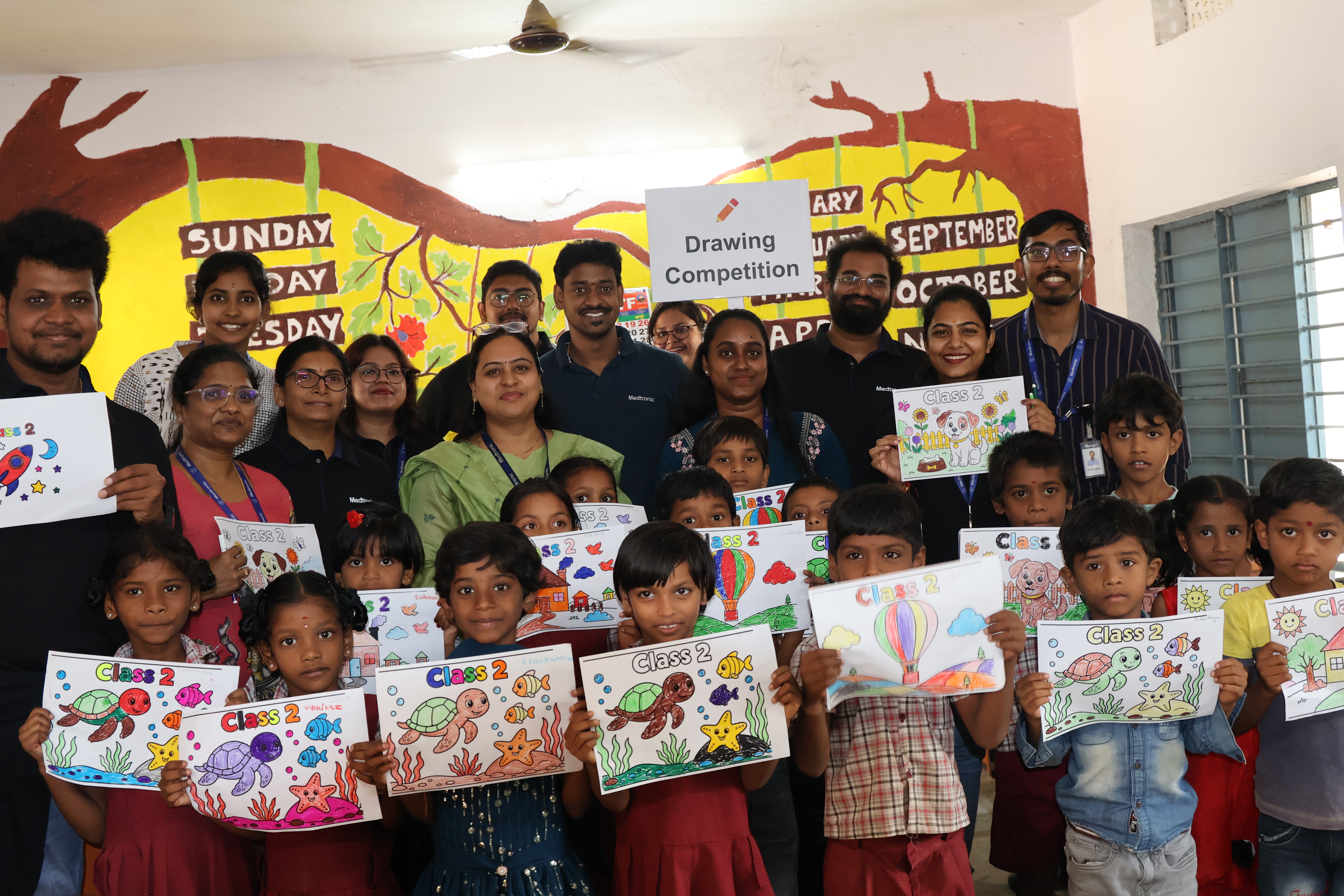
By connecting employee participation, partner expertise and ongoing programmes, we aim to ensure that volunteering contributes to a wider and more sustained outcome—not simply a moment of engagement.
“What makes volunteering meaningful is the opportunity to contribute in different ways and around needs that matter to the community. When employees can bring their own ideas, interests and skills to the effort, participation becomes more personal and easier to sustain through the year.”
— Madhumita Routh, Director Finance, Medtronic Engineering and Innovation Center.
Q. This year, Project 6 brought together more than 400 employees to support students and schools. What have you learned about building a culture where employees actively take ownership of social impact?
A. For me, the biggest learning is that ownership cannot be assigned; it must be enabled. People step forward when they understand the purpose, have the freedom to contribute in a way that feels meaningful to them and know that their ideas are valued.
The second is that culture is built through consistency. A strong collective moment can create energy, but what sustains it is giving employees the space to lead, shape opportunities and keep others involved through the year. For example, an employee can take an idea—whether it is mentoring students, supporting a learning activity or contributing to an environmental initiative—and mobilise colleagues around it, while the organisation enables that ownership by providing the structure, support and space to take the idea forward.
That is when volunteering becomes more than participation—it becomes something employees feel personally connected to and want to carry forward.
Q. As an engineering organization, how can MEIC leverage its technical expertise, innovation and problem-solving capabilities to address social challenges?
A. MEIC’s opportunity is to bring the engineering mindset we use to solve complex healthcare challenges into our social-impact work. Our teams know how to look beyond the visible problem, understand the system around it and bring together different perspectives to develop practical solutions.
STEM is one area where our employees can make a particularly relevant contribution. By bringing engineering concepts to life through hands-on challenges, mentoring and real-world problem statements, our teams can help students move from learning science and technology in theory to seeing how they can be used to solve problems. Just as importantly, interacting with practicing engineers can build confidence, expand students’ awareness of STEM careers and help them see themselves as future innovators.
The starting point, however, must always be the community need. Not every challenge requires a technology solution. Our greatest value lies in listening carefully, defining the problem well and working with partners to determine where engineering expertise can make a meaningful and sustainable contribution.
Q. What role does leadership play in encouraging employees to participate in community initiatives and making social impact a part of the organizational culture?
A. Leadership plays an important role in showing that social impact is a shared responsibility. The Medtronic Mission gives us the larger organisational anchor, and leaders help bring it to life by making good citizenship visible in what we do—not simply something we talk about.
When leaders make time to participate, work alongside employees and engage with community partners, they make that commitment visible. Their involvement also makes participation feel more natural and gives employees the confidence and comfort to step forward and contribute beyond their day-to-day roles.
At the same time, leadership’s role is not to own every initiative. It is to create the environment in which employees can lead—removing barriers, supporting good ideas and giving people the space and flexibility to bring others along.
Over time, those signals matter. They show employees that community engagement is valued as part of our culture and that they are trusted to take ownership and sustain the momentum.
Q. What do you see as the biggest opportunity for organizations to make employee engagement a more meaningful and sustained part of their social impact efforts?
A. The biggest opportunity is to move from engaging employees in activities to engaging their capabilities. Volunteering becomes more meaningful when people understand the community need, can contribute in ways that draw on their strengths and remain connected to the outcome over time.
Engineering organisations can bring a particularly valuable dimension to this effort. Beyond contributing time, engineers can share their experience and problem-solving perspective where it is relevant to a community need. They can also broaden access to STEM through hands-on learning, mentoring and exposure to real-world engineering, helping students build curiosity, confidence and a clearer view of the opportunities available to them.
The key is to organise this contribution around community priorities and sustained partnerships, rather than start with a solution in search of a problem. When employees can see how their expertise complements local knowledge and what their collective effort has made possible, participation becomes more purposeful and ownership grows.
The larger opportunity is to build a model in which community insight, employee capability and measurable outcomes reinforce one another. For engineering organisations like MEIC, that can turn social impact into a platform not only for volunteering, but also for knowledge-sharing, innovation and capability-building that creates value well beyond a single activity.