
From Scale to Sustained Impact: Infosys Foundation on Building Lasting Social Change
India’s social development challenges are deeply interconnected, requiring interventions that go beyond immediate relief to strengthen access, opportunity and community capacity over time. For corporate philanthropy, this raises an important question: how can the reach of a programme translate into meaningful, lasting change in people’s lives?
Infosys Foundation works across healthcare, education, livelihoods and environmental sustainability, combining technology, partnerships and on-ground implementation to address diverse needs. Its 2025-26 report records 217 projects reaching over 7.16 million beneficiaries, bringing the question of impact, rather than reach alone, into focus. Sustaining outcomes also requires adapting solutions to local contexts, building community capacity and ensuring that partnerships contribute beyond individual project cycles.
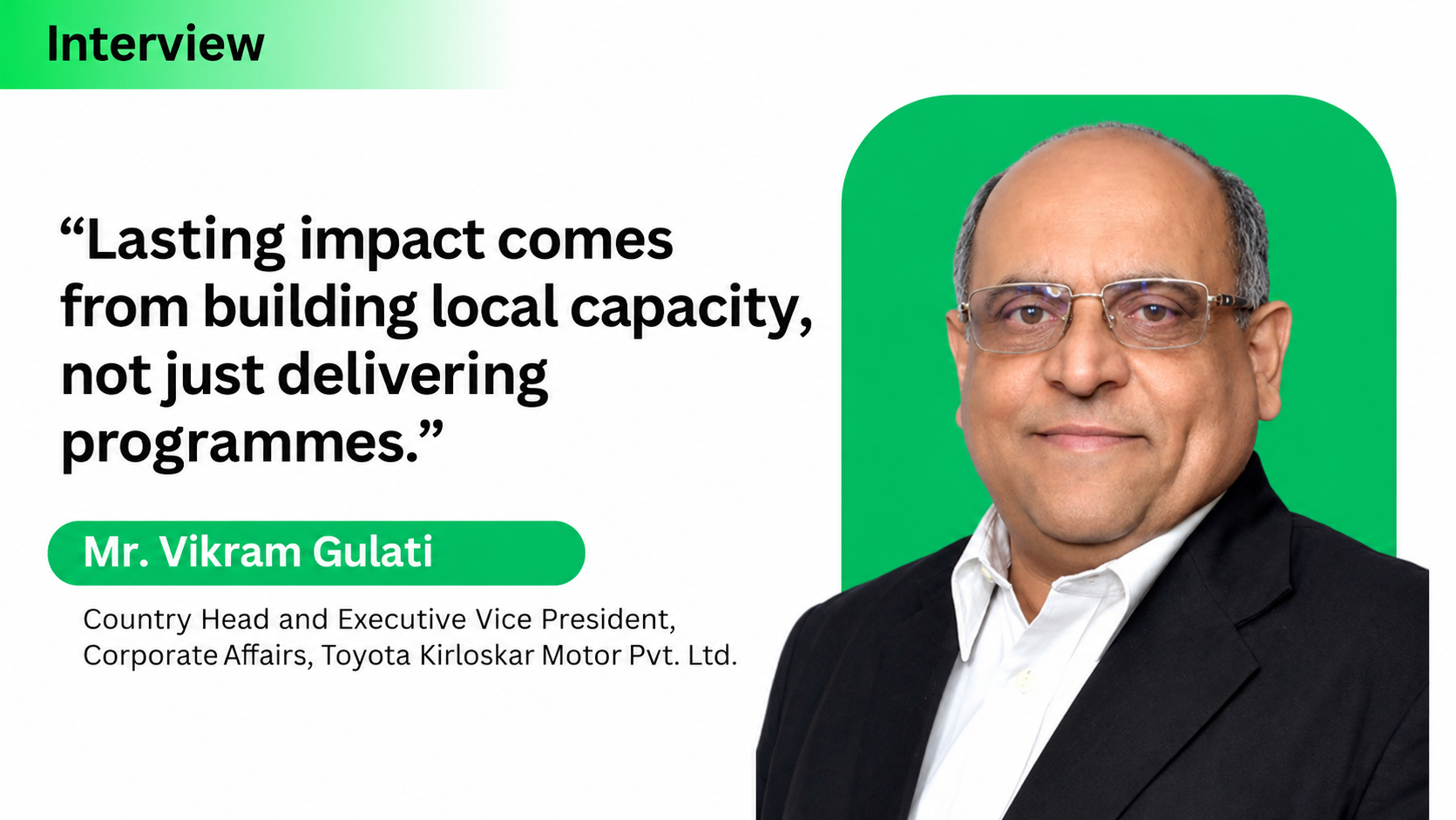
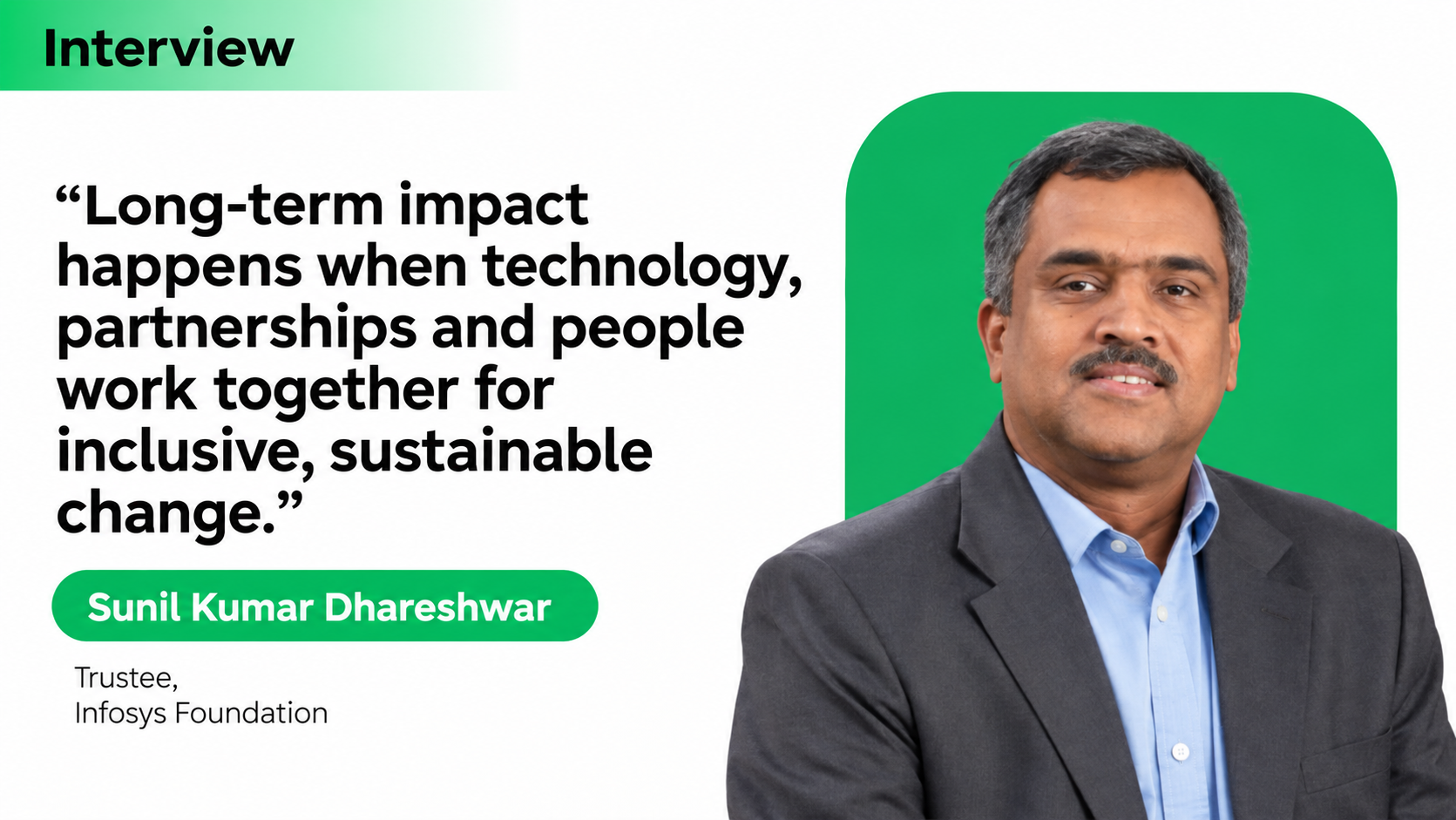
In this interview, Sunil Kumar Dhareshwar, Trustee, Infosys Foundation, discusses how the Foundation approaches long-term impact, assesses outcomes beyond beneficiary numbers, and navigates the challenges of scaling interventions while keeping them relevant to the communities they serve.
Scroll down to read the full interview:
Q. How does Infosys Foundation connect its work across healthcare, education, livelihoods, women's empowerment and environmental sustainability to create long-term social impact?
A. Infosys Foundation doesn't treat these as separate priorities but as interconnected challenges. Education only matters if it eventually leads to a livelihood. A woman earning her own income improves her family's well-being. Clean water and a cleaner environment reduce illness. Good healthcare access is a basic human right that many still lack. Help one area, and it strengthens the others as well.
Q. How does the Foundation decide which social challenges require long-term intervention, and what makes you stay with a program beyond the initial project cycle?
A. Infosys Foundation prioritizes challenges that uplift multiple aspects of a person's life at once. At a time when sustainable livelihoods are critical for the nation, we help bridge the gap between potential and opportunity through long-term skilling investments. Similarly, our cornea care commitment builds a nationwide ecosystem for eye donation, retrieval, and transplantation to reduce avoidable blindness, which is proof of the kind of work that makes us stay with a program.
Q. With more than 7 million beneficiaries reported in 2025-26, how do you assess whether scale is translating into meaningful and lasting impact on the ground?
A. A large number alone doesn't create a real impact. For every program, we track actual outcomes and conduct regular impact assessments. We speak directly with the people it has helped, hear how the program changed their lives, and ask what's still missing. For example, empowering thousands of individuals with job offers is a testament to the meaningful impact of our efforts in creating sustainable livelihood opportunities.
Q. When does a successful social intervention become ready to scale, and what are the biggest challenges in taking a solution that works in one community or geography to many others?
A. Creating a solution begins with understanding the nuances of a challenge. When it truly addresses all the intricacies, it becomes scalable. Our AI-led preventive eye care platform, SightConnect, launched with LVPEI, and our skilling programs show how a model can expand across geographies while maintaining quality and outcomes. The real challenge lies in not overlooking local needs and infrastructure, since what works in one community often needs to be adapted elsewhere.
Q. What does the responsible use of technology in social development look like to you? Where can technology genuinely improve outcomes, and where is the human and community connection still irreplaceable?
A. Technology helps make care accessible even in remote areas. For instance, people in remote villages no longer need to travel to an eye hospital, as SightConnect empowers a regular health worker to screen patients using a phone. At the same time, ensuring that a new mother receives the tools and support essential to navigate postpartum health, continues to require human intervention. Technology helps improve the quality of care by sharing the load with healthcare professionals.
Q. Infosys has a large employee base, and volunteering is also part of the Foundation's work. How can employee volunteering move beyond short-term participation to contribute meaningfully to the communities and programs being supported?
A. The shift happens when a volunteering group takes long-term ownership, not when it just shows up once. Arpan, Chandigarh DC's CSR group, runs Paathshala, addressing foundational literacy gaps across 110 government schools through regular classes and teacher training over several years. Bangalore DC's Samarpan team spent a summer supporting fodder distribution for farmers in Pavagada, while eVidyaloka volunteers mentor students in rural areas in AI and digital skills, balancing long-term commitment with critical short-term interventions.
Q. How can CSR programmes address environmental and social challenges together, rather than treating them as separate priorities?
A. The most effective CSR interventions address challenges holistically rather than breaking them into separate priority areas. At Vittal High School in Karnataka, Infosys Foundation and Prerana Trust, the CSR group of Mangaluru DC, installed a 25 KW rooftop solar plant that reduced electricity costs by more than 95%, with the savings redirected toward fee waivers and scholarships for students. This addressed both environmental and educational challenges.
Q. What has the Foundation's healthcare work taught you about making interventions sustainable beyond the initial service or programme?
A. A single health camp rarely creates lasting change. Interventions become sustainable when frontline workers, who are already embedded in and trusted by a community, are trained to build awareness, access, and capacity over time. Under our EMPOWER program, Sangath trains ASHAs and Anganwadi workers to screen for maternal depression during routine visits and refer high-risk cases through tele-mental health pathways. Our cornea care work builds similar capacity for early diagnosis, extending care well beyond the initial intervention.
Q. What distinguishes a partnership that creates lasting impact from one that simply brings multiple organizations to the same project?
A. Collaborating with the right partners who can contribute meaningfully and accelerate impact on the ground is the objective, not the number of partners involved. Infosys Foundation's Springboard Livelihood Program works with over 15 partners responsible for training students, with a focus on women, PwDs, and transgender persons across regions, to help us achieve our 2030 goal of creating 500,000 jobs.
Q. Where do you see the biggest gaps in India's social development landscape today, and what role can corporate philanthropy and CSR play in addressing them at scale?
A. Each region has its own set of challenges. There is no single solution that addresses them all. This makes identifying, mapping, and customizing solutions for diverse challenges imperative. Technology is a great leveler and can help bridge these gaps. Corporates can leverage Tech for Good initiatives to extend the impact of their programs.