
The Association of People with Disability: Reframing Disability Representation Through AS i AM
Disability inclusion extends beyond access to healthcare, education and employment. It also depends on how people with disabilities are perceived, represented and included in everyday social and cultural life. Visual narratives, in particular, have a powerful influence on public attitudes, yet mainstream imagery continues to frame disability through stereotypes of vulnerability, exceptional achievement or inspiration.
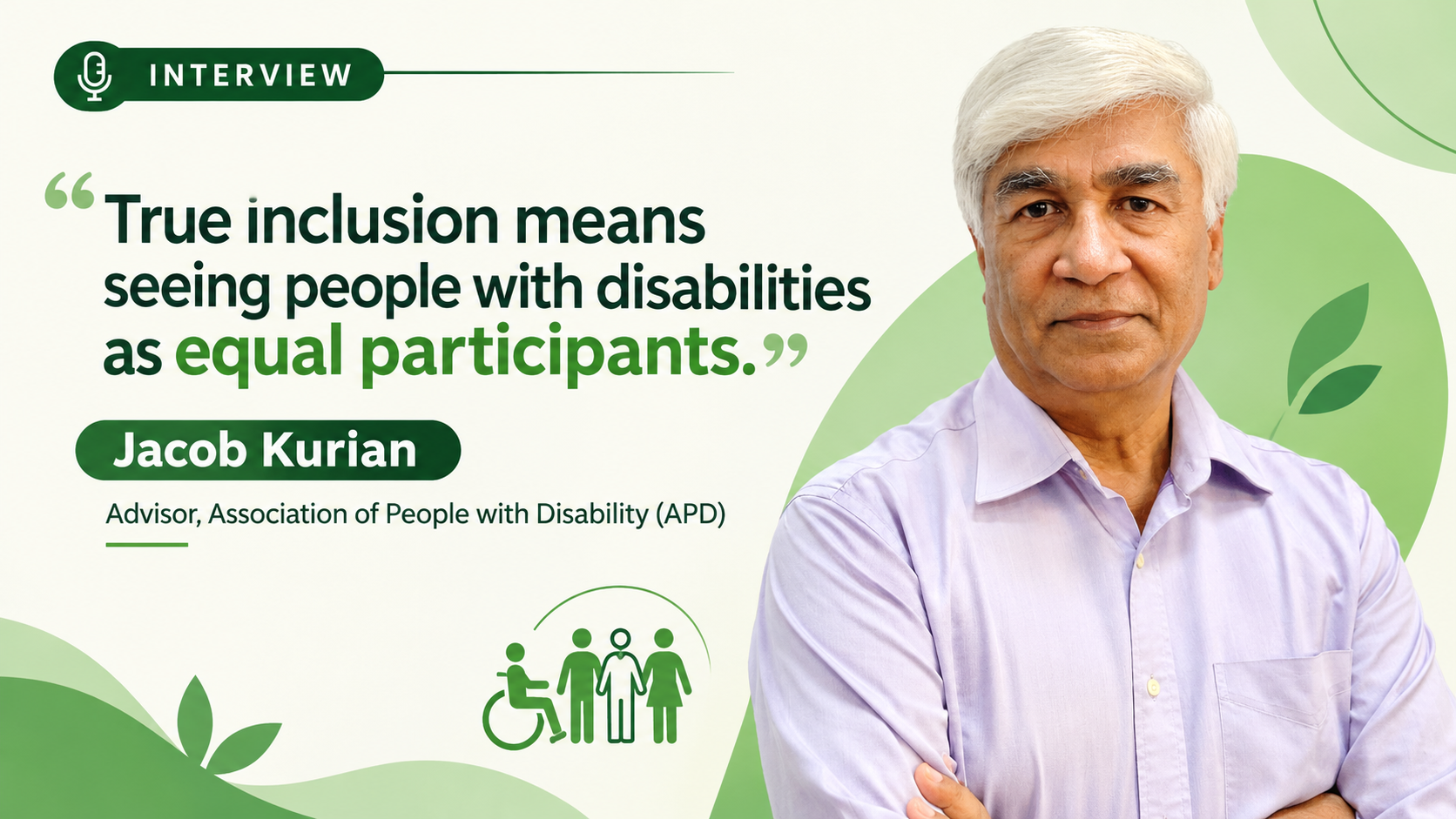
Challenging these conventions requires more than visibility. It calls for representation rooted in dignity, agency and the freedom to define one's own identity. Through AS i AM, the Association of People with Disability (APD) is using photography and visual storytelling to reshape how disability is seen, while creating pathways for inclusive creative expression and economic opportunity for photographers. Discussing the initiative and the broader responsibility of CSR, philanthropy and the creative industry in advancing disability inclusion, Jacob Kurian, Advisor at APD, reflects on the need to move beyond welfare-led interventions towards a culture where people with disabilities are recognised as equal participants in society.
Scroll down to read the full interview:
Q. How does APD view the role of CSR and philanthropy in moving disability inclusion beyond service delivery towards changing the social attitudes, systems and narratives that shape everyday experiences of people with disabilities?
A. Traditional philanthropy and CSR have historically focused on direct service delivery – funding wheelchairs, prosthetics, special schools, or vocational centers. While these interventions are essential for basic survival and mobility, they address only one side of the equation. You can provide a person with a disability with high-quality vocational training, but if societal mindsets, workplace cultures, and public infrastructure remain exclusionary, that individual is still denied true participation.
Our 3 E framework – Equip, Enable and Empower – has been a part of our advocacy on behalf of the disabled. CSR support is now focused on the Equip and Enable parts. However, true inclusion only comes with Empowering the disabled to be able to be understood, respected and not defined just by their disabilities.
At the Association of People with Disability, we view the evolving role of CSR and philanthropy as a shift from welfare to equity. Corporate and philanthropic funding must actively target the systemic and cultural barriers that perpetuate exclusion. Changing public attitudes, dismantling visual stereotypes, and influencing media narratives are just as critical as building accessible buildings. When philanthropy invests in narrative change – like the "AS i AM" movement – it addresses the root cause of stigma. It enables us to move from asking "How do we help people with disabilities?" to asking "How do we fix an exclusionary society so people with disabilities can thrive as equal citizens?"
Q. After more than six decades of working across healthcare, education, employment and advocacy, what has APD learned about the difference between creating opportunities for people with disabilities and enabling genuine agency, visibility and participation?
A. Over the last 67 years, APD’s journey has taught us that providing an opportunity can sometimes remain a passive, top-down act if it doesn't transfer power to the individual. Creating an opportunity might mean opening a door or offering a job; enabling genuine agency means ensuring the person has the self-determination, confidence, and social standing to walk through that door on their own terms, speak for themselves, and shape their environment.
Visibility without agency often degenerates into tokenism or "inspiration porn" – where a person with a disability is showcased merely to make an institution look progressive or to evoke pity. Genuine participation occurs when individuals with disabilities are seen not as passive beneficiaries of charity, but as active protagonists, decision-makers, consumers, and leaders in their own lives. True inclusion requires creating space for people with disabilities to define their own identities, express their full humanity – their joys, struggles, ambitions, and ordinary routines – and participate in society without needing to constantly justify their presence.
Q. Disability representation in mainstream visual culture has often been shaped by pity, exceptionalism, or inspiration. In your view, what responsibilities do brands, media organisations and the wider creative industry have in ensuring that people with disabilities are represented with dignity, complexity and authenticity?
A. Mainstream media, advertising, and the creative arts hold the pen that writes a society's visual vocabulary. When brands and media outlets consistently frame disability through the binary of "tragedy" or "superhuman triumph," they train the public to view millions of citizens through a deeply skewed lens. This isn't just an aesthetic flaw; it directly impacts hiring policies, public infrastructure investment, and daily social interactions.
The creative industry has a fundamental responsibility to reflect the true diversity of the human experience. First, brands must move beyond tokenistic casting and stop treating disability as an exotic topic reserved for annual CSR campaigns or awareness days. Persons with disabilities should feature in everyday consumer advertising – buying groceries, driving cars, using tech, leading corporate meetings, or enjoying family vacations – without their disability being the central plot or tragic backstory. Second, agencies and media houses must embed ethical, dignity-first guidelines into their production workflows, ensuring that subjects are depicted eye-to-eye, with full agency, respect, and collaborative consent.
Q. What prompted APD to use photography and videography as an instrument for social change through AS i AM, and why do you believe transforming visual representation is an important part of advancing disability inclusion?
A. Visual imagery operates at a visceral, subconscious level. Long before a person reads a policy document or attends a diversity workshop, their attitudes toward disability have already been shaped by thousands of images seen on billboards, television screens, print ads, and social media feeds. If those images consistently portray disability as grey, forlorn, or superhuman, no amount of legal advocacy can fully erase the underlying social bias.
We launched "AS i AM" through photography and videography because visual storytelling is one of the fastest, most potent instruments for cultural disruption. A single authentic photograph can dismantle decades of learned bias by capturing what words often fail to convey: the raw, unscripted reality of everyday life. By turning cameras across India toward moments of disabled joy, workplace hustle, romance, and ambition, we aren't just staging a creative competition – we are systematically re-engineering India's visual memory.
Q. AS i AM seeks to document the ordinary, joyful and diverse realities of people with disabilities rather than reducing their lives to narratives of struggle. How important is it for APD that people with disabilities themselves have agency over how their stories are conceived, captured and represented?
A. It is paramount. The disability rights movement has long operated under the guiding principle: "Nothing About Us Without Us." Historically, non-disabled storytellers have held the camera, framed the shot, and written the caption, often projecting their own anxieties, assumptions, or pity onto the subject.
In "AS i AM," establishing agency is at the core of our dignity-first guidelines. We require storytellers to spend time with their subjects, conduct contextual interviews, and build collaborative consent before pressing the shutter button. The subject must have the final say on how they are depicted. Furthermore, the campaign actively encourages and equips creators with disabilities to take up the camera themselves. When an individual has complete ownership over how their story is told, the narrative shifts instantly from passive objectification to active self-representation.
Q. The initiative will create a permanent visual repository and global stock image library with royalties in perpetuity. How do you see this model contributing to both long-term representation and economic opportunity for visual storytellers, particularly photographers with disabilities?
A. Advocacy campaigns often face a "drop-off" challenge once the award ceremony ends. We deliberately designed "AS i AM" to avoid being a one-time event by embedding a sustainable commercial infrastructure into its DNA.
When brand marketers or art directors want to include disability in their campaigns today, they encounter a genuine barrier: authentic stock imagery of Indian context simply doesn't exist. By building a curated, commercial-grade repository with major stock platform partners, we solve this supply-chain problem permanently. Brands can license authentic, dignity-first imagery for mainstream use year-round. Crucially, by routing commercial royalties directly back to the creators – including photographers with disabilities – we turn an advocacy effort into an ongoing engine of economic opportunity and professional dignity.
Q. The campaign has attracted support from Tanishq and the Azim Premji Foundation, alongside a jury drawn from the worlds of cinema, advertising, public policy and disability advocacy. What does this cross-sector collaboration tell you about the evolving role of philanthropy and corporate support in addressing representation and inclusion?
A. This cross-sector alignment signals a major maturation in how India approaches social impact. Having a corporate leader like Tanishq as our lead sponsor, strategic backing from the Azim Premji Foundation, and a jury featuring cultural icons like R. Balki, Santosh Sivan, Josy Paul, and Manasi Joshi proves that disability inclusion is no longer viewed as a peripheral charity project.
It demonstrates that corporate India and mainstream creative leaders now recognize representation as a core brand, cultural, and societal imperative. When a brand like Tanishq backs a movement about authentic identity, it validates that inclusion is central to contemporary Indian culture. Philanthropy provides the patient capital for foundational infrastructure, corporate sponsors provide market reach and validation, and creative leaders lend artistic credibility. This multi-stakeholder ecosystem is precisely what is required to drive large-scale, irreversible social change.
Q. With a ₹10 lakh prize pool, mentorship, public exhibition, media visibility and formal certification, AS i AM offers support beyond a conventional competition. What outcomes would convince APD that the initiative has succeeded in creating a sustained community of disability-sensitive visual storytellers rather than simply generating a one-time body of content?
A. We will measure success not just by the volume of entries on October 31st, but by what happens in the months and years following the campaign.
We will know we have built a sustained community when:
1. Ongoing Adoption: Art directors, creative agencies, and editorial publications regularly license assets from the "AS i AM" repository for mainstream commercial campaigns throughout the year.
2. Alumni Network: The cohort of participating photographers continues to document and pitch inclusive visual stories independently, acting as ambassadors for ethical representation in their respective regions.
3. A Shift in the Public Perception of Disability: India gradually moves into a more evolved understanding of disability, beyond the pity-inspiration binary.
Q. Given the scale of disability in India and the persistent under-representation of people with disabilities in mainstream imagery, what measurable change does APD hope AS i AM will contribute to over the next three to five years? Could you share any targets around participation, content creation, reach or adoption by brands and media?
A. Over a 3- to 5-year horizon, APD aims for "AS i AM" to become the definitive national benchmark for inclusive visual culture in India. Our key target outcomes include:
• Content & Asset Creation: Building a repository of over thousands of high-resolution, ethically audited photo sets and micro-videos capturing diverse realities across Tier-1, Tier-2, and rural India.
• National Reach: Achieving over 5 million+ public impressions annually through digital media and public exhibitions.
• Brand & Industry Adoption: Replacing default, generic stock photos with authentic visuals from our repository in corporate reports, marketing campaigns, news coverages, and digital platforms.
• Economic Impact: Generating consistent quarterly royalty payouts for participating visual creators, establishing a proven commercial model for socially conscious photography.
Q. Looking beyond AS i AM, what would a genuinely disability-inclusive visual culture in India look like to APD, and what role should CSR, philanthropy, media and the private sector play in making disability representation a mainstream practice rather than an occasional campaign?
A. A genuinely disability-inclusive visual culture is one where the presence of a person with a disability in a movie, an advertisement, a news story, or a public billboard is completely unremarkable. It is a culture where disability does not require a special tragedy, a hero’s journey, or an awareness month to justify its visibility on screen. It is when accessibility and human diversity are woven naturally into the fabric of everyday visual life.
To make this a mainstream practice rather than an occasional campaign:
• CSR & Philanthropy must commit long-term funding to narrative change, infrastructure, and advocacy, recognizing that cultural attitudes dictate the success of all other social investments.
• The Private Sector & Corporate India must mandate accessibility and authentic representation across their marketing, procurement, and HR workflows – making diversity a non-negotiable metric for their creative agency partners.
• Media & Advertising Agencies must move from tokenism to intentionality, actively casting disabled talent and hiring disabled creators behind the camera.
When inclusion shifts from a seasonal "CSR initiative" to standard, day-to-day creative and commercial practice, that is when we will have truly succeeded.