
Metropolis Foundation: Why Adolescent Agency Must Be at the Heart of Sustainable Social Change
For adolescent girls growing up amid social stigma, economic insecurity and entrenched gender inequalities, access to health information is only the beginning. The ability to make informed decisions also depends on whether they can speak without fear, continue their education, seek support and exercise agency over their futures. Addressing these interconnected barriers requires CSR interventions that move beyond service delivery to strengthen community networks, build confidence and create pathways to sustained change.
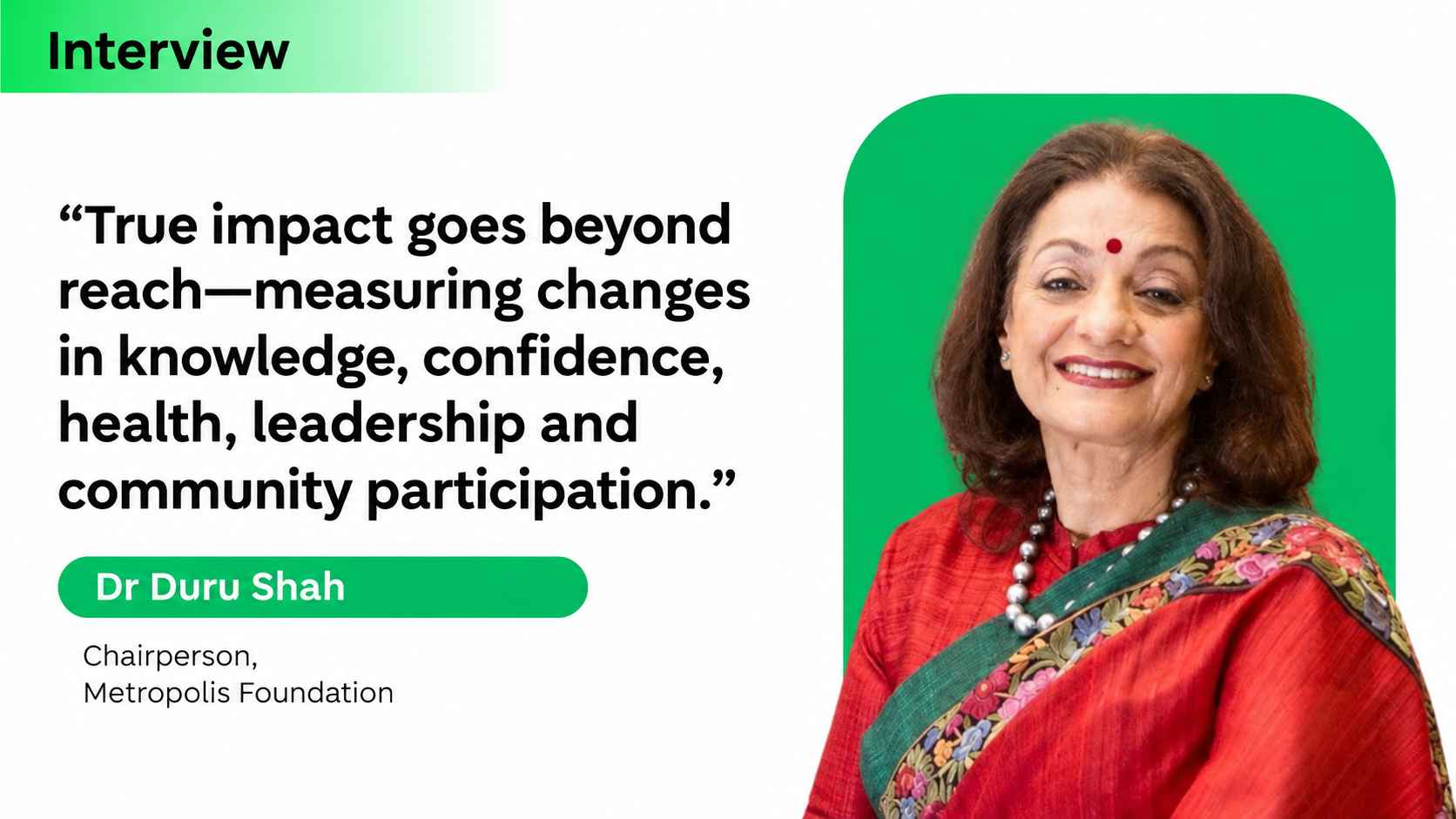
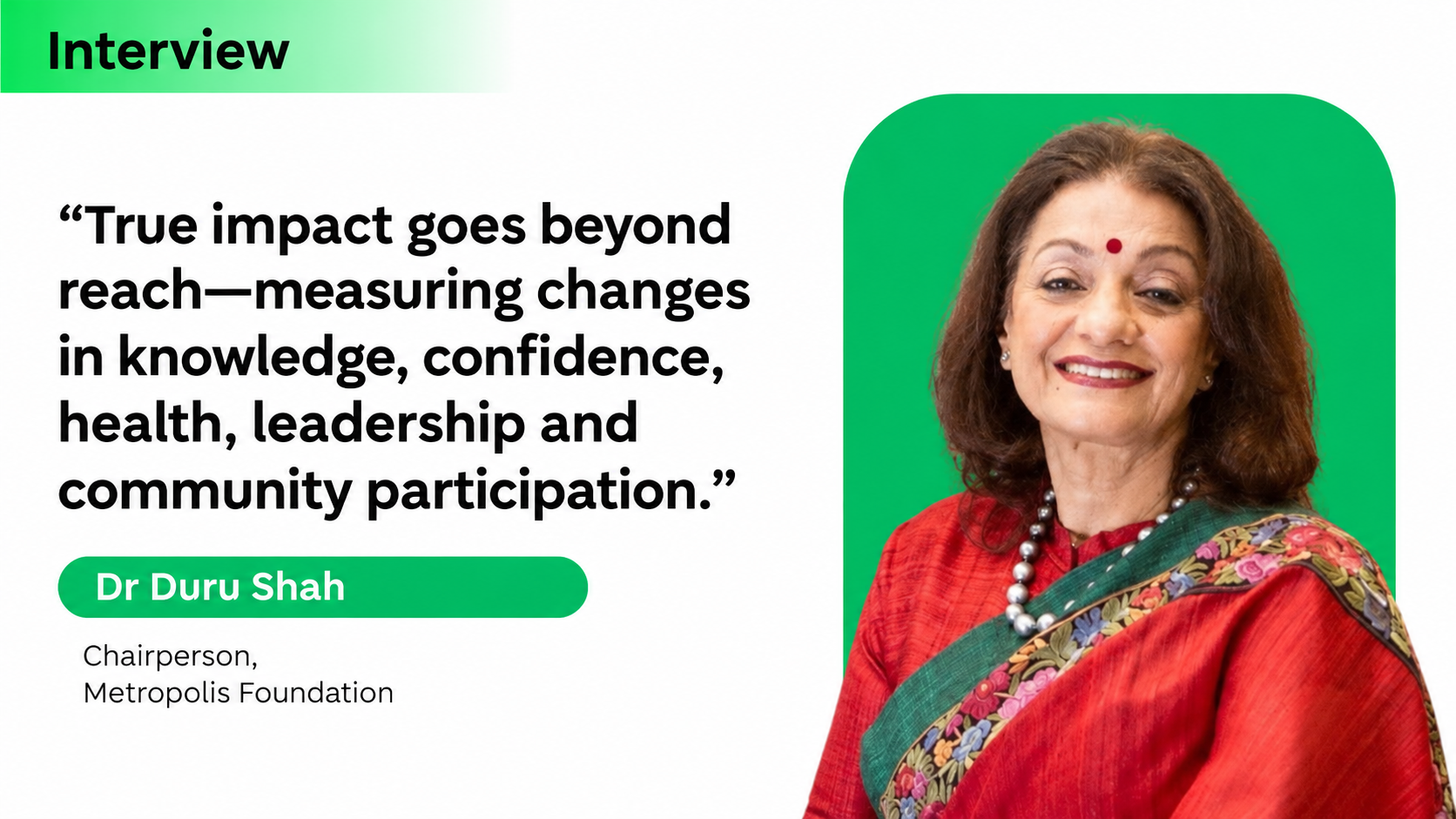
Metropolis Foundation’s Adolescent Reproductive and Sexual Health (ARSH) programme adopts this approach by placing adolescent leadership and community participation at the centre of its work. Through its Kishori Manch model and Project Hausla, implemented with grassroots partner Aastha Parivaar, the Foundation seeks to connect health education with life skills, family engagement, social protection and access to essential services. Dr Duru Shah, Chairperson of Metropolis Foundation, discusses how community led interventions can strengthen adolescent agency, address structural vulnerabilities and redefine responsible scaling in CSR through lasting, measurable social impact.
Scroll down to read the full interview:
Q. How is Metropolis Foundation evolving its CSR approach from addressing immediate social needs to building long-term agency and resilience among vulnerable communities, particularly across health, education and gender equality?
A. When we began working with adolescents, our focus was naturally on addressing immediate gaps, whether that meant access to menstrual health products, an unanswered health question, or connecting a girl to the right service. Those needs remain important. But over time, our experience taught us that sustainable change requires something more: confidence, peer support, and an environment where young people feel able to speak, ask questions, and make informed decisions.
That learning has shaped how we approach CSR today. Our Adolescent Reproductive and Sexual Health (ARSH) programme is built around Kishori Manch, where small groups of adolescents learn together, discuss issues affecting them, and develop solutions within their communities. Health education is complemented by life skills, counselling, and referrals, while parents, teachers, Panchayats, and frontline health workers are brought into the wider support ecosystem.
During FY2025–26, ARSH reached more than 1.3 lakh adolescents through 6,300+ Kishori Manch groups across urban, rural, and tribal communities in Maharashtra. But for us, scale is only one measure of success. The deeper measure is whether adolescents become more confident, better equipped to seek support, and increasingly able to participate in shaping solutions around them.
That is what we believe resilience means: building capabilities, confidence, and support systems that can continue to create value beyond the formal programme intervention.
Q. Adolescent health is often approached primarily through awareness and access to services. What, in your view, is missing from this approach, and how has your experience through ARSH, including programmes such as Hausla, shaped your understanding of what meaningful adolescent health intervention should look like?
A. Awareness and access to services are important, but they do not always translate into action. What is often missing is the confidence to ask questions, the safety to speak openly, trusted support and a clear pathway to care. Our experience has reinforced that knowledge becomes meaningful when it is accompanied by agency and support.
This understanding shaped Too Shy To Ask (TSTA), our award-winning digital health platform that gives adolescents a confidential space to ask questions they may otherwise hesitate to discuss. The platform provides science-backed information and an anonymous ‘Ask the Expert’ feature, with content supported by leading medical and health experts. Available in English and four regional Indian languages, TSTA makes credible information more accessible while helping reduce the fear or embarrassment that can sometimes prevent young people from seeking support.
But digital access alone is not enough. Through our Adolescent Reproductive and Sexual Health (ARSH) programme, we complement digital access with on-ground engagement, combining health education with life skills, counselling, peer support and referrals. TSTA creates a safe space to ask; ARSH helps build the confidence and support to act.
Our experience through Project Hausla, implemented in partnership with NGO Aastha Parivaar in Malvani, a locality in Malad, Mumbai, has further reinforced the importance of looking beyond health alone. In a high-vulnerability setting, adolescent well-being is also shaped by education continuity, family and community support, protection and access to social protection.
For me, meaningful adolescent health intervention is therefore not simply about providing information or services. It is about helping young people understand their health, ask questions without fear, make informed decisions, seek support when needed and build the confidence to shape healthier lives and communities.
Q. ARSH brings together health education, life skills, leadership and community engagement. What was the thinking behind addressing these dimensions together, and what have you learned about the relationship between health awareness and a young girl's ability to make informed life choices?
A. Adolescence doesn't come in separate compartments. A girl's health is closely connected to whether she stays in school, how her family supports her, whom she trusts and what she hopes for. If we teach reproductive health in isolation, we risk missing many of the factors that shape her choices.
That is why ARSH brings together health education, life skills such as problem solving, critical thinking and managing stress and emotions, along with leadership and community engagement. Through Kishori Manch, girls are encouraged to apply these skills to issues they see around them and develop their own action plans.
We have learned that information becomes meaningful when a girl has the confidence and support to act on it. For example, Kishori manch girls in Malvani, Mumbai, identified the need for better access to menstrual hygiene products and took the lead in establishing community pad banks. This created a practical solution while also opening up conversations around menstrual health and hygiene.
Project Hausla also demonstrates how health, education and agency are interconnected. In FY2025–26, 76% of girls reported that they did not stop going to school during their menstrual period, while 80% of parents reported allowing their daughters to continue their education.
Q. In communities where stigma, economic vulnerability and social conditioning can influence adolescent girls' choices, how does a CSR intervention create a safe environment in which girls can speak openly about reproductive health, sexuality, aspirations and future opportunities?
A. Trust comes first, and it cannot be rushed. Girls are more likely to speak openly about periods, relationships or what is happening at home when they feel heard and respected. Creating that trust is therefore the starting point.
Kishori Manch groups are deliberately small, with around 10 to 15 girls, and are facilitated through local partner organisations. As girls gain confidence, they take on greater responsibility as Girl Champions, leading discussions and community action. This allows them to learn from one another, ask questions and respond to issues that affect their lives.
But the support cannot stop with the girls. Families and community institutions also influence whether they can act on what they learn. Our Project Hausla therefore uses Mother Daughter Meetings to engage families around domestic relationships, reproductive health and collective problem solving. In FY2025–26, these meetings engaged more than 150 community members.
Inclusion is another important part of the approach. Project Hausla has also undertaken activities for adolescents with disabilities. Zainab (name changed), an 18-year-old visually impaired adolescent, has emerged as a Kishori Manch leader, advocating for more inclusive ARSH and leading sessions on life skills, menstrual hygiene and reproductive health.
For us, the real measure of a safe environment is whether a girl feels able to speak, participate and act on what she knows.
Q. The Kishori Manch model places adolescents themselves at the centre of the intervention. What does this community-led approach reveal about the limitations of externally driven CSR programmes, and how can philanthropy ensure that beneficiaries become participants in creating change?
A. Honestly, communities often understand their challenges better than anyone coming from outside. An organisation can bring resources, technical expertise and structure, but lasting change is more likely when solutions are shaped by the people, they are intended to serve.
This is also how we approach our partnerships at Metropolis Foundation. We work closely with our NGO partners beyond providing financial support, investing in their capabilities through workshops, knowledge-sharing forums, technical support and regular engagement. Stronger implementation partners are then better equipped to facilitate meaningful participation and local leadership.
Kishori Manch reflects this approach at the community level. Adolescents identify issues that affect them and develop their own Community Action Plans, while girls who demonstrate leadership are trained as Girl Champions to mobilise and support their peers. In FY2025–26, ARSH developed more than 2,900 Girl Champions, and adolescents developed more than 14,540 Community Action Plans addressing issues such as child marriage, school dropout, anaemia and menstrual health. In some communities, these efforts have also extended to local institutions, including contributions to Panchayat resolutions addressing child marriage.
For me, that is the real shift from designing solutions for communities to creating the conditions for them to shape and lead those solutions. Philanthropy has an important role to play in providing the resources, capabilities and partnerships that enable this, while ensuring that ownership ultimately rests with the community.
Q. What have you learned from community-level champions, including Hausla Dost, about building trust in communities that conventional institutional outreach may struggle to reach? How do you identify and equip community members to sustain the intervention beyond the formal programme?
A. Trust often travels through people. In communities where families may be hesitant to engage with outsiders, someone who is already known and trusted can open doors that conventional institutional outreach may not.
That is why we look for people who already have the trust of their communities and are willing to support others. We then strengthen their ability to contribute through knowledge, skills and networks. In the Hausla project implemented with Aastha Parivaar in Malvani, Malad, 138 key influencers were engaged during FY2025–26.
This approach comes to life through community-led roles such as Girl Champions and Hausla Dost. Girl Champions emerge from Kishori Manch as peer leaders and are supported to engage other girls, lead activities and identify issues that need attention. In FY2025–26, 750 Girl Champions were engaged in Malvani.
Hausla Dost, a community support group mentored by mothers, provides another layer of support by helping girls and families connect with appropriate services when needed. The programme also works closely with local stakeholders and health and protection systems. For example, in one case, Hausla Dost accompanied a girl experiencing violence at home to the Malvani Health Care Centre, followed by engagement with the police and other support organisations.
For us, sustainability is not only about how long a programme is funded. It is about whether people within the community have the confidence, capabilities and connections to continue supporting change beyond the formal programme structure.
Q. Moving girls away from entering or continuing in sex work involves addressing circumstances that extend well beyond health. How does project Hausla engage with families, social protection systems and other community institutions to address these underlying vulnerabilities rather than focusing only on the individual girl?
A. Vulnerability around sex work is rarely shaped by one factor. It can involve financial hardship, family circumstances, interrupted education, social conditioning and limited access to alternative opportunities. Supporting a girl to make a different choice therefore also requires addressing the circumstances around her.
Project Hausla takes an ecosystem approach. Alongside life skills and counselling, the programme works with families through Mother-Daughter Meetings, while Hausla Dost provides an additional layer of community support through mothers. The programme also helps families access social protection schemes such as Sukanya Samriddhi Yojana, e-Shram, Ayushman cards and disability pensions. In FY2025–26, it supported scholarships for 12 students, facilitated hostel admission for two girls in Satara and helped a girl with a disability return to formal schooling. Vocational skills were also provided to girls who had dropped out of school and to mothers seeking alternative livelihood pathways.
When a girl faces immediate risk, the response can extend to the local health system, police, shelter homes and partner organisations. For example, in one case documented by Aastha Parivar, a girl experiencing violence at home was supported by a Hausla Dost to access healthcare, followed by engagement with the police and another NGO for continued support.
The cumulative Hausla reporting records 1,008 girls supported to move away from sex work, along with 180 connections to government and social protection schemes and 2202 health referrals.
For us, the important lesson is that sustainable change cannot rest on the individual girl alone. It requires families, community networks and public systems to become part of the support around her.
Q. Project Hausla has demonstrated the importance of sustained engagement and community support. How does the Foundation measure whether these outcomes translate into sustained improvements in health, education, safety and agency over time?
A. Reach tells us how many girls we met. It says much less about whether anything changed in their lives, so we measure impact at several levels.
At the individual level, pre and post assessments look at knowledge and life skills such as self-awareness, communication, decision making, problem solving and coping with stress and emotions. We also track confidence, agency and health seeking behaviour. Counselling and referral records help us understand whether adolescents are moving from awareness to accessing appropriate support. Across ARSH, more than 8,120 girls received counselling and over 2,925referrals were supported in FY2025–26.
We also look at whether adolescents are moving from participation to leadership and community action. In the Hausla programme, 68% of girls were reported to have taken initiative as champions or peers and contributed to social change. The programme recorded 435 adolescent action plans, of which 185 were implemented.
At the community level, we look at indicators such as continued education, parental support, access to social protection, engagement with local institutions and health seeking behaviour. In Hausla, for example, 80% of parents reported allowing their daughters to continue education, while 76% of girls reported that they did not stop attending school during menstruation.
Quantitative measures are complemented by partner observations and case studies, which help us understand changes that numbers alone may not capture. Ultimately, we are looking beyond reach to ask whether adolescents are becoming more confident, better able to seek support, more involved in decisions affecting them and better connected to the systems around them.
Q. What has the Metropolis Foundation's collaboration with Aastha Parivaar, as one of its grassroots implementation partners under ARSH, taught you about the respective strengths of corporate philanthropy and grassroots organisations when addressing deeply embedded social challenges? Are there aspects of this partnership model that you believe are essential for replication?
A. Each partner brings something the other would struggle to build. Aastha Parivaar was established in 2009 by and for members of the sex worker community and has deep roots in the communities it serves. Its outreach workers, peer educators and community leaders bring trust, lived experience and an understanding of local realities that an external institution cannot easily replicate.
Our role is complementary. We bring the programme framework, funding, reproductive and sexual health expertise, technical and capacity-building support, and monitoring and measurement capabilities. We also provide a common structure across ARSH, while giving implementation partners the flexibility to adapt it to their local context.
Project Hausla is a good example of how this partnership works. The core ARSH elements include Kishori Manch, life skills, Girl Champions, counselling, referrals and community action. In Malvani, Aastha Parivaar has built on this foundation through Mother-Daughter Meetings, inclusive ARSH activities for girls facing different vulnerabilities, community support through Hausla Dost and other locally relevant interventions.
Today, ARSH works with several NGO partners, including Manthan Foundation, SHARP, Aastha Parivaar, Child Help Foundation and BharatCares, across diverse urban, rural and tribal communities in Maharashtra. Each brings its own understanding of the communities it serves, while the Foundation provides a consistent programme architecture and support system.
If there is one lesson for replication, it is to keep the core principles clear, partner with organisations that have genuine community roots, invest in their capabilities and give them enough flexibility to adapt the model to local realities. That balance between consistency and local ownership is what makes a partnership sustainable.
Q. Looking beyond Hausla, how is Metropolis Foundation using insights from its work with adolescents and vulnerable communities to shape the next generation of its CSR strategy? What would responsible scaling look like when the objective is not simply to reach more beneficiaries, but to create deeper and more sustainable social impact?
A. Project Hausla has taught us that meaningful change requires depth, continuity and trust, and that scaling a programme is not simply about increasing the number of people reached. That lesson is shaping the next phase of ARSH.
Our priority is to strengthen the Kishori Manch model, deepen adolescent leadership and build stronger partnerships across the communities where we work. We also want closer convergence with government systems, schools, Panchayats and frontline health services, so that the support around adolescents becomes stronger and more sustainable. Our digital platform Too Shy To Ask complements this field engagement by providing confidential, age-appropriate health information beyond physical programme settings.
To me, responsible scaling means keeping the core of the model consistent while giving partners the freedom to adapt it to local realities. What works in tribal communities in Nandurbar, Maharashtra will naturally look different from what works in an urban settlement in Mumbai. Our ARSH model is designed around that principle, with common programme elements and local implementation expertise.
It also means being honest about what the numbers tell us. Reach matters, but so do changes in knowledge, confidence, health seeking behaviour, adolescent leadership and community participation. That is why our monitoring looks beyond participation numbers to outcomes and qualitative evidence.
Ultimately, responsible scaling for us is about building capability and ownership, not simply increasing reach. If adolescents are better equipped to make informed decisions, support their peers and participate in shaping solutions in their communities, then the programme is creating the kind of impact that can last.