
Beyond Sight, Towards Opportunity: How Birlasoft Is Making Education More Inclusive
Every child deserves the opportunity to learn, grow, and dream without limits. But for visually impaired students, access to education often goes beyond classrooms and textbooks. Accessible learning materials, assistive technology, digital skills, and the right guidance can make a meaningful difference in helping them build confidence and independence.
Through its Braille Digital Library in Hyderabad and Swar & Shiksha – Talent Beyond Sight initiative in Delhi, Birlasoft is working to make education more inclusive and accessible for visually impaired learners.
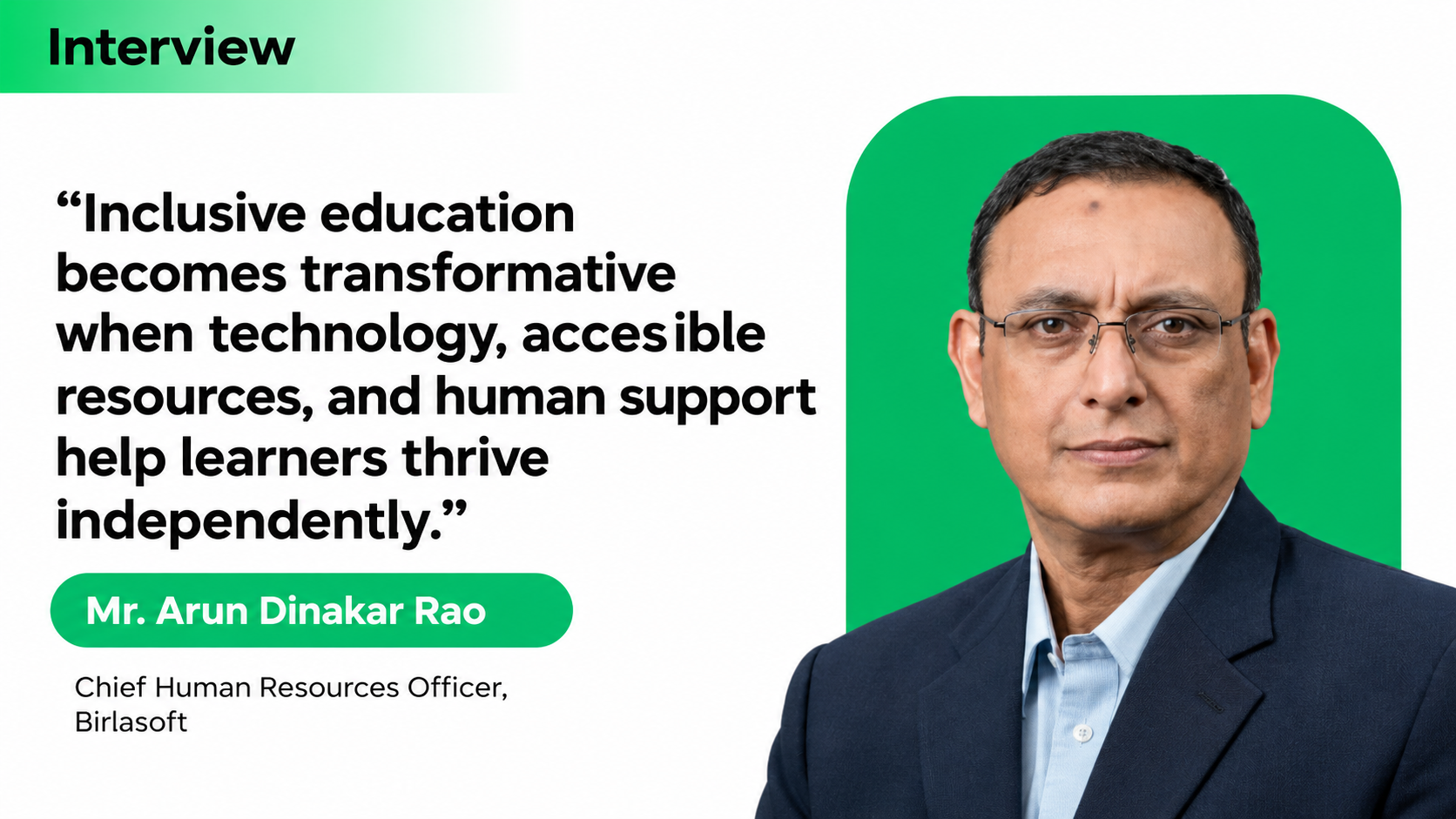
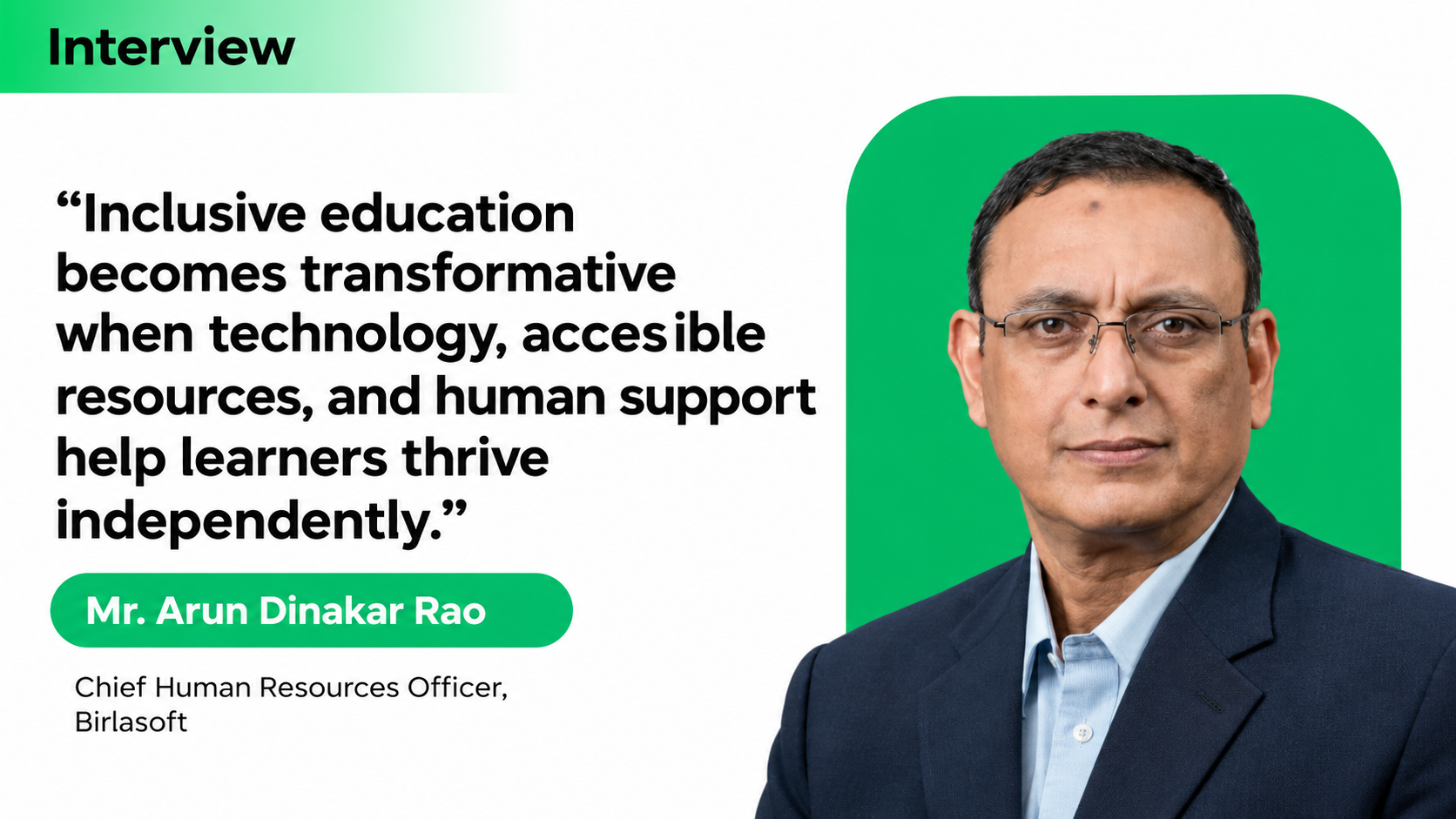
In this exclusive interview with Arun Dinakar Rao, Chief Human Resources Officer, Birlasoft, we explore the vision behind these initiatives and how technology is helping students overcome barriers to learning. He shares how Braille and audio resources, digital literacy, career guidance, classical music training, and employee volunteering are coming together to support students’ overall development.
The conversation also highlights the importance of community partnerships, the lessons learned in building inclusive learning spaces, and Birlasoft’s plans to expand these efforts. It offers insights into how combining technology, mentorship, and accessible education can open new pathways for independence, skills, and future employment.
Scroll down to read more about:
Q. What was the vision behind launching the Braille Digital Library and the 'Swar & Shiksha – Talent Beyond Sight' initiative? Which key gaps in accessible education were you aiming to address?
A. Our vision was guided by a simple, deeply held conviction: learning must be accessible, inclusive, and empowering for every individual. We recognized the everyday barriers visually impaired students navigate - limited access to Braille books, high costs of assistive resources, and a severe lack of digital infrastructure. Through the Braille Digital Library in Hyderabad and the Swar & Shiksha initiative in Delhi, we set out to create warm, welcoming spaces that combine assistive technology, accessible content, and real opportunities for skill development.
At its heart, this effort was not just about improving access to education, it was about nurturing confidence, independence, creativity, and pathways to long-term personal and professional growth.
Q. With Braille literacy remaining low in India, what challenges did you identify while designing these initiatives, and how did you approach them?
A. One of the key challenges was the limited availability of accessible resources and the lack of integrated spaces where visually impaired students could truly feel supported with both educational and digital tools. We also felt strongly that learning has to go beyond textbooks to encompass practical, digital, and life skills.
Our approach was to build a nurturing, holistic ecosystem by combining Braille resources, audio content, assistive technologies, upgraded digital infrastructure, and volunteer-led learning sessions. By partnering with experienced implementation organisations who share our commitment, we were able to design initiatives that respond directly to individual needs while supporting independent learning and long-term inclusion.
Q. How is technology helping visually impaired students improve their learning and access to education through these initiatives?
A. Technology is acting as a bridge; turning long-standing barriers into new opportunities for flexible, inclusive, and independent learning. Through the Braille Digital Library, students can access Braille books, printed scripts, audio-based learning content, and specialised assistive technologies all under one roof.
At Akhil Bhartiya Netrahin Sangh, upgraded computer labs, digital libraries, and laptops are helping learners build essential digital skills alongside their academic education. By combining technology with accessible content and caring, guided learning, we are enabling these promising young minds to strengthen literacy, grow their digital confidence, and prepare with hope for higher education and future employment opportunities.
Q. The initiative combines Braille and audio learning with digital literacy, career guidance, and music training. What was the thought process behind bringing these different elements together under one programme?
A. We wanted to move beyond a traditional education programme and create a journey that truly enriches the whole student. Education today is about much more than academic knowledge; it lives in digital skills, confidence, communication, creativity, and career readiness.
By integrating Braille and audio learning with digital literacy, mentoring, career guidance, and classical music training, we aimed to embrace every dimension of a student’s potential. This integrated approach helps students strengthen foundational learning while giving wings to their self-expression, employability, and independence — ensuring they can navigate life with confidence and pride.
Q. How have Birlasoft employees contributed to the initiative through mentoring and digital literacy sessions?
A. Birlasoft volunteers engaged actively with students through digital literacy and career guidance sessions, helping them navigate opportunities in the IT industry, government support schemes, recruitment pathways, communication skills, and personality development.
These human connections beautifully complemented the infrastructure investments by providing practical knowledge, mentorship, and genuine encouragement. To us, employee volunteering reflects our deep belief that meaningful social impact comes not only through technology and infrastructure, but through sharing our time, empathy, and experiences to lift others up.
Q. Could you share a story or experience from the programme that best reflects the difference it has made in the lives of visually impaired students?
A. What stood out most was interacting with students who, despite limited access to learning resources, displayed extraordinary determination and talent. During one of the engagement sessions, several students shared how access to digital learning tools and assistive technology had enabled them to learn more independently and explore opportunities beyond their traditional curriculum. Their enthusiasm to pursue higher education and build careers demonstrated how the programme was not just providing infrastructure, but also fostering confidence, self-reliance, and hope for the future.
For us, the most meaningful outcome was seeing students move from dependence to empowerment, with improved access to knowledge, skill development, and opportunities that can help them lead more independent and fulfilling lives.
Q. Collaboration often plays an important role in scaling social initiatives. How have your partnerships with implementation organisations and other stakeholders helped strengthen and expand these efforts?
A. While our vision and commitment drive these initiatives forward, strong partnerships have played a vital role in amplifying their reach. We collaborated closely with organisations that have deep experience working with the visually impaired, enabling us to listen closely to local needs and design interventions that are meaningful, relevant, and sustainable.
Through partnerships with institutions such as the VH Women Hostel in Hyderabad and Akhil Bhartiya Netrahin Sangh in Delhi, we have been able to strengthen learning infrastructure, improve access to assistive technologies, and create vibrant opportunities for digital literacy, music education, and mentorship. Combining our technology capabilities with the compassion and ground-level expertise of implementation partners has helped create far greater and more heartfelt impact.
Q. Based on your experience so far, what are the key lessons from these initiatives that could help make accessible education more inclusive and scalable across the country?
A. One of our biggest learnings is that accessibility is about so much more than providing learning materials—it requires building an entire ecosystem of care and opportunity. Technology, assistive infrastructure, accessible content, skill development, community partnerships, and mentorship must all come together seamlessly.
Another vital lesson is that true solutions must be shaped around the lived experiences of learners and delivered in close harmony with organisations that understand the community best. Finally, the human touch of employee volunteering can transform infrastructure investments into life-changing encouragement and mentorship.
Q. What are the next priorities for these initiatives, and how do you plan to expand their reach and impact in the coming years?
A. Our priority is to continue nurturing and expanding these inclusive learning ecosystems where technology, accessibility, and skill development meet. We aim to build on the foundations created through the Braille Digital Library and the Swar & Shiksha initiative by reaching even more learners with accessible resources, digital opportunities, and warm, employee-led mentorship.
We will continue working closely with implementation partners to deepen our root connection within the community and ensure our interventions remain relevant and sustainable. Our ultimate hope is to create inclusive pathways that empower visually impaired individuals to pursue education, develop employable skills, and realize their dreams with confidence.