Why Education Must Lead Social Transformation

Education fulfils its true purpose when it empowers people to transform not only their own lives but also the communities around them. As India works towards more inclusive and sustainable development, educational institutions have a vital role in shaping socially conscious leaders and enabling meaningful change beyond classrooms. Recently honoured with the Women Power Impact Creator of the Year Award 2026, Mrs Vishakha Bhujbal, Senior Management Representative at Mumbai Educational Trust (MET), shares why education must become a catalyst for social transformation. Drawing from her work in women's empowerment, rural development, and livelihood creation for indigenous Warli artists and traditional artisans, she discusses building self reliant communities, preserving cultural heritage through sustainable livelihoods, fostering partnerships between educational institutions and corporates, and the leadership values needed to create lasting social impact.
Read the full interview below.
Q&A
Q. First of all, congratulations on being honoured with the Women Power Impact Creator of the Year Award 2026. What does this recognition mean to you, and how has your journey shaped your belief in education as a catalyst for social change?
A. This award matters a lot to me, and I'm truly honoured to receive it. I see it as recognition for the hard work of everyone involved in our efforts to help communities grow through education and social programs. This award confirms what I already believe: education can make a difference and lead to real progress. Through my experiences, I believe that investing in education is the best thing we can do for society. When we focus on educating people with a clear goal in mind, we're helping to raise kind leaders, good citizens, and communities that can stand on their own. That's the idea that keeps pushing us forward in all our work.
Q. How do you view the role of educational institutions in driving social transformation and nation-building?
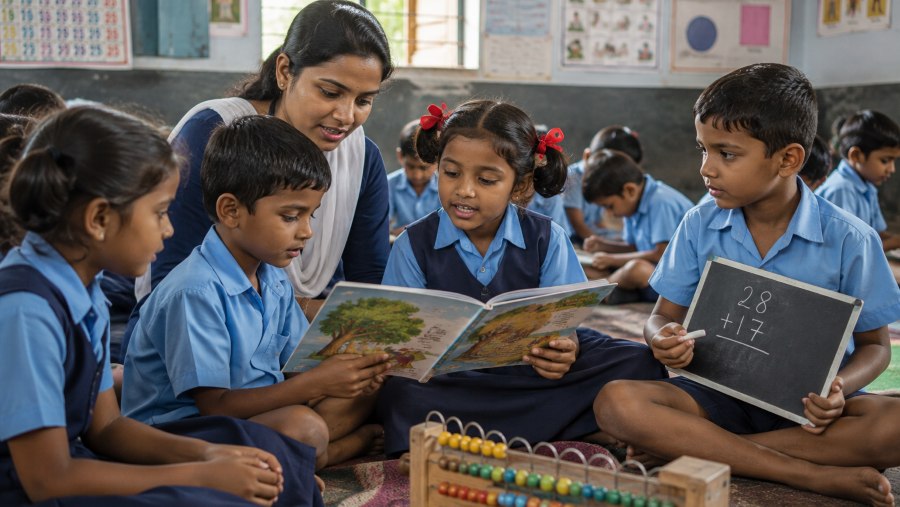
A. Educational institutions today have a responsibility that goes far beyond academic grades. They play an important role in raising students who are responsible citizens, good social leaders, and professionals who care about society and can make a positive difference. When schools integrate hands-on learning, get involved with the community, focus on sustainability and encourage new ideas, they help students build skills like critical thinking, empathy, and problem-solving. This also means students learn to tackle real-world problems. This all-around way of teaching turns education into a strong force for improving society and building up the country.
Q. How can institutions create opportunities for students to engage meaningfully with issues such as sustainability, community development, and social responsibility?
A. Educational institutions have a unique opportunity to transform learning into meaningful action by creating platforms where students actively engage with society. Through volunteering programmes, sustainability initiatives, rural outreach projects, social entrepreneurship, and partnerships with NGOs and local communities, students gain first-hand exposure to real-world challenges while developing empathy, leadership, and problem-solving skills.
Q. Through your work with rural communities, particularly women, what have you learned about the role of women's economic empowerment in advancing inclusive development?
A. My experience in rural communities has only strengthened my belief that families and communities as a whole benefit from women's empowerment. It is a timeless fact that empowering and educating women strengthens society as a whole. A woman becomes more self-assured, financially independent and capable of making more decisions when she has access to education, skills, and employment possibilities. There is more to women's economic empowerment than just their means of subsistence. It is about creating communities that are resilient, inclusive and sustainable.
Q. Based on your experience, what are the key ingredients for building self-reliant and resilient communities?
A. True social impact is created by empowering communities, not creating dependency. By investing in people's skills, knowledge, and leadership, we enable them to take ownership of their development and build resilient communities that continue to thrive long after an initiative has ended.
Q. Your efforts to support Warli artists and revive traditional crafts such as Paithani weaving have combined cultural preservation with livelihood creation. What lessons can development practitioners draw from such community-based models?
A. Development in a community works best when it builds on the strength of the people while respecting their identity. Supporting traditional artisans has made me realise that preserving heritage can also create economic opportunities. When communities are empowered to sustain their skills and livelihoods, the impact is both meaningful and long-lasting.
Q. How can educational institutions, corporates, civil society organisations, and local communities work together to create greater and more sustainable impact?
A. No single organisation has all the answers to today's social challenges. Meaningful and sustainable impact comes from bringing together the strengths of educational institutions, corporates, civil society organisations, and local communities. When collaboration is guided by trust, shared purpose, and long-term commitment, it creates solutions that truly transform lives.
Q. Where do you see the greatest opportunities for partnerships between the corporate sector and educational institutions?
A. The strongest partnerships are those driven by a common purpose rather than short-term goals. When corporations and educational institutions come together to invest in education, innovation, sustainability, and community development, they create lasting value not only for students but also for society as a whole.
Q. What leadership principles have guided your journey, and what advice would you offer to emerging leaders seeking to create meaningful change?
A. True leadership is about empowering others to grow and creating opportunities that enable lasting change. It is built on integrity, empathy, and a willingness to keep learning. To future leaders, I would say, lead with purpose, stay grounded in your values, and always strive to create an impact that extends beyond individual success. The most meaningful legacy is one that uplifts communities and transforms lives.
Q. As India works towards more inclusive and sustainable development, what shifts do you believe are most needed across institutions, communities, and leadership to create meaningful and lasting impact?
A. India's future will depend on how effectively we connect education with inclusion, innovation with empathy, and economic growth with social responsibility. Institutions, businesses, governments, and communities all have a role to play, but lasting change begins when we place people at the centre of every decision. If we can build partnerships rooted in trust, purpose, and shared responsibility, we will create not just stronger institutions but a more resilient and inclusive nation.


.png)