Achieving Foundational Literacy and Numeracy at Scale: What Will It Take to Meet India's NIPUN Bharat Goals?

India has made measurable progress in advancing Foundational Literacy and Numeracy (FLN) since the launch of the NIPUN Bharat Mission. Yet, with the 2026–27 target approaching, the challenge is no longer about expanding access to schooling but ensuring every child acquires the foundational skills needed to learn, thrive and succeed. Education leaders argue that achieving this goal will require stronger public systems, empowered teachers, evidence-based pedagogy, meaningful partnerships and a shared commitment to placing learning outcomes at the centre of every intervention.
For decades, India's education journey has largely been defined by one overriding objective: getting every child into school. That goal has seen remarkable progress, with access to education improving significantly across the country. Yet, as the National Education Policy (NEP) 2020 rightly acknowledges, being in a classroom does not necessarily translate into learning.
Today, the national conversation has shifted. The focus is no longer on enrolment alone, but on whether children are acquiring the foundational literacy and numeracy skills that determine their ability to learn throughout school and beyond. This shift has placed the NIPUN Bharat Mission, launched in 2021 with the goal of ensuring every child achieves Foundational Literacy and Numeracy (FLN) by the end of Grade 3, at the heart of India's education reforms.
The urgency is evident. According to the Annual Status of Education Report (ASER) 2024, only about one in four children in Class III in rural India can read a Class II-level text, while only around one-third can perform basic subtraction. Although learning outcomes are showing signs of recovery following the pandemic, these figures underscore that India still has considerable ground to cover before universal FLN becomes a reality.
For education practitioners working across government systems, civil society and philanthropy, however, the discussion is no longer centred on identifying the problem. The evidence on what works is steadily growing. The larger question now is how those proven approaches can be embedded within public education systems so they reach every classroom, every teacher and every child.
That challenge, moving from successful interventions to systemic transformation, emerges as the defining theme among experts working at the forefront of foundational learning. The conversation is changing, and so is the challenge
There is broad agreement that the launch of NIPUN Bharat has fundamentally altered the way India approaches early learning.
 Smitin Brid, Head – Early Years (Direct Programs), Pratham Education Foundation, says one of the mission's biggest achievements is that it has shifted the country's focus from children attending school to children actually learning. States are increasingly developing dedicated FLN missions, teachers are becoming more familiar with competency-based learning, assessments are improving, and collaboration between governments, civil society organisations and CSR partners is growing stronger.
Yet, he cautions against judging the mission solely against a timeline. India takes decades to move from limited access to near-universal schooling, he notes. Expecting universal foundational literacy and numeracy to be achieved within just a few years risks overlooking the scale and complexity of the country's education system. Sustainable reform, he argues, requires patience, persistence and continuous learning rather than expectations of immediate transformation.
Nixon Joseph, Group Executive Director, DEVI Sansthan, echoes that optimism while reminding stakeholders that the challenge remains immense. He says the National Education Policy places foundational literacy at the centre of India's education reforms because every subsequent stage of learning depends on children first acquiring the ability to read with understanding and perform basic numeracy. India's learning poverty remains high, particularly following the disruption caused by COVID-19, but recent improvements reflected in ASER 2024 demonstrate what becomes possible when governments, civil society organisations and CSR partners work towards a common objective.
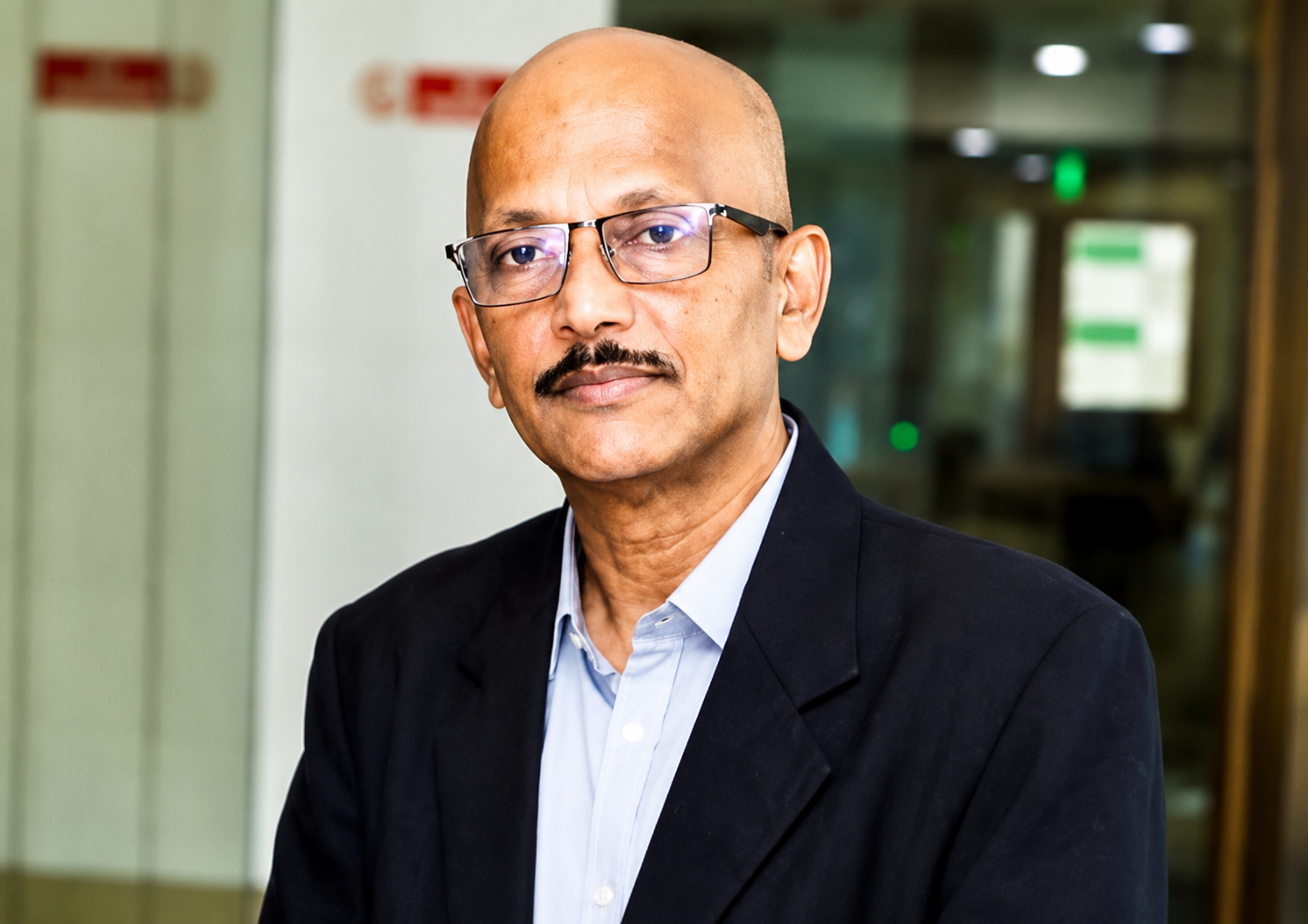 At the same time, Joseph points out that every academic year another cohort of children progresses through the education system without mastering foundational skills, making later learning progressively more difficult.
Drawing on DEVI Sansthan's experience with its ALfA pedagogy, which has been implemented in government schools, he argues that proven, evidence-based pedagogies can dramatically improve learning outcomes when combined with continuous teacher mentoring, regular assessments and strong institutional ownership.
Collectively, these perspectives point towards an important conclusion: India is no longer searching for solutions. It is searching for ways to deliver those solutions consistently across a system that serves millions of children every year.
Why promising pilots struggle to transform public systems
Perhaps the strongest consensus emerging from education leaders is that India does not suffer from a shortage of successful FLN interventions. The greater challenge lies in ensuring those successes are sustained beyond pilot projects.
Brid believes this requires fundamentally rethinking what "scale" actually means. He says, "Scale is not about expanding projects. Scale is about strengthening the system."
He explains that while pilot projects are designed to test whether an intervention works, scaling asks a far more demanding question: can the public education system adopt, own and sustain that intervention independently?
From Pratham's experience, five principles consistently distinguish programmes that successfully scale. The first is simplicity. Classroom practices must be practical enough to become part of teachers' daily routines rather than additional responsibilities.
The second is demonstration. Teachers and frontline workers need to see effective classroom practices being modelled in real learning environments instead of merely attending workshops.
The third is continuous mentoring. Professional development, Brid argues, cannot end with a training session. Classroom observations, peer learning, constructive feedback and ongoing encouragement are what ultimately translate policy into improved teaching practice.
The fourth is government ownership. While civil society organisations can innovate and demonstrate effective models, only government systems possess the reach necessary to serve every child.
Finally, programmes themselves must remain open to continuous learning and adaptation, evolving in response to classroom realities rather than remaining fixed after the pilot stage.
Joseph builds on this argument by reflecting on why many education pilots produce impressive results initially but struggle when expanded.
In his view, pilot projects often rely on exceptional teachers, specialised teams and intensive support structures. Public education systems, however, function under very different conditions.
For interventions to succeed across thousands of schools, pedagogy itself must become simpler. Teachers and anganwadi workers should be able to implement it confidently without requiring extraordinary expertise. Learning should also become enjoyable for children, replacing fear and rote memorisation with curiosity and confidence.
Equally important, Joseph argues, is ensuring that teachers experience visible success. When educators see children making measurable progress, they are more likely to embrace new approaches with confidence.
Continuous assessment also plays a central role. "You cannot improve what you do not measure," Joseph says, emphasising that regular assessments should help teachers identify children who are beginning to fall behind so timely support can be provided before learning gaps widen.
Finally, both experts converge on one principle that extends beyond pedagogy itself: government ownership.
Programmes designed to operate alongside public systems rarely survive beyond the duration of project funding. Sustainable impact depends on embedding successful approaches within existing institutional structures so that district officials, teacher mentors, school leaders and frontline educators collectively see them as part of their own mission rather than an external initiative.
That emphasis on ownership also reshapes the role of CSR and civil society. Rather than creating parallel delivery mechanisms, their greatest contribution may lie in helping governments strengthen the systems that already exist—demonstrating innovation, generating evidence and supporting implementation until those practices become institutionalised.
The discussion therefore moves beyond a simple question of whether FLN programmes work. Increasingly, it asks a more fundamental one: how can the entire education ecosystem create conditions where successful approaches continue delivering results long after individual projects come to an end?
Teachers remain central—but they cannot do it alone
If scaling effective pedagogies is one side of the equation, strengthening teachers is the other. Yet, the experts argue that teacher capacity building needs to be fundamentally reimagined.
 Sangita Dandapat, Head – Foundational Literacy and Numeracy, Kotak Education Foundation, believes teachers should not be viewed as passive recipients of training but as professionals who require continuous support throughout their journey. Traditional approaches that rely on one-off workshops rarely translate into sustained changes in classroom practice.
Instead, she advocates viewing teacher development as an ongoing process of professional learning, supported by mentoring, practical demonstrations and regular opportunities for reflection. Creating safe spaces where teachers can openly discuss classroom challenges and learn from one another, she says, is equally important.
Dandapat also draws attention to the increasingly complex realities teachers navigate every day. A single classroom may include children from different linguistic, cultural and socio-economic backgrounds, each entering school with varying levels of preparedness. For many young learners, particularly those from vulnerable communities, teachers become the first trusted adult outside the family.
"Teachers genuinely want children to learn," she says. "What they need is sustained support that recognises the realities of their classrooms."
Brid shares a similar perspective. He believes India already has robust education policies, quality teaching-learning materials and large-scale teacher training programmes. The gap, however, lies in implementation.
Professional development, he argues, cannot end once a workshop concludes. Classroom observations, mentoring, peer learning and constructive feedback are what ultimately help teachers adopt new pedagogical practices with confidence.
Importantly, he also broadens the conversation beyond schools. Foundational learning, he says, begins long before a child enters Grade 1. Early childhood development, school readiness and parental engagement all influence learning outcomes, yet these concepts often remain confined to technical discussions. Simplifying this language and helping families understand their own role in supporting children's learning should become an integral part of India's FLN strategy.
Building systems that outlast projects
While strengthening teachers is essential, lasting change depends equally on strengthening the education system around them.
Sunisha Ahuja, Director – Equity, Language and Learning Foundation, argues that India has made remarkable progress in expanding physical access to schools. The challenge now is ensuring that every child experiences quality learning once they enter the classroom.
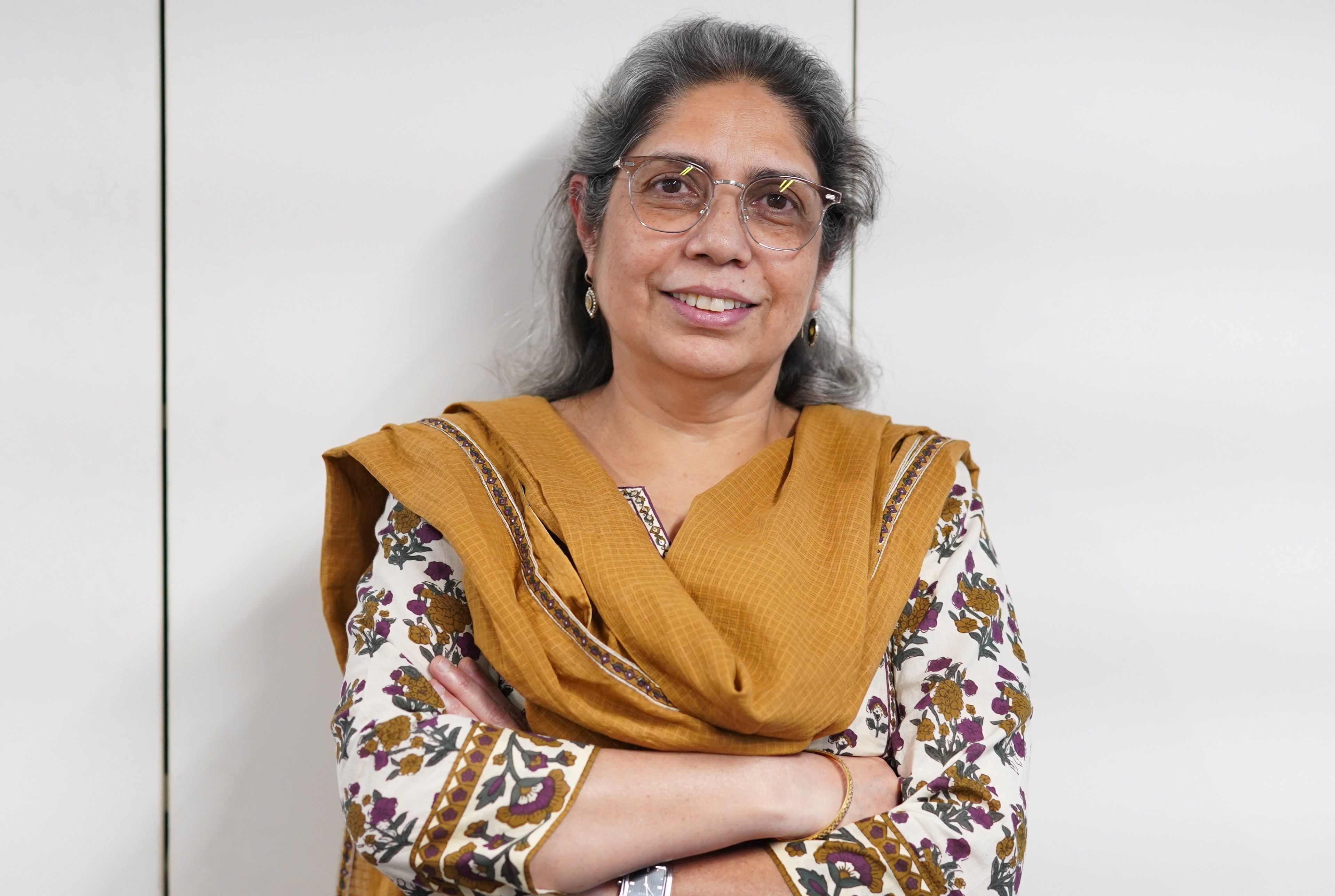 She identifies several barriers that continue to affect learning outcomes. Children often begin Grade 1 with vastly different levels of school readiness because of unequal access to quality preschool education. Although the National Education Policy encourages teaching in children's home languages, many teachers remain hesitant to adopt multilingual approaches despite growing evidence of their effectiveness.
Teaching-learning materials are widely available but are not always used meaningfully in classrooms. Similarly, assessments intended to help teachers understand children's learning needs increasingly become high-stakes reporting exercises, limiting their usefulness for improving instruction.
Rather than introducing standalone programmes, Ahuja argues that sustainable reform begins with collective ownership. "It takes an ecosystem to attain foundational skills for all children,” she adds.
She believes that every stakeholder,from state leadership and district officials to teachers, parents and communities, must work towards a shared vision. Equally important is the way programmes are designed. Instead of presenting governments with ready-made solutions, development organisations should co-create interventions alongside public systems, allowing ownership to emerge naturally throughout implementation.
She also cautions against creating parallel delivery structures that disappear once project funding ends. Existing government platforms, including District Institutes of Education and Training (DIETs), cluster meetings and academic support mechanisms, should become the primary channels for implementation.
Ahuja also introduces an important distinction between physical and human resource infrastructure. While school buildings and basic infrastructure have improved significantly over the years, shortages of academic mentors, coaches and resource persons continue to constrain implementation quality, particularly in single-teacher and multi-grade classrooms.
For her, strengthening these human support systems may prove just as important as investing in physical infrastructure.
From strengthening classrooms to strengthening systems
Although the discussion centres on early-grade learning, its implications extend far beyond primary education.
 Robin Sarkar, Director – Shiksha and Dadri Development Program, Shiv Nadar Foundation, points out that foundational learning gaps rarely disappear on their own. Drawing from the Foundation's experience with VidyaGyan Leadership Academy, he explains that academically talented students from rural backgrounds often require intensive bridging support before transitioning successfully into mainstream secondary education. Similar learning gaps frequently re-emerge at the university level, where educators once again find themselves providing additional academic support to students who missed foundational learning opportunities earlier in life.
His experience reinforces an important point: investments in FLN are not simply about improving primary education outcomes. They shape children's educational journeys for years to come.
Technology should amplify learning—not replace teachers
Artificial intelligence and digital technologies are transforming education globally, but the experts advocate a measured and purposeful approach to their adoption within FLN.
Sarkar believes technology can make a meaningful contribution when deployed to strengthen teachers rather than replace them.
Within Shiv Nadar Foundation's programmes, AI already supports data analysis, content development, reporting and providing timely feedback to teachers. However, it is deliberately not used to replace classroom instruction.
Teaching young children, he argues, depends fundamentally on human interaction, emotional connection and trust—qualities technology cannot replicate. "We should use technology like salt," he notes. Technology becomes valuable only when used in the right measure, he explains, and when supported by adequate infrastructure, connectivity and teacher preparedness.
Joseph agrees that technology should amplify effective pedagogy and teacher capacity rather than become an end in itself.
Brid offers another practical application. Artificial intelligence, he suggests, should increasingly reduce teachers' administrative workload, allowing them to spend more time supporting children's learning instead of completing paperwork and routine reporting.
Across the discussion, technology is therefore viewed not as a substitute for teachers but as an enabler that strengthens human capacity within the education system.
Towards a stronger NIPUN Bharat
As attention turns towards the next phase of India's foundational learning journey, the experts outline several priorities that could further strengthen NIPUN Bharat.
Ahuja advocates extending the mission beyond Grade 3 to Grade 5, arguing that foundational learning does not end once children complete the early grades. She also calls for a sharper focus on equity, noting that state-level averages often conceal significant disparities across districts, while girls' learning outcomes continue to decline as they move through higher grades.
Dandapat believes greater attention should be given to preparing teachers for increasingly diverse classrooms. Beyond literacy and numeracy, teachers today must respond effectively to linguistic, cultural, gender and inclusion-related diversity if every child is to experience meaningful learning.
Joseph emphasises the importance of combining evidence-based pedagogy with stronger teacher capacity and responsible use of technology to accelerate learning outcomes.
Brid, meanwhile, argues that the responsibility for achieving universal FLN cannot rest solely with teachers. Parents, families and communities all shape children's learning experiences, making their active participation essential for long-term success.
Sarkar also highlights the importance of children's first language in early learning, suggesting that stronger emphasis on mother tongue-based instruction could significantly improve comprehension during the foundational years.
From programmes to systems
As India moves closer to the NIPUN Bharat milestone, the conversation is becoming increasingly clear. The country is no longer searching for isolated success stories or innovative pilot projects. Across states, classrooms and organisations, there is growing evidence of what works.
The challenge now lies in translating that evidence into everyday classroom practice across the public education system.
The experts converge on a common message: achieving universal Foundational Literacy and Numeracy will require more than curriculum reforms, teacher training workshops or technology-enabled interventions in isolation. It will depend on simpler pedagogies, continuous professional support for teachers, stronger government ownership, evidence-informed implementation, meaningful community participation and systems that continue delivering results long after individual projects conclude.
Ultimately, meeting India's NIPUN Bharat goals is not simply about helping children read and count by Grade 3. It is about laying the foundation for every subsequent stage of learning and, in doing so, strengthening the country's future human capital.
The journey towards universal foundational literacy and numeracy, therefore, is not merely an education reform—it is an investment in India's long-term social and economic development. The question is no longer whether the country knows what works. The real test is whether those lessons can be embedded across the education system so that every teacher is supported, every classroom is equipped and every child, regardless of background, is given an equal opportunity to learn.




.JPG)