
"Technology Should Empower Every Farmer": Vishnu Dhas on Building an Inclusive Agri-Tech Ecosystem
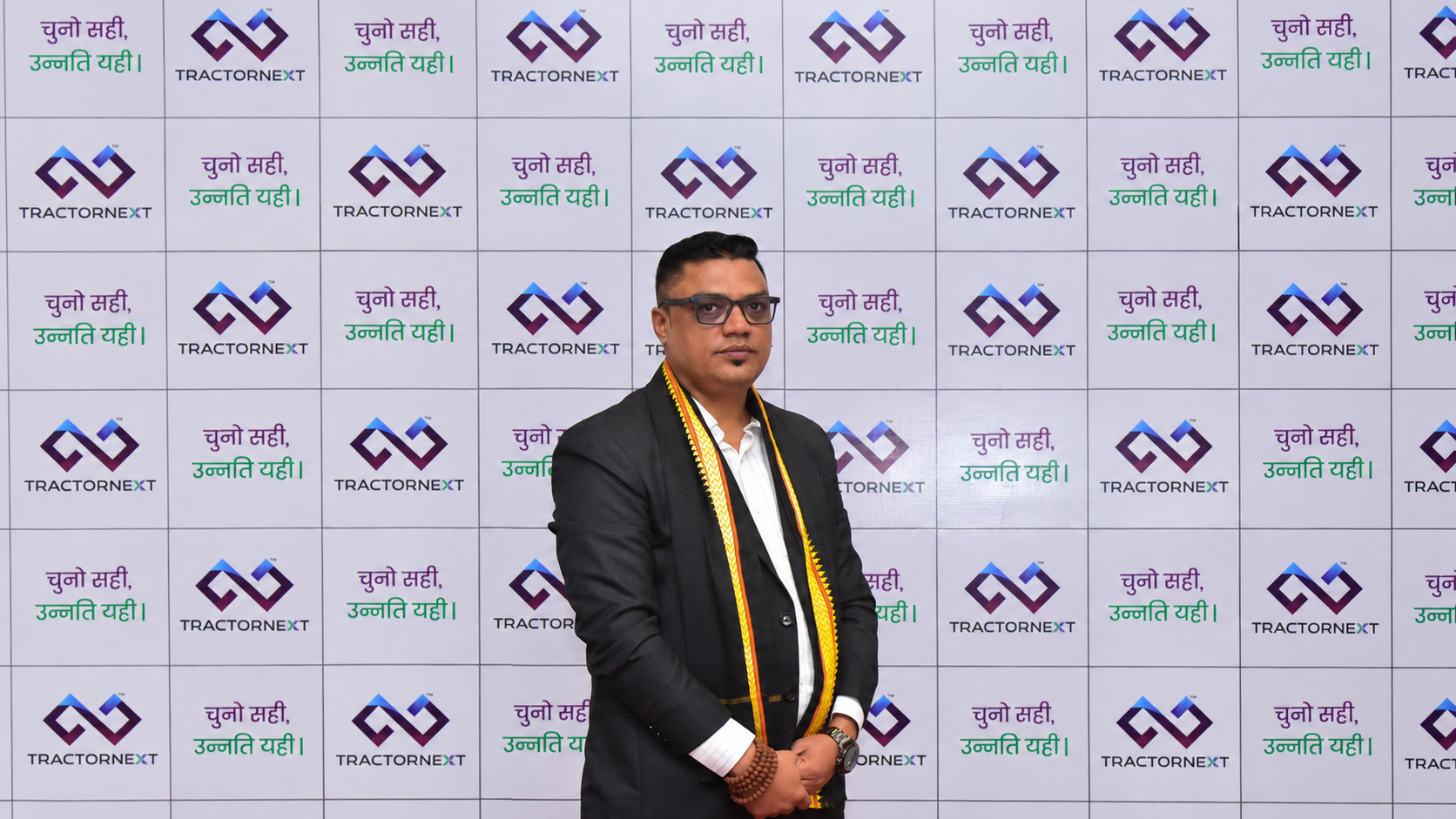
A farmer’s progress should not depend on how big their landholding is, how much they earn, or where they live. Access to the right technology and information can make all the difference. As agricultural mechanisation continues to evolve in India, digital platforms have an important role to play in helping small and marginal farmers make informed decisions, improve productivity and create new livelihood opportunities in rural areas.
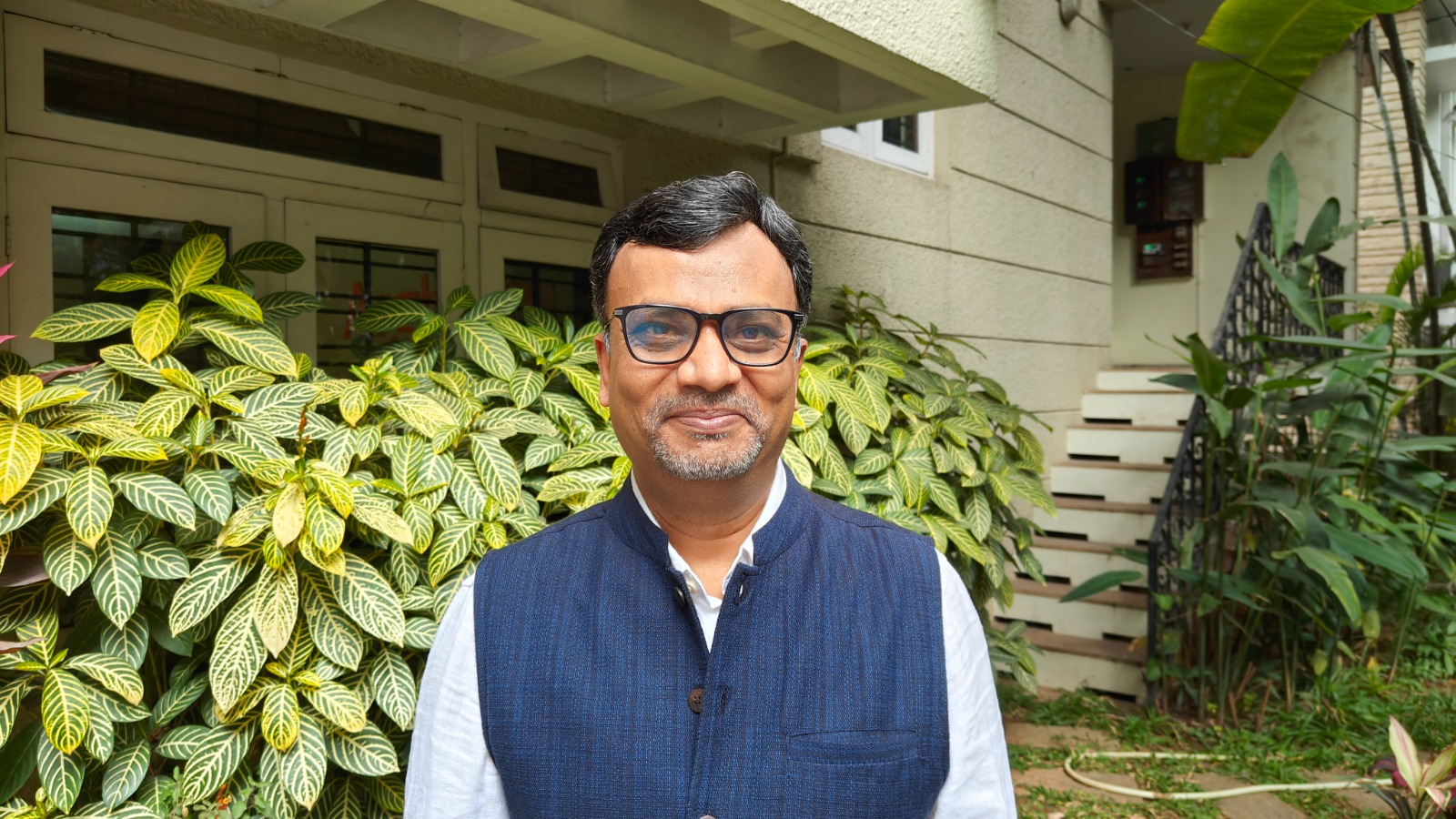
In this interview, Vishnu Dhas, Founder and CEO of TractorNext, shares his vision of making agricultural technology more accessible, affordable and useful for India's farming communities. He discusses how TractorNext is bridging the information gap between farmers, equipment manufacturers and dealers through a digital marketplace that brings multiple equipment categories onto one platform.
The conversation explores how technology can prevent uninformed machinery purchases, improve farmers' financial decision-making, promote custom hiring services and encourage rural entrepreneurship, particularly among young people and women. Dhas also highlights the role of agricultural drones and precision farming in promoting sustainable agriculture, along with opportunities for CSR partnerships to advance inclusive mechanisation. He shares his vision and measurable goals for making rural technology adoption more accessible and creating lasting livelihood opportunities.
Scroll down to read more:
- Q. Agricultural mechanisation is often discussed in terms of productivity and technological advancement, but its impact on rural livelihoods is equally significant. How do you believe businesses operating at the intersection of agriculture and technology can contribute to more inclusive rural development, beyond their immediate commercial objectives?
A. I am from Dhas Pimpal Gaon, Barshi taluka, Solapur district. I have been staying in Pune for the last 40 years, but I am still very well connected to my village and rural India. So when I talk about inclusive rural development, I am not talking about theory.
I have seen many times, a farmer buys wrong machinery because the dealer told him or his neighbour bought it. Then he gets stuck in EMI, and finally he has to sell the machinery at a loss. That is a total loss for his family.
I believe Agri-Tech businesses can contribute to inclusive development beyond their commercial objectives in three practical ways:
1. By giving right information, not just selling: A small farmer does not have access to experts. If we give him comparison tools and information about tractors, implements, Agri drones, bulldozers in his language, and help him choose after analysing his portfolio - his land, crop and budget - we save him from a wrong purchase. That information itself is development.
2. By keeping income in the village: Technology should create local work, not take it away. When a local dealer, mechanic or custom hiring centre gets visibility through a platform, his income grows. A young boy in the village can become a drone operator or service technician. That is how development spreads.
3. By building long-term trust: Inclusive development is not one-time sale. It is about making sure the farmer's EMI is manageable and the machine actually earns for him. If he succeeds, he will tell 10 other farmers in his village. That trust is more valuable than any advertisement.
For me, if a business helps a farmer buy the right technology and avoids one wrong EMI trap, that is real inclusive development. Commercial growth will follow automatically. In short, commercial success and rural inclusion are not separate. For Agri-Tech, inclusion is the business model. If we help a farmer make a more informed, profitable decision, the business will grow automatically.
Q. With access to technology increasingly shaping the economic prospects of farming communities, what role should private-sector platforms play in bridging the information asymmetry between equipment manufacturers, dealers and farmers, particularly those operating in underserved rural markets?
A. I have seen this gap across rural geographies in India. The manufacturer knows everything about the machine, the dealer knows everything about selling it, but the farmer who is investing his savings knows the least. In underserved markets, this gap is even bigger because there are fewer dealers to compare with and no one to verify the information. Private platforms should play the role of a neutral bridge here. First, by giving the farmer complete and honest information in his own language - comparison of tractors, implements, drones and bulldozers, not just one brand's promotion. Second, by helping him analyse his own portfolio - his land, crop and budget - before he buys. And third, by taking the farmer's real need back to the manufacturer, so that small OEMs also get a chance to reach villages where they have no dealer. If a platform does this honestly, the farmer will not buy a wrong machine and get stuck in EMI. That trust is the real role of a private platform.
Q. How can agricultural technology initiatives move beyond facilitating access to equipment and contribute to building a more financially resilient farming ecosystem? What responsibilities do you believe technology-led enterprises have in ensuring that mechanisation translates into tangible improvements in farmers’ livelihoods?
A. Buying a machine is easy, earning from it is difficult. A farmer buys a tractor, but if he does not get regular work for it, the EMI starts eating his income. In two years, he has to sell the machine at a loss. The technology did not fail, the ecosystem failed. Agri-tech should go beyond access in two ways. First, help the farmer buy only what he can earn from - by analysing his land, crop and budget before he buys. Second, help him earn after he buys - by connecting him to custom hiring work, maintenance, and local service jobs. The responsibility of a technology enterprise is simple. We should not sell a bigger machine for higher commission. We should tell the truth, even if it means a smaller sale. If the farmer's livelihood does not improve, our technology has no value. For me, a financially resilient farmer is one who sleeps peacefully after buying a machine, because he knows his EMI is covered by his earnings.
Q. Agricultural equipment often involves substantial capital investment, making the consequences of uninformed purchasing decisions particularly significant for small and marginal farmers. How can digital platforms contribute to improving financial literacy, technology awareness and decision-making capabilities among rural buyers?
A. A small farmer does not need a classroom for financial literacy. He needs the right number at the right time, in his own language. Most farmers I meet in do not ask "What is the price?" They ask "Mahinyala kiti bharava lagel?" That is his real question. A digital platform can answer that. Instead of only showing the price of a tractor or drone, it should show the full picture - EMI, diesel, maintenance, and expected monthly earning from custom hiring. When a farmer sees "EMI 18,000 ahe, pan kamai 25,000 hoil" he understands it immediately. He does not need financial terms, he needs clarity. Second, technology awareness should be in small videos and comparisons, not in big brochures. A 2-minute video in Marathi - "5 acre sathi ha tractor ka purese ahe, ha motha ka nako" - is more powerful than 10 pages of specifications. For me, improving decision-making is simple. Do not make the farmer depend on the dealer for information. Give him the numbers in his hand, so he can decide himself.
Q. TractorNext brings multiple agricultural and rural equipment categories onto a common discovery platform. How do you envision the platform contributing to the democratisation of agricultural technology, particularly for farmers and rural entrepreneurs who have traditionally had limited access to reliable product information and technical expertise?
A. Earlier, good technology was only for big farmers and big cities. A farmer in a small village did not even know that such a machine exists. A small manufacturer in a small town could not reach that farmer. Both were disconnected. TractorNext changes this by bringing tractors, implements, Agri drones and bulldozers onto one common discovery platform. That is democratisation for me. For a farmer, it means he can compare 10 options sitting at home, in his own language, without travelling to 5 different dealers. He gets the same information that a big farmer in Pune or Nashik gets. For a rural entrepreneur, it means opportunity. A young boy in Barshi who wants to start a drone spraying service or a custom hiring centre can now see what machines are available, what they cost, and what he can earn from them. He does not need a big contact in the city. The platform becomes his starting point. And for small manufacturers, it means they get a fair chance. Their product is judged on quality and price, not on how big their dealer network is. When information becomes equal, technology becomes equal. That is how a small farmer and a small entrepreneur get the same chance as anyone else.
Q. Given the diversity of agricultural practices, landholdings and economic conditions across Indian farming communities, how important is localised communication in ensuring that technology adoption is both relevant and accessible? How does TractorNext plan to address the information needs of farmers across different linguistic and regional contexts?
A. India does not have one farmer. A farmer in Barshi and a farmer in Punjab have different land, different crop, different water, and different language. If we give both of them the same English brochure, neither will understand it. That is why localised communication is not a feature, it is the foundation. For a farmer, technology becomes relevant only when he hears it in his own language and in his own context. A Marathi farmer wants to know, "Hi machine mazya koradwahu jaminila chalel ka?" A Tamil farmer will have a completely different question. If we cannot answer in his language, he will not trust the technology, however good it is. TractorNext can address this in three practical ways:
1.Language first: All information - comparison, price, EMI, maintenance - in the farmer's own language, in simple words, not technical English.
2.Local context: Instead of saying "This tractor is 50 HP", we should say "This is suitable for 5-10 acres of sugarcane in Western Maharashtra" or "For paddy in Tamil Nadu". That local example makes it instantly clear.
3.Local people: Technology should be explained by local voices - short videos by local farmers and local service providers who speak the same dialect. A farmer trusts his neighbour more than any advertisement. If a farmer understands it in his language and sees it working on his type of land, he will adopt it. If he does not understand it, he will never buy it, even if it is free.
Q. Agricultural mechanisation also presents an opportunity to strengthen rural entrepreneurship through equipment rentals, service networks and technology-enabled businesses. Does TractorNext envision supporting such entrepreneurial ecosystems, particularly among rural youth and communities seeking alternative livelihood opportunities?
A. Yes, and for me this is the most exciting part of mechanisation. Today, a young boy from a village goes to Pune to find a job of Rs. 15,000. He leaves his family, his land, his village. But if he had the right opportunity in his own village, he would stay. TractorNext can create that opportunity. Not every farmer needs to buy a tractor, but every village needs a tractor service. One machine can create 3-4 livelihoods. For example, a youth can start a custom hiring centre with one tractor and implements. Another can start a drone spraying service. Another can become a local mechanic or service provider for that machine. The farmer gets the machine on rent without buying it, and the youth gets a business in his own village. The platform's role is to connect them. Show the youth what machine to buy, what it will cost, what he can earn from rentals, and connect him to farmers who need that service. Also connect him to small manufacturers and service networks. For me, TractorNext should not just sell machines to farmers. It should help a rural youth become an entrepreneur, so that he does not have to leave his village to earn a living.
Q. How can the growing adoption of technologies such as agricultural drones and precision farming equipment be leveraged to advance sustainable agriculture, optimise resource utilisation and reduce the environmental footprint of farming? What role could TractorNext play in encouraging awareness and adoption of such solutions?
A. For me, sustainability is not a big English word. It is very simple - less water, less chemical, more production. In our area, a farmer sprays pesticide by hand. He walks in the field, sprays more on one side, less on the other, and inhales the chemical himself. He wastes pesticide, wastes water, and harms his own health. This is not his fault, he has no better option. This is where drones and precision farming change everything. A drone sprays the exact amount needed, on the exact part of the field, in 10-20 minutes. It uses 70-80% less water than manual spraying. The farmer does not have to enter the field and breathe the chemical. The soil also gets less chemical load. That is sustainability in practice. Similarly, precision equipment helps the farmer use fertiliser and water only where it is needed, not everywhere. This saves his money and protects his land for his children. TractorNext's role is to make the farmer aware of this. Most farmers think a drone is only for big farmers or for show. We need to show them in simple language and with local examples - "Tumcha 5 acre usasathi drone ne favarni kelyas kiti paise, kiti vel, kiti pani vachel." When he sees the saving, he will adopt it. If we help farmers use less chemical and less water, we are not just selling technology. We are protecting their health, their soil, and their future.
Q. From a CSR and philanthropy perspective, how do you see opportunities for collaboration between TractorNext, agricultural equipment manufacturers, development organisations and institutional funders to improve technology access for smallholders, women farmers and marginalised rural communities? Could such collaborations help develop scalable models for inclusive mechanisation?
A. For me, CSR is not about donating a machine and taking a photo. It is about creating a model that continues even after the funding stops. There are many groups who cannot buy a machine alone - smallholders, women farmers, and marginalised communities. A single woman farmer with 2 acres cannot buy a tractor. But 10 women together can. This is where collaboration is powerful. TractorNext can be the bridge between three people:
1. Manufacturers: They can give special pricing or small, suitable machines for women and smallholders.
2. CSR / Funders / NGOs: They can provide the initial support - training, subsidy, or a shared machine for a women's group or Farmer Producer Organisation.
3. TractorNext: We can provide the platform - which machine is right, how to use it, how to maintain it, and how to earn from custom hiring. For example, if a CSR fund helps a women's self-help group in Barshi to buy one drone, those 10 women can start a spraying service for the whole village. They earn money, they get respect, and other villages copy the model. That is a scalable model. Without collaboration, one NGO helps one village. With collaboration, one successful model can be copied in 100 villages. Inclusive mechanisation means the technology should reach the farmer who needs it most, not just the farmer who can pay for it most.
Q. Looking ahead, what measurable social and developmental outcomes would TractorNext like to associate with its growth over the next three to five years? Could you share the targets or indicators through which the platform intends to assess its contribution to farmer awareness, technology adoption, rural entrepreneurship and livelihood enhancement?
A. For me, growth is not just how many machines we sold. Growth is how many lives changed because of those machines. If we cannot measure it, we cannot claim it. Over the next 3 to 5 years, I would like TractorNext to be measured on 4 clear indicators:
1. Farmer Awareness: How many farmers compared machines on the platform before buying? Target: 1 lakh farmers who make an informed comparison in their own language, instead of depending only on one dealer.
2. Technology Adoption: How many farmers actually adopted the right machine for their land? Not just tractors, but also implements and drones. And how many of them are first-time buyers from small villages?
3. Rural Entrepreneurship: How many rural youth started a business because of the platform? Target: 5,000 custom hiring centres, drone service providers and service mechanics started by youth who stayed in their villages.
4. Livelihood Enhancement: This is the most important. Did the farmer's income increase? Did his cost of spraying or harvesting reduce? Did his EMI get covered by his earnings from the machine? We can measure this through simple follow-ups - "Machine ghetlya aadhi income kiti hota, aata kiti ahe?"If after 5 years, we can say - "10,000 farmers bought the right machine, 5,000 youth started a business, and 2,000 women farmers got access to technology" - that is real success for TractorNext. That is more valuable than any sales number



.png)