
Success Story | Sowing Prosperity Through Crop Diversification
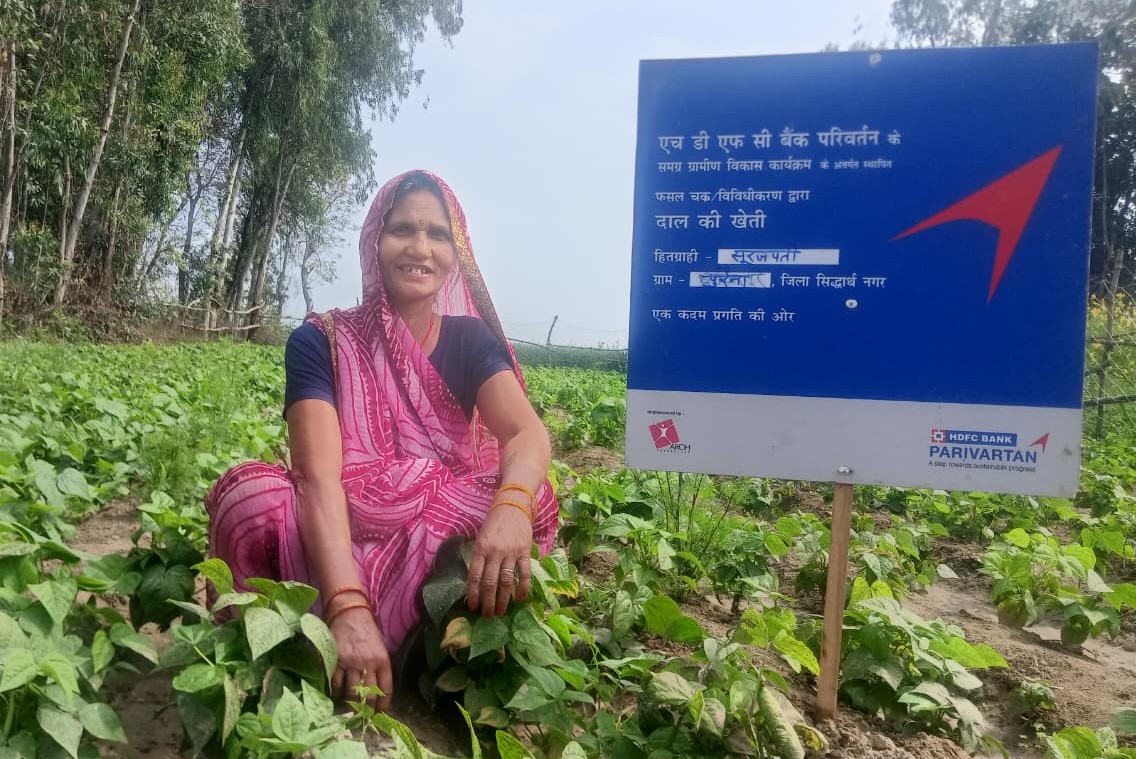
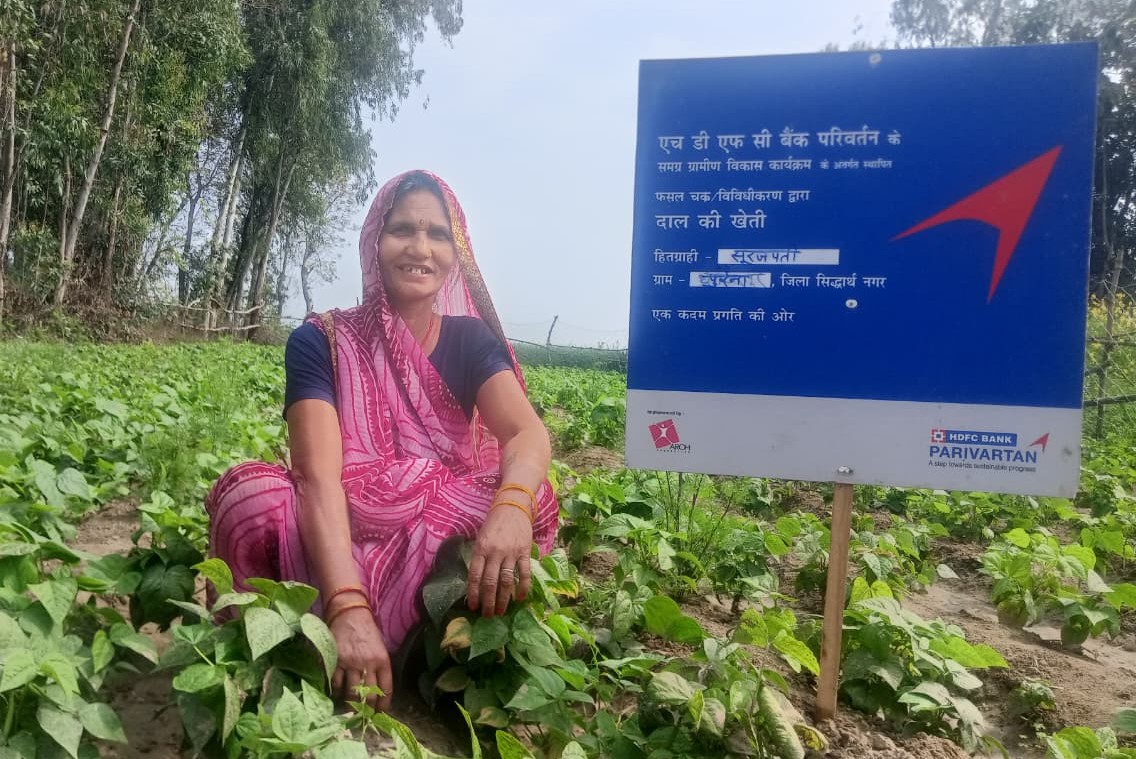
This case study explores how crop diversification, supported by AROH Foundation and HDFC Bank's Parivartan Programme, enabled Surajpati, a farmer from Puraina village, to increase her farm income more than tenfold while inspiring other farmers to adopt sustainable agricultural practices.
Sowing the Seeds of Change
Across rural India, many small and marginal farmers continue to rely on traditional cropping patterns that often generate low and uncertain returns. Limited access to quality inputs, technical knowledge, and market oriented farming practices keeps many households dependent on seasonal wage labour despite owning cultivable land. Crop diversification is increasingly emerging as a practical solution, enabling farmers to improve productivity, reduce risks, and cultivate higher value crops suited to local conditions.
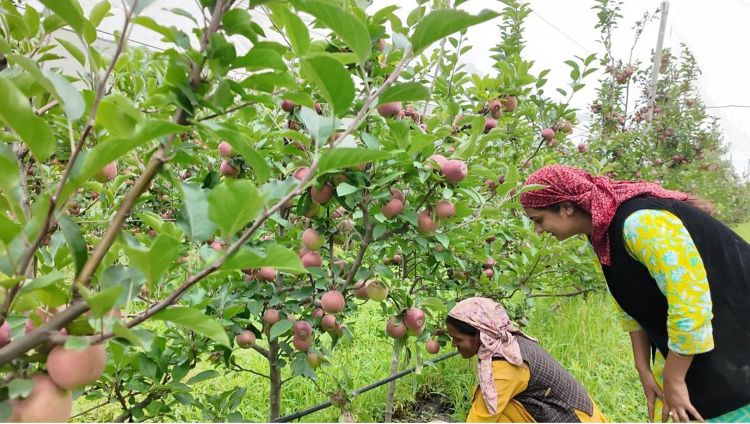
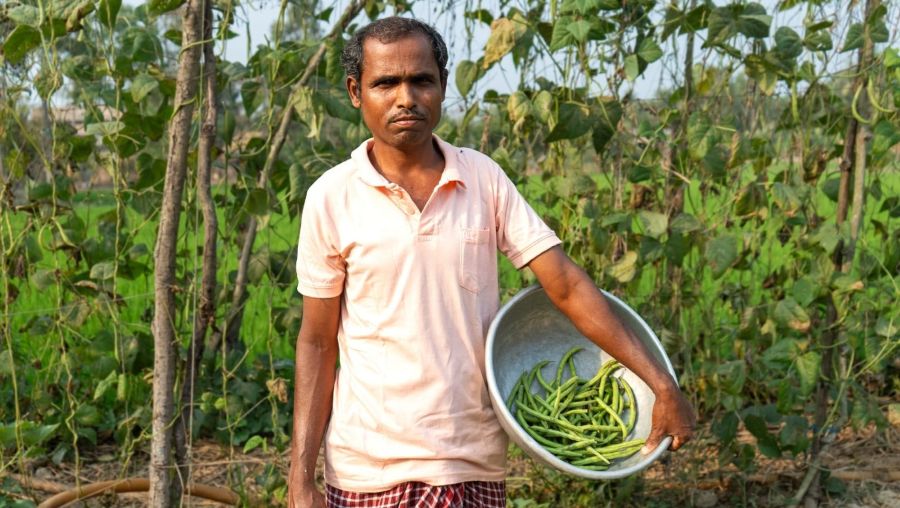
Surajpati's journey from Puraina village reflects how the right support at the right time can help farmers break this cycle. Belonging to a lower middle-class family of seven, including her husband Viswanath, two sons, and three daughters, she cultivated paddy and wheat on her limited farmland, following practices that had been passed down through generations. Like many small and marginal farmers, she worked hard every season, yet the returns rarely reflected her efforts.
The income from wheat cultivation on the same piece of land was only around ₹2,000 to ₹3,000. Meeting the needs of a family of seven with such limited earnings was a constant struggle. To make ends meet, the family had little choice but to supplement their income through daily wage labour. The uncertainty of agricultural income meant that every expense, whether related to education, healthcare, or household needs, required careful planning.
Breaking Away from Conventional Farming
While Surajpati owned agricultural land, she had limited exposure to alternatives beyond traditional paddy and wheat cultivation. She had never considered growing rajma and was unaware that it could offer significantly better returns.
Recognising this opportunity, AROH Foundation, with support from HDFC Bank's Parivartan Programme, introduced crop diversification as part of its livelihood intervention. Rather than simply providing seeds, the programme focused on helping farmers adopt improved agricultural practices that could generate sustainable income.
Rajma was identified as a suitable crop because of its higher market demand and stronger income potential compared to conventional crops. However, introducing a new crop also meant overcoming hesitation and uncertainty.
Initially, Surajpati was reluctant to move away from familiar farming methods. Changing a practice that had sustained the family for years was not an easy decision. Understanding this, the AROH Foundation field team and agriculture experts worked closely with her through regular counselling, field visits, demonstrations, and practical training.
She received quality rajma seeds, essential agricultural inputs, and hands on guidance covering every stage of cultivation, including land preparation, seed sowing, crop planning, nutrient management, pest management, and harvesting techniques. Continuous technical support gradually replaced hesitation with confidence.
A Harvest That Changed More Than Income
The impact became evident within a single cropping cycle. Using the same piece of land that earlier generated only around ₹2,000 to ₹3,000 through wheat cultivation, Surajpati earned approximately ₹35,000 within just three months after switching to rajma. This represented more than a tenfold increase in income, highlighting the potential of crop diversification when supported by quality inputs and technical guidance.
The difference was not merely financial. It transformed the family's outlook towards farming itself. For the first time, agriculture began to emerge as a dependable source of income rather than a livelihood of compulsion. The additional earnings strengthened the family's financial stability and reduced their dependence on daily wage labour. They were better positioned to meet household expenses, support their children's education, access healthcare when needed, and set aside savings for the future.
The increased income also enabled the family to reinvest in farming, creating opportunities to further improve productivity in the coming seasons.
Looking Beyond the Harvest
For Surajpati, perhaps the greatest change has been the confidence that came with success.
Having experienced the benefits of crop diversification firsthand, she now sees farming not simply as a traditional occupation but as a livelihood that can become profitable through informed decisions and improved practices.
Looking ahead, she hopes to continue diversifying into other high value crops, expand improved cultivation methods, and invest in better agricultural inputs. Her long term aspiration is to build a more secure future for her family, ensure better education and healthcare for her children, and reduce their dependence on wage labour altogether.
Her journey also reflects the importance of continuous handholding. Access to quality seeds alone may not have produced the same results. It was the combination of technical guidance, practical demonstrations, and sustained field support that enabled her to successfully adopt a completely new cultivation practice.
Inspiring Change Beyond One Farm
The impact of Surajpati's success is now extending beyond her own fields.
Farmers in Puraina village have closely observed the results of rajma cultivation. Encouraged by the visible improvement in her income, around 20 farmers are expected to adopt rajma cultivation during the next cropping season.
This emerging ripple effect demonstrates how one successful intervention can encourage wider behavioural change within a farming community. As more farmers witness the economic benefits of crop diversification, the potential for collective livelihood improvement becomes stronger.
Such examples are particularly important for small and marginal farmers, many of whom hesitate to experiment with unfamiliar crops because of the risks involved. Visible success within their own village often becomes the strongest motivation to adopt new practices.
A Model for Sustainable Rural Livelihoods
Surajpati's journey illustrates that improving rural livelihoods is not always about expanding landholdings or making large investments. Sometimes, the most meaningful transformation begins by helping farmers make better use of the resources they already possess.
Reflecting on her journey, Surajpati says, "Earlier, I cultivated only paddy and wheat, but the income was never enough to support my family. I was unaware that rajma cultivation could provide such good returns. With the guidance and continuous support of the AROH Foundation team and agriculture experts, I learned improved farming techniques and successfully adopted crop diversification. Today, I have earned much more from the same piece of land, and my family's financial condition has improved. This intervention has given me confidence that farming can be a profitable and sustainable livelihood, and I am grateful to AROH Foundation and HDFC Bank for bringing this positive change into my life."
Echoing this broader vision, AROH Foundation notes, "Crop diversification is a powerful strategy for improving the livelihoods of small and marginal farmers. By introducing high value crops along with quality inputs, technical guidance, and continuous handholding support, we enable farmers to increase productivity, improve incomes, and strengthen resilience against market and climate related risks. Through the support of HDFC Bank's Parivartan Programme, we are creating sustainable livelihood opportunities that empower rural families to achieve long term economic security and a better quality of life."
Surajpati's journey demonstrates how targeted CSR interventions can help small and marginal farmers move beyond subsistence agriculture towards sustainable livelihoods. By combining access to quality inputs, technical guidance, and continuous handholding support, crop diversification is enabling farmers to improve productivity, increase incomes, and build greater resilience. With around 20 farmers in Puraina expected to adopt rajma cultivation in the next cropping season, Surajpati's success is already inspiring wider community transformation, demonstrating how one farmer's success can become the catalyst for wider community transformation.