How a 16-year-old is transforming discarded books into new beginnings for thousands of children
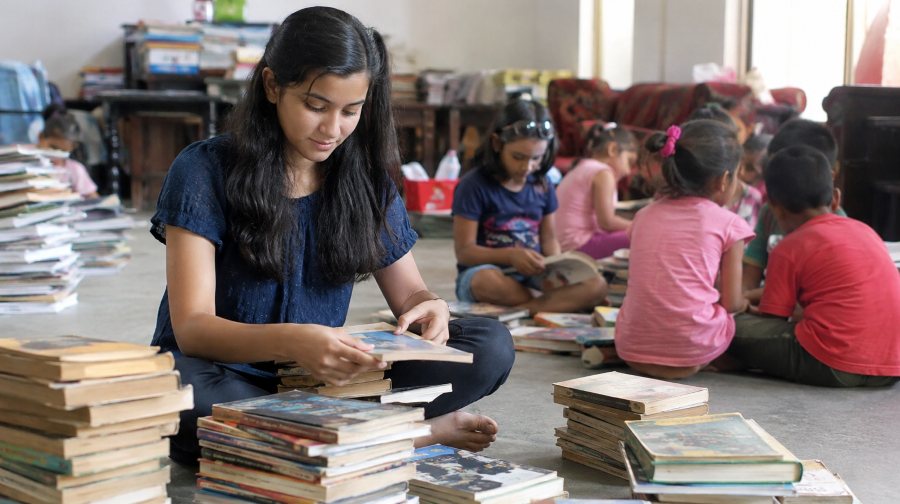
Discarded notebooks are finding a new purpose through Made@gain, a Thinking Circular initiative led by 16-year-old Samaira Garg. By converting nearly 20 tonnes of used books and paper into 10,000 new notebooks, the initiative connects circular consumption with educational access, dignity and opportunity for underserved children.
Made@gain is a Thinking Circular initiative - a movement that is redefining how India thinks about consumption.
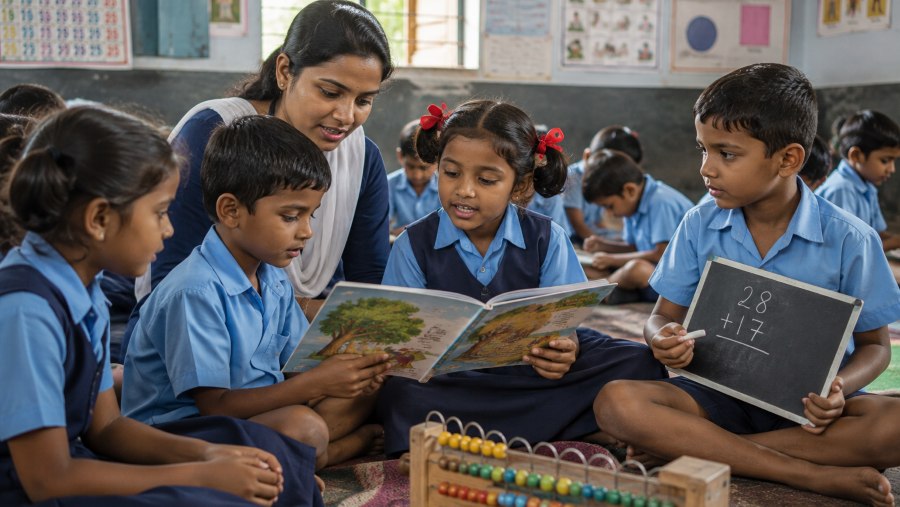
Every year, millions of notebooks across India are discarded at the end of the academic year. They are tossed into cupboards, cartons, recycling bins or simply forgotten. At the very same time, thousands of children walk into Government and tribal schools carrying little more than a pencil, often without a single notebook they can call their own.
Most people see these as two unrelated realities. Sixteen-year-old Samaira Garg saw them as two sides of the same problem.
Today, her initiative Made@gain has collected nearly 20 tonnes of discarded books and paper, transforming them into 10,000 brand-new notebooks that are reaching children from underserved communities, including tribal schools in Karnataka.
The story of Made@gain is not really about recycling. It is about how our consumption pattern has moved from being circular to linear. Made@gain is an initiative to be more responsible consumers, through thoughtful product design to increase product longevity and upscaling and by doing this, restoring dignity to products that are considered waste.
A question that started in her cupboard
The idea of Made@gain began while Samaira was cleaning her cupboard. Like thousands of students, she found stacks of notebooks with unused pages. Her first instinct was simple- tear out the blank sheets, bind them together and give them to children who needed them. She did. Yet something did not feel right.
"I realised that although I was helping, I was still giving children something that was visibly used. I kept wondering why they should receive someone else's leftovers? Could they instead receive something completely new?", remarks Samaira, explaining where it all started!
That single question became the foundation of Made@gain. Rather than redistributing used notebooks, Samaira began exploring whether discarded paper could be converted into entirely new notebooks, allowing every child to begin school with something they could proudly call their own. Made@gain’s first project traces this journey from that initial observation to the insight that old paper could become brand-new stationery rather than second-hand donations.
Reimagining charity through dignity
Many social initiatives focus on collecting and donating used educational material. Made@gain deliberately chose a different path. The initiative collects discarded notebooks, textbooks and stationery from schools, residential communities and corporate offices. These materials then pass through a structured seven-step recycling process before emerging as brand-new notebooks carrying the Made@gain identity and the names of contributors on the cover; ensuring everyone remains at the centre of the story. The initiative describes this as a closed-loop model: collect, sort, recycle, manufacture, distribute, track and report.
The result is a subtle but powerful shift; from charity to dignity.
Building a circular economy, one school at a time
What began as a small experiment has rapidly evolved into a growing movement on Thinking Circular. Made@gain has developed an ambassador programme in which students lead collection drives within their own schools, learning about sustainability, leadership and responsible consumption. The programme has also expanded into apartment communities and corporate workplaces, demonstrating that circular economy principles can be embedded into everyday life rather than remaining abstract environmental concepts.
The initiative has now:
- Collected 20 tonnes of used books and paper.
- Produced 10,000 new notebooks.
- Engaged thousands of students, families, schools, communities and corporate contributors.
- Raised over ₹3 lakh to support production and distribution.
- Created a model designed to scale beyond a single school.
Where sustainability meets education
Environmental conversations often focus on reducing waste. Educational conversations focus on improving access. Made@gain brings both together. Every notebook produced represents paper diverted from landfill while simultaneously placing learning material into the hands of children who need it most. The initiative demonstrates that sustainability is about conserving resources, about redistributing opportunity and moreover thinking circular.
A journey to BR Hills
Perhaps the most emotional chapter in Made@gain's journey unfolded in the forests of Biligiri Rangana Hills (BR Hills) in Karnataka. Partnering with Vivekananda Girijana Kalyana Kendra (VGKK), and Government School in the region, Samaira and student volunteers travelled to schools serving Soliga tribal communities. The visit culminated in the distribution of notebooks alongside books, educational materials and essential supplies. The initiative also included cultural interactions and conversations with nearly 300 children, reinforcing the idea that education is about connection as much as access. For many children, it was the first time they had received a brand-new notebook. That simple moment captures the deeper purpose of Made@gain.
Beyond notebooks
Although Made@gain has become widely recognised for its recycling model, it reflects something larger about its founder. Samaira's work consistently explores one central question: How can systems designs become more equitable – a key aspect of thinking circular?
Alongside Made@gain, she has undertaken research on aspiration gaps among low-income migrant communities, worked on adaptive learning programmes designed to personalise literacy interventions, and begun developing AI-supported educational tools. Rather than treating Made@gain as an isolated project, these efforts show a sustained interest in systems designs to improve access and reduce educational inequality.
A movement, not a project
Made@gain is designed not to remain dependent on one individual. Its long-term vision is ambitious: expand through school ambassadors, reach government and tribal schools across Karnataka, build partnerships with NGOs and education authorities and eventually embed Thinking Circular economy practices into school systems so that the model continues regardless of who leads it. If successful, Made@gain will have achieved something rare.
It will not simply have recycled paper. It will have reshaped how young people think about consumption, responsibility and social impact. India generates enormous volumes of waste every year while millions of children continue to face barriers to learning. Made@gain demonstrates that solving these challenges does not always require entirely new resources. Sometimes it requires asking better questions. For Samaira Garg, that question began with a cupboard full of old notebooks.
Today, it is inspiring schools, communities and organisations to discover that what we throw away can become the beginning of someone else's future.