
How a Delhi Early Intervention Center Is Supporting Children’s Inclusion in Mainstream Schools
For children with disabilities, early intervention can play a crucial role in building the communication, learning and social skills needed for greater inclusion. At CBM India Trust’s Early Intervention Centre in Khanpur, Delhi, multidisciplinary support is helping children prepare for mainstream education, while enabling families to become active partners in their development and inclusion journey.
Anant is six years old and is from Delhi. This year, he started Balvatika at Kendriya Vidyalaya. Anant has autism; for him, this means that he repeats words and phrases spoken by others, and he finds it difficult to express his needs, follow instructions, maintain attention, and interact with children his age. Since November 2025, he has been going to an early intervention center in Khanpur, a neighborhood in South Delhi, for language and speech therapy, special education, and occupational therapy.
For children with disabilities like Anant, the law states that they must be admitted to school and given the same opportunities to learn as other children, with the goal of full inclusion. Even so, many children with disabilities never make it into a classroom. Part of the answer lies in making schools more inclusive. Part of it lies much earlier, in identifying children's needs in their first years and supporting them from the start.
That is what the Early Intervention Centre in Khanpur, run by CBM India Trust, was set up to do. Since its official inauguration in April 2025, its focus has been on children up to the age of ten, when intervention can do the most, but it doesn't turn away older children who need its services. The center enrolls around 90 children. 14 of them, Anant among them, have since joined mainstream schools: nine in government schools and five in private ones, and they continue to come to the center for support. They include children on the autism spectrum, children with Down syndrome, locomotor disabilities, speech and language disabilities, and ADHD.
 Children are referred to the center through several routes. In the initial months, the team organized a door-to-door outreach campaign in the neighboring areas and collaborated with the District Disability Rehabilitation Centre. More and more families now come on the recommendation of other parents, which is how Anant's family heard about it.
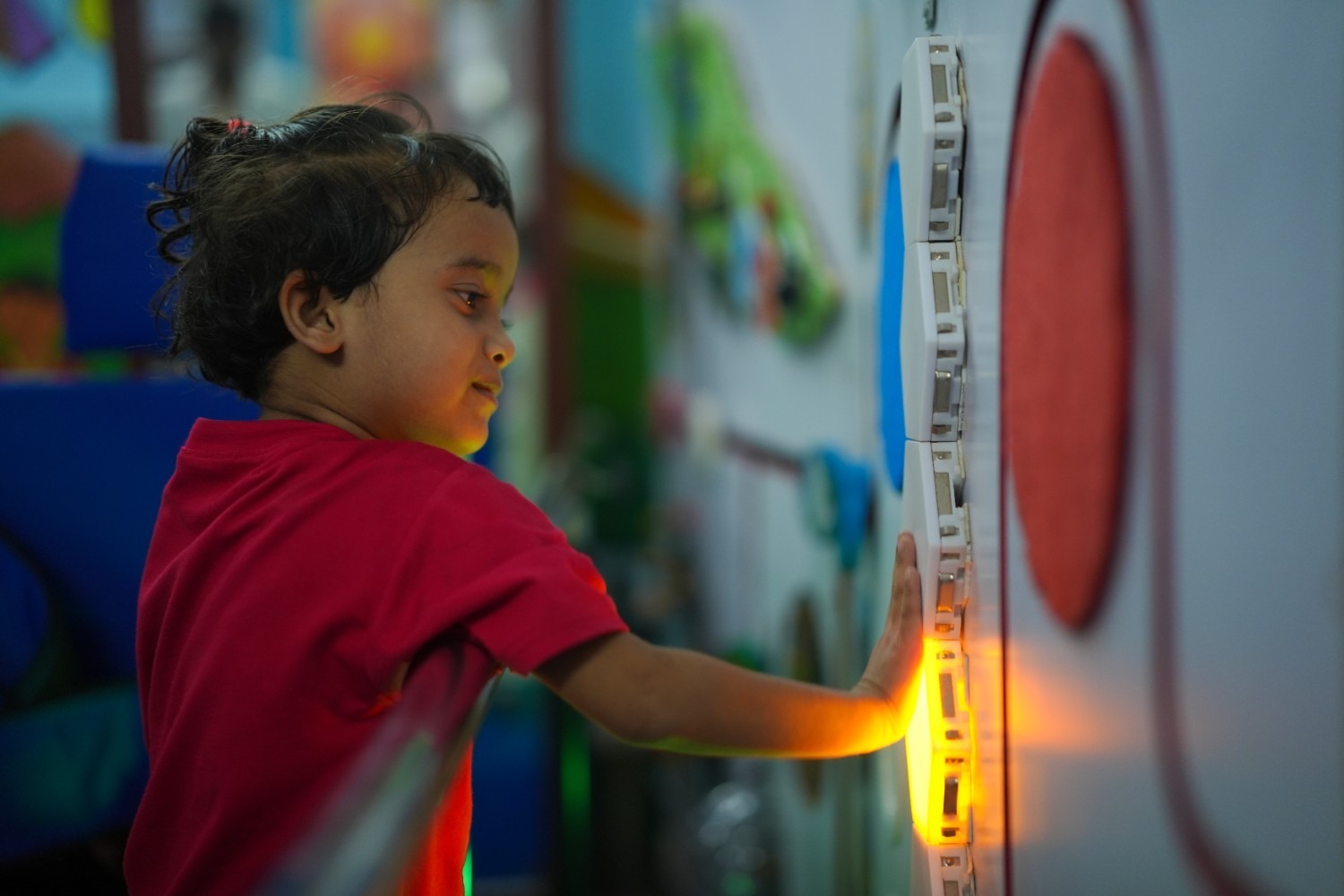
Every child who joins is assessed first. A team of physiotherapists, occupational therapists, speech and language therapists, and special educators then sets specific goals based on the child's needs, and together these make up the individualized education and therapy plan. The child attends regular sessions at the center, and the team reviews the goals and adjusts them as the child progresses. Parents are part of the process too; they receive counselling and learn ways to support their child at home.
“At the center, we work on the children’s communication, social interaction, and daily living skills, in accordance with their individual needs. Along with that, we also focus on school readiness, following instructions, classroom participation, and basic academic concepts. The child participates in both individual and group sessions, through which they work on developing the skills they need,” says Payal Sirohi, Special Educator, CBM India Trust Early Intervention Center.
Improving functional communication, attention, social interaction, and language skills were among the goals set for Anant when he joined the center. Settling into a structured routine took time at first but, gradually, he began following instructions more consistently, staying engaged in activities for longer, and participating more actively in sessions. He is also making clearer attempts at sounds and words and using them more often to communicate. His mother, Saroj, has noticed changes at home as well. He is more responsive and takes part more readily in everyday routines. Anant continues his sessions at the center alongside school, and his family now encourages other parents in their community to have their children assessed and supported early.
Sony Thomas, Executive Director, CBM India Trust, shared, “The early years are when a child’s communication, movement, learning, and social skills develop the most, so identifying needs promptly and supporting both the child and the family makes a real difference. When a child moves into a mainstream classroom, it reflects the effort of everyone involved. But being enrolled is not the same as being included. CBM India will continue to support these children and their families so they can take part in school life alongside their peers.”
For children with disabilities, early access to therapies and special education is crucial to support communication, mobility, self-care, and learning, and in doing so improve the quality of life of both the child and the family. Their impact is greatest when professionals from different disciplines work together in a holistic manner around the child's individual needs. This is the model followed at CBM India Trust’s early intervention center, where physiotherapists, occupational therapists, speech and language therapists, and special educators develop and implement each child's plan jointly, in close collaboration with families.
For Anant and the other 13 children now enrolled in mainstream schools, this support continues, strengthening their foundation for full inclusion in school and community life.