Rockwell Automation Connects Technology, Education and Livelihoods Through CSR
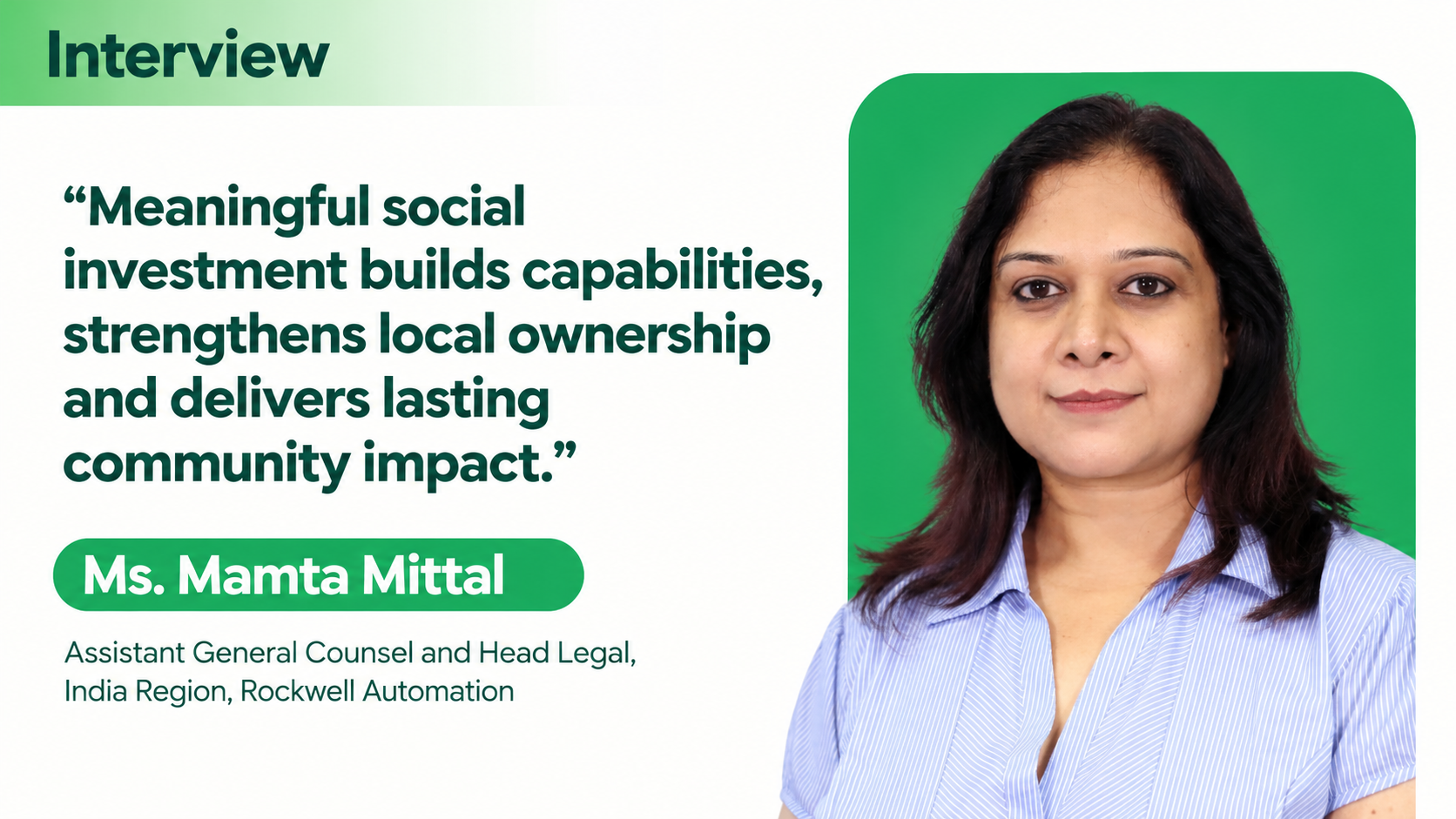
The true measure of technological progress lies not only in industrial efficiency but also in its ability to expand opportunities and improve lives. For the manufacturing sector, this presents an opportunity to rethink corporate social responsibility as a means of strengthening public education, advancing clean energy access and preparing communities for a changing economy.
Rockwell Automation’s CSR approach brings these priorities together through interventions in STEM education, digital skills, solar energy and technology-enabled rural livelihoods. In this interview, Ms. Mamta Mittal, Assistant General Counsel and Head Legal, India Region, Rockwell Automation, reflects on the role of industry in building community capabilities, complementing public systems and ensuring that CSR investments translate into measurable, sustained social impact.
Scroll down to read the full interview:
Q. Manufacturing companies today operate at the intersection of technology, sustainability and community development. How do you see the role of CSR evolving in this context, and what should distinguish meaningful long-term social investment from conventional philanthropy?
A. At Rockwell Automation, social responsibility and sustainability are integral to our mission and long-term success. In India, our CSR programmes connect clean energy, education, STEM learning, employability and rural livelihoods. Meaningful social investment goes beyond one-time giving: it builds capabilities, strengthens local ownership and delivers measurable outcomes that communities can sustain over time.
Q. With automation and Industry 4.0 reshaping the nature of work, how can manufacturers ensure that the communities around them are not merely beneficiaries of CSR, but active participants in the economic opportunities created by this transition?
A. Manufacturers should enable communities to use technology, not simply receive its benefits. Our Youth Empowerment Programme has trained 550 students across 11 colleges in Microsoft Azure AI, data analytics and robotic process automation. In Wardha, Maharashtra, dairy farmers use sensor-based alerts to improve animal-health decisions. In both programmes, participants gain practical tools and capabilities that can strengthen employability, productivity and income resilience.
Q. Rockwell Automation’s CSR portfolio spans education, clean energy, STEM, employability and rural livelihoods. What is the thinking behind this interconnected approach, and how do you determine which interventions can create lasting community capability rather than short-term impact?
A. Our approach reflects the interconnected needs of communities. Reliable energy can improve the learning environment; STEM exposure can build curiosity; employability programmes can convert learning into opportunity; and livelihood initiatives can strengthen household resilience. We prioritise interventions with clear objectives, capable implementation partners, defined milestones and measurable outcomes, alongside the potential for local ownership and continuity beyond the funding period.
Q. Your solar initiative has equipped 22 government schools with off-grid rooftop solar systems, benefiting more than 14,000 students. Beyond reducing electricity costs, how do you assess the role of reliable clean energy in improving the quality of learning and enabling greater use of digital and scientific infrastructure in government schools?
A. Reliable clean energy makes existing school infrastructure more usable. Across 22 government schools, off-grid rooftop solar systems support more consistent use of IT and science labs, projectors, digital boards, lighting and fans for over 14,000 students. Some schools also use solar power for water systems. Electricity-bill savings can further ease pressure on school resources.
Q. Rockwell’s STEM programme has reached around 27000 students across 39 schools, while also exposing students to robotics competitions and hands-on learning. In your view, what gaps in India’s public education system can industry-led STEM interventions realistically address, and where must CSR avoid duplicating the role of the state?
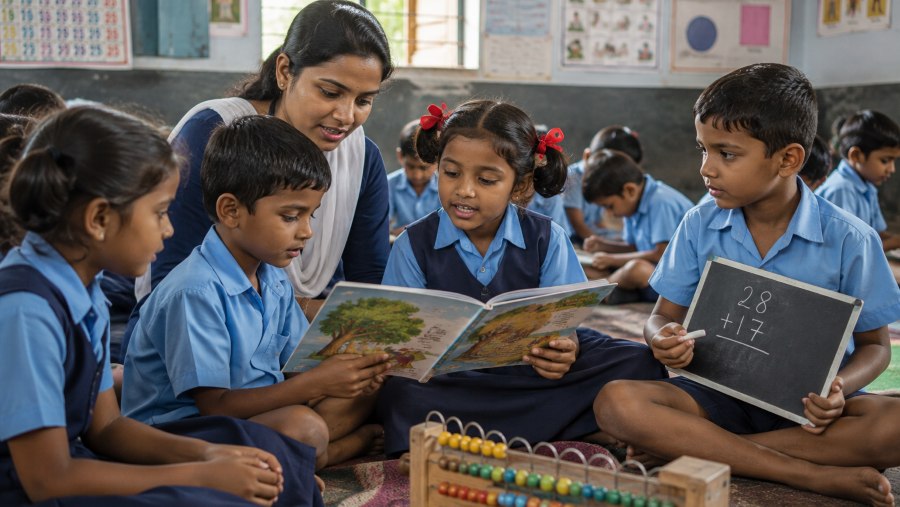
A. Industry-led CSR can complement public education through hands-on laboratories, teacher enablement, mentoring and exposure to robotics competitions and technology careers. Our programme with India STEM Foundation reaches about 27000 students across 39 schools.
CSR should strengthen learning opportunities without replacing the state’s responsibility for curriculum, staffing and core school operations. The most effective role for industry is to add expertise, access and real-world relevance.
Q. Preparing young people for emerging employment opportunities requires more than basic digital literacy. Through your Youth Empowerment Programme, students are being trained in areas such as AI, data analytics and robotic process automation. How do you approach the challenge of ensuring that these skills translate into actual employability and career progression?
A. Our Youth Empowerment Programme, delivered with ICTAcademy, has trained 550 students across 11 colleges in Microsoft Azure AI, data analytics and robotic process automation. The focus is on applied, industry-relevant learning rather than basic digital exposure. We continue to strengthen the link between coursework, mentorship and evolving employer needs so that training supports practical capability, career readiness and progression, not only certification.
Q. Your technology-enabled dairy farming initiative in Maharashtra works with more than 120 dairy farmers and seeks to improve milk yields, animal health and income stability. What does this experience tell you about the potential of technology-led CSR to transformtraditional livelihoods, and what factors are critical for ensuring that such solutions remain viable after the programme ends?
A. The Dairy project in Wardha, Maharashtra, shows that technology-led CSR is effective when it addresses an everyday livelihood challenge and is simple for communities to use. Working with ISAP Foundation, the programme covers more than 120 farmers and about 400 animals. Over two years, tracked data show higher milk production, improved milk quality and an increase in average monthly profit per farmer. Long-term viability depends on farmer adoption, local capability, reliable support and continued economic value.
Q. With 1,105 home solar units supporting more than 5,000 people in underserved and remote communities, what have you learned about designing CSR programmes for communities where access to basic infrastructure remains a constraint? How do you balance technological solutions with the social and behavioural realities of last-mile implementation?
A. The installation of 1,105 home solar units across seven regions, supporting more than 5,000 people, has reinforced that last-mile implementation is as important as the technology itself. Programmes must reflect local needs, terrain and household routines, while building awareness and maintenance capability. Success is not the installation alone; it is whether the system remains useful, reliable and locally supported over time.
Q. Impact measurement is increasingly central to the credibility of corporate CSR. Across Rockwell Automation’s education, clean-energy, employability and livelihood programmes, which outcome indicators do you consider most meaningful, and how do you distinguish between outputs such as beneficiaries reached and deeper outcomes such as improved learning, income or employment?
A. Outcomes show whether programmes have improved lives. In 29 schools supported through our infrastructure programme with Ummid Foundation, reported average attendance increased from 57% to 85%, hygiene scores from 52% to 90%, and enrolment from 6,572 to 7,039. In dairy farming, we track income, productivity, milk quality and animal-health responses across multiple surveys. Credible CSR requires both reach and sustained, evidence-based outcomes.
Q. Looking ahead, what should manufacturing companies in India be doing differently to connect CSR with the country’s larger priorities around inclusive growth, green transition and future-ready skills? What lessons from Rockwell Automation’s experience would you consider most replicable for the wider manufacturing sector?
A. Manufacturers can create greater value by linking CSR to their expertise while remaining anchored in community needs. The most replicable lessons from our experience are to build connected programmes, work with capable partners, define outcomes at the outset and measure progress over time. Combining clean energy, education, future-ready skills and technology-enabled livelihoods can support inclusive growth while building community capability and resilience.



.png)