
Protecting Women Farmers: DS Group’s Approach to Agricultural Safety
Agricultural safety remains a critical but often overlooked dimension of rural development in India. Women contribute substantially to farming, yet the occupational risks they face, including exposure to pesticides and other agricultural chemicals, receive limited attention. Inadequate access to appropriate protective equipment, gaps in safety awareness and the challenges of adopting protective practices leave many agricultural workers vulnerable. Addressing these risks requires sustained efforts spanning health education, access to effective protective gear and safer approaches to pesticide use.
Against this backdrop, Dharampal Satyapal Group (DS Group), through its Salute the FarmHER programme, has introduced Pallu Protection Equipment in seven villages in Uttar Pradesh’s Baghpat district. The initiative integrates a washable nano-fibre filter into saree pallus and dupattas, seeking to make protective measures more accessible by building on familiar practices.
The intervention raises broader questions about the role of corporate engagement in addressing occupational health gaps, the importance of validating solutions for real-world use and the challenge of translating awareness into lasting behavioural change. In this interview, Mr Sachin Sharma, Senior General Manager, Corporate Marketing, DS Group, discusses the initiative’s rationale, implementation and approach to assessing its impact.
Read the full interview below.
Q. For decades, women's contribution to agriculture has remained highly visible, while their occupational health challenges have remained largely invisible. What made DS Group decide that this was an issue worth championing through FarmHER?
A. Women farmers form the backbone of India's agricultural economy. Nevertheless, they rarely receive the recognition they deserve for their contributions. Their occupational health concerns have historically received very little attention as well.
Through DS Group’s in rural communities, we repeatedly observed that while discussions around productivity and livelihoods were common, the health risks associated with prolonged exposure to pesticides and agricultural chemicals were rarely addressed. Pallu Protection Equipment( PPE) is a comprehensive initiative by DS Group to address the occupational health risks faced by women farmers due to exposure to agricultural pesticides and chemicals. Moving from awareness to action, the initiative not only educates women farmers about health risks but also provides them with access to a practical, culturally relevant protective solution that can fit seamlessly into their daily lives. This initiative forms part of DS Group’s Salute the FarmHER programme, which recognises and supports the contributions of women farmers across India. By creating awareness and providing a PPE solution the programme seeks to bridge the gap between awareness and action, empowering women farmers to adopt safer agricultural practices.
Q. How did the original insight behind the 'Pallu Protection Equipment' emerge? Was there a particular field observation or moment that made the team realise there was an opportunity hidden in an everyday behaviour?
 A. The idea emerged directly from our field interactions with women farmers. During community visits, we consistently noticed that the saree pallu and dupatta are often used as informal protective coverings against pesticide, dust and other pollutants during agricultural work despite offering inadequate protection. Often, a proper safety mask is not used during work because it turns into a separate hassle and might be uncomfortable to wear while working. As a result, women farmers experience health problems such as lung issues and stomach infections due to direct exposure to pesticides. This highlights the urgent need for simple, practical and culturally appropriate solutions that women farmers can seamlessly adopt. Through the Pallu Protection Equipment’ Awareness initiative, DS Group combines awareness with action, providing accessible solutions that can help make agricultural work safer and healthier for women.
By integrating a washable nano-fibre filter into the saree pallu or dupatta, we transformed a familiar garment into a practical protective solution that women could adopt comfortably without disrupting their daily routines.
Q. Occupational health risks among women farmers are rarely discussed within the broader CSR and rural development ecosystem. In your view, what explains this gap, and how can corporate India contribute to bringing greater visibility and action to the issue?
A. On hearing the word ‘farmer’, the image of a male farmer usually comes to everyone’s mind. This age-old association overlooks the fact that their female counterparts contribute equally. Despite playing a significant role in farming activities, women are often viewed as supporting contributors rather than primary farmers, which has also limited visibility around the unique health challenges they face.
Corporate India can help bridge this gap by bringing these issues into the mainstream and resolving them through meaningful, community-led interventions that are rooted in local realities. At DS Group, our approach has been to first listen, understand the lived experiences of women farmers, and then co-create solutions that fit naturally into their daily lives and cultural practices. Beyond implementing interventions, corporates can also collaborate with governments, NGOs, healthcare experts and local communities to build awareness, encourage safer practices and scale solutions that create long-term impact. When businesses use their innovation capabilities and resources to complement existing efforts, they can play a meaningful role in improving occupational health outcomes while giving women farmers the recognition they truly deserve.
Q. The most effective social innovations are often those that work with existing habits rather than against them. Why was it important for the intervention to evolve from the saree pallu itself instead of introducing a completely new behavioural practice?
A. Behaviour change is most successful when it builds upon habits people already trust and practice. The saree pallu and dupatta is a natural part of traditional way of dressing and we felt that it would be far more effective to enhance an existing behaviour than introduce an entirely new one that might face resistance. While women farmers used their pallu or dupatta to create makeshift face covers, the additional effort required to implement alternative safety measures acted as a major roadblock. Our objective was to create a solution that was practical, culturally relevant and easy to adopt. By integrating the protective filter into a garment women already use, the intervention becomes intuitive rather than disruptive.
Q. From a marketing perspective, the initiative brings together creativity, behavioural science and product innovation in an unusual way. What were some of the key conversations and considerations that shaped the final concept?
A. From the outset, we wanted to ensure that the initiative was driven by genuine community insight rather than communication alone. The discussions revolved around one central question: how can we create a practical solution that women farmers will willingly use every day? That led us to combine behavioural understanding with functional innovation.
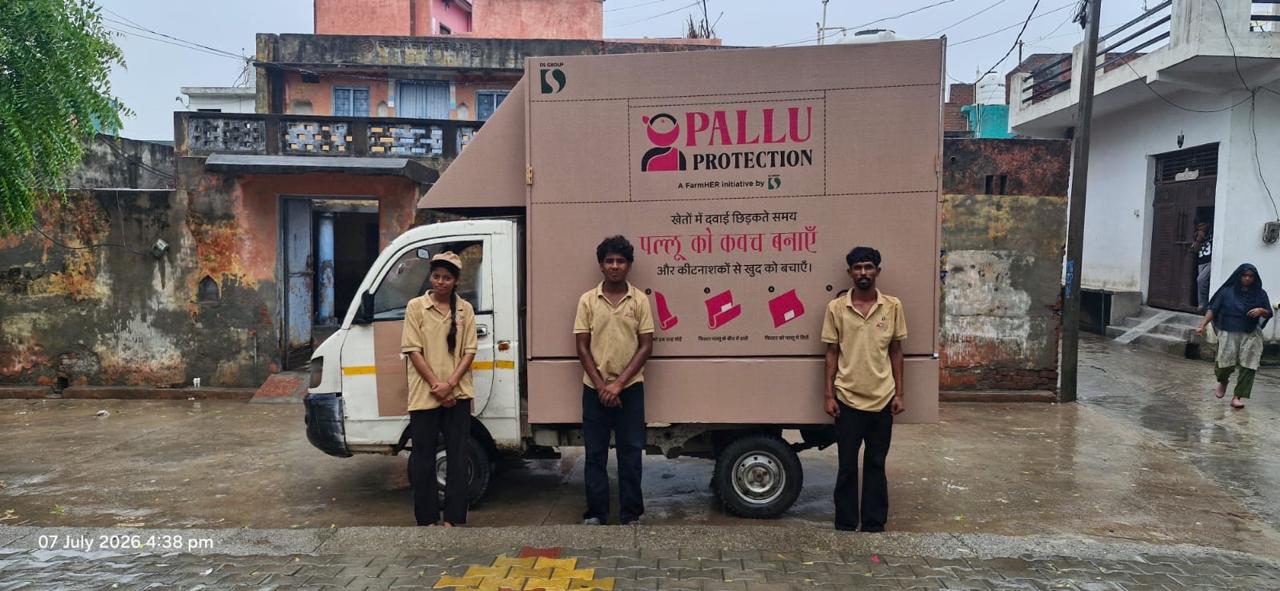
The protective filter had to be lightweight, washable, effective against pesticide particles and easy to integrate into garments already worn by women farmers. The ongoing initiative has engaged rural communities through mobile awareness vans, traditional puppet shows, nukkad nataks (street plays in local language), free health check-up camps and door-to-door educational outreach. Conducted with the support of local authorities as well as local communities, the programme has encouraged conversations around the hidden health risks associated with pesticide exposure and the importance of adopting safer agricultural practices. Health camps have offered blood pressure and blood sugar screenings, basic health counselling and the distribution of the PPE protective masks to women farmers.
Additionally, every woman participating in the programme has received mirrors and calendars carrying messages that reinforce the importance of safe farming practices.
Q. The initiative brings together expertise across filtration technology, grassroots implementation and local tailoring networks. Could you tell us more about the partners involved in this journey and the unique contribution each made in taking the idea from insight to on-ground action?
A. The initiative has been built through collaboration, with each stakeholder contributing distinct expertise. While Nirvana Being is the mask designer and manufacturer, Kinnect is the creative partner for the campaign and Impact Communications serves as the on-ground execution partner.
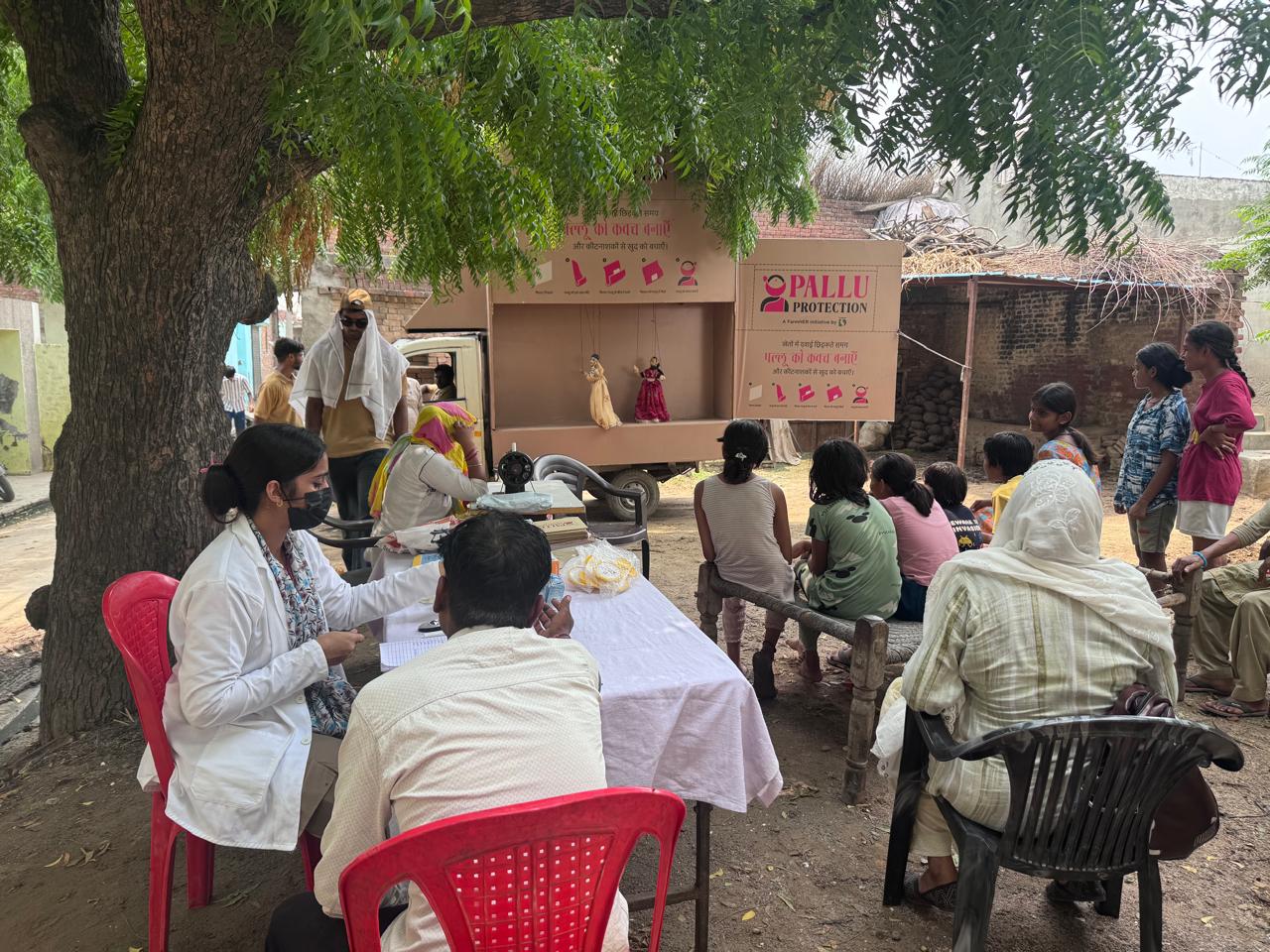 On the ground, the programme has been implemented by Impact communications with the support of local authorities and community stakeholders, who have played a critical role in mobilising participation, facilitating awareness activities and organising health camps. Local tailoring shops have become an important distribution point by stitching the filters into saree pallus and dupattas, while pesticide retailers are helping make the protective solution easily accessible within the villages. Furthermore, the posters and banners displayed at these stores have turned them into hubs for spreading awareness regarding the Pallu Protection Equipment Campaign. This collaborative ecosystem ensures that the initiative remains practical, community-owned, and scalable.
Q. As the initiative moves beyond the first phase, what will success look like from your perspective?
A. For us, success extends well beyond the number of filters distributed or villages covered. The real measure of impact will be whether women consistently adopt safer practices and whether awareness around occupational health becomes part of everyday agricultural decision-making.
Considering this is an ongoing initiative, we will assess the programme using multiple indicators including the adoption and continued use of the protective equipment, participation in health awareness activities, behavioural shifts in safe pesticide handling, community feedback, and the reach of preventive health interventions. We also hope to see greater community-led advocacy, where women themselves become ambassadors for safer farming practices. Ultimately, if the initiative contributes to making occupational health a recognised part of rural development conversations, we will consider that a meaningful achievement. We aim to create this impact by working closely with women farmers and incorporating their feedback into our efforts.
Q. Purpose-led marketing has become one of the most discussed themes in the corporate world today. In your view, what distinguishes a campaign with a purpose from one that creates lasting social value, and how do you see this space evolving in the years ahead?
A. While purpose-led campaigns have taken the corporate world by a storm, they become truly meaningful when they extend beyond communication and deliver measurable impact on ground. When such an initiative addresses a genuine community need, receives sustained engagement, and empowers people with practical solutions, it creates lasting social value.
By making essential health and safety information accessible, practical and culturally relevant, the PPE Campaign seeks to bridge the gap between awareness and action, empowering women farmers to adopt safer and more sustainable agricultural practices.