Powering Rural Resilience Through Biogas and Regenerative Agriculture
India's agricultural sector is under increasing pressure to balance productivity with sustainability. Rising input costs, dependence on conventional cooking fuels, inefficient livestock waste management and the environmental impact of intensive farming practices continue to affect the resilience of rural communities. While clean energy solutions are becoming more widely available, their long-term success depends on whether they can deliver practical benefits at the household level while supporting sustainable agriculture and improving rural livelihoods.
Biogas has emerged as one such solution by converting livestock waste into clean cooking fuel and organic fertiliser, helping farming households make productive use of resources that often go unmanaged. This case study explores how Sistema.bio, in partnership with Escorts Kubota Limited and the EKL CSR Foundation, implemented the EKAFI Biogas Project to demonstrate how decentralised clean energy solutions can address multiple rural challenges through a single intervention.
Implemented across Kaithal and Kurukshetra districts of Haryana, the project has enabled smallholder farming households to reduce expenditure on cooking fuel and agricultural inputs, improve livestock waste management, strengthen soil health and lower greenhouse gas emissions, while supporting more sustainable farming practices.
About the Organisation
Founded in Mexico in 2010, Sistema.bio develops biogas and regenerative agriculture solutions that help farmers convert livestock waste into clean energy and organic fertiliser through circular resource management. Today, the organisation operates in more than 35 countries across Africa, Asia and Latin America. Since entering India in 2018, it has worked with more than 1.25 lakh farmers across over 24 states through its patented biodigester technology, approved by the Ministry of New and Renewable Energy (MNRE). The company's biogas systems are manufactured at its facility in Pune, described as the world's largest biogas manufacturing facility. The organisation designs, manufactures, installs and services prefabricated biodigesters, biogas appliances and slurry management solutions, while supporting carbon mitigation programmes through digital Measurement, Reporting and Verification (MRV) systems. Its work focuses on improving access to clean energy, strengthening rural livelihoods, advancing regenerative agriculture and promoting circular resource management.
Addressing Local Challenges Through an Integrated Approach
India has significant potential for expanding household biogas systems. With the world's largest bovine population, estimated at more than 536 million animals, and over 80 million farmers engaged in dairy farming, livestock waste offers an abundant source of feedstock for renewable energy generation. Government initiatives have also supported the technology's adoption, with more than five million biogas units facilitated under programmes of the Ministry of New and Renewable Energy.
Despite this potential, many farming households continue to depend on LPG, firewood and cow dung cakes for cooking, resulting in recurring household expenditure while exposing families, particularly women, to indoor air pollution. In Haryana's Kaithal and Kurukshetra districts, livestock waste was often disposed of through open dumping, contributing to environmental pollution and sanitation concerns. At the same time, farmers remained heavily dependent on chemical fertilisers, increasing cultivation costs while affecting long-term soil health.
Recognising that these challenges were interconnected rather than isolated, Sistema.bio designed the EKAFI Biogas Project as a solution that combined clean energy generation with improved waste management and sustainable agriculture.
Implemented across Kaithal and Kurukshetra during 2025, the project focused on introducing household biogas systems among smallholder farming communities. It primarily targeted families owning between two and ten cattle and cultivating approximately two to five acres of agricultural land. Most beneficiary households comprised four to six members whose livelihoods depended on agriculture, dairy farming or salaried employment.
Before the intervention, many families spent two to three hours each day cooking with firewood or cow dung cakes while continuing to purchase LPG cylinders to meet household energy needs. They also relied extensively on synthetic fertilisers, using an average of 48 bags of DAP and urea each year.
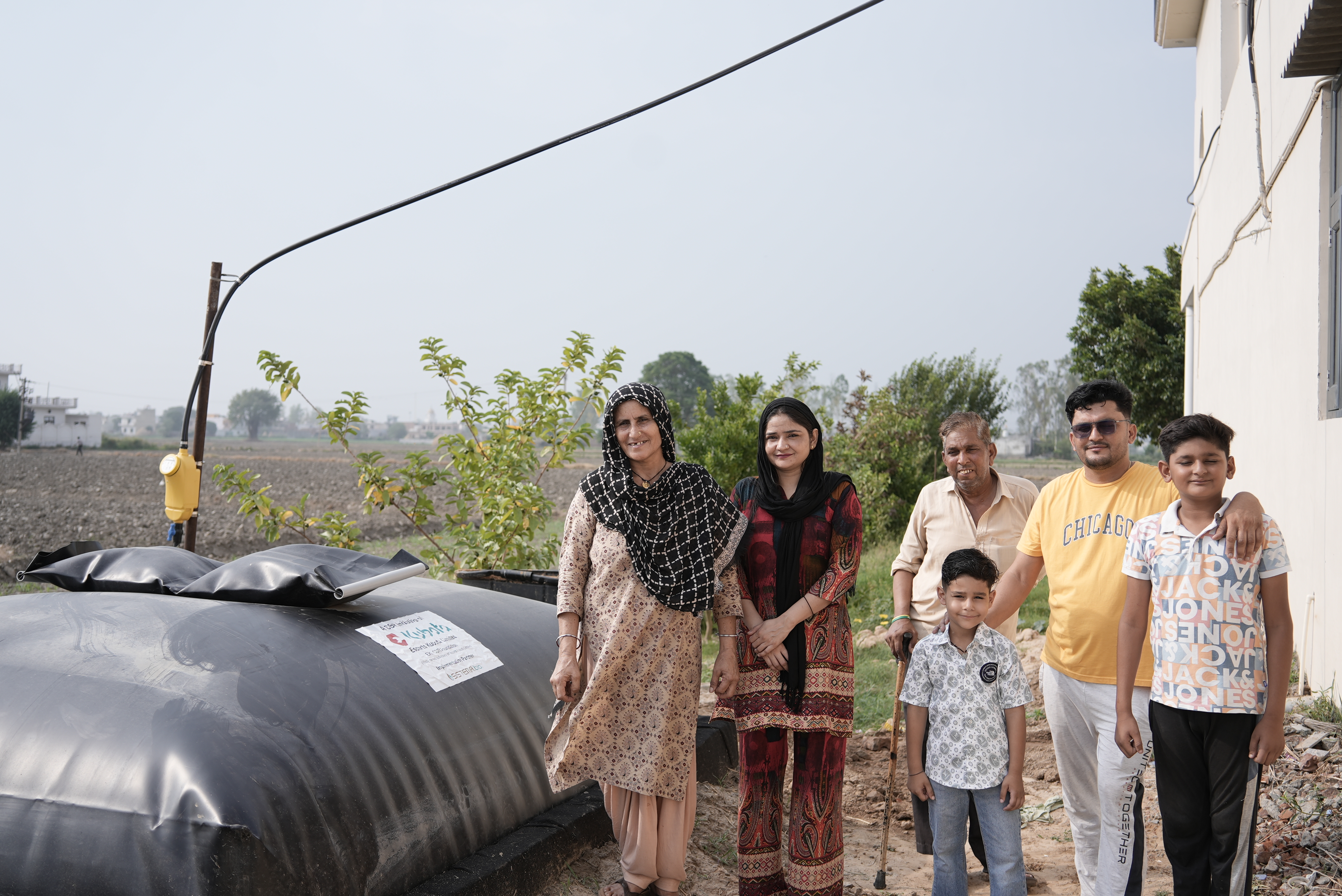
To address these challenges, the project deployed Sistema.bio's patented 2 m³ biodigesters, which convert cattle dung into biogas for household cooking while producing nutrient-rich bioslurry that can be applied as an organic fertiliser. Each system generates around 2.5 to 3.5 hours of clean cooking gas every day, helping households save approximately one and a half LPG cylinders each month. At the same time, each biodigester produces nearly 150 litres of bioslurry daily, providing farmers with a natural alternative to chemical fertilisers while supporting improved soil health.
The project was implemented in two phases between February and November 2025. The first phase, undertaken between February and May, covered the installation of 150 household biogas systems, while the second phase, implemented between July and November, added another 100 units, taking the total to 250 biodigesters.
Beyond improving access to clean cooking fuel, the initiative aimed to strengthen livestock waste management, reduce dependence on synthetic fertilisers and encourage regenerative agricultural practices. In doing so, the project contributes to several Sustainable Development Goals (SDGs), particularly those related to clean energy, sustainable agriculture, climate action and rural livelihoods.
From Planning to Implementation
The project followed a phased implementation strategy designed to support both effective deployment and long-term adoption of the technology. Beneficiary identification formed the first step in the process, with farmers assessed against clearly defined eligibility criteria, including cattle ownership, availability of land for installing the biodigester, household energy requirements and willingness to adopt and maintain the system.
Before installation, field teams conducted site assessments to evaluate technical feasibility and geo-tagged every approved location to support planning, monitoring and transparency. Once the sites were validated, biogas systems were delivered directly to beneficiary households, where trained technicians completed the installation.
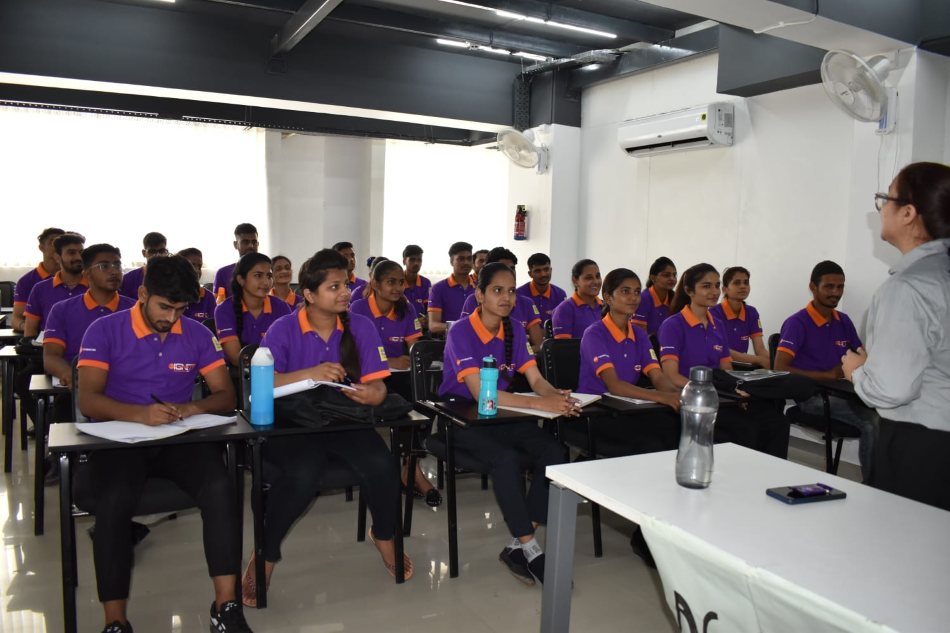
Recognising that infrastructure alone does not guarantee sustained adoption, Sistema.bio combined installation with extensive capacity-building activities. Following installation, all 250 beneficiary households received practical training covering the day-to-day operation of the biodigesters, routine maintenance, safe handling practices and the use of bioslurry as an organic fertiliser. Continued technical support remains available through field teams and a multilingual customer service network, enabling households to seek assistance whenever required.
Rather than viewing installation as the conclusion of the intervention, the project adopted a lifecycle approach that combines technology deployment with ongoing technical handholding to maximise long-term benefits for participating households.
Building Partnerships for Last-Mile Delivery
The EKAFI Biogas Project was implemented through a partnership that combined financial support, community outreach and technical expertise. The EKL CSR Foundation, a subsidiary of Escorts Kubota Limited, supported the initiative through CSR funding while facilitating access to its established network of farming communities across Kaithal and Kurukshetra. This local engagement helped streamline beneficiary identification and community mobilisation during the initial stages of the project.
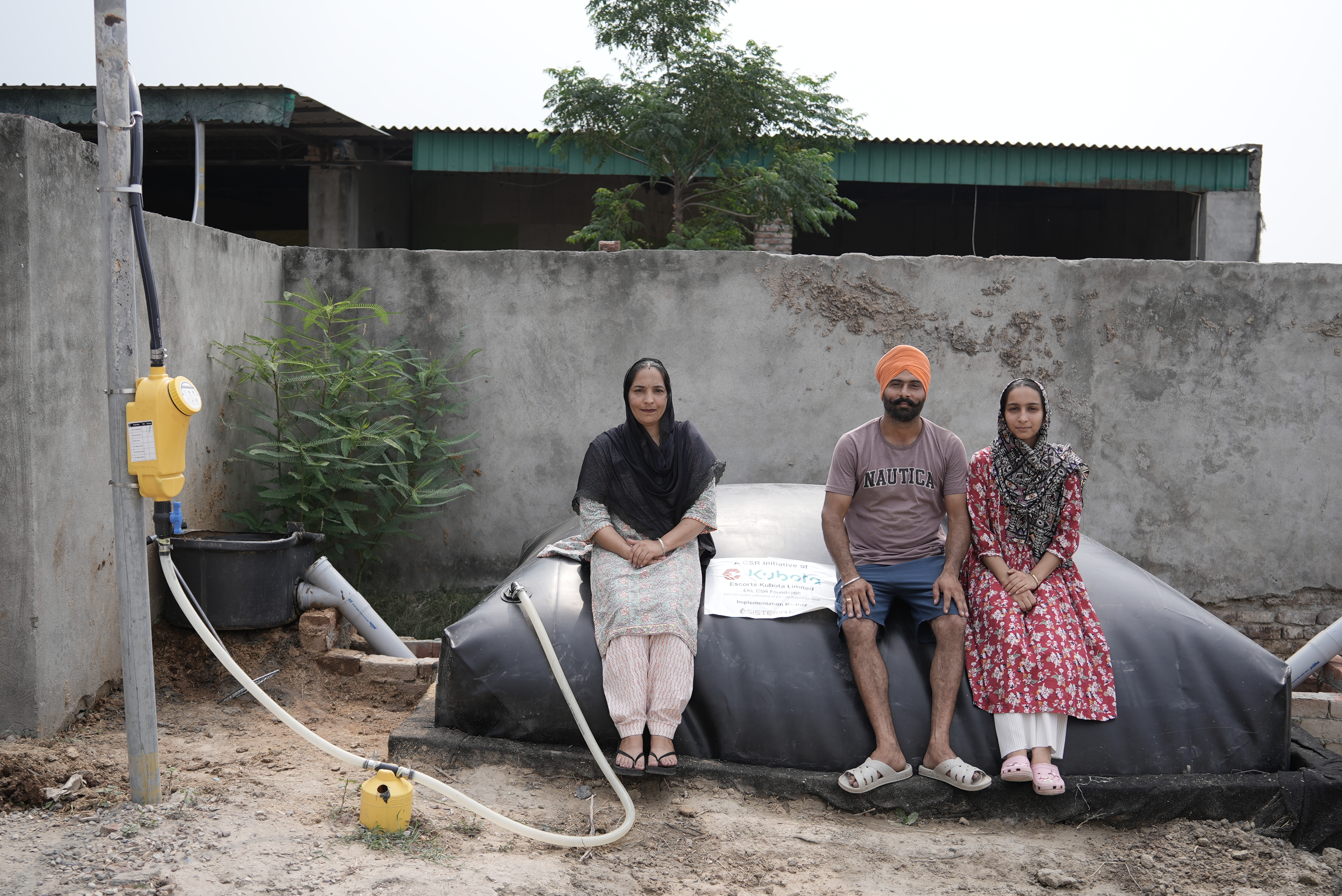 Sistema.bio led project implementation, providing the technology, overseeing installation and managing field operations. The organisation was also responsible for beneficiary training, post-installation support and continued technical assistance to ensure that households were able to operate and maintain the systems effectively after installation.
This partnership model enabled the project to move beyond infrastructure deployment and focus on sustained adoption of the technology, with each partner contributing complementary strengths to improve last-mile delivery.
Encouraging Community Participation
Community participation was integrated into every stage of the implementation process. During the first phase, beneficiaries were selected from a verified list of farmers shared by the EKL CSR Foundation. As awareness of the technology grew within the project area, the second phase increasingly relied on peer referrals and field assessments, enabling project teams to identify households with suitable livestock resources and a willingness to adopt biogas technology.
Beneficiary families also played an active role in preparing for installation. Households undertook site preparation and excavation work required for the biodigesters, creating a greater sense of ownership over the assets from the outset.
Capacity-building continued after installation through structured training sessions that familiarised families with the benefits of biogas technology, safe operation of the systems, routine maintenance and the agricultural application of bioslurry. These sessions were designed not only to explain how the technology works but also to build confidence among users and encourage long-term utilisation of both the clean cooking fuel and the organic fertiliser generated by the systems.
By combining community participation with continued technical support, the project sought to strengthen long-term adoption rather than focusing solely on the number of units installed.
Adapting Technology to Local Conditions
One of the defining features of the project was its ability to respond to field-level challenges through adaptive engineering.
During the early stages of implementation, field teams observed that local cattle feed practices resulted in higher-than-expected hydrogen sulphide (H₂S) levels in the biogas. Elevated H₂S concentrations can reduce gas quality and, over time, corrode household cooking appliances if left untreated.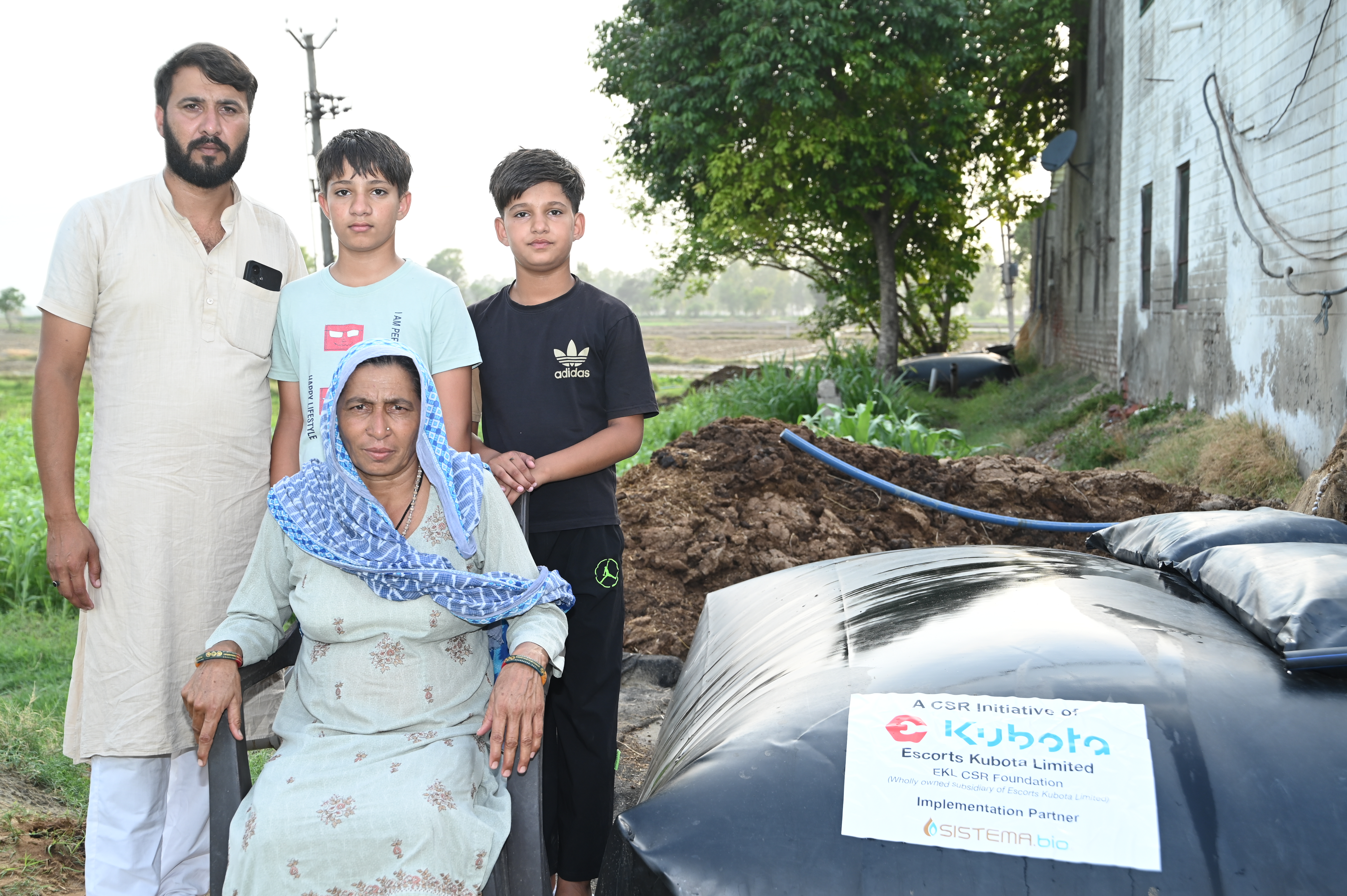
Rather than viewing this as an operational setback, Sistema.bio modified the biodigester design by integrating micro-aerators that enable biological desulphurisation within the units. The improvement was incorporated into newly installed biodigesters and retrofitted into existing systems, allowing hydrogen sulphide to be reduced at the source. Besides improving gas quality and household safety, the modification strengthened the long-term durability of the technology under local conditions, helping protect household appliances throughout the biodigesters' expected operational lifespan of more than 15 years.
The experience also generated valuable operational insights that can inform future deployments in regions with similar livestock feeding practices.
Alongside these engineering improvements, the project adopted a data-driven approach to monitoring impact. Digital systems were used to track indicators such as livestock waste processed, methane captured and carbon emissions mitigated, providing measurable evidence of environmental outcomes while supporting future carbon reporting and programme evaluation.
Measuring Impact
The combination of technical support, community participation and continuous monitoring laid the foundation for measurable outcomes across environmental, economic and social indicators. The project demonstrates how decentralised clean energy interventions can generate multiple benefits for rural households by simultaneously addressing energy access, waste management and agricultural sustainability.
Across the 250 beneficiary households, the biodigesters have helped convert livestock waste into a productive resource while reducing dependence on conventional cooking fuels and synthetic fertilisers. Participating families are estimated to save between ₹15,000 and ₹20,000 annually through lower expenditure on LPG and agricultural inputs, improving household economics while supporting more sustainable farming practices.
The environmental outcomes have also been significant. Collectively, the installed biodigesters treat more than 46 lakh kg of livestock waste each year and generate over 2 lakh cubic metres of biogas annually. The systems capture approximately 1.8 lakh cubic metres of methane every year, contributing to an estimated reduction of more than 1,500 tonnes of carbon dioxide equivalent (CO₂e) emissions annually.
Beyond these measurable outcomes, the project has contributed to cleaner kitchens, improved livestock waste management and wider use of organic bioslurry as a natural fertiliser. Together, these outcomes demonstrate how a single intervention can generate environmental, economic and social benefits while supporting more resilient farming systems.
Project Snapshot
|
Particulars |
Outcomes |
|---|---|
|
Project location |
Kaithal and Kurukshetra, Haryana |
|
Project duration |
February–November 2025 |
|
Household biogas systems installed |
250 |
|
Annual savings per household |
₹15,000–₹20,000 |
|
Livestock waste treated annually |
46 lakh+ kg |
|
Biogas generated annually |
2 lakh+ m³ |
|
Methane captured annually |
1.8 lakh+ m³ |
|
Estimated CO₂e emissions reduced annually |
1,500+ tonnes |
Voices from the Ground
For participating households, the benefits of the intervention extend beyond financial savings. Access to clean cooking fuel has reduced dependence on firewood and traditional biomass, while improved management of livestock waste has contributed to cleaner household surroundings. The availability of bioslurry has also encouraged greater use of organic fertiliser, reducing reliance on chemical inputs.
Meena Devi from Pai village in Kaithal says the household biogas system has made everyday cooking easier while improving conditions inside her home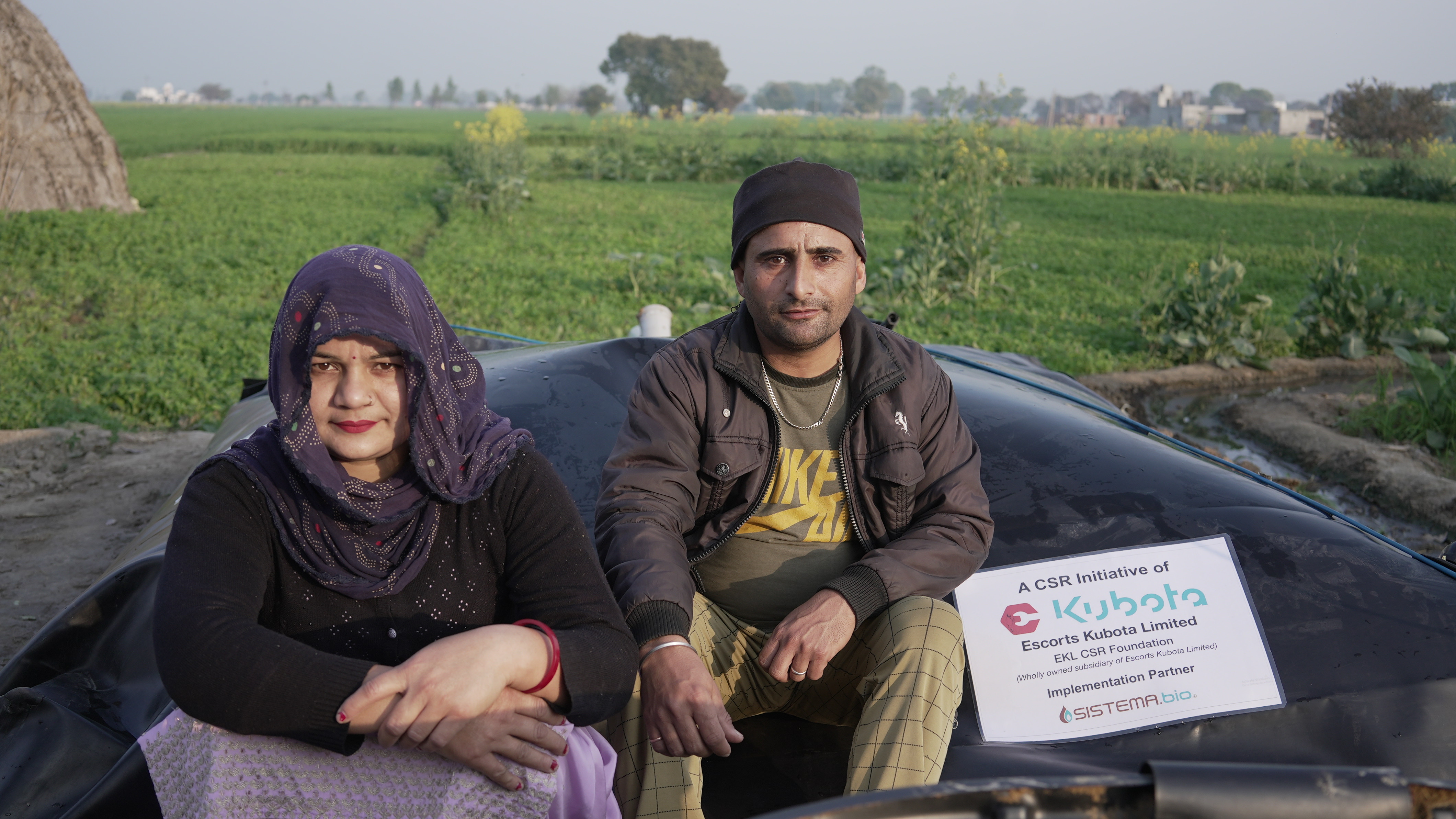
"Biogas has changed our daily life for the better. Cooking is quick and easy, we spend less on fuel, and the smoke-free kitchen has brought great relief to my eyes."
Harjeet Kaur from Megha Majra village highlights both the household and environmental benefits of the intervention.
"Biogas has been a blessing for us. Cooking is easy and quick now, and I have more time for my family. The cattle waste is managed well, keeping our home and surroundings clean and healthy."
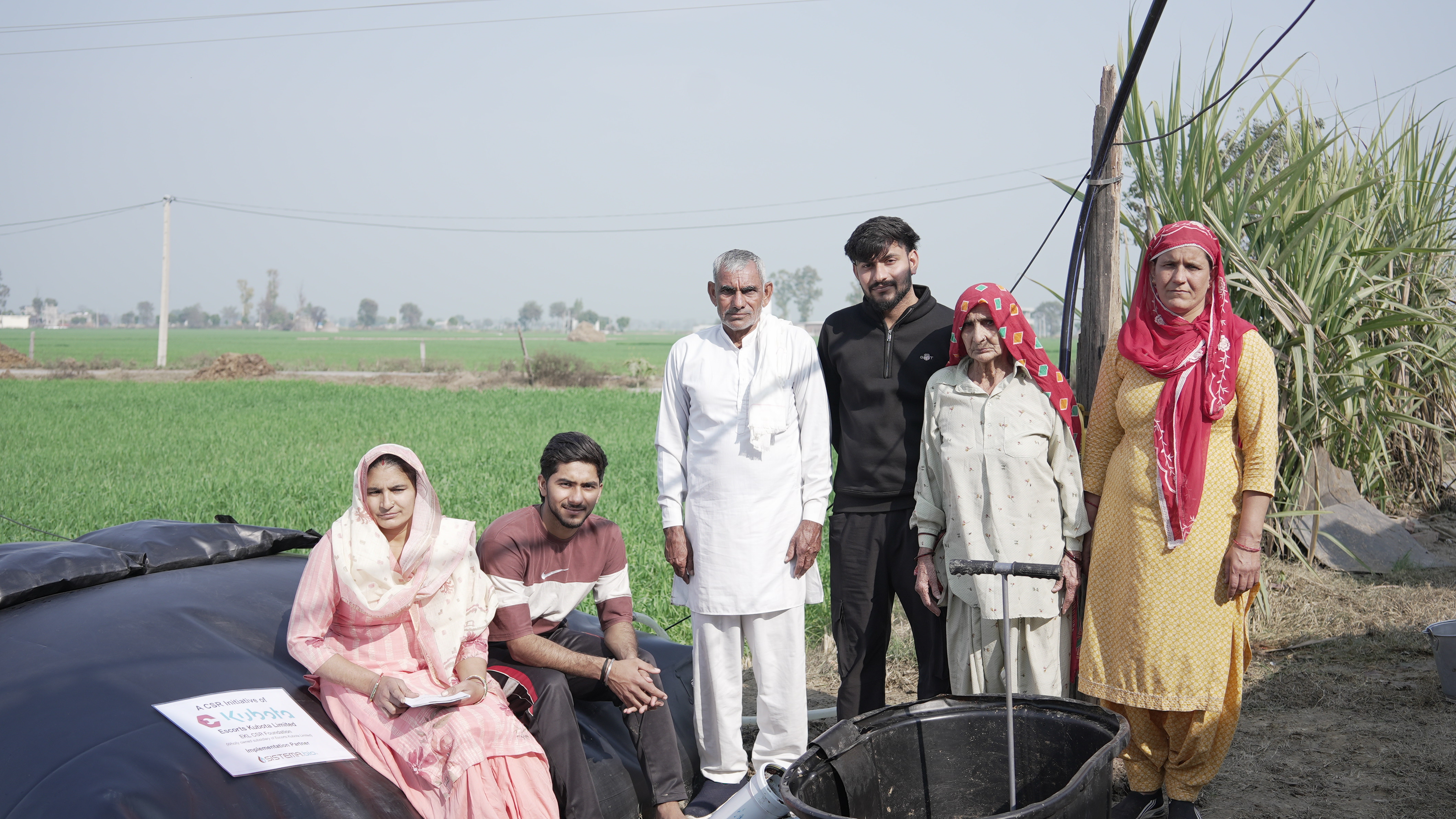 Reena Devi from Kamoda village in Kurukshetra says the technology has reduced the time spent collecting firewood while improving daily life.
"Biogas has made cooking simple and quick, giving me more time for my family and my farm. I no longer spend hours collecting firewood, and our home and surroundings are now cleaner and healthier."
While each household's experience is unique, these accounts reflect the wider changes reported by beneficiary families following the adoption of household biogas systems.
Voices Behind the Initiative
Reflecting on the project, Piyush Sohani, Managing Director, Sistema.bio India, says the initiative demonstrates how clean energy solutions can deliver sustained benefits when supported by strong partnerships and long-term engagement with communities.
"The project has reinforced our belief that clean energy interventions can create lasting improvements in the lives of farming households when they address multiple challenges together. By converting livestock waste into biogas and organic bioslurry, farmers can reduce expenditure on conventional cooking fuels and chemical fertilisers while improving soil health and household well-being. Equally important has been the partnership with EKL CSR Foundation and Escorts Kubota Limited, which enabled the project to reach communities effectively and establish a model that is measurable, scalable and designed for long-term adoption."
Debashish Bose, Director – Partnerships, Sistema.bio India, believes the project also highlighted the importance of adapting technology to local conditions while building trust with farming communities.
"The success of the initiative was shaped as much by community engagement as by technology. Escorts Kubota's relationship with farmers helped strengthen implementation, while the technical learnings from the project—including modifications introduced to improve gas quality under local conditions—have strengthened our deployment model. These learnings will help guide future interventions as we continue to expand access to household biogas systems across rural India."
The Road Ahead
Building on the experience of the EKAFI Biogas Project, Sistema.bio plans to expand the adoption of household biogas systems in other agrarian regions where livestock ownership, agricultural practices and dependence on conventional cooking fuels create similar opportunities for decentralised clean energy solutions.
The organisation intends to strengthen its presence in Haryana while exploring expansion into other states where smallholder farming households can benefit from integrated waste management, clean cooking energy and organic fertiliser production. The partnership model adopted for the project, bringing together corporate CSR support, established community networks and implementation expertise, has demonstrated its potential for replication across different geographies.
The technical learnings from the project are also expected to inform future deployments. Improvements introduced during implementation, including the integration of micro-aerators to address gas quality under local conditions, have strengthened the technology and generated operational insights that can be applied to similar interventions elsewhere.
Sistema.bio also plans to continue using its digital Measurement, Reporting and Verification (MRV) platform to monitor environmental outcomes and generate verifiable carbon impact data. This evidence-based approach is expected to strengthen programme management while supporting the wider adoption of decentralised clean energy and regenerative agriculture solutions.
According to the organisation, these efforts also contribute to its long-term goal of helping reduce 1% of global greenhouse gas emissions by 2030 through the wider adoption of biogas and regenerative agriculture solutions.
Conclusion
The EKAFI Biogas Project illustrates how partnerships between corporate CSR programmes and technology-led implementation organisations can address multiple rural development challenges through a single intervention.
Across 250 farming households in Kaithal and Kurukshetra, the initiative has enabled livestock waste to be converted into clean cooking fuel and organic fertiliser, reducing dependence on LPG and chemical inputs while supporting improved waste management and healthier household environments. The project has also delivered measurable environmental outcomes, including the treatment of more than 46 lakh kg of livestock waste annually, the generation of over 2 lakh cubic metres of biogas and an estimated annual reduction of more than 1,500 tonnes of carbon dioxide equivalent (CO₂e) emissions.
For participating households, these outcomes have translated into annual savings of ₹15,000 to ₹20,000, alongside cleaner kitchens, reduced indoor air pollution and greater use of organic bioslurry to improve soil health. Together, these changes demonstrate how decentralised clean energy solutions can strengthen rural livelihoods while contributing to more sustainable farming systems.
The project also highlights the value of combining technology, community participation and cross-sector partnerships to improve last-mile delivery. As Sistema.bio expands similar initiatives in other parts of the country, the experience gained from Haryana is expected to inform future programmes that promote clean energy access, sustainable agriculture and more efficient use of rural resources.
Ultimately, the EKAFI Biogas Project demonstrates that well-designed clean energy interventions can extend beyond environmental gains. By linking renewable energy with improved agricultural practices, resource efficiency and community participation, the initiative offers a practical model for strengthening rural resilience while supporting India's broader sustainability and development priorities.



.JPG)