From Traditional Craft to Grassroots Leadership: How BIPF Is Enabling Livelihoods and Youth Empowerment in Odisha
.JPG)
Across Odisha, grassroots development often begins with individuals who understand the challenges of their communities because they have experienced them firsthand. The Bansidhar & Ila Panda Foundation (BIPF), the social development arm of Indian Metals and Ferro Alloys Limited (IMFA), has sought to strengthen such locally driven change through its integrated work in education, livelihoods and health.
Established in 2011 under the philosophy of “Touching Lives beyond Business”, BIPF works through three core pillars — Adhyayan for education, Sakshyam for livelihoods and skilling, and Arogyadhara for health. In FY 2025-26, its programmes reached close to 3.7 lakh people across 487 villages, 63 Gram Panchayats, seven blocks and five districts of Odisha.
At the heart of this approach is the Shambhavi Puraskar, BIPF's flagship platform for recognising grassroots changemakers. Now in its 13th year, the initiative celebrates individuals whose work demonstrates how locally rooted solutions can create wider social impact.
Two such stories from the 2026 awards — Dr. Sasmita Meher's work with marginalised women in Bargarh and sisters Sharmilata and Yamuna Pradhan's youth football initiative in Kandhamal — illustrate how skills, cultural heritage, mentorship and personal commitment can become pathways to community empowerment.
The Challenge: Limited Livelihoods and Opportunities at the Grassroots
In Bargarh, traditional Bandha, or tie-and-dye weaving, faced the challenge of adapting to changing market expectations. At the same time, many women, particularly widows, separated women, women from landless families and other economically disadvantaged groups, had limited opportunities to earn locally.
For these communities, the challenge was not simply preserving a traditional craft. It was about making that craft economically viable while enabling women to build greater control over their livelihoods.
In Kandhamal, young people in Jhiridikia and surrounding villages faced a different set of barriers. Limited access to structured sporting opportunities and mentorship meant that aspiring athletes, particularly girls, had few avenues through which they could develop their skills, confidence and competitive opportunities.
Sharmilata and Yamuna Pradhan, having grown up facing similar constraints, chose to create opportunities within their own community.
The Response: Turning Local Knowledge into Opportunity
Reviving Craft, Building Women's Livelihoods
Dr. Sasmita Meher's initiative in Tora and surrounding villages of Bargarh combines traditional Bandha weaving with tailoring, contemporary design and colour application.
Since 2016, the initiative has focused on training marginalised women in skills that can be translated into income-generating opportunities. Rather than separating heritage preservation from livelihood development, the model connects the two — enabling women to use an existing cultural tradition while adapting products to contemporary market requirements.
Training is delivered directly to women in Tora and neighbouring villages and covers weaving and tailoring techniques, colour application and textile design.
The initiative also promotes a micro-enterprise approach built around home-based and Self-Help Group (SHG)-led production units. This allows women to undertake income-generating activities without having to migrate for work and while managing household responsibilities.
The underlying idea is straightforward: a traditional skill can become a pathway to economic independence when it is combined with market-oriented skills and an appropriate production model.
Creating a Pathway for Young Athletes
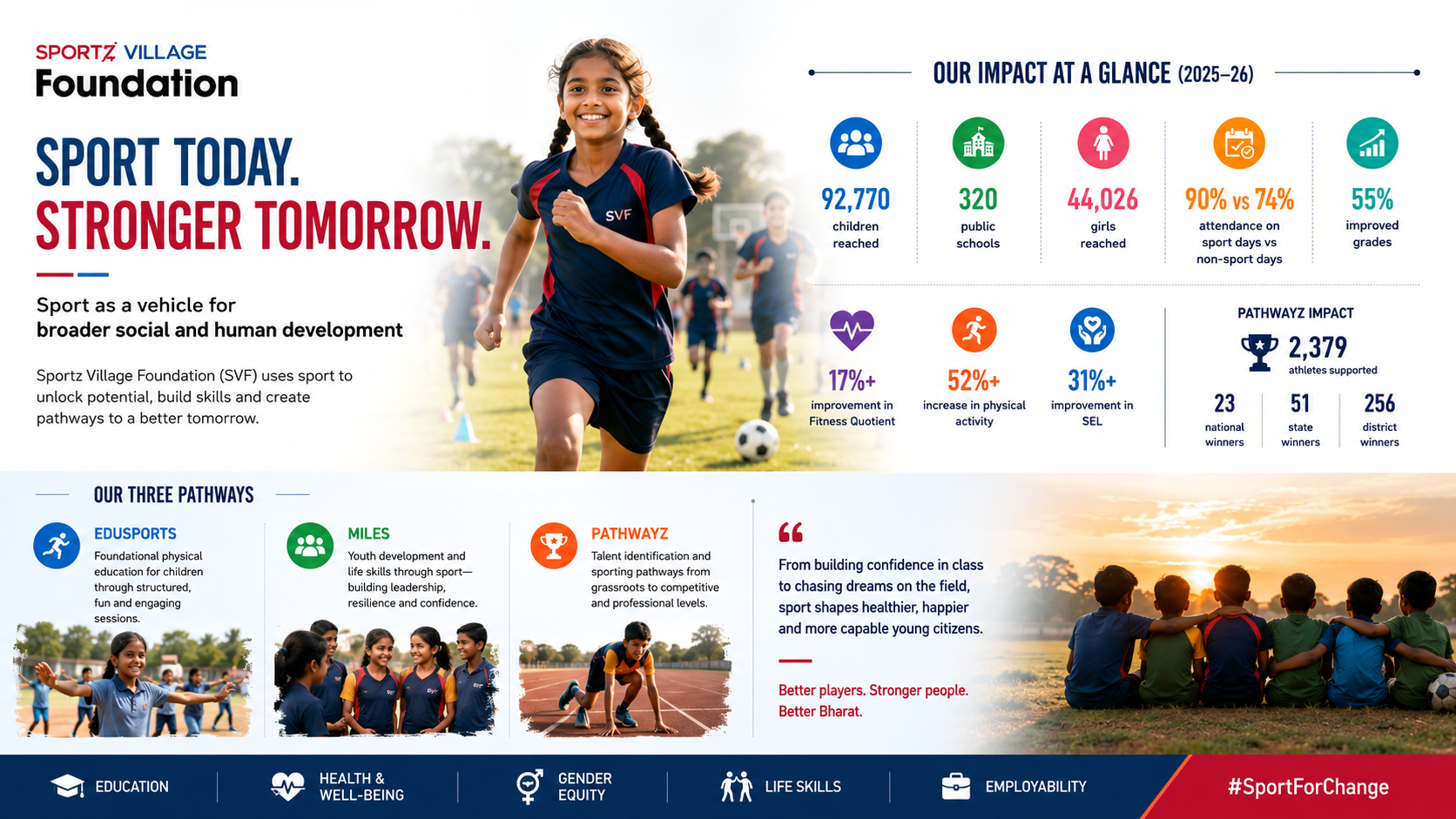
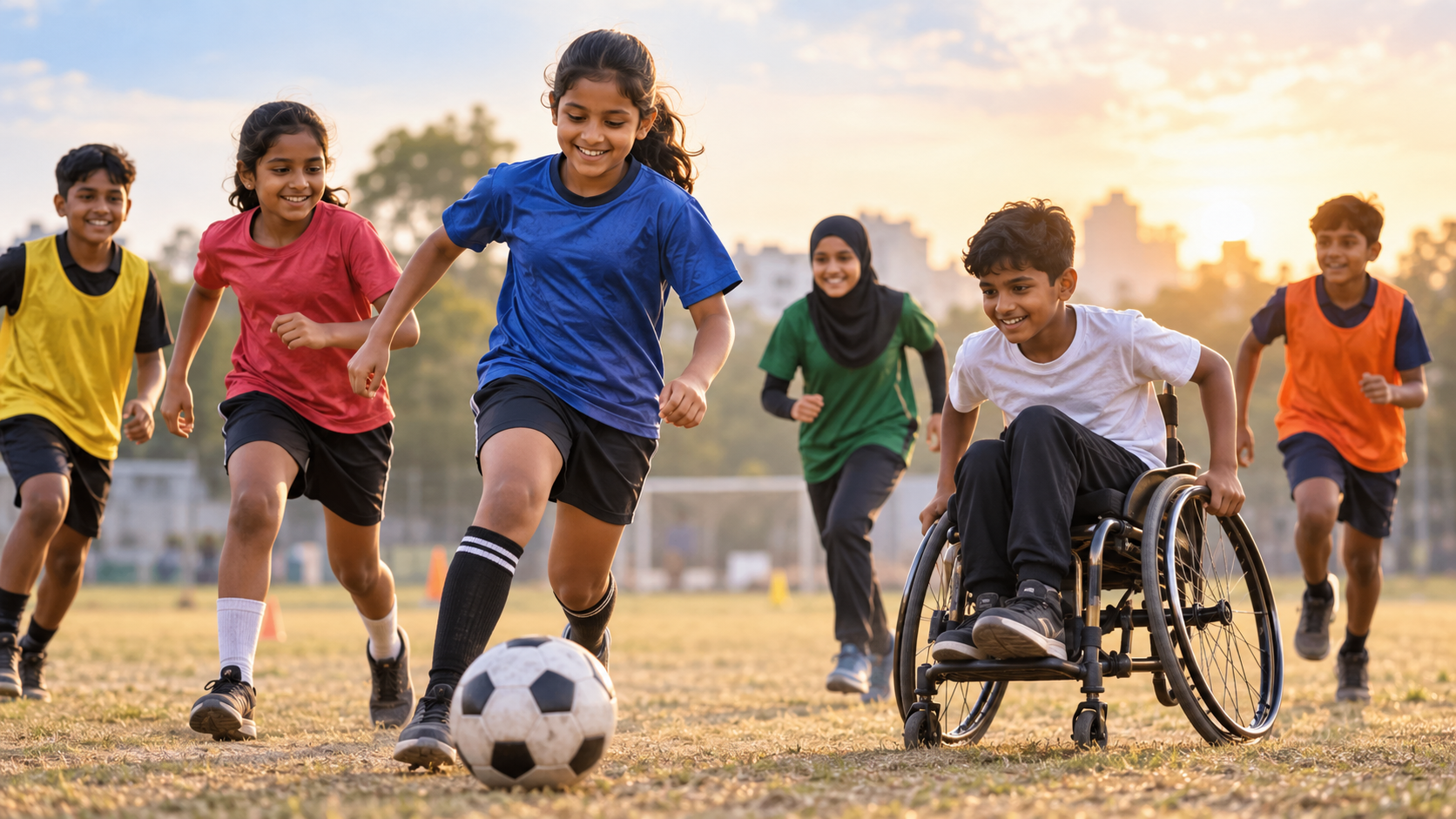
In Kandhamal, Sharmilata and Yamuna Pradhan have developed a grassroots sports and mentorship initiative centred around football.
The sisters operate a training camp in Phulbani where aspiring young athletes receive coaching. A particular focus is placed on encouraging girls to participate in football and creating an environment where young women can see sport as a legitimate pathway for personal development and competitive achievement.
Their work extends beyond coaching. They have established a football team at their college and provide individual guidance to girls who approach them for support in sport.
The sisters also extend voluntary support to children in orphanages, broadening their engagement beyond competitive football to community-level mentorship.
Their approach creates a grassroots pathway from informal coaching to participation at village, block and state levels.
From Implementation to Community Ownership
Both initiatives are built around direct engagement with the communities they seek to support.
In Bargarh, training takes place within the villages, reducing the barriers that can prevent marginalised women from participating. The emphasis on home-based and SHG-led production further enables women to integrate economic activity with existing household responsibilities.
In Kandhamal, the Pradhan sisters have created an accessible sporting ecosystem through coaching, a college football team and one-to-one mentorship. Their own journey as athletes provides an important element of role modelling for younger girls.
This community-rooted approach reflects a broader principle underpinning BIPF's work: sustainable development is strengthened when communities are not merely recipients of interventions but active participants in creating their own pathways forward.
Measuring the Impact
The two initiatives demonstrate different but complementary dimensions of grassroots empowerment.
Bargarh: Skills into Livelihoods
The initiative has trained approximately 100 marginalised women from Tora and surrounding villages, including widows, separated women, members of landless families and other economically disadvantaged individuals.
The intervention has also contributed to a shift for many participants from being wage earners to becoming more active decision-makers, supported by new capabilities in design and colour application.
The work received the Shambhavi Puraskar Jury Commendation Certification 2026, along with a citation and cash prize of ₹1,00,000.
Kandhamal: Sport into Confidence and Opportunity
Sharmilata and Yamuna have represented their village, block and state in football while establishing a college football team and operating a training camp for aspiring athletes in Phulbani.
They were named Athletic Champions of their college for the academic year 2025-26.
Their work was recognised through the Shambhavi Youth Icon Award 2026, accompanied by a citation and cash prize of ₹50,000.
Beyond formal recognition, their initiative is creating a visible sporting pathway for young girls who may otherwise have limited access to coaching, mentorship and competitive opportunities.
The Leadership Perspective
The stories of Dr. Sasmita Meher and the Pradhan sisters reflect BIPF's broader philosophy of supporting locally rooted leadership.
Speaking at the Shambhavi Puraskar 2026 ceremony, BIPF Founder and CEO Shaifalika Panda highlighted the importance of relationships, shared learning and community ownership in the foundation's development approach:
“BIPF’s journey of 15 years has been shaped by relationships, through shared learning and a deep sense of togetherness with our communities. Development at the core is about people. When given the opportunity, they will build futures far stronger than anything we could design for them.”
The two initiatives illustrate this philosophy in practice. In Bargarh, a traditional craft becomes an economic resource when women are equipped with relevant skills. In Kandhamal, sport becomes a platform for confidence, mentorship and opportunity when young people are given access to coaching and role models.
Building Models That Can Continue
Sustainability for the Bargarh initiative is anchored in its micro-enterprise and SHG-led approach. By enabling women to undertake production locally, the model seeks to reduce dependence on migration while creating a structure that can potentially be replicated across other weaving clusters in Odisha.
In Kandhamal, the combination of a training camp and college football team provides a relatively low-cost mechanism for continued mentorship of young athletes. The existing structure also offers scope to reach more girls across the block.
The emphasis in both cases is therefore not simply on delivering a one-time intervention. It is on establishing community-level structures that can continue creating opportunities beyond the immediate programme period.
A Grassroots Model of Change
The two Shambhavi Puraskar stories demonstrate how social impact can emerge from very different starting points.
In Bargarh, the starting point is a traditional craft facing economic challenges. In Kandhamal, it is the lack of structured sporting opportunities for young people. Yet both initiatives follow a similar pathway: identify a locally relevant challenge, build on existing community strengths, develop practical capabilities and create opportunities that can be sustained locally.
Dr. Sasmita Meher's work shows how heritage and livelihood development can reinforce each other, while Sharmilata and Yamuna Pradhan demonstrate how sport and mentorship can open new possibilities for young people, particularly girls.
Together, these stories reflect the spirit of the Shambhavi Puraskar — recognising individuals who turn personal experience, local knowledge and determination into wider community change.
For BIPF, the recognition of such grassroots leaders is also part of a larger development philosophy: when communities are trusted, equipped and supported, they can become the strongest architects of their own futures.


.JPG)