From the Playing Field to Life: How Sportz Village Foundation Is Using Sport to Drive Social Change
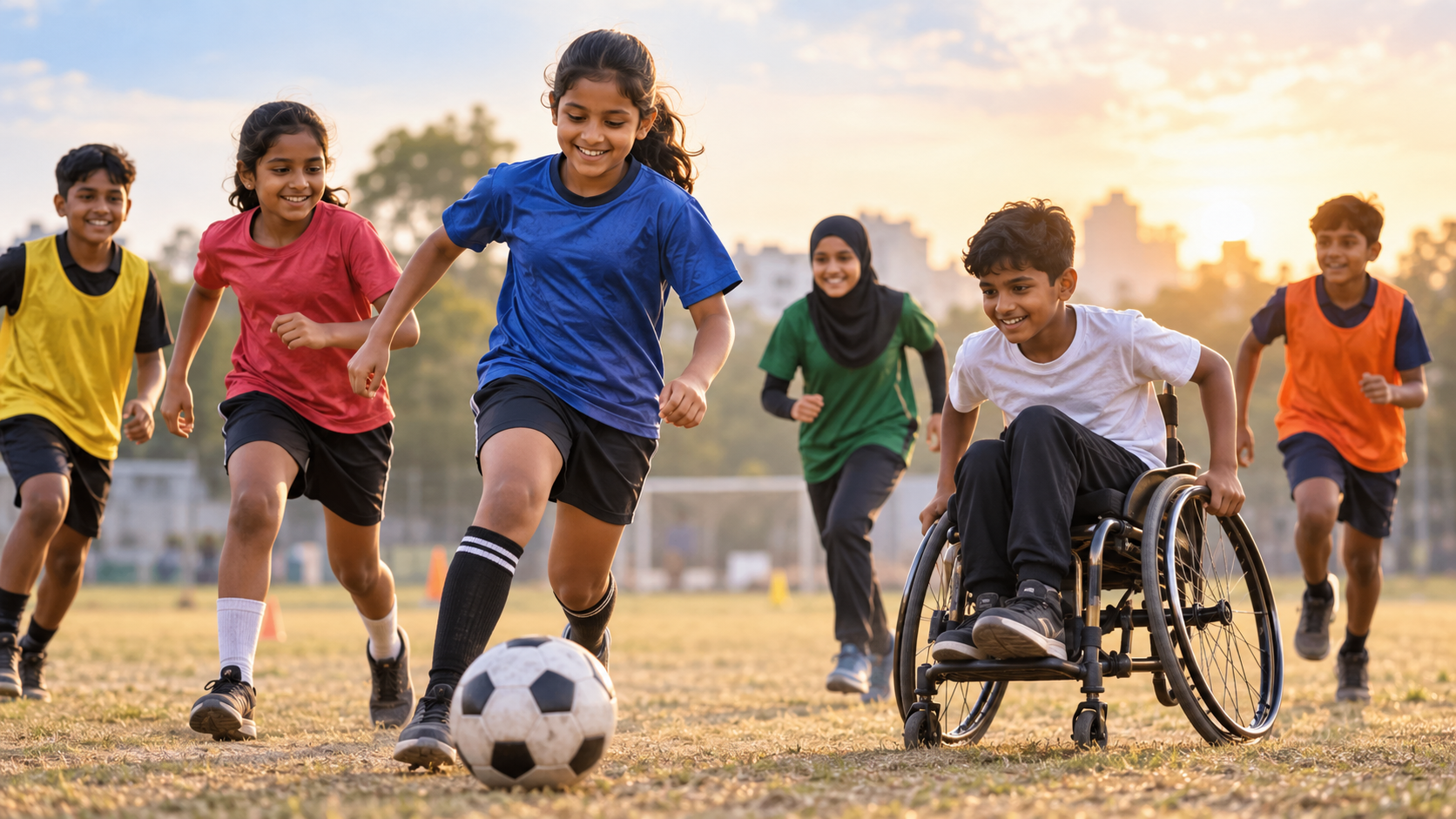
For children growing up in underserved communities, access to structured sport can mean far more than time spent on a playing field. It can create a safe space to participate, opportunities to build confidence and a practical setting in which teamwork, discipline, resilience and leadership are developed.
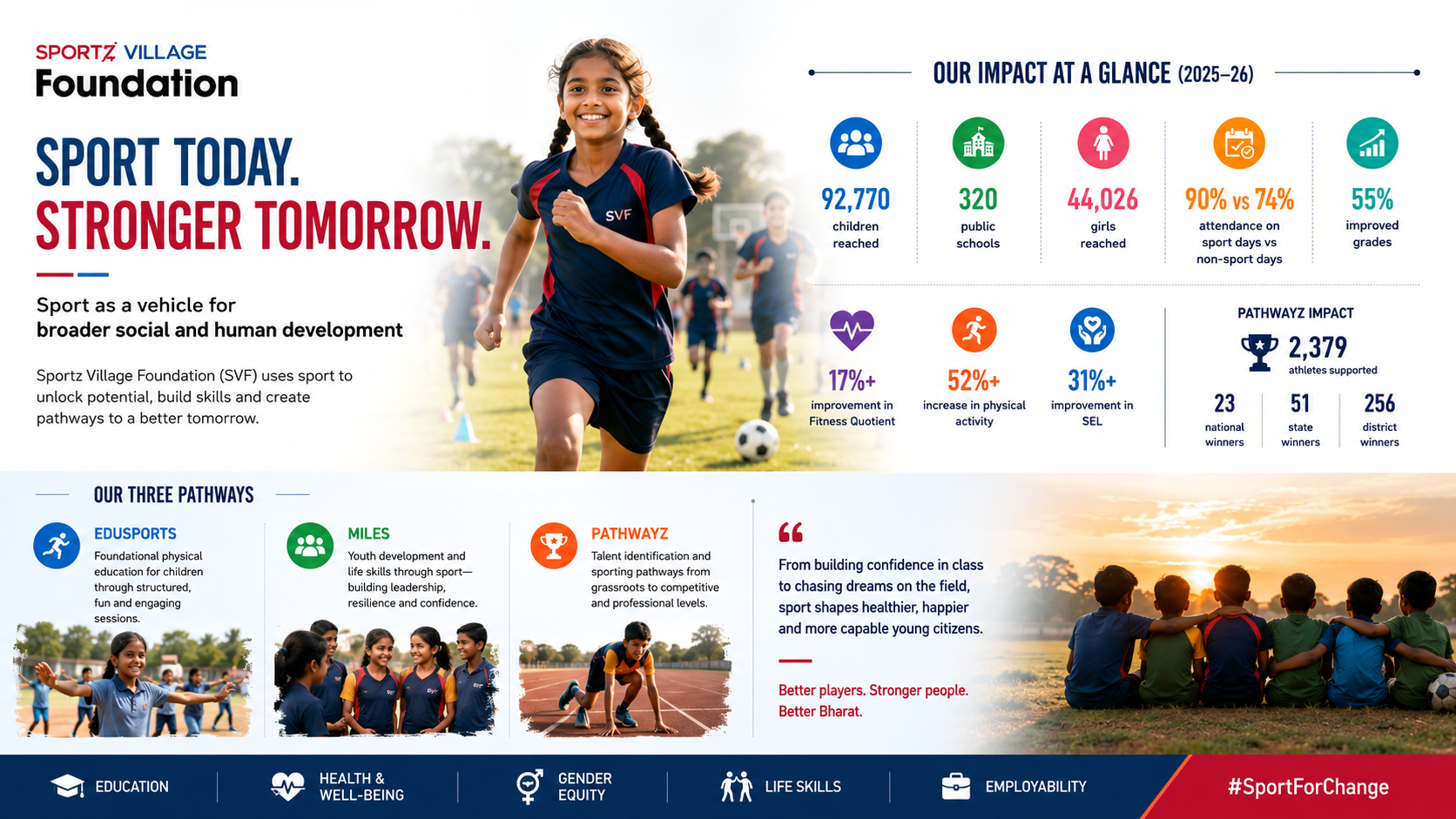
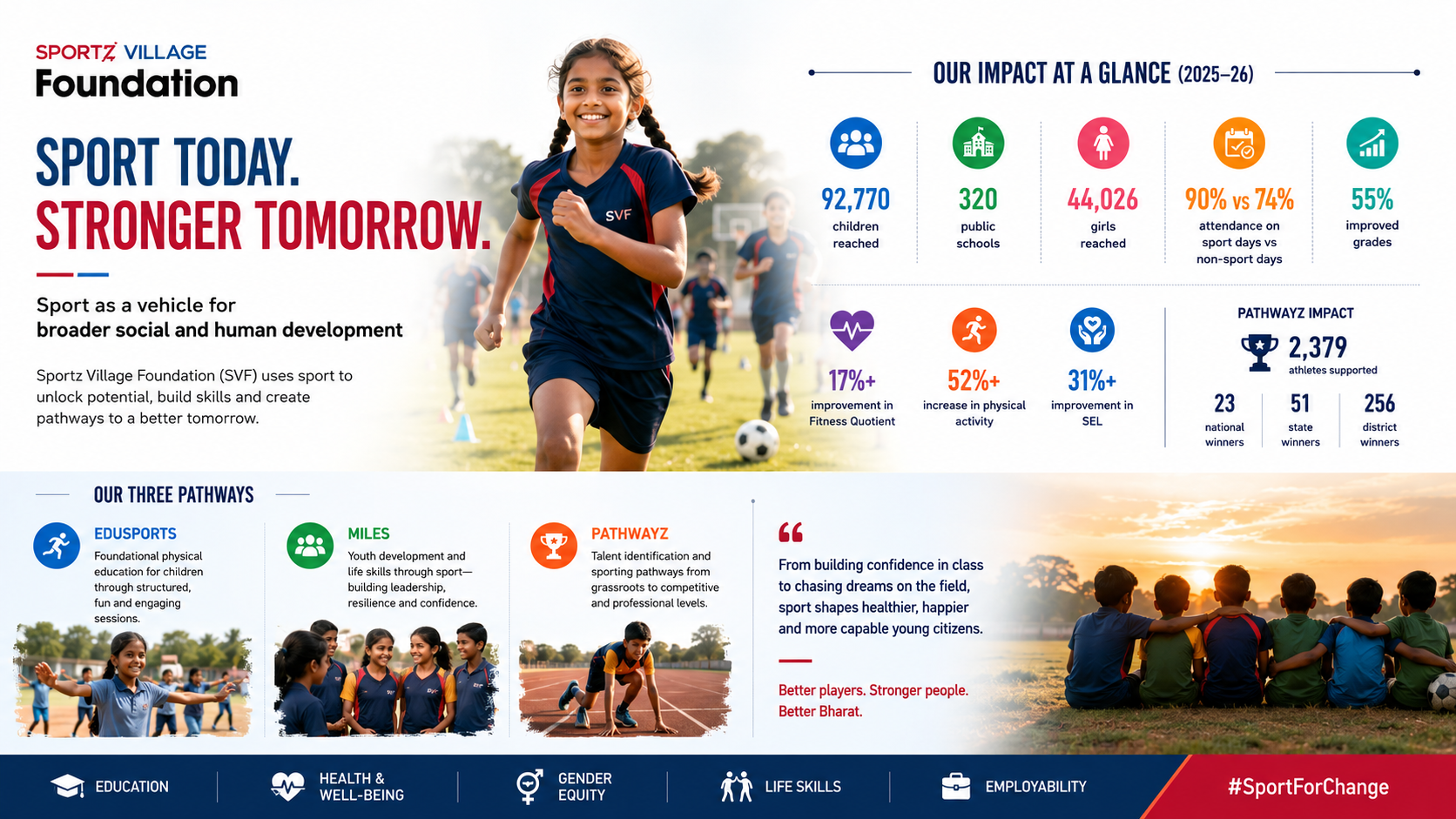
This is the premise behind Sportz Village Foundation's (SVF) #SportForChange approach, which uses sport as a starting point for wider human development. In 2025–26, the Foundation reached 92,770 children across 320 public schools in India, including 44,026 girls, through 1,26,178 sports sessions across 13 states. Its reported outcomes span education, health and well-being, gender equity, social-emotional learning, sporting excellence and emerging employability pathways.
Making Sport Part of Development
For children in underserved communities, regular access to organised sport can be limited by inadequate infrastructure, a lack of trained coaches and fewer opportunities to participate. For adolescents, the absence of structured sporting environments can also mean fewer opportunities to develop skills such as teamwork, communication, resilience and leadership.
For girls, safety concerns and social barriers can make access to sporting spaces even more difficult.
SVF's #SportForChange programme brings structured physical education, youth development and sporting opportunities into public schools and communities. Its work is delivered through three complementary programmes.
EduSports provides structured physical education for younger children, focusing on fundamental movement skills and making sport accessible and engaging.
MILES works with adolescents, using sport and physical activity to develop life skills and youth leadership, including resilience, communication, teamwork and discipline.
PathwayZ identifies and nurtures promising young athletes, creating pathways from grassroots participation to district, state and national level competition.
Together, these programmes cover different stages of a child's journey, from their first experience of structured sport to the development of life skills and, where there is talent and aspiration, the opportunity to pursue competitive sport.
Impact at a Glance
In 2025–26, SVF reached:
92,770 children
320 public schools
44,026 girls
1,26,178 sports sessions
13 states
The Foundation reports:
90% attendance on sport days compared with 74% on non sport days
55% of students improved their grades from baseline to endline
17%+ improvement in Fitness Quotient
52%+ increase in time spent in sport and physical activity
31%+ improvement in overall Social Emotional Learning
Through PathwayZ:
2,379 athletes supported
1,104 girls among the athletes supported
23 national level winners
51 state level winners
256 district level winners
The outcomes cover five areas: education, health and well-being, gender equity, sports excellence and livelihoods.
Education
Across #SportForChange programmes, students who participated in sport showed stronger attendance, classroom engagement and academic performance, according to SVF. Teachers also reported improvements in attentiveness, participation and homework completion.
Attendance stood at 90% on days with sport sessions, compared with 74% on non sport days, while 55% of students improved their grades from baseline to endline.
The findings point to a relationship between regular sporting opportunities and children's engagement with school, while also highlighting the potential for structured physical education to complement classroom learning.
Health and Well-being
Children spent more time being physically active and showed healthier BMI outcomes. SVF also reported gains in social-emotional competencies including resilience, initiative, conflict management, communication and following instructions.
Across the cohort, Fitness Quotient improved by more than 17%, time spent in sport and physical activity increased by more than 52%, and overall Social Emotional Learning improved by more than 31%.
Gender Equity and Inclusion
Girls accounted for nearly half of the children reached through #SportForChange, with 44,026 girls participating during the year.
SVF's gender responsive programme design and initiatives such as Shakti aim to create environments where girls feel safe, supported and encouraged to participate. The focus also extends to creating opportunities for girls to take on leadership roles.
Among the reported outcomes, SVF recorded a 30% improvement in overall Social Emotional Learning and a 56% increase in time spent in sport and physical activity for the relevant cohort.
The focus is therefore not simply on increasing participation, but on creating sporting environments in which girls can participate with greater confidence and agency.
Sports Excellence
PathwayZ operates through 90 Sports Development Centres, where promising athletes can train consistently, compete regularly and develop their sporting potential.
During the year, the programme supported 2,379 athletes, including 1,104 girls. They recorded 23 national level wins, 51 state level wins and 256 district level wins.
The programme provides support beyond regular training, including nutrition, physical conditioning and exposure to national level competition. Through these centres, SVF aims to create a bridge between grassroots participation and higher levels of sporting competition.
The Stories Behind the Numbers
The scale of the programme is reflected in the numbers. Its impact can also be seen in the experiences of the children and young people who participate.
Mahathi | Government High School, Kathirvedu, Chennai
Mahathi used to stay away from sport. She found it difficult and was worried about getting hurt.
That changed when her school introduced structured PE classes under SVF's #SportForChange programme. The sessions were organised and engaging, while the trainer helped create an environment in which participation felt safe.
Mahathi started attending. Then she started competing. Over time, she also began encouraging other girls in her community to play.
Now in Class 7, her ambition has moved beyond her own participation. She wants to share what sport has given her with students across the country.
Her journey shows how a first opportunity to participate can lead to greater confidence and, in her case, a desire to encourage other girls to take up sport.
Deepak Toppo and Asha Kiran | Jharkhand
Deepak and Asha came from different districts in Jharkhand and entered the PathwayZ 36 excellence programme through separate district level trials.
They received structured support covering nutrition, physical conditioning and exposure to national level competition. Their journeys eventually brought them together on the same relay team at the National Relay Championship.
For Asha, one of the few girls in the programme, the medal meant more than a sporting achievement. It showed what can happen when girls from underserved communities have access to a structured pathway into competitive sport.
Their experience also reflects the role of sustained support in talent development. Identification is only the first step. Training, nutrition, conditioning and opportunities to compete are needed to help young athletes progress.
Sport Beyond the Playing Field
For SVF, the role of sport extends beyond participation and performance.
The skills developed through sport, including resilience, teamwork, discipline, communication and leadership, can also help young people navigate education, employment and life beyond the playing field.
This is increasingly reflected in the Foundation's focus on employability. In 2025–26, 1,098 young people participated in career counselling sessions, while SVF reported an over 28% improvement in Social Emotional Learning among youth aged 12 to 18.
The Foundation's work around employability through sport explores how capabilities developed through sporting participation can translate into the workplace. This represents a growing area of focus as SVF looks at how sport can contribute to young people's longer term development, rather than ending with participation or sporting performance.
Looking Ahead
SVF's priorities for the next phase include expanding girls' participation, strengthening government partnerships, widening pathways for sporting talent and developing the employability dimension of its work.
Through Girls in Sports, the Foundation plans to deepen its focus on communities where girls continue to face barriers to participation.
On scale, SVF is looking to work more closely with governments and embed #SportForChange within public systems of education and sport rather than working school by school. The aim is to move towards models that can be integrated into existing systems and reach more children.
The Foundation is also placing renewed emphasis on PathwayZ 36, with the aim of identifying promising athletes who might otherwise be missed and providing them with the support needed to progress.
Employability will remain another area of focus, with efforts to connect the skills developed through sport with career support and future opportunities for young people.
International partnerships are also part of the longer term plan, as SVF seeks to take #SportForChange beyond India and strengthen the country's contribution to the global Sport for Development movement.
The #SportForChange Roundtable Series is another part of this effort, bringing together governments, corporates, practitioners and communities to build greater coordination around sport and social investment. SVF sees collaboration across sectors as important to pooling knowledge, infrastructure and expertise and developing models that can scale.
The ambition is to build a stronger ecosystem around sport as a tool for education, health, inclusion and opportunity.
For the children reached through these programmes, the starting point may simply be a chance to play. What they gain from it can extend much further, into the classroom, their relationships, their confidence, their health and, for some, towards a sporting or professional future.
For SVF, that is where the value of sport lies: not only in creating better players, but in giving more young people the opportunity to develop, participate and aspire with confidence.



.JPG)