Konica Minolta India: Advancing CSR Through Resilience, Inclusion and Sustainable Community Development
Lasting social impact is increasingly defined by what remains after a CSR intervention concludes: stronger local institutions, greater community ownership and the capacity to sustain progress independently. This is shifting the conversation around corporate responsibility from the scale of activities undertaken to the depth and durability of outcomes created.
Across India, interconnected challenges spanning healthcare, education, nutrition, livelihoods, water security and environmental sustainability demand interventions that recognise their relationship rather than address them in isolation. Konica Minolta Business Solutions India’s CSR portfolio reflects this approach through its four programmes, Aarogya, Neev, Urja and Pravah, which focus on healthcare access, holistic child development, renewable energy and water conservation.
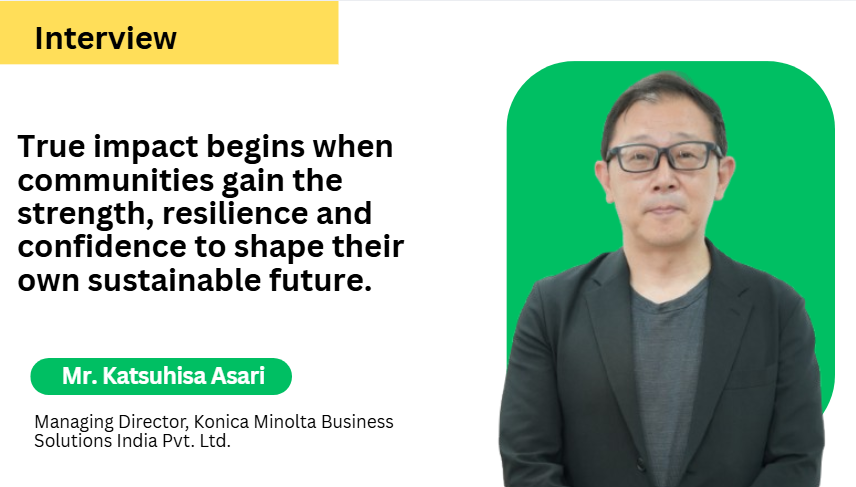
In this interview, Mr. Katsuhisa Asari, Managing Director, Konica Minolta Business Solutions India Pvt. Ltd., discusses how the organisation is shaping its CSR strategy around community needs, local partnerships and long-term resilience. He reflects on the role of shared value in the future of corporate philanthropy, the lessons emerging from interventions across diverse geographies, and the importance of measuring outcomes beyond beneficiary numbers. The conversation also examines how technology, environmental sustainability and community participation can converge to create more resilient and self-reliant communities.
Scroll down to read the full interview:
Q. CSR is increasingly moving from a compliance-led function to a more strategic approach centred on long-term social impact. In your view, what distinguishes CSR programmes that create lasting community transformation from those that remain limited to short-term interventions?
A. The key distinction between CSR programmes that create lasting community transformation and those limited to short-term interventions lies in their intent, continuity, and approach. While short-term initiatives are valuable in addressing immediate needs and responding to urgent challenges, transformational CSR focuses on creating sustainable change by addressing the root causes of social issues.
Long-term programmes adopt a holistic approach, recognising that community development requires progress across interconnected dimensions such as education, healthcare, livelihoods, and environmental sustainability. Rather than implementing standardised solutions, they are designed around the unique needs of each community and developed in partnership with local stakeholders. This emphasis on community participation, capacity building, and local ownership enables beneficiaries to become self-reliant and sustain impact beyond the duration of the programme.
Q. As businesses increasingly integrate CSR with their broader ESG and sustainability agendas, how can companies strike the right balance between responding to immediate community needs and investing in interventions that build long-term resilience and self-reliance?
A. Every CSR intervention has its own value, as even small initiatives can address critical and immediate community needs. The right balance lies in adopting a context-based approach rather than treating short-term and long-term interventions as competing priorities.
Companies should begin by assessing the focus area, beneficiaries' needs, the required scale of impact, and the broader challenges affecting them. This helps determine whether an intervention should provide immediate relief or be designed as a long-term programme that builds resilience and self-reliance. While urgent support is essential in addressing immediate concerns, sustained investments in areas such as education, livelihoods, healthcare, and capacity building enable communities to become more resilient over time.
Ultimately, the most effective CSR strategies are those that combine timely action with a long-term vision, ensuring that immediate support also contributes to lasting and sustainable community development.
Q. The idea of shared value suggests that businesses can contribute to social development while also strengthening their own long-term sustainability. How do you see this approach shaping the future of corporate philanthropy and CSR in India?
A. The concept of shared value is reshaping the future of corporate philanthropy and CSR in India by encouraging businesses to view social impact and business success as complementary rather than separate objectives. When CSR is aligned with a company's core business, expertise, and broader sustainability goals, it becomes more strategic, purposeful, and capable of creating long-term value. This approach enables companies to leverage their strengths to address social and environmental challenges in a way that is both scalable and sustainable. As a result, CSR moves beyond one-time philanthropic contributions to initiatives that generate measurable outcomes, strengthen community resilience, and create lasting social impact. At the same time, businesses benefit through stronger stakeholder trust, enhanced reputation, greater innovation, and improved long-term sustainability.
As ESG becomes increasingly central to corporate strategy, the shared value approach will continue to shape CSR in India by fostering partnerships and solutions that create meaningful and enduring benefits for both communities and businesses.
Q. What role do you believe businesses should play in addressing interconnected challenges such as education, healthcare, water security and environmental sustainability, particularly in communities where these issues often reinforce one another?
A. Businesses have a critical role to play in addressing interconnected challenges such as education, healthcare, water security, and environmental sustainability by adopting a holistic, systems-based approach rather than addressing issues in isolation. Since these challenges often reinforce one another, creating meaningful and lasting impact requires solutions that recognise their interdependence and address the underlying causes.
By working closely with NGO partners, community members, local institutions, and subject experts, businesses can gain a deeper understanding of community needs and design interventions that are relevant, integrated, and sustainable. Such collaborations help ensure that programmes not only address immediate concerns but also strengthen local capacity, build resilience, and encourage community ownership. With their resources, expertise, innovation, and long-term commitment, businesses are well positioned to drive systemic change and support development models that improve quality of life while enabling communities to become more resilient and self-reliant over time.
Q. Konica Minolta India’s CSR portfolio spans preventive healthcare, education, renewable energy, water conservation and livelihood development through programmes such as Aarogya, Neev, Urja and Pravah. How does the organisation identify community needs and determine which interventions are most relevant to a particular geography or population?
A. Our approach to CSR is guided by core values of Inclusivity & Collaboration reflecting our belief that meaningful and sustainable solutions are built through partnership. We believe that creating long-term social impact begins with understanding the unique needs, priorities, and challenges of each community rather than applying a standardised approach.
To achieve this, we work closely with credible NGO partners, subject matter experts, local institutions, and community members to gain a comprehensive understanding of grassroots realities. Through regular community engagement, needs assessments, and field-level insights, we identify the most pressing challenges and the areas where our interventions can create the greatest and most sustainable impact.
These insights enable us to design programmes that are tailored to the specific requirements of each geography and population, whether in preventive healthcare, education, renewable energy, water conservation, or livelihood development. We also continuously monitor our initiatives and engage with implementation partners to ensure they remain relevant, responsive, and aligned with evolving community needs.
By combining collaboration, local participation, and evidence-based decision-making, we ensure that our CSR initiatives are not only impactful in the short term but also contribute to building resilient, self-reliant communities over the long term.
Q. From solarising 10 Zila Parishad schools in Palghar and supporting integrated development across 13 schools in Pune to installing Health ATMs in Gujarat and constructing check dams in Uttar Pradesh, what lessons have these interventions offered about designing CSR programmes that can deliver sustainable outcomes across diverse communities?
A. Our CSR journey across diverse geographies has reinforced that there is no one-size-fits-all approach to community development. While every intervention is shaped by local needs, a few key principles consistently contribute to creating sustainable outcomes.
First, CSR initiatives are most impactful when aligned with the company's core business values and sustainability vision, fosteringgreater purpose, authenticity, and long-term commitment. Equally important is investing time in understanding the community's unique needs and the root causes of local challenges before designing any intervention. This helps ensure that programmes are relevant, need-based, and capable of delivering lasting impact.
Another important lesson has been the value of collaboration. Working closely with local government authorities, implementation partners, and community stakeholders strengthens ownership, improves implementation, and enhances the long-term sustainability of projects. Finally, every intervention should incorporate capacity building and a clear exit strategy so that communities are empowered to manage and sustain the benefits independently.
Q. Healthcare accessibility and preventive care remain significant challenges in many underserved communities. Through Aarogya, including the installation of six Health ATMs in Gujarat, how is Konica Minolta India assessing whether such technology-led interventions are improving access to healthcare in a meaningful and sustained manner?
A. At Konica Minolta India, we believe that the success of any CSR intervention is determined not only by its implementation but by the meaningful and lasting impact it creates. Through Aarogya, including the installation of Health ATMs in Gujarat, we focus on ensuring that technology enhances healthcare accessibility while addressing the specific needs of underserved communities.
To assess the effectiveness of these interventions, we regularly monitor project outcomes through structured impact assessments and continuous feedback from beneficiaries, implementation partners, healthcare professionals, and relevant government authorities. This enables us to understand not only the reach and utilisation of the Health ATMs but also their role in improving access to preventive healthcare and early health screening within the community.
The insights gathered help us refine our implementation approach, address emerging challenges, and ensure that our healthcare initiatives remain relevant, accessible, and responsive to evolving community needs.
Q. Education and child development form a significant part of Konica Minolta India’s CSR approach, including school development initiatives, nutrition support and its partnership with SOS Children’s Villages. How does the organisation view the relationship between foundational education, nutrition, child well-being and the long-term development of communities?
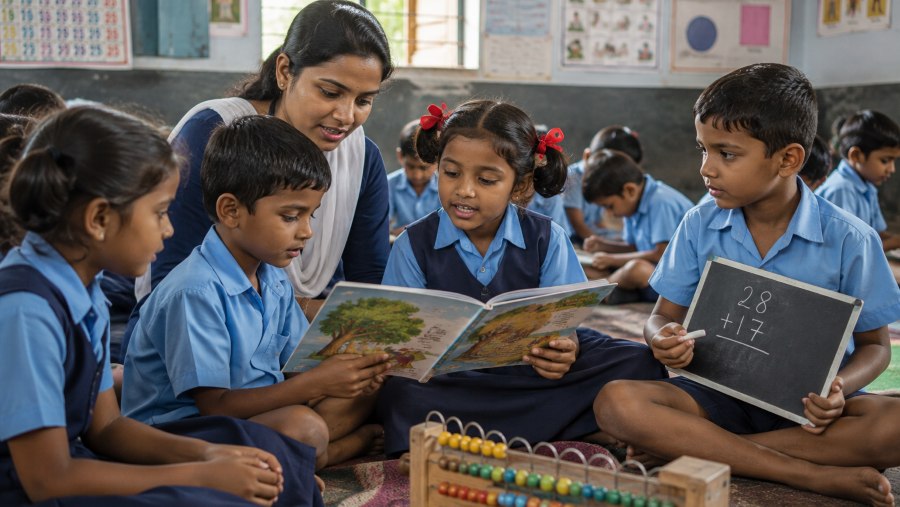
A. Our NEEV programme is built on the belief that a child's development extends beyond access to education alone. Foundational education, adequate nutrition, and overall physical and emotional well-being are deeply interconnected, and together they create the foundation for children to learn, grow, and realise their full potential.
This understanding shapes our approach to school development initiatives, nutrition support, and partnerships such as SOS Children's Villages. By addressing these interconnected aspects together, we aim to create an enabling environment where children can thrive academically, physically, and socially.
We believe that investing in children is one of the most impactful ways to drive long-term social development. Healthy, educated, and empowered children are more likely to become confident individuals who contribute meaningfully to their communities. In this way, strengthening child well-being today helps build more resilient communities and supports the nation's sustainable development in the years to come.
Q. With Urja and Pravah focusing on renewable energy and water conservation, how does Konica Minolta India approach environmental sustainability as a component of community development, particularly in terms of building local resilience to resource insecurity?
A. We view environmental sustainability as a fundamental pillar of community development rather than a standalone focus area. Access to reliable energy and water has a direct impact on education, healthcare, livelihoods, and overall economic well-being, making it essential for building resilient communities.
Through Urja and Pravah, we aim to strengthen long-term community resilience by promoting renewable energy adoption and sustainable water conservation practices. These initiatives are designed not only to address immediate resource needs but also to help communities manage natural resources more efficiently and responsibly for the future.
Our approach is centred on creating sustainable solutions that reduce vulnerability to water and energy shortages while improving the quality of life for local communities. By integrating environmental sustainability into our broader CSR strategy, we seek to build self-reliant communities that are better equipped to adapt to resource challenges and contribute to sustainable development over the long term.
Q. Could you share the measurable impact of Konica Minolta India’s CSR programmes in terms of beneficiaries reached, geographical coverage and key outcomes across its focus areas, particularly under Aarogya, Neev, Urja and Pravah? How does the organisation track outcomes over time to assess whether its interventions are creating sustained impact rather than only measuring the number of beneficiaries or activities completed?
A. Konica Minolta India's CSR programmes are designed to create meaningful impact across diverse geographies, especially with a strong focus on reaching those communities where support is needed the most rather than limiting interventions to specific locations. Today, our initiatives span multiple states across India, with Aarogya implemented through government PHCs and CHCs in Bathinda, Balotra, and Vadodara; Neev reaching communities across Delhi NCR, Hyderabad, Bhubaneswar, Dehradun, and Varanasi; Pravah supporting water conservation efforts in Shravasti, Uttar Pradesh; and Urja promoting renewable energy in Palghar, Pune, and Raichur.
In terms of reach, Aarogya has benefited over 1,88,000 individuals, a figure that continues to grow, while Neev has reached 6,816 beneficiaries, Pravah has impacted 6,868 people, and Urja has benefited 1,382 individuals through its renewable energy initiatives.
However, we believe the success of such initiatives cannot be measured by beneficiary numbers alone. Along with tracking reach and programme implementation, we continuously assess long-term outcomes through regular monitoring, impact assessments, and feedback from implementation partners and communities. Depending on the nature of the intervention, we also evaluate measurable indicators such as carbon emissions mitigated through the deployment of solar power systems and electric vehicles, as well as improvements in groundwater recharge and water availability through initiatives such as the construction of check dams under Pravah.
This outcome-based approach enables us to understand the long-term effectiveness of our programmes, refine interventions where required, and ensure that our CSR initiatives continue to create sustainable environmental and social impact across the communities we serve.



.png)