From Funding to Impact: Ramesh Daswani on Building Sustainable Change at Light of Life Trust
.png)
Real change begins when people come together to create opportunities that can last beyond a single intervention. For organisations working with underserved communities, access to the right resources, transparent funding and strong partnerships can make this change more sustainable and scalable.
In this interview, Ramesh Daswani, CEO, Light of Life Trust (LOLT), discusses the organisation’s journey of creating pathways from education to skills, livelihoods and greater self-reliance. He shares the vision behind LOLT’s listing on the BSE Social Stock Exchange, the role of its ₹1.27 crore Zero Coupon Zero Principal issue in supporting 420 children in Bihar and Jharkhand, and how the Social Stock Exchange can strengthen transparency and donor engagement.
The conversation also explores LOLT’s approach to breaking intergenerational poverty, its Anando programme, the role of performing arts through Melodies for Change, and the importance of partnerships in expanding social impact. Daswani also reflects on how donors, institutions and individuals can contribute to building a stronger ecosystem for underserved communities.
Scroll down to read more about:
Q. What was the vision behind listing Light of Life Trust on the BSE Social Stock Exchange, and what gaps in social-impact funding did you hope to address through this step?
A. The vision behind listing Light of Life Trust on the BSE Social Stock Exchange was to create a more structured and transparent avenue for mobilising funds for social development. For us, it was also about making our work and impact more visible to a wider ecosystem of donors, institutions and other stakeholders.
There is a growing interest in responsible and outcome-oriented philanthropy, but organisations need platforms where they can communicate their work, funding requirements and impact in a transparent manner. The SSE provides that framework.
Our listing was therefore not just about raising funds. It was about strengthening accountability, widening the pool of potential supporters and creating a more structured connection between philanthropic capital and clearly defined social outcomes.
Q. The ZCZP issue of ₹1.27 crore is aimed at supporting the education and holistic development of 420 children in Bihar and Jharkhand. How will these funds be utilised, and what outcomes do you hope to achieve?
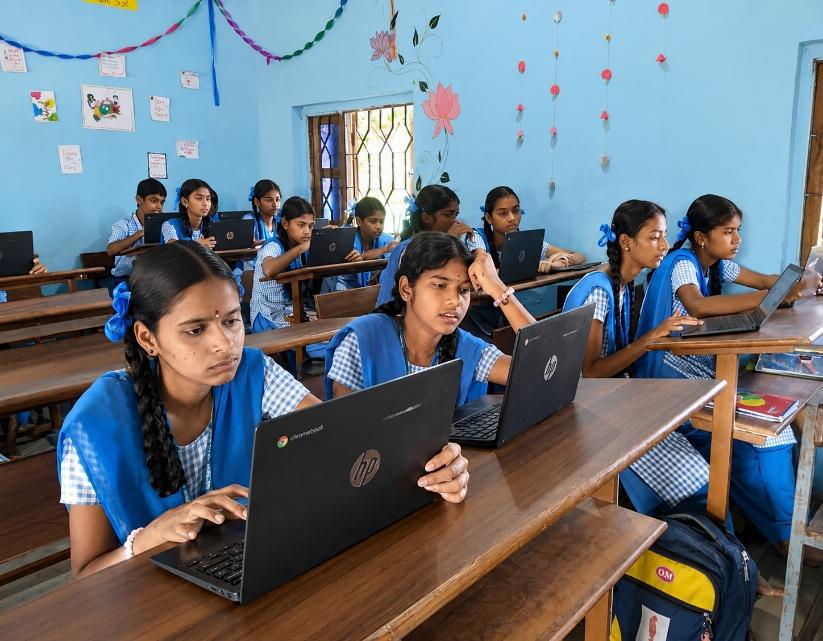
A. The ₹1.27 crore raised through the Zero Coupon Zero Principal issue will support the education and holistic development of 420 underserved children in Bihar and Jharkhand through our Anando programme.
The funds will support the children's educational journey along with mentoring and other elements of holistic development. Our objective is not simply to provide access to education, but to help children build the confidence, skills and capabilities required to continue their education and pursue better opportunities in the future.
We look at this as a long-term intervention. However, our immediate goal is to prevent these probable dropouts from leaving school and help them complete their SSC, while the larger objective is to create sustainable pathways through which education can translate into greater opportunities for them and their families.
Q. How does the Social Stock Exchange platform change the way NGOs like Light of Life Trust can raise funds and engage with donors, institutions and other stakeholders?
A. The Social Stock Exchange gives non-profit organizations an additional structured platform to present their work, impact and funding requirements to a broader set of stakeholders.
One of the important aspects is the emphasis on transparency and disclosures. It encourages organizations to communicate not only what they are doing, but also who they are reaching, what outcomes they are working towards and how resources are being utilized.
For LOLT, this creates an opportunity to engage with donors and institutions who are looking for greater visibility into the social impact associated with their contributions. It also encourages us, as an organization, to continuously strengthen our systems and communicate our work in a more measurable and accountable manner.
Q. Transparency and measurable outcomes are important aspects of the SSE framework. How is Light of Life Trust strengthening its systems to track, report and demonstrate the impact created through the funds it receives?
A. Measurement and accountability have always been important to our work because social impact cannot be measured only by the number of beneficiaries reached.
We track programme-level data and outcomes across our different interventions, and our teams monitor implementation at the community level. This helps us understand whether programs are reaching the intended beneficiaries and whether the interventions are delivering the outcomes we set out to achieve.
The SSE framework has further strengthened our focus on documentation, disclosures and measurable outcomes. We see this as an ongoing process of improving how we track, evaluate and communicate our impact to our donors, partners and other stakeholders.
Ultimately, transparency is about ensuring that supporters can understand how their contributions are being used and the difference they are making on the ground. We are also now using AI tools to ensure the timely preparation of reports and to develop the various research-based documents required for submission to different authorities.
Q. LOLT works across education, skilling, livelihoods, healthcare, performing arts and environmental conservation. How does education fit into your broader approach to addressing intergenerational poverty?
A. Education is one of the strongest foundations for breaking the cycle of intergenerational poverty.
For a child from an underserved community, access to education can influence future opportunities, employability, income and confidence. But we also recognize that education does not operate in isolation. A child may face challenges related to healthcare, family income, access to resources or the wider community environment.
That is why LOLT has developed a broader approach that combines education with skilling, livelihoods, healthcare, performing arts and community development.
Our objective is to address some of the interconnected challenges that affect vulnerable communities and create a pathway from education to skills, opportunities and greater self-reliance.
Over the past 10-15 years, we have been able to track the onward journey of both male and female students. We have seen that girls in the villages are now getting married at a later age, while young men are finding suitable employment within their villages or districts and are able to earn a sustainable income to support their families. Young women are also pursuing opportunities in areas such as data operations, sewing and tailoring, and beautician courses, for which they are equipped after completing Class X or XII.
Q. Melodies for Change’ brings music and social impact together. What was the idea behind using a live concert as a platform to support LOLT’s work with underserved communities?
A. Music has always been closely connected to our work through Anant, our performing arts initiative, which uses music and the arts to build confidence and create opportunities for young people.
With Melodies for Change, we wanted to take that connection between music and social impact to a wider audience. The concert brings together Mahalakshmi Iyer and Shriram Iyer for an evening of music, while creating an opportunity for audiences and supporters to contribute towards a larger social cause.
The proceeds from the concert will support LOLT’s Village Transformation Initiative, through which we work with rural communities across areas such as education, livelihoods, healthcare and sustainable development.
For us, the idea is to make participation in social impact more accessible. People can come together, enjoy an evening of music and, at the same time, contribute towards creating opportunities for underserved communities.
It is about bringing culture, community and purpose together on one platform.
Q. LOLT has worked with several organizations and stakeholders over the years. How have your current partners and collaborators contributed to strengthening or expanding your programs and fundraising efforts?
A. Partnerships have been an important part of LOLT's journey from the beginning. Our work has grown through the support and collaboration of corporates, institutions, philanthropic organizations, individual donors, programme partners and the communities themselves.
Different partners bring different strengths. Some contribute financial resources, while others bring expertise, technology, networks, infrastructure or programme support. These collaborations have helped us expand into new geographies, strengthen existing programmes and reach more beneficiaries.
At the same time, partnerships are most meaningful when they are aligned with the actual needs of communities. Our focus is therefore on building long-term relationships where both the resources and expertise being brought in contribute towards sustainable outcomes.
Q. With the SSE listing and initiatives such as ‘Melodies for Change’, what would you like supporters and potential donors to understand about the role they can play in expanding LOLT’s work?
A. The most important thing I would like supporters to understand is that lasting social change is a collective effort. An organisation can build and implement programmes, but the scale and sustainability of that work depends on communities, donors, institutions, partners and individuals coming together.
The SSE listing gives us a structured way to communicate our work and funding requirements, while initiatives such as Melodies for Change create another way for people to engage with the cause.
Support does not always have to take the same form. It can be financial support, professional expertise, institutional partnerships, networks or simply helping create greater awareness about the issues communities face.
At LOLT, our responsibility is to use that support thoughtfully and transparently, with a clear focus on outcomes. The larger the ecosystem of people willing to participate, the more communities we can reach and the more opportunities we can create for children and families who need them.
Finally, one of the most important roles supporters can play is to spread the word. No form of publicity is as powerful as word of mouth. When people share our work, talk about the issues affecting communities and encourage others to participate, they help extend the reach of the cause and bring more people into the ecosystem of change.
.png)


.jpg)