
Beyond Sustainability: Why Regenerative Design Is the Next Step
For years, businesses have been encouraged to improve efficiency, reduce waste, use fewer resources and move towards net zero. But as sustainability challenges become more complex, the conversation is also beginning to move beyond reducing harm towards asking whether products, materials and systems can be designed to address some of the environmental and social issues we face today.
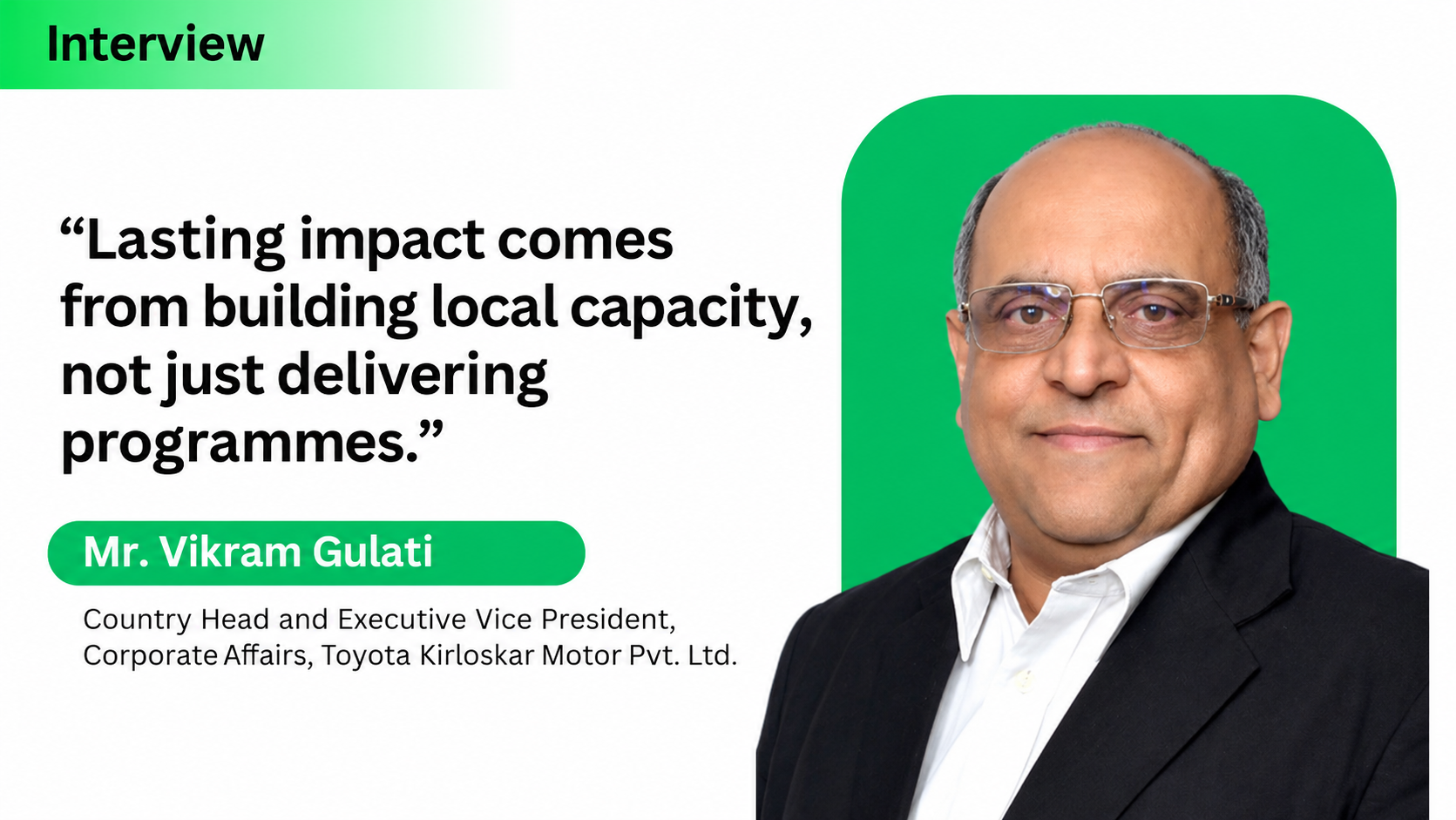
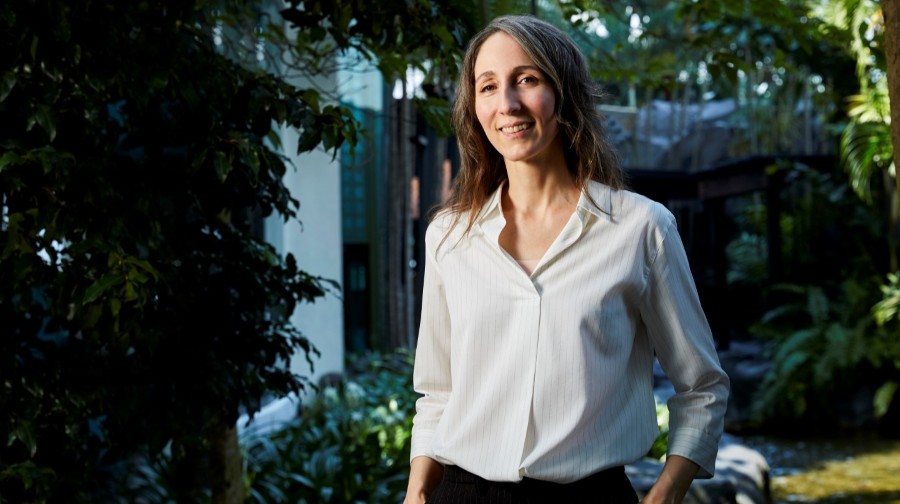
In this conversation with TheCSRUniverse, Jane Abernathy, Chief Sustainability Officer, HumanScale and an industrial designer, draws on nearly two decades of experience across product design, materials, manufacturing and sustainability to explain the emerging concept of regenerative design. She discusses why the conversation needs to begin at the design stage, the challenges of gaining visibility across deeper supply-chain tiers, and the role regulation can play in creating market signals without stifling innovation.
Abernathy also shares HumanScale’s experience of eliminating PFAS coatings from its textiles, discusses practical opportunities for smaller businesses, healthier workplaces and emerging approaches to medical-waste processing, and makes a case for greater stakeholder engagement and learning between the Global North and Global South.
Read the full interview below.
Q. We have heard a lot about sustainability, green initiatives, zero waste and net zero. Where does regenerative design fit into this conversation, and what does it mean?
A. If you don't know the definition of regenerative design, I think that's very understandable because I do know about 30 sustainability professionals who are working together to try to figure out this definition. So, it's understandable if it's not already known.
But what I think is that it is basically increasing what we're expecting. At first, when we talked about sustainability, we often meant we're going to be efficient.
Maybe you have all of your waste and now you reduce it by 25 per cent. You have only 75 per cent of your waste now and that would be celebrated as being sustainable. Then we started thinking, wait a minute, you still have 75 per cent of your waste. That's not that great.
Maybe you should actually go even further and then you would get down to these net-zero concepts. So, the idea of maintaining things as they are today.
But then we see there's actually a lot of issues today. So, the idea of regenerative is going even further than that to say, can we start to address some of these issues in the environment, some of the issues in the world?
We try to think about it for the ecosystems, the environment, but also the social impacts, to make sure that we're maintaining social structures, maintaining healthy people, and that people are able to thrive.
Q. At what stage of the design process should companies start thinking about regenerative design?
A. The best is to start as early as possible. So, right when you're thinking about the concept, what is it going to be. At that point everything is wide open. Things are not fully defined.
So, you have many more choices and many more options. Because you have that freedom, you can choose to use less material. You can choose a whole different solution. You can choose so many different options of ways of doing things that could make such a huge difference.
Once you start to define the design, then you have fewer options, but it becomes more real. So, you still need to think about it at each stage of design.
As it becomes more real, then you start to ask more specific technical questions, just as it becomes more real. But the best place to start is right when you're starting to think of the concept and what it's going to be.
Q. Products, particularly in electronics and telecom, can involve complex global supply chains, with different parts manufactured across countries before final assembly. How can companies bring sustainability and material transparency deeper into these supply chains?
A. I think it does take a fair bit of effort and it takes a fair bit of relationship building.
I find working with the first-tier suppliers, of course, you have a very close relationship because you're buying from them directly. When you start to say, can we go past that, you have to have good relationships with the first-tier suppliers to then get to the second-tier, third-tier and fourth-tier suppliers.
And I think often folks have not been asked these questions, so it ends up with a lot of education through the supply chain as you reach the next level or the next tier in the supply chain. There's a round of education, a round of relationship building and then you can start to get the information that's asked for.
I find as we go through this, the first time we're asking is very challenging because it's a lot of new information, a lot of different ideas. But as we start to work together, then it becomes easier and easier.
So, the more people are asking, the easier it will become for everyone as the supply chains start to improve.
Q. What role can government policy and industry standards play in creating greater accountability while still allowing companies to innovate?
A. It's interesting. I do find individual companies can be more nimble because they can make decisions on their own, depending on the size of the company.
You can really experiment and show what's possible. But when you have regulations and standards and governments that get involved, it takes longer for those regulations to come into place because they have to be thinking through many companies in many different parts of the economy.
But they're very effective because then everyone has to comply.
I've been seeing regulations around packaging, reduced packaging in many different places, and regulations around manufacturer responsibilities. So, if you're going to sell a product into a market, certain regulations require you to be responsible for it even after you've sold it.
I've also seen other regulations where, if you're building out a space, you're required to use a certain percentage of the material that has already been used before.
When that happens, immediately it creates the market. It doesn't tell every company what they need to do, so it doesn't necessarily slow them down or stifle innovation. But it does send that market signal to say this is what is desired.
Then, as a manufacturer and supplier of goods, I'm getting the question: can you provide us with a used version of your product? Can you provide us with something that has a lot of recycled content?
So, it helps to create that sort of nudge in the market that then everyone that's innovating and working quickly starts working in that direction. So, it can be really effective.
Q. Sustainability is sometimes seen as something that can put pressure on costs and profit margins. How can businesses pursue regenerative design while remaining financially viable?
A. I do find that usually the very immediate, obvious answer that you said, this is the most sustainable, more sustainable version, and nobody's doing it, is probably more expensive and there's probably a reason for it.
What I have found in working in sustainability for the last 14 years is that if you just look at that one solution and say, “Oh, can't be done,” and then you just go on with business as usual, of course you're never going to change anything.
There's usually a reason why that solution is not adopted. So, that's when we need to be creative and innovative and start thinking about things differently. That's where you start looking at costs over time.
You start looking at ways of doing things that maybe you invest in some R&D, but then it's not necessarily an increase in cost going forward.
So, if we have just a minute or so, I'll tell a quick story. For example, we wanted to eliminate a toxic chemical that was a coating on our textiles. We hadn't asked for it to be put on there. It's industry standard to put on the stain-resistant PFAS coating, and it's toxic.
So, then we said, the reason it's on there is to eliminate stains. We thought, okay, we'll try a version with it and a version without this coating. The version without didn't perform quite as well. It wasn't that bad.
And then we thought, we looked around, we couldn't find any chemistry that was better. So, if you want to develop new chemistry for a different stain-resistant coating, that's millions of dollars in development and you hope it's going to work. It's many, many years. It's a long time.
So, of course everyone's like, it's impossible, no one's done it before, we can't do it.
And we thought about it for a long time and we realised that this kind of coating, PFAS, is a chemical family. The main reason it's used is because it's non-stick. And if it's non-stick, how long is it staying on the textile?
So, then we developed a test with a government lab because it didn't exist. We had to work with the lab to develop the test to test the durability of the coating.
We found it was coming off after around six to eight months of a person sitting in the chair. So, we thought our products last for 15 years. We even warranty the textiles for five years and after about six months or maybe eight months, that coating is not even on the product anymore.
It just comes off. It wears off. And if it's wearing off that quickly, it's not really providing a function.
So, we actually ended up eliminating it by just going to the supplier and saying, stop putting it on the product. It's not more expensive to do that.
But it did take a lot of innovative thinking to say, let's step back, let's really look at the situation, let's find out what are we trying to achieve, what are the possible ways to do it, and not just choose the obvious one and say, oh, that obvious one isn't possible because it's too expensive, and then go back to the usual way.
So, it does take a lot of creative thinking, which I find very exciting and basically fun to work on.
Q. For smaller businesses and new entrepreneurs, where investment capacity may be limited, how can they incorporate more sustainable and innovative approaches without increasing costs significantly?
A. I think if you're looking at sources of material that are abundant and mismanaged, there could be a great opportunity there.
You look at recycled content, using materials that are currently not well managed. They're probably not going to be very expensive to purchase, but if you can find ways of using them, then you bring them back into the economy, you add value and then you make money off of the value that you're adding.
Now, you want to try as much as possible to make sure that they're natural materials, if you can, or not toxic materials as much as possible, especially if you're starting out and small.
Small efficiencies are always something where we're going to find a synergy between sustainability and finances. So, if you can eliminate waste, you can eliminate energy use. These are ways where those both work together.
And then, I don't know how much it would depend on the company, but if you're looking at the people working there as well and the health of those people, their ability to be really productive and functional, looking at making sure they're in healthy spaces could make a big difference too.
But it wouldn't necessarily need to be more expensive. It might be a matter of providing daylight and exposure to open windows that open and allow for natural air and things like that.
There are elements that can be expensive, but that, I would say, isn't the place to start. Definitely start with the things that are going to make a difference and also save money and make you more efficient.
Q. The conversation around sustainability often focuses on materials and resources, but how does the human dimension fit into this thinking, particularly when it comes to workplace design and ergonomics?
A. I probably don't know if this is what makes sense, but I don't work on the design of workspaces very much. I work on designing products and mass production and supply chain.
But I can sort of tell stories of what other people in the company have done, if that's helpful.
The idea of all of our products is to make sure that you're keeping people in a healthy body posture, so that when they're interfacing with technology, they're not contorting their bodies to make sure that they fit with the technology. Technology is adjusted to fit with their body.
We try to make sure that you're in a neutral body posture, that you're not getting repetitive stress injuries.
Those kinds of injuries, they tend to cause a lot of physical pain, but then they can also be distracting. Even though you're not always conscious of the challenges your body might have because you might be very focused on the work that you're doing, it can be distracting from that work and then make people less efficient.
So, then you have a workforce that's actually producing less.
I would have to say this is sort of starting to get into the world of ergonomics and I'm not an ergonomist, so I feel like I would want to send you follow-up information because maybe you're very interested in it. I just feel like it's not my world of expertise, so I would want to make sure to point you to the right studies.
Q. Workplaces are also changing rapidly, with hybrid working and more people working from home. How can awareness around healthier workspaces extend beyond companies to individuals?
A. I wonder if we partner with the places where they're working to help educate them for their work when they're at home.
This is something we had done during COVID a few times, where we said, you had available in your office, now we'll make it available for you to be able to have the same work set-up at home.
We did find when COVID started, a lot of people were just working, as you mentioned. They had a table and a chair, they just would work there. And then, of course, they would find they have back issues, neck issues, wrist issues, arm issues.
So, I hope we don't have to wait for everyone to have issues to figure out what do we need to do and then try to solve their issues.
It does seem to be more useful to be proactive. This is something we try to reach out to our clients to say we can help educate you and we can help educate your workforce on how to set yourself up ergonomically.
At HumanScale, we have consultants that will come in and actually consult with you to help advise. And it's not always feasible to get a consultant into each individual person's home.
So, then we also have software where you can take photos of your set-up. We can help advise sort of remotely and help to set up, help you to figure out, based on the work that you're actually doing and the way that your body is set up and your proportions, what would be the best set-up for you.
We've found we've been able to scale that up pretty well using software to assist with that and do some of that virtually.
Q. Medical waste presents another complex sustainability challenge, with different types of waste requiring different approaches. Do you see emerging technologies that could help address this?
A. That's a great question. It's very, very broad. There's a lot of different kinds of medical waste and then there's a lot of different kinds of processing material that are relatively new and emerging.
So, maybe I'll just mention a couple of those as possibilities, but I don't know for sure they're going to align perfectly with the materials.
I am seeing some interesting types of recycling, enzyme recycling, for example, which is using enzymes to break down materials. They can break down polymers down to the individual monomers, which are, you know, getting the chemicals to break down the molecules down to the individual ones.
So, then you get to break down some of the things that you're concerned about with medical waste, which would be potential pathogens and microbes that you wouldn't want to be continuing to exist.
We're also seeing some other types of waste, and this is basically water treatment, the solid waste from water treatment, which you can picture what that is, is now being processed in formats where it is basically burned without oxygen.
So, it gets to really high temperatures and it can break down anything that's in it, including even chemicals like PFAS, other chemicals that are very difficult to break down.
We're seeing that type of material turn into a very benign equivalent to sand, for example. So, then it can be used in a lot of different applications where sand is currently used.
There's a few different types of ways of processing material that are in development that may be applicable.
It's kind of interesting to watch the space of material and how it flows and how we're able to process it and what we can do with it. I find it very exciting because there's always different innovations that are coming out.
So, I'm hopeful, but I don't know that I have a solution to say this is the one that's going to solve our issues.
Q. Sustainability regulations and standards developed in the Global North are sometimes seen as putting pressure on manufacturers in developing economies. How can the sustainability conversation become more collaborative and inclusive?
A. I have two very specific thoughts on that.
The first is that one of the trends I'm seeing in sustainability, and this is in the Global North, but the trend is towards more stakeholder engagement and more collaborative sustainability, instead of it being, these are all the rules and this is exactly what you must follow.
It's more of a collaborative, like we'll work together towards this end goal, getting input along the value chain, including from suppliers.
Just as an example of that, B Corp certification is, I'm not sure in this market is that well known here. But B Corp certification is basically a certification to say your business is for good.
HumanScale is also a B Corp, but it's pretty challenging to get. Their most recent version of their standard requires you to get feedback from your value chain, including your supply chain, on your sustainability programme as it's being developed.
So, I think that is starting to shift just the idea that it should be a dialogue.
What I find kind of interesting is that often I see the rules or the requirements, and they are kind of mistakes that the Global North has made. In some way, it's almost asking you not to make this mistake.
And I hope this collaborative trend leads to learning from the Global South.
Because some things like PFAS, that toxic chemical that I mentioned, I mean, I hope you wouldn't manufacture with that because your local communities would really suffer. You, as an individual business person, might be able to sell something, but it might be at the detriment of the community around you.
So, hopefully we can avoid some of the things that were, what I would sort of call, mistakes.
There is still a lot of knowledge about natural materials, about how to make them. There's a lot of sort of untapped potential to me about the knowledge of how to do things that is much smarter than what we have been doing in the past.
And I think, led by the North, I hope that we can get to a point where those things are valued.
To me, that seems like an untapped potential of better ways of doing things with better materials that may be more regional, may be more local.
But then it gets down to the exact business, the exact supply chain, the exact product. And so it comes down to the exact details of how that gets done.