Beyond Digital Access: How Motorola Mobility Is Bringing STEM and AI Learning to Government Schools
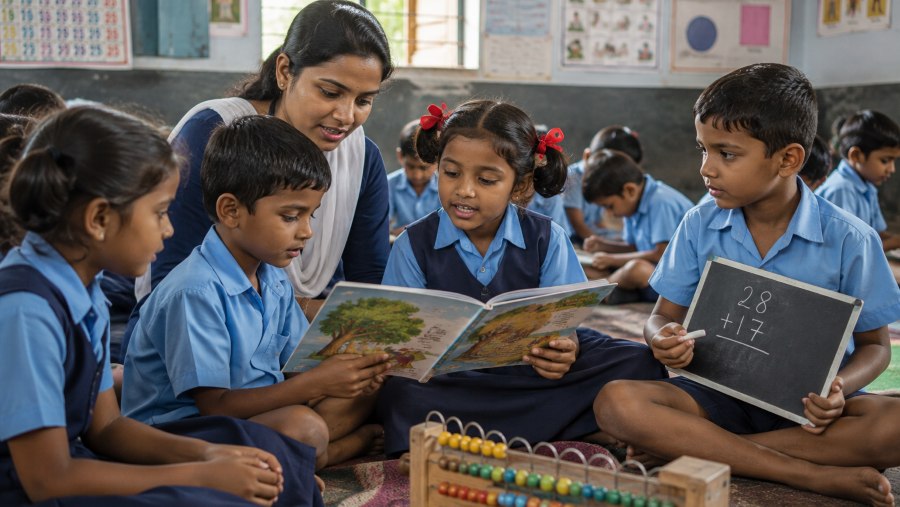
Foundational education is no longer just about teaching children to read, write and count. In an increasingly technology-driven world, it must also equip them with the curiosity, critical thinking and problem-solving skills needed to navigate an AI-enabled future. For India, this calls for a shift from measuring access to education towards ensuring meaningful learning outcomes, strengthening teacher capacity and creating opportunities for experiential learning, particularly for children from underserved communities.
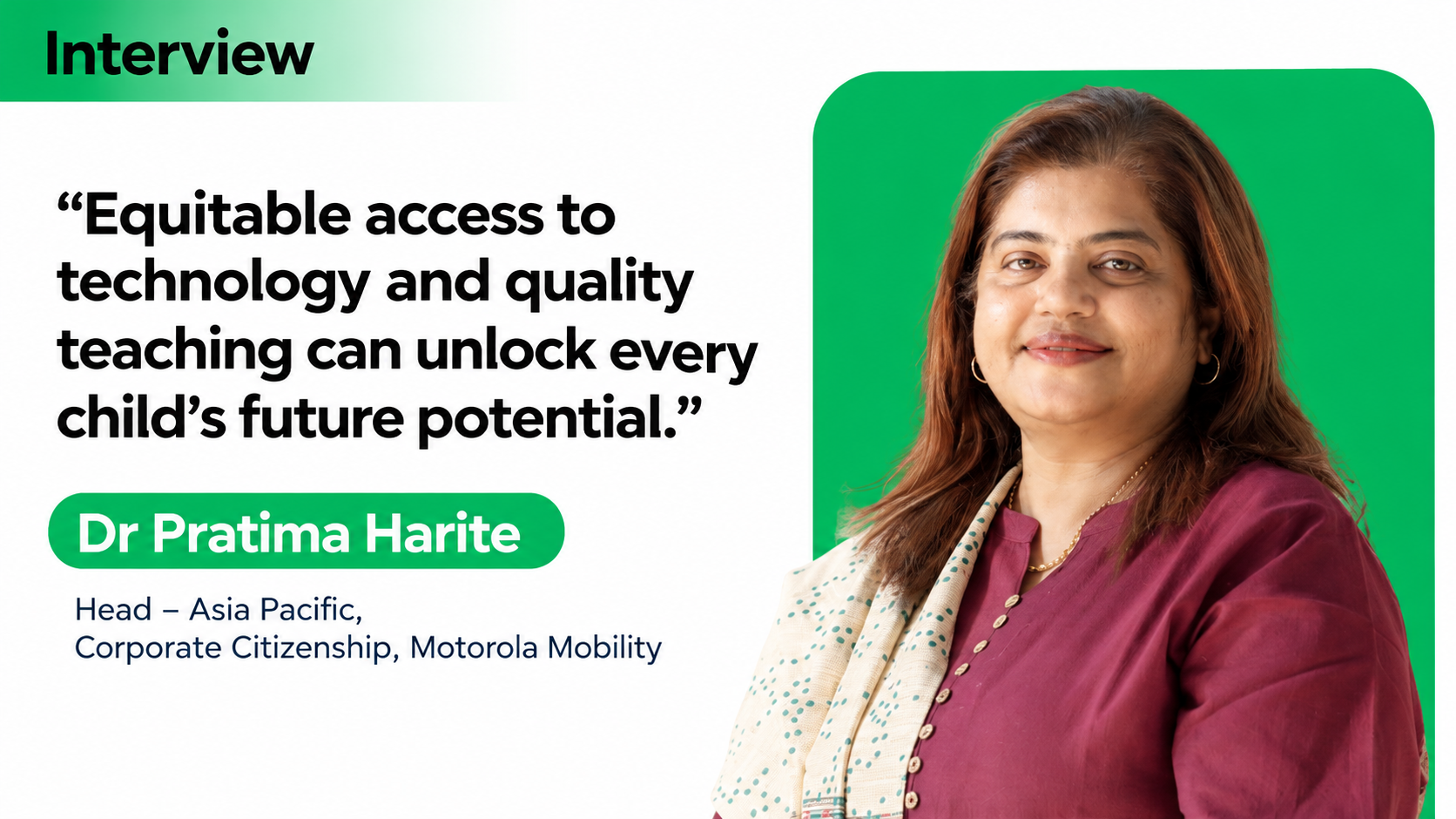
In this email interview with TheCSRUniverse, Ms. Pratima Harite, Head – Asia Pacific, Corporate Citizenship, Motorola Mobility, discusses the gaps in India’s Foundational Literacy and Numeracy (FLN) efforts and the need to move beyond rote learning towards engaging, competency-based classroom practices. She highlights how continuous teacher mentoring, differentiated instruction and outcome-oriented CSR investments can help bridge persistent learning gaps.
The conversation also explores the role of technology and artificial intelligence in supporting teachers, personalising learning and building digital literacy, while emphasising the importance of human interaction, equitable access and responsible technology use. Drawing on the experience of Motorola Mobility’s STEMSpark initiative, which establishes AI and Robotics Labs in government schools, Ms. Harite shares insights into how hands-on exposure to STEM, coding, robotics and AI can nurture confidence, creativity and innovation among students.
She also reflects on the role of CSR in building sustainable educational ecosystems and the shifts required to help children progress from foundational competencies to future-ready capabilities.
Read the full interview below for more insights:
Q. What are the biggest gaps in India's efforts to achieve Foundational Literacy and Numeracy (FLN), particularly in classroom pedagogy, teacher capacity, and learning outcomes?
A. India has made significant progress through initiatives such as NIPUN Bharat, which has brought renewed focus to foundational learning and teacher support. However, three challenges remain.
First, there is often a gap between policy intent and classroom practice. Many classrooms continue to rely on rote learning rather than competency-based, activity-driven approaches that help children build strong literacy and numeracy foundations. NIPUN Bharat itself emphasizes learning with understanding, play-based pedagogy, and continuous assessment.
Second, teachers frequently manage classrooms where students are at very different learning levels. While teachers are deeply committed, they often need ongoing mentoring, practical tools, and classroom support to personalize instruction.
Third, we need a stronger focus on learning outcomes rather than inputs alone. Enrollment and attendance are important, but the real measure of success is whether every child can read with comprehension, communicate effectively, and apply basic mathematical concepts confidently by the end of Grade 3.
Q. How can teachers effectively address different learning levels within the same classroom, and what kind of training or support do they need?
A. Teachers need the flexibility and confidence to teach at the child's current learning level rather than strictly by age or grade. Differentiated instruction, small-group learning, peer learning models, and continuous formative assessment can be highly effective in addressing diverse learner needs.
To do this successfully, teachers require more than one-time training. They need ongoing professional development, access to structured teaching-learning materials, coaching and mentoring support, and simple assessment tools that help them quickly identify learning gaps.
Technology can also support teachers by reducing administrative burden and providing data-driven insights into student progress, allowing them to spend more time on teaching and individualized support.
Q. Which interventions have you seen deliver measurable improvements in foundational literacy and numeracy, and what will it take to scale these approaches across government schools?
A. The most effective interventions share three characteristics: they are simple, teacher-centered, and embedded within the education system.
Experience across educational programs suggests that structured classroom approaches, regular formative assessment, targeted remediation, and sustained teacher mentoring are among the most promising components. Similarly, experiential learning approaches that encourage children to apply concepts through projects, games, and problem-solving activities have shown promising results.
Scaling requires integration with government systems rather than parallel implementation models. Successful approaches must align with state curricula, strengthen teacher capacity, leverage existing school infrastructure, and include robust monitoring and evaluation frameworks. Long-term partnerships between government, civil society, and the private sector will be critical to achieving sustainable scale.
Q. How can CSR funding move beyond infrastructure, devices, and learning materials to strengthen teacher capacity, classroom practices, and measurable learning outcomes?
A. CSR investments can create far greater impact when they support the entire learning ecosystem rather than focusing solely on infrastructure.
While infrastructure and devices are important enablers, we must equally invest in teacher professional development, classroom innovation, mentoring systems, outcome measurement, and evidence-based program design.
At Lenovo, one of our key learnings is that technology alone does not transform education. Sustainable impact happens when teachers are trained to use technology effectively and when interventions are designed around measurable learning outcomes. Teacher enablement and digital pedagogy investments often create a multiplier effect that extends well beyond a single classroom. Technology can potentially support assessment, progress tracking, lesson planning and access to contextualized resources, provided that it is simple, reliable and designed around teachers’ needs.
CSR can also play a catalytic role by supporting innovation pilots, generating evidence on what works, and helping governments scale proven models.
Q. How can technology and AI support teachers and improve foundational learning, and where should technology-led interventions be approached with caution?
A. Technology and AI have tremendous potential to strengthen foundational learning when used as tools that augment teachers rather than replace them.
AI can help personalize learning pathways and has potential to support identification of learning gaps, provide adaptive assessments, automate routine administrative tasks, and generate actionable insights for teachers. Emerging solutions have potential to support content creation in regional languages and help teachers deliver more engaging lessons.
However, technology should be approached with caution when it risks becoming a substitute for teacher-student interaction. Foundational learning depends heavily on human engagement, language development, social interaction, and emotional support.
We must also address issues such as digital access, data privacy, algorithmic bias, and teacher readiness. Technology should always remain purpose-driven and child-centric rather than technology-led for its own sake.
Q. How should the definition of literacy evolve in the AI age to include digital literacy, critical thinking, problem-solving, and responsible use of technology?
A. In the AI era, literacy must extend beyond the ability to read, write, and perform arithmetic.
Tomorrow's learners need to be able to evaluate information critically, distinguish fact from misinformation, solve complex problems, collaborate effectively, and use technology responsibly. Digital literacy, media literacy, computational thinking, and ethical awareness are becoming increasingly important life skills.
The goal is not simply to prepare students to consume technology, but to empower them to understand, question, create, and innovate with technology. Foundational literacy remains the starting point, but digital fluency and critical thinking are becoming equally essential for success in the future economy.
Q. How can STEM education strengthen foundational learning while building curiosity, creativity, and problem-solving skills among students in government schools?
A. STEM education is most powerful when it complements foundational learning rather than competing with it.
Hands-on STEM experiences naturally encourage students to read instructions, communicate ideas, collaborate with peers, measure, calculate, observe patterns, and solve problems. In doing so, they reinforce foundational literacy and numeracy in meaningful real-world contexts.
More importantly, STEM transforms students from passive recipients of information into active learners. It nurtures curiosity, experimentation, resilience, and creative thinking, which are essential skills for success in an increasingly innovation-driven world.
For government school students, particularly those from underserved communities, STEM exposure also broadens aspirations and introduces pathways to future careers that may previously have seemed inaccessible.
Q. What has Motorola Mobility's C revealed about the impact of hands-on STEM and AI learning on students in government schools, and what outcomes or learnings stand out from the programme?
A. Motorola STEMSpark was designed to expand equitable access to STEM, AI, robotics, coding, and experiential learning for students in government schools. The initiative has established AI and Robotics Labs across government schools and provided thousands of students with hands-on exposure to emerging technologies.
One of the most important learnings has been that access alone is not enough. The greatest impact occurs when technology infrastructure is combined with structured learning experiences, teacher orientation, and opportunities for project-based learning.
We have seen students demonstrate higher engagement levels, greater confidence in technology, stronger problem-solving abilities, and increased interest in STEM careers. The programme has also reinforced the importance of moving beyond one-time equipment donations toward school-owned infrastructure, teacher enablement, and long-term sustainability.
Perhaps the most encouraging outcome is seeing students become creators rather than consumers of technology, experimenting with robotics, coding, and design challenges while building confidence in their own ability to innovate.
Q. What are the most important shifts India needs to make in its education system to move children from basic learning to future-ready capabilities, particularly those from underserved communities?
A. India's next phase of educational transformation must focus on four shifts.
First, move from input-based measures toward learning outcomes and competencies.
Second, strengthen and continuously support teachers, as they remain the single most important factor influencing student learning.
Third, integrate technology meaningfully to improve learning experiences, not just digital access.
Fourth, expand opportunities for experiential learning, STEM exploration, innovation, and problem-solving from an early age.
For underserved communities, this requires ensuring that access, equity, quality, and future-readiness advance together. Every child should have the opportunity not only to acquire foundational literacy and numeracy, but also to develop the confidence, creativity, digital fluency, and adaptability needed to thrive in an AI-enabled future.
Ultimately, the goal is not just for children to learn, but for them to become lifelong learners, critical thinkers, and active contributors to society.





.png)