
Beyond Compliance: How CSR Can Leverage India's Social Stock Exchange for Greater Impact
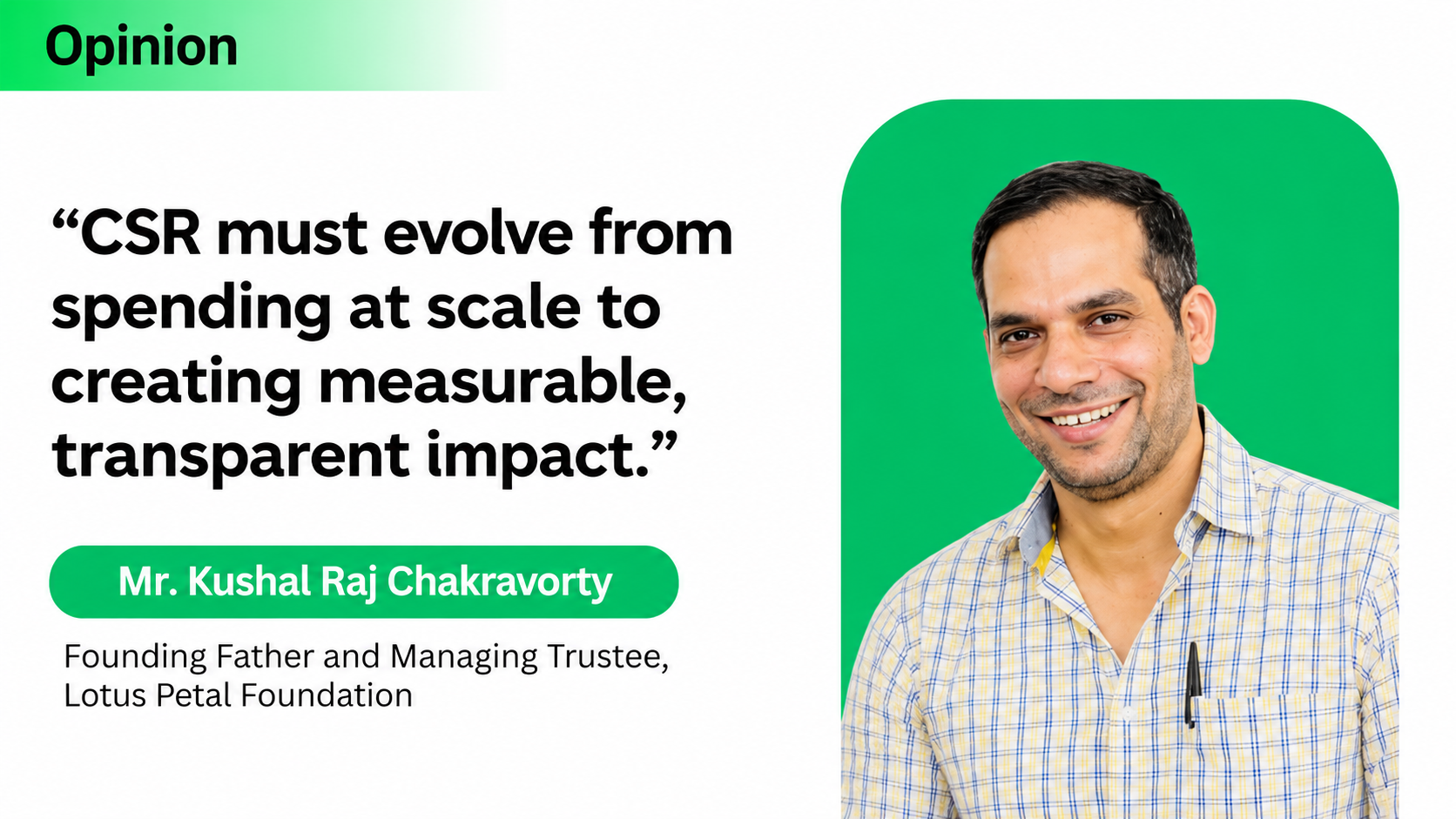
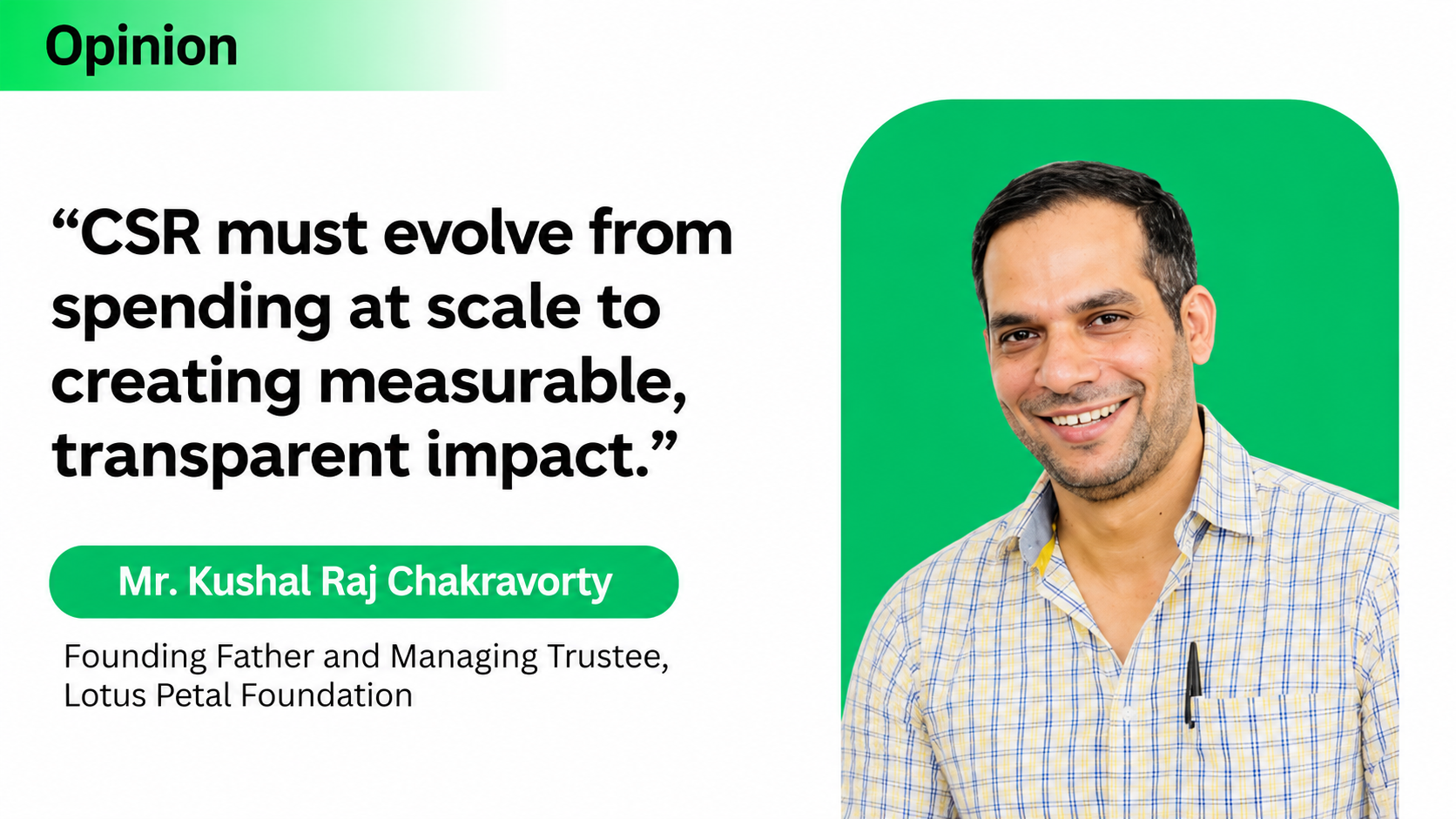
India’s CSR ecosystem is entering a new phase, where the focus is shifting from the scale of corporate giving to the quality, transparency and measurable impact of social investments. In this opinion, Mr. Kushal Raj Chakravorty, Founding Father and Managing Trustee, Lotus Petal Foundation, explores how the Social Stock Exchange could help companies move beyond conventional grant-making, strengthen due diligence and support credible grassroots organisations through structured, accountable and outcome-oriented CSR funding.
A decade into mandated corporate giving, Indian CSR has comfortably learned how to spend. Companies deployed ₹34,908.75 crore in FY 2023-24, according to the National CSR Portal of the Ministry of Corporate Affairs, and the annual figure has grown almost every year since Section 135 came into force. The harder question, the one boards now ask with growing insistence, is what all that spending verifiably changes. Checking the credentials of an unfamiliar non-profit takes time and money; impact reports arrive in formats no two partners share, and so funding tends to settle on the same well-known institutions year after year. It is a rational habit, but it leaves a great deal of credible grassroots work unfunded, and it is precisely the habit that a new route through India's stock exchanges now makes easier to break.
The 10 per cent window
That route opened formally in May 2026, when the Companies (CSR Policy) Amendment Rules recognised subscriptions to Zero-Coupon-Zero-Principal instruments as eligible CSR activity and allowed companies to route up to 10 per cent of their annual CSR expenditure through issues listed on the Social Stock Exchange. Against FY24 spending levels, that works out to an addressable channel of roughly ₹3,500 crore a year. For a CSR committee, the appeal lies less in the headline number than in what the structure quietly takes off its plate. Every listed NPO has already cleared exchange registration, every issue carries standardised disclosure and an independent social audit, and deployments through ZCZP instruments are exempt from a separate impact assessment because the exchange's own reporting framework performs that role. Much of the diligence that once consumed a committee's calendar now arrives built into the instrument itself, which changes not just the paperwork but the way a portfolio can be assembled.
From cheque writing to portfolio thinking
The instruments reward that shift in thinking. SEBI's April 2026 relaxations favour issues where a project is costed per unit of outcome, so that even a partly subscribed raise still funds a countable result. Education lends itself naturally to this design, and a live example arrives this July, when Lotus Petal Foundation opens a ₹1 crore issue on the BSE SSE whose proceeds sponsor 160 children for a full year of schooling, nutritious meals, safe transport and digital learning. An independent KPMG assessment has already estimated the social return of its education work at ₹3.12 for every rupee deployed, which means a CSR head can evaluate the issue much as an analyst would read any listing through its unit economics, its audited record and its delivery window. What remains scarce is supply. As of May 2026, 92 NPOs were registered on the BSE SSE and 84 on the NSE SSE, yet only 11 had raised funds, and corporate demand is the most reliable force that will draw more credible issuers onto the board.
What beyond compliance actually means
This is why early movers matter beyond their portfolios. Each corporate subscription tells the wider sector that rigorous measurement is rewarded, deepening the pipeline for everyone and allowing capital to travel past familiar names toward organisations that help children learn and grow with dignity. Seen that way, the exchange is less a new line item than a layer of trust that compounds with use. CSR taught Indian business the habit of giving at scale, and the SSE now offers it the habit of verifying at scale. When a child's uninterrupted education can be funded through a listed, audited instrument, the journey beyond compliance is no longer an aspiration in a policy document. It is simply how the work gets done.