
Researchers Use Virtual Reality to Advance Disability-Inclusive Engineering Design
New Delhi, July 25, 2026: Researchers at the University of Canterbury, New Zealand, are exploring the use of virtual reality (VR) to help engineering students better understand the challenges faced by people with physical disabilities, with the aim of promoting more inclusive product and infrastructure design.
The initiative comes as disability continues to affect an estimated 1.3 billion people globally, or around 16% of the world's population, according to the World Health Organization (WHO). Despite this, many products, buildings and technologies are still developed without adequately addressing the needs of people living with disabilities.
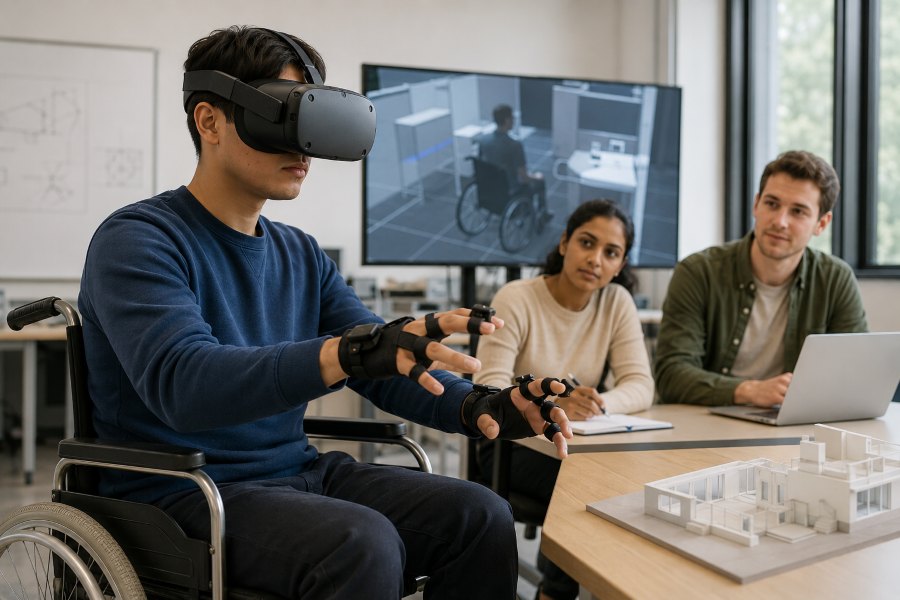
The pilot project involves around 50 fourth-year mechanical engineering students and forms part of a final-year design challenge. Using a VR-based learning tool, students experience the physical limitations associated with tetraplegia caused by cervical spinal cord injuries, including reduced arm movement and hand function during everyday activities. The exercise is designed to encourage empathy-led, human-centred engineering and help students identify accessibility barriers that may otherwise be overlooked.
The VR tool has been developed by researchers at the University of Canterbury's Human Interface Technology (HIT) Lab NZ in collaboration with physiotherapy experts and the university's engineering faculty. It complements existing inclusive design education by providing students with first-hand insight into the daily experiences of people with spinal cord injuries.
The initiative reflects a broader global trend of integrating immersive technologies such as virtual reality into education and training. Beyond healthcare and entertainment, VR is increasingly being used to strengthen learning outcomes by enabling students to better understand real-world challenges through interactive experiences.
Researchers believe that incorporating empathy into engineering education could contribute to the development of products, technologies and infrastructure that are more accessible and inclusive. While the long-term impact of the pilot is still being evaluated, the project highlights the potential of virtual reality to support disability-inclusive design and innovation.