
Sentient Investigation Finds Welfare and Biosecurity Concerns at 21 Poultry Units
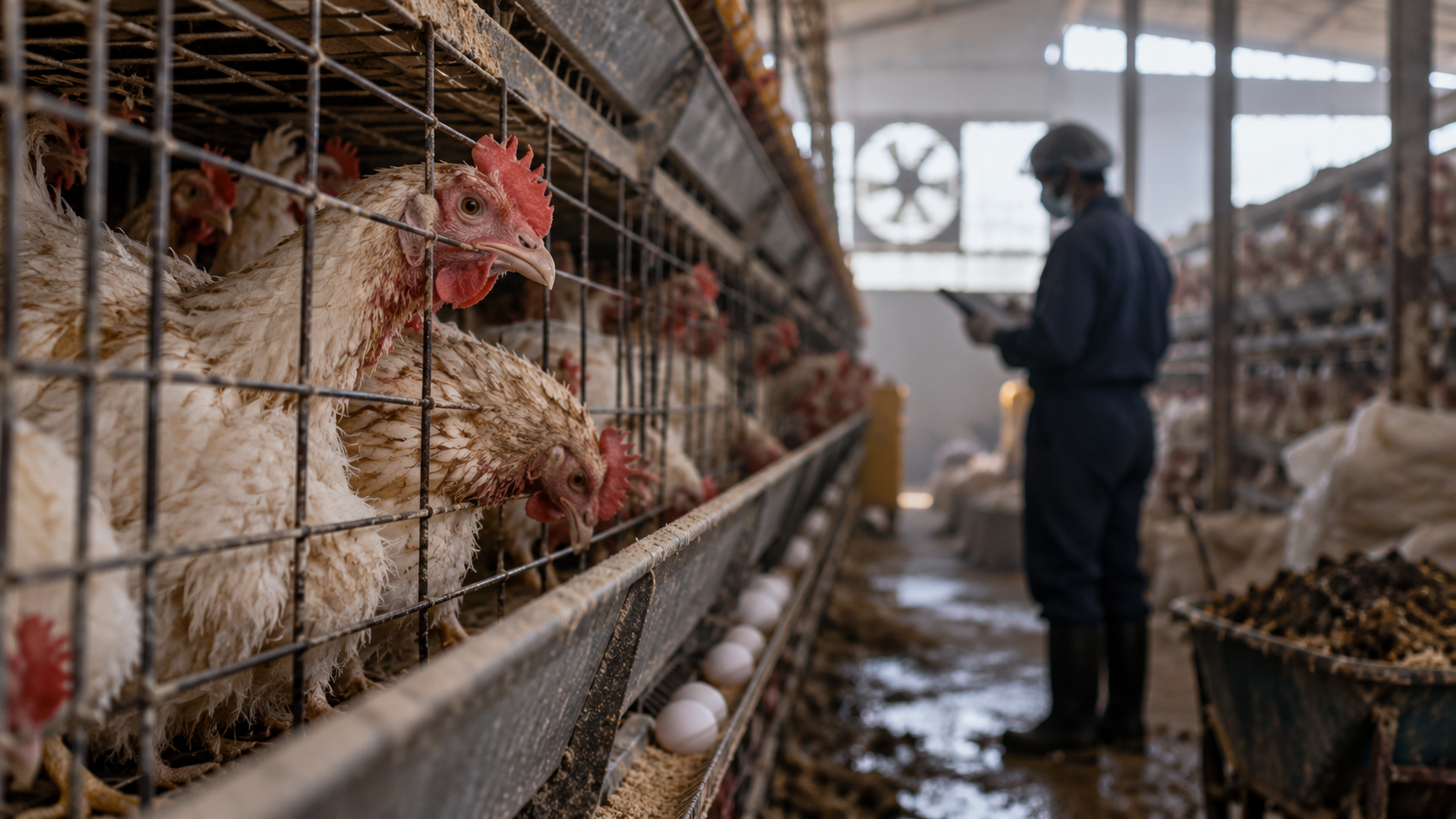
New Delhi, September 8, 2026: An investigation by Sentient into 21 layer-hen poultry units across Haryana, Punjab, Madhya Pradesh and Tamil Nadu has documented concerns related to animal welfare, hygiene, waste management and biosecurity.
The investigation covered private poultry operations using battery-cage systems, with estimated capacities ranging from around 3,000 to 200,000 hens. According to Sentient, similar practices were observed across multiple facilities, indicating that the concerns were not limited to individual units.
Investigators reported severe overcrowding, fighting and injuries among hens. Nearly all observed birds reportedly had injuries around the neck, apparently linked to repeated contact with metal cage bars. Other injuries included wing damage, broken legs, bleeding, skin conditions and severe physical weakness. Some hens were reportedly unable to stand.
Debeaking was also reported as a routine practice across the facilities visited. Investigators documented visible injuries and blood loss associated with the procedure, while one facility was observed carrying out debeaking during the investigation.
The report also highlighted hygiene and waste-management concerns, including manure accumulation beneath cages, foul ammonia-like odours, rodents, cockroaches, stagnant water and mosquito larvae. Feed showing signs consistent with fungal growth or possible contamination was also observed at some locations.
Wastewater and manure were reportedly poorly managed at several facilities, with blocked drains, stagnant or overflowing wastewater and accumulated waste. Carcass disposal methods included burial, burning and incineration, while one disposal site near a highway was reportedly used to dump carcasses without burial or incineration.
Biosecurity measures were found to be limited. Sentient said apparent biosecurity protocols were observed at only one facility, while masks and other personal protective equipment were generally not provided or used. Children were also observed working at some poultry facilities, including collecting eggs and cleaning premises.
The investigation identified regulatory concerns in Madhya Pradesh. According to Sentient, none of the seven facilities investigated in the state possessed Consent to Establish or Consent to Operate from the Madhya Pradesh Pollution Control Board. The organisation also referred to complaints submitted in 2024 concerning some facilities.
“The consistency of what our investigators documented across 21 facilities is deeply concerning. Practices such as severe overcrowding, routine debeaking, untreated injuries, poor waste management and weak biosecurity should not be accepted as business as usual. The findings point to a systemic gap between the standards that are expected and the conditions animals and workers may actually experience on the ground. Stronger enforcement, regular inspections and meaningful accountability are urgently needed to ensure that poultry production does not come at the cost of animal welfare, hygiene or public health,” said Abhishek Pandey, CEO, Sentient.
Sentient has called for stronger implementation and monitoring of existing animal welfare, environmental, public health and poultry-sector regulations, along with regular inspections, improved biosecurity and veterinary support, responsible waste disposal and greater accountability across poultry operations.