

Nearly 90% of India’s Renewable Energy Pipeline Faces High or Critical Climate Risk by 2030: Uniqus Consultech
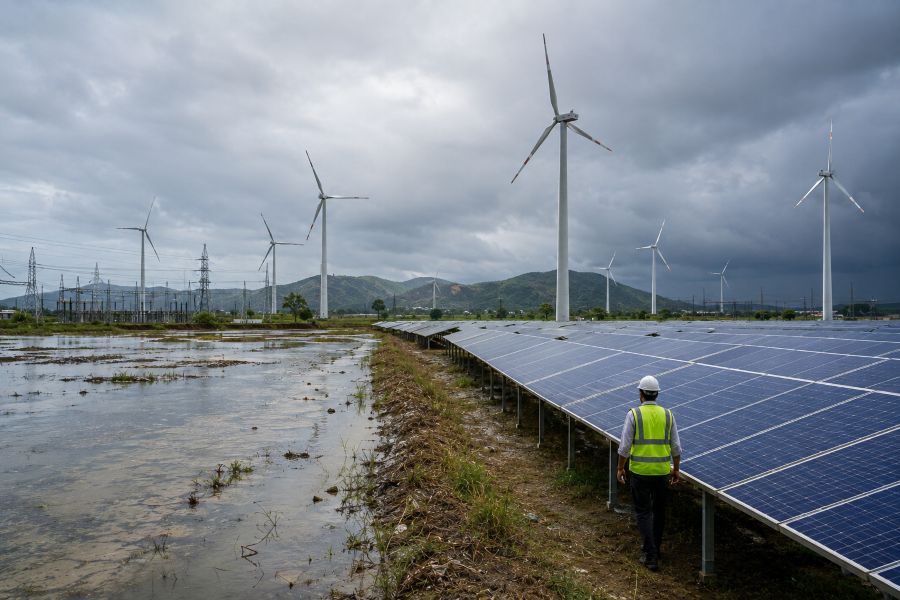
Mumbai, August 05, 2026: India’s green transition is entering a critical phase, with climate resilience emerging as an increasingly important consideration alongside renewable energy deployment, according to the latest edition of Sustainability and Climate Pulse, released by Uniqus Consultech. The analysis highlights that nearly 90% of India’s planned renewable energy pipeline is exposed to high or critical climate risks by 2030, placing more than INR 4 lakh crore in assets at risk from floods, extreme heat, storms, and other climate-related events.
The report notes that approximately 239 GW of planned solar, wind, and hydropower projects across 10 states and Union Territories face high or critical exposure to climate hazards. It also points to a significant opportunity: investing around 2% of project costs in climate-resilient design and infrastructure could help avoid up to USD 28 billion in future losses, according to the report’s analysis.
Commenting on the findings, Anu Chaudhary, Partner and Global Head, Sustainability & Climate Consulting (SCC), Uniqus Consultech, said, “India’s sustainability journey is entering a new chapter. The focus is no longer only on building renewable capacity but on ensuring that critical infrastructure is resilient to the very climate risks it is designed to address. Climate resilience must move from being a project-level consideration to a boardroom and investment priority. Developers, investors, and policymakers need to integrate resilience into project planning to safeguard India’s clean energy transition and strengthen long-term energy security.”
The report also highlights positive momentum in India’s biodiversity and nature agenda. India’s Access and Benefit Sharing (ABS) framework has mobilised over INR 266 crore since 2008, with approximately INR 145 crore distributed to local communities and beneficiaries, including INR 78 crore during FY 2025-26.
The benefits have reached more than 10,500 Biodiversity Management Committees across 23 States and 4 Union Territories, more than 230 farmers, six State Forest Departments, and several research institutions.
The framework supports biodiversity conservation, habitat restoration, traditional knowledge preservation, community development, and sustainable livelihood initiatives while advancing India’s commitments under global biodiversity agreements.
Sustainability Regulations Are Tightening Globally
Beyond India, the newsletter identifies an increasingly stringent global sustainability landscape.
Multilateral Development Banks collectively delivered a record USD 163 billion in climate finance in 2025, reflecting growing global capital commitments toward climate-resilient infrastructure and low-carbon development. The report suggests that businesses aligned with these priorities could unlock new opportunities across renewable energy, sustainable agriculture, and green transportation sectors.
The publication also examines the evolving Science Based Targets initiative (SBTi) Corporate Net-Zero Standard Version 2.0, describing it as a significant shift from one-time sustainability commitments toward continuous, assurance-driven climate accountability. Under the new framework, companies will be required to report progress annually, with end-of-cycle assessments and assurance requirements for Category A companies. The standard also places greater emphasis on transparency, accountability and integration with financial and strategic decision-making.
“The era of voluntary, self-paced sustainability is ending. Sustainability is increasingly being embedded into regulation, capital allocation decisions, and stakeholder expectations. Whether through climate disclosures, carbon markets, resilience planning, or transition reporting, organizations must prepare for a future where sustainability performance is measured with the same rigor as financial performance,” Chaudhary added.
The newsletter further highlights major regulatory developments across the European Union, the United States, and the Gulf region, where governments are accelerating sustainability disclosure requirements, carbon market reforms, and environmental compliance mechanisms. These trends collectively signal that sustainability accountability is becoming a non-negotiable business requirement across global markets.