
$17 Trillion Invested in Sustainable Tech, But Progress Diverges: Bain
Boston | September 11, 2026: Private companies and governments have invested around $17 trillion in sustainable technologies over the past decade, but progress across sectors has been uneven, according to Bain & Company’s fourth edition of the Visionary CEO’s Guide to Sustainability.
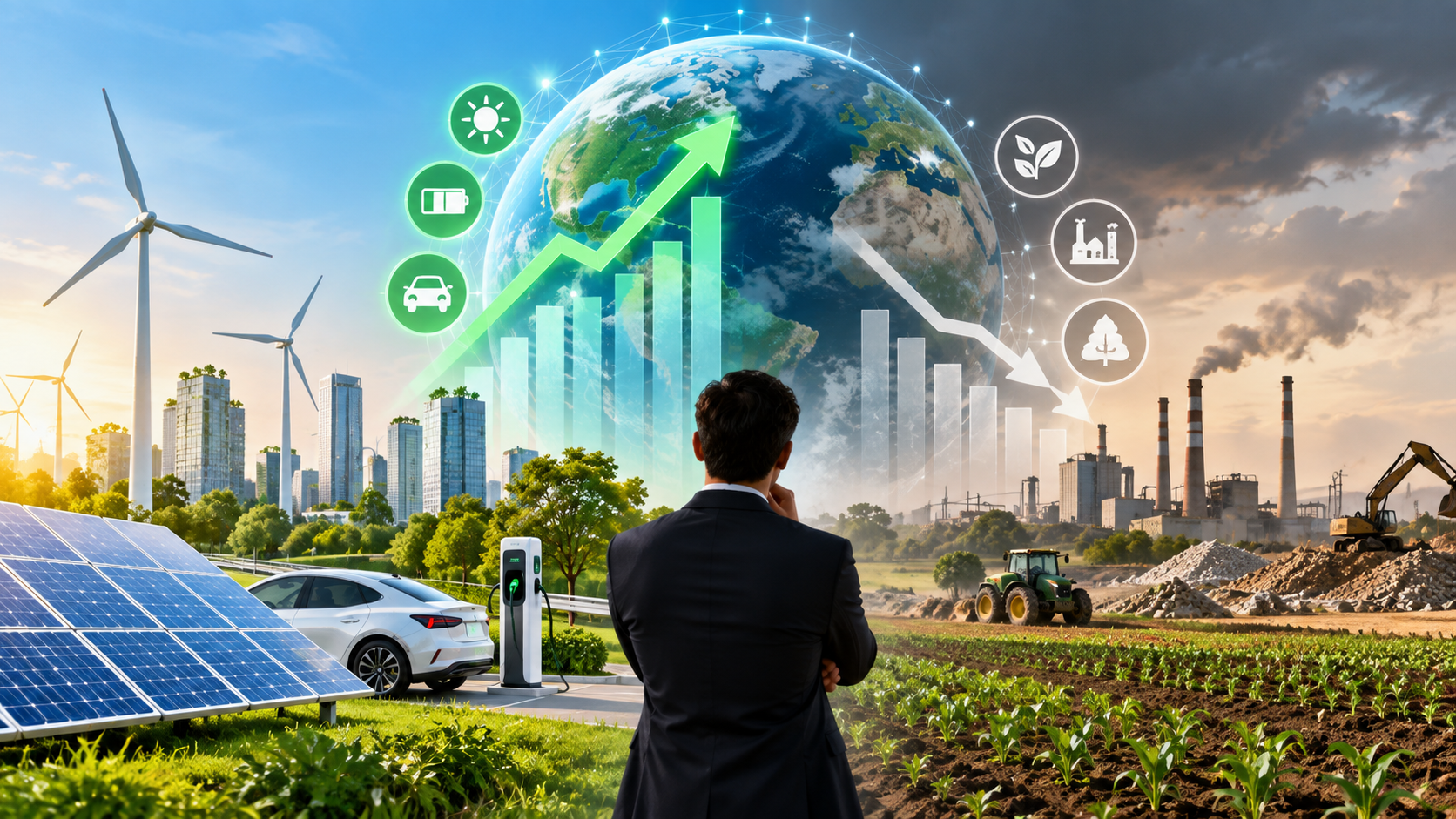
The report found that sustainability transitions are entering an “age of divergence,” with investment, technology deployment, corporate action and consumer behaviour advancing at different rates.
Sustainability investment reached a record $2.4 trillion in 2025, with 90% directed to green energy, buildings and mobility. In contrast, agriculture, manufacturing and materials, and natural capital—sectors that collectively account for about 37% of global greenhouse gas emissions—received less than 10% of investment.
Bain’s Green Technology Performance Index, which compares 2025 deployment with forecasts made a decade earlier across 37 sustainable technologies, found that only three technologies—solar, batteries and electric vehicles—outperformed forecasts, while 29 fell short. The report attributes underperformance to gaps across technology, consumer behaviour and policy.
“Ten years into the Paris Agreement, the world has made commendable sustainability achievements, but this summer’s record-breaking heat is a reminder that we need to do more,” said Jean-Charles van den Branden, Bain’s global head of Sustainability. “Today’s CEO must recognize this age of divergence for what it is: not a sign of failure, but an opportunity to place the right bets for the future. CEOs will need to understand how to leverage divergence as a source of competitive advantage, converge priorities across the firm to harness AI for its full sustainability benefits and ask the right questions about climate resilience.”
The report also found renewed consumer concern about sustainability. Eighty-five per cent of 7,500 consumers surveyed across the US, UK, Italy, Brazil and Indonesia said they were concerned about environmental sustainability, up from 79% last year. Meanwhile, 83% reported adopting at least three sustainable lifestyle habits, compared with 73% in 2023.
AI presents another area of divergence. Bain found that executives overestimate AI’s future energy consumption by 16 times, while consumers overestimate it by nearly 30 times. Bain’s climate-economic modelling estimates AI could account for 0.7% of global energy demand three years from now, compared with executives’ 11% and consumers’ 19% estimates.
Despite the gap, nearly two-thirds of surveyed consumers said concerns about AI’s energy impact had prompted them to take concrete actions, including limiting usage, switching platforms or dropping certain tools.
The report said companies that can identify where technology, policy and consumer behaviour are likely to accelerate sustainability transitions, while strengthening climate resilience, will be better positioned to capture emerging opportunities.