
Brother India: Bridging Educational and Digital Divides Through Holistic Child Development
A child’s educational journey is shaped by far more than the opportunity to attend school. Access to healthcare, adequate nutrition, a supportive environment and the ability to engage with emerging technologies all influence whether learning can translate into confidence, independence and meaningful opportunities. This distinction is particularly significant in India, where disparities in educational resources and digital access continue to shape the prospects of children from underserved communities. As the country works towards a more inclusive and digitally empowered future, the challenge is not simply to bring more children into classrooms, but to ensure they have the resources and support to thrive beyond them.
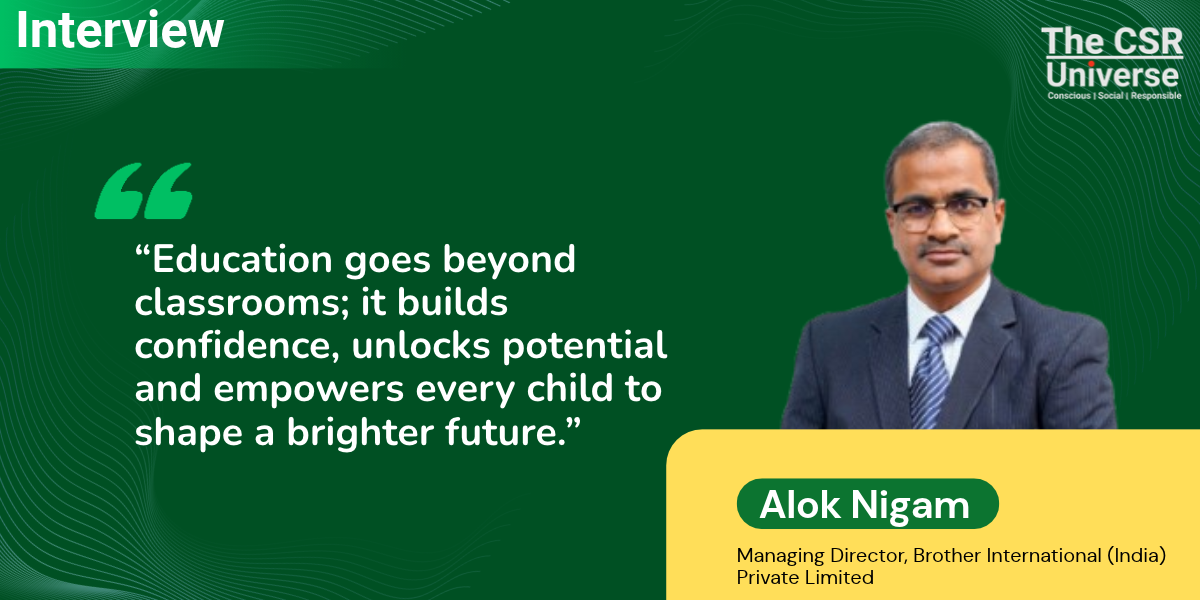
This calls for a more comprehensive approach to corporate social responsibility, one that prioritises continuity, community engagement and measurable progress over short-term interventions. Brother International (India) Private Limited’s continuing partnership with Mahesh Foundation reflects this broader understanding of educational equity. Now in its third year, the collaboration supports 400 children through education, healthcare and holistic development, while initiatives such as the Mobile Computer Lab seek to bridge gaps in access to digital learning. In this conversation, Alok Nigam, Managing Director, Brother International (India) Private Limited, discusses the importance of sustained CSR engagement, the role of technology in widening educational opportunities and why meaningful child development must be measured by more than academic achievement. He also shares his perspective on building lasting corporate-NGO partnerships that can help children move towards greater dignity, self-reliance and a more secure future.
Scroll down to read the full interview:
Q. How does Brother India define meaningful and sustainable impact when designing CSR interventions around education and the long-term development of children from disadvantaged communities?
A. For Brother India, meaningful impact goes beyond enabling access to education. We look at education as part of a broader development journey, where access to healthcare, wellbeing, appropriate learning resources and a supportive environment are equally important in enabling children to grow with confidence and dignity.
Our partnership with Mahesh Foundation reflects this approach. Through the current programme, we are supporting 400 children from disadvantaged communities with access to quality learning opportunities, healthcare and holistic development. This is closely aligned with our “At Your Side” philosophy and our broader focus on creating more equitable opportunities for children and communities.
For us, sustainability also comes from continuity and long-term engagement. This is the third year of our partnership with Mahesh Foundation, which allows us to build on the work already undertaken and support an organisation that understands the needs of the community. We believe CSR interventions create greater value when they are consistent, locally relevant and focused on long-term development rather than being viewed as standalone initiatives.
Q. What has the company learned from its engagement with Mahesh Foundation over the past three years about the difference between providing educational access and enabling children to build greater independence and dignity?
A. One of our key learnings has been that education is an important starting point, but meaningful development requires a more holistic approach. Access to nutrition, healthcare, shelter and a supportive environment also plays an important role in helping children become more independent.
Our three-year engagement with Mahesh Foundation has allowed the Brother India team to witness this impact first-hand. It has reinforced our belief that the value of education goes beyond enrolment. It is about creating opportunities for children to build their capabilities, confidence and independence.
Q. How does Brother India assess the effectiveness of a long-term CSR partnership, particularly when the desired outcomes extend beyond academic performance to healthcare, wellbeing and holistic development?
A. We assess the effectiveness of a long-term CSR partnership by looking beyond academic performance to the overall development of children. For instance, the 100% result achieved by Utkarsha School’s first SSLC batch last academic year is an encouraging milestone.
Equally important is ensuring consistent access to education, healthcare and wellbeing support, along with opportunities for holistic development. A long-term partnership allows us to assess progress over time and understand how these interventions contribute to better opportunities for children.
Q. What role does continuity of corporate support play in strengthening the ability of social-sector organisations to plan and deliver sustained interventions for vulnerable children?
A. Continuity is important because areas such as education, healthcare and child development require sustained engagement rather than one-time interventions.
Our decision to renew the Mahesh Foundation partnership for a third year reflects our belief in long-term engagement. It provides greater consistency for the children and allows the Foundation to build on existing programmes. For us, it also creates an opportunity to understand the impact over time and continuously strengthen our support where it can make a meaningful difference.
Q. How has the partnership evolved over its three years, and which aspects of the programme have been strengthened or rethought based on the experiences and needs observed on the ground?
A. Over the three years, our engagement has evolved from supporting education to developing a deeper understanding of the broader needs of children and the communities they come from.
The Mobile Computer Lab is one example of how the partnership is responding to practical gaps in access to digital education. It takes computer education to children who may not have these facilities in their schools.
Our continued engagement has also helped us understand the needs on the ground better and identify areas where our support can contribute more meaningfully over time.
Q. The Mobile Computer Lab introduces digital learning to children who may have limited access to technology. How does Brother India view digital literacy within the larger question of educational equity, and what potential do you see for taking such models to more underserved communities?
A. Digital literacy is increasingly becoming an important part of educational equity. Access to computers and digital tools can help children build skills that are relevant to their education and future opportunities.
The Mobile Computer Lab is a valuable concept because it takes computer education to children who may not have access to such facilities in their schools. We see potential for similar models to support other underserved communities as well, particularly where access to digital learning remains limited. The focus should be on creating meaningful and sustainable access based on the needs of each community.
Q. How does Brother India approach the challenge of ensuring that technology-enabled education becomes a meaningful learning intervention rather than simply improving access to devices and digital infrastructure?
A. Technology has the greatest value when it strengthens the learning experience rather than simply providing access to devices. The focus should therefore be on how children use technology, the quality of learning they receive and the skills they are able to develop through it.
The Mobile Computer Lab is a good example of this approach, as it focuses on taking computer education to children who may not have access to such facilities in their schools. For us, the objective is to use technology as an enabler for better learning and greater opportunities, rather than treating it as an end in itself.
Q. What impact indicators does Brother India use to evaluate this initiative, and could you share any data on changes in educational outcomes, digital learning exposure, retention or other measurable indicators among the children supported?
A. We look at impact across multiple dimensions, including the number of children supported, academic progress, access to digital learning and the broader development outcomes of the programme. Under the FY2026-27 programme, Brother India is supporting 400 underprivileged children. Mahesh Foundation’s wider work has also reached more than 4,900 children through its Care Home, supported the education of 72,000 underprivileged children and reached 90,000 socially disadvantaged families affected by HIV.
There are also encouraging academic indicators, with Utkarsha School’s first SSLC batch achieving a 100% result in the previous academic year. At the same time, we believe it is important to distinguish between programme-level indicators and outcomes that can be directly attributed to Brother India’s support. The current programme information does not provide longitudinal data on areas such as retention, attendance, digital-learning outcomes or individual academic progress. These are areas that can be assessed more meaningfully over time through structured programme monitoring. Going forward, indicators such as attendance and retention, grade progression, examination outcomes, digital-learning exposure and demonstrated digital competencies can help provide a more comprehensive view of the programme’s impact. This allows us to look beyond the scale of intervention and understand how effectively it is contributing to the children’s longer-term development.
Q. How important is the strength of the implementing partner in determining the success of a CSR education programme, and what have three years of working with Mahesh Foundation taught Brother India about building effective corporate-NGO partnerships?
A. The implementing partner plays a fundamental role because it is closest to the communities and understands the needs on the ground. Mahesh Foundation brings 18 years of experience in working with HIV-positive and underprivileged children, with its work spanning education, healthcare, nutrition, shelter and community support.
Our three-year partnership has reinforced the importance of trust, continuity and direct engagement. The Brother India team has had the opportunity to visit the Foundation, understand its initiatives and see the progress first-hand. For us, an effective corporate-NGO partnership is therefore built on alignment of purpose, transparency, strong implementation capabilities and continuous dialogue. It is about working together to understand evolving needs and create meaningful, long-term impact.
Q. As Brother India looks beyond the current year of support, how do you envision the programme evolving to create deeper and more lasting educational and livelihood pathways for the children it serves?
A. Our immediate priority is to make the current intervention meaningful for the 400 children we are supporting and continue learning from our engagement with Mahesh Foundation.
Over time, we see an opportunity to look at the child’s journey beyond basic educational access, including digital capabilities, continued education, career awareness and vocational exposure that can support greater independence.
This is aligned with our broader approach to creating equitable learning opportunities and supporting sustainable community development. It also contributes to our commitment towards UN SDG 4: Quality Education, while keeping the focus on creating meaningful, long-term opportunities for the children.

.png)
.png)