Svayam–KPMG Whitepaper Highlights $191 Billion Accessibility Opportunity in India
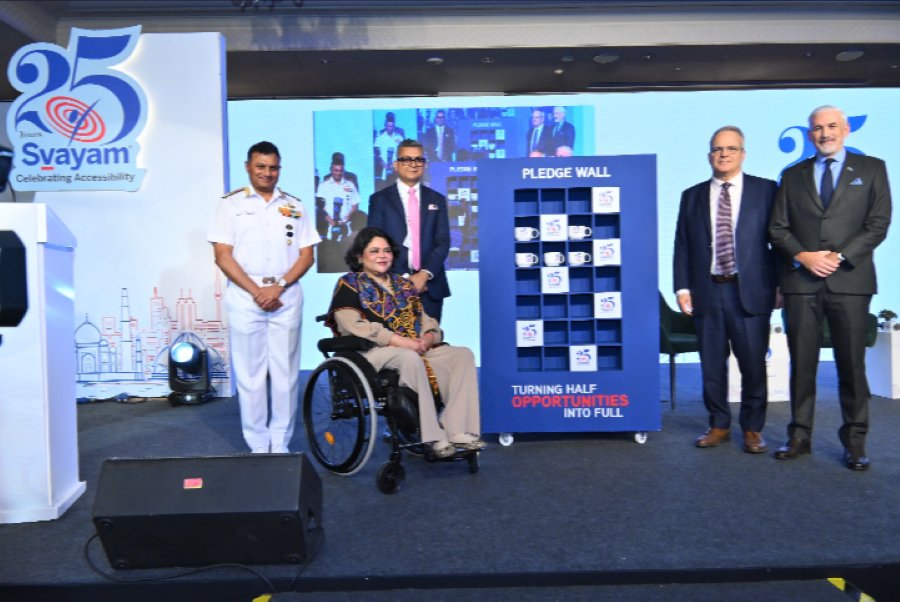
New Delhi, April 12, 2026: Svayam, in collaboration with KPMG, has released a whitepaper titled “Does Accessibility Make Economic Sense?”, highlighting the significant economic potential of improving accessibility across key sectors such as tourism, transport, sports, and digital services.
The report positions accessibility as a critical economic driver, noting that nearly 34% of India’s population—over 486 million people—experience reduced mobility. This includes not only persons with disabilities but also elderly individuals, caregivers, and those facing temporary limitations. When extended to households, the impact reaches nearly half of the population, underlining the scale of opportunity.
According to the findings, an estimated USD 191 billion (₹16.08 lakh crore) in economic value remains untapped due to accessibility gaps in infrastructure, services, transport systems, and digital platforms.
Sector-wise analysis highlights substantial potential gains. In tourism, nearly 191.8 million people face barriers to travel, representing a potential USD 16.6 billion (₹1.39 lakh crore) opportunity if accessibility improves. Similarly, enhanced accessibility in transport could unlock an estimated USD 125 billion annually by improving mobility and workforce participation. Digital accessibility also presents a significant opportunity, with over 262 million Indians facing challenges and a potential USD 37 billion in annual gains through inclusive digital systems.
The report emphasizes that inaccessible systems limit participation, reduce consumption, and constrain productivity across sectors. Addressing these gaps can enable broader engagement in economic activities and improve overall efficiency.
Founder-Chairperson, Svayam, Sminu Jindal said, “Accessibility is often evaluated at the level of individual assets, whether it is a building, a station, or a website. But people experience systems as a journey. If that journey is broken at any point, access is incomplete. The focus now has to move towards ensuring continuity across infrastructure, transport, and digital platforms so that people can move independently and with confidence.”
Naveen Aggarwal, Partner, KPMG, added, “Accessibility at its core is an economic enabler. When everyday systems are designed to include everyone, nearly 34% of Indians can participate more fully in economic life, as workers, consumers, and contributors. That means better productivity, stronger demand, and infrastructure that delivers for more people. At this scale, accessibility shapes how India grows and who gets to grow with it. Embedding it into national planning is essential to building a Viksit Bharat by 2047, one that works for people as they are, at every stage of life and in every part of the country.”
Tina Mathur, Associate Partner, G&PS, KPMG, further noted, “Investing in accessibility creates shared progress across the Sustainable Development Goals. When infrastructure, services, and digital systems are accessible, more people can work, travel, learn, and contribute productively. This expands livelihoods across age groups and communities, strengthens workforce participation, and improves the returns on public and private investment. Accessibility, when planned upfront, becomes a powerful driver of inclusive and resilient growth.”
The whitepaper recommends integrating accessibility into infrastructure design, strengthening implementation frameworks, improving workforce sensitisation, and embedding accessibility standards in digital systems.
As India advances towards its long-term development goals, the report underscores accessibility as a key lever for inclusive growth, improved service delivery, and enhanced economic participation.



.jpg)