Women Building Institutions: From Fellowship to Foundations of Change
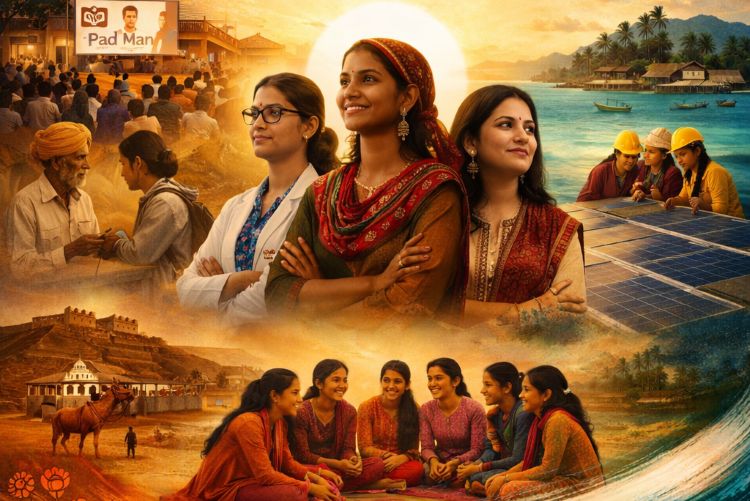
One evening in a village in Rajasthan, a film screening drew an unusual crowd. Men gathered in the village square to watch Pad Man, while women stayed behind doorways, watching from a distance. By the next morning, something had shifted. An elderly man approached a young fellow to ask for help about his granddaughter’s menstrual health, a conversation that had never found space in his home before.
Miles away, on remote Pacific islands, solar panels were being installed across scattered communities during a global pandemic, powered not just by technology but by coordination, trust, and persistence. And in another corner of rural India, a group of adolescent girls sat together at a mela, speaking openly about their bodies, their fears, and their aspirations, many for the first time.
These moments may seem small, even isolated. But they point to something far more enduring. They are glimpses of institutions in the making, built not through scale alone, but through trust, participation, and the steady expansion of agency.
For Dr Charvee, SBI YFI Fellow, Dhilsha Jubair Amaryil, Senior Programme Manager at Barefoot College, and Dr Monalisa Padhee, Program Head Wellness and Education Initiatives at Bindi International, leadership has never been about launching initiatives. It has been about building systems that continue to create change long after the moment has passed.
Starting where the gap feels personal
Dr Charvee’s journey into public health began with a gap that often hides in plain sight. Information exists, but it does not always translate into awareness or action where it matters most. Over time, she came to see this information gap as one of the most persistent barriers to meaningful change.
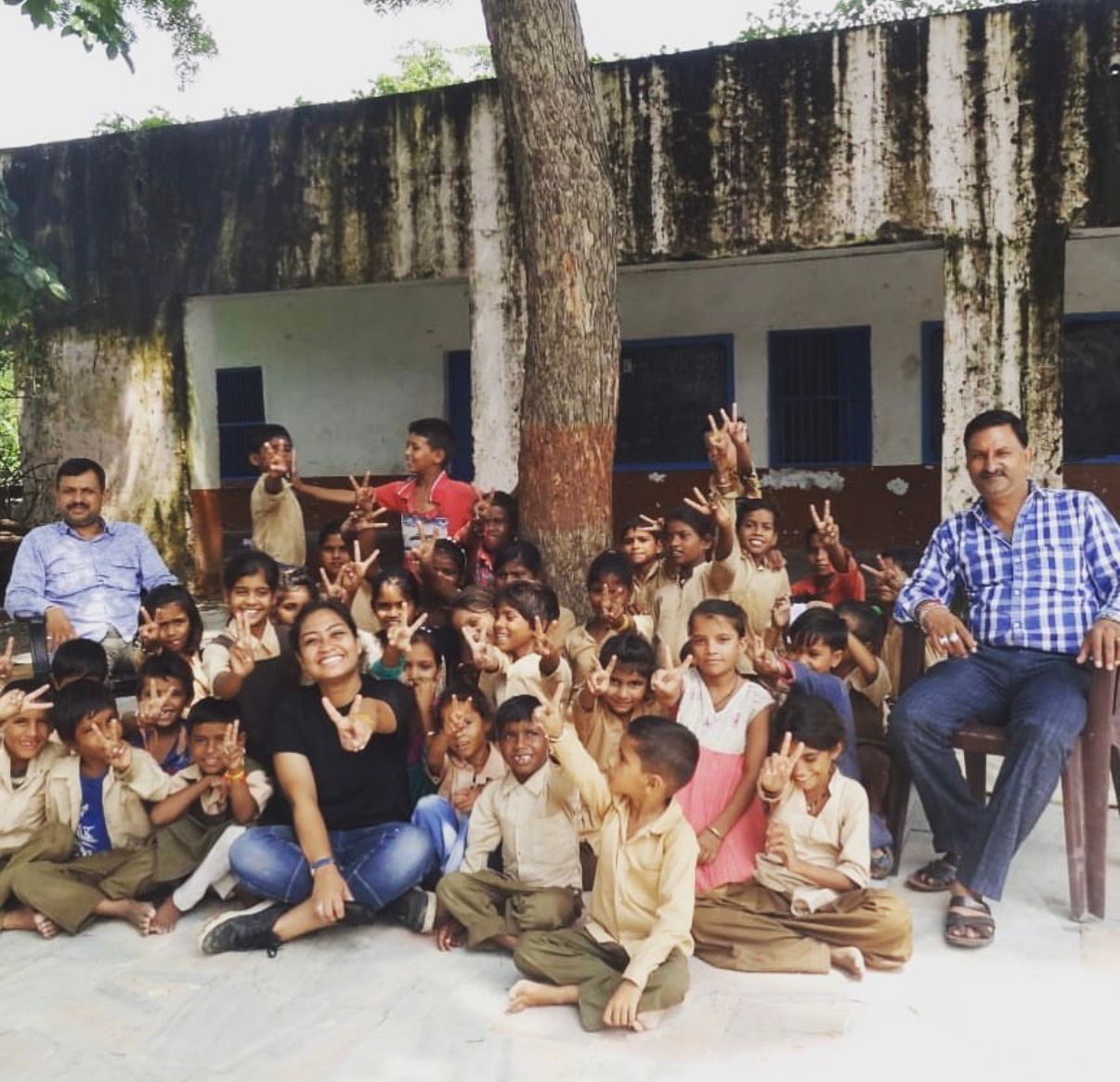 “Social impact is a broad term, but information gap remains one of the simplest yet most challenging obstacles in bringing change,” she says.
Trained as a dentist and later specialising in healthcare administration at the Faculty of Management Studies, University of Delhi, she shifted her focus toward preventive health, working extensively on awareness and behaviour change.
A defining influence in shaping her approach was the idea of libertarian paternalism, introduced by Richard H. Thaler in his book Nudge. The concept, which advocates guiding choices without restricting freedom, resonated deeply with her.
“As a woman, I deeply resonated with the concept of autonomy and agency,” she explains, emphasising that behaviour change must respect freedom of choice. Her work, therefore, focuses on making healthier actions easier and more intuitive, rather than enforcing them.
For Dhilsha Jubair Amaryil, the challenge was embedded in the structure of development work itself. Her early experiences revealed a persistent disconnect between externally designed solutions and the lived realities of communities. Many interventions delivered short term results, but fewer invested in building the local capacity required for long term sustainability.
Her journey with the SBI Youth for India Fellowship introduced her to Barefoot College’s philosophy of community led development, where rural communities are recognised as knowledge holders and leaders of their own progress.
“Lasting institutions are built not through external expertise alone, but through collective leadership rooted in communities themselves,” she says.
Working alongside rural women leaders across regions, she has seen how access to skills, platforms, and decision making spaces can transform women into anchors of sustained change.
For Dr Monalisa Padhee, the motivation to step into leadership came from lived realities that were both familiar and unsettling. Growing up and working closely with grassroots communities, she witnessed how women’s identities were often defined relationally, limiting their agency and sense of self.
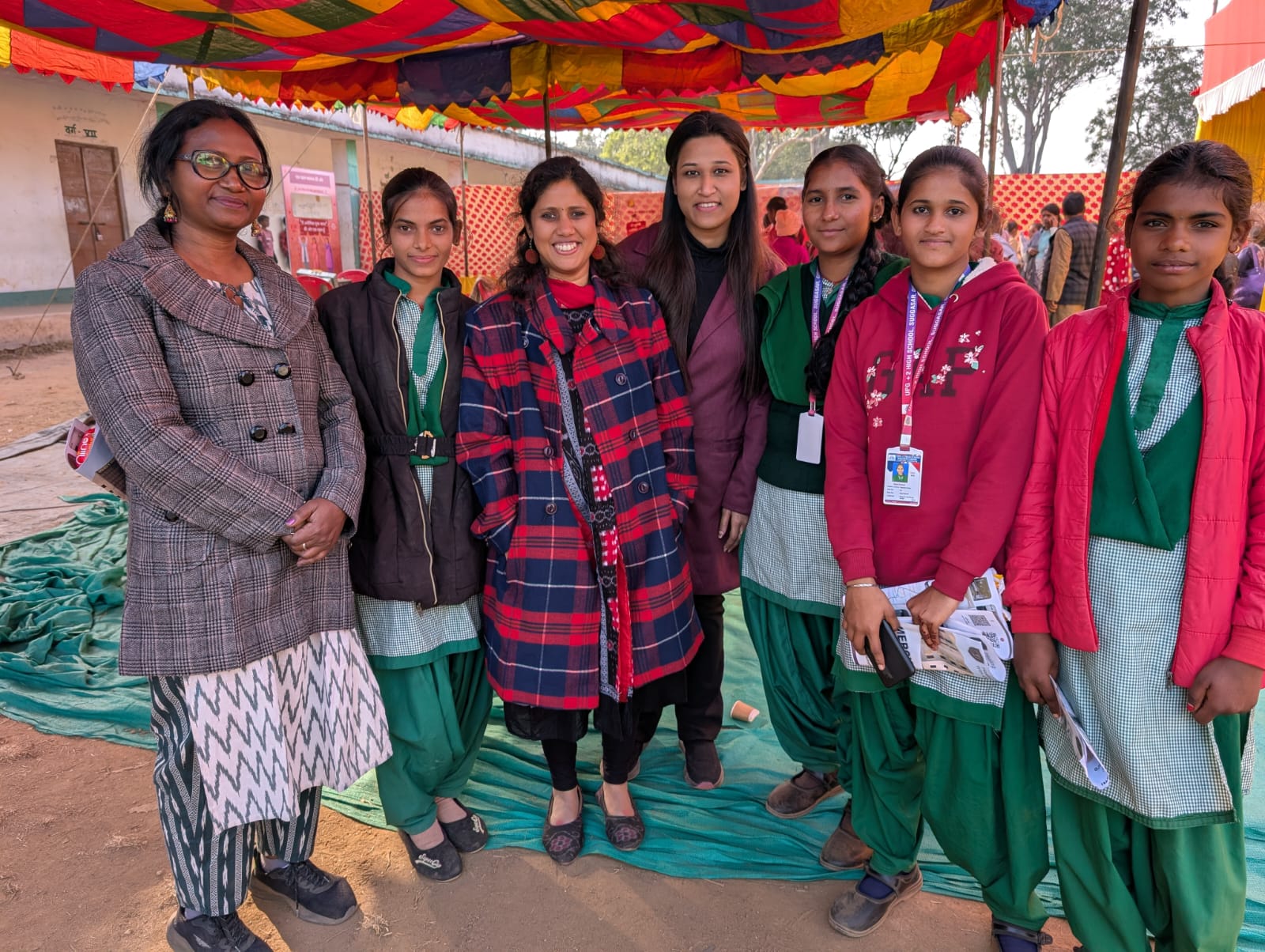 “Our existence is often defined relationally as someone’s daughter, sister, wife, or mother,” she says, reflecting on how this shapes both opportunity and aspiration.
At Bindi International, her work focuses on addressing this gap by creating safe spaces where women and adolescent girls can build confidence, leadership, and awareness. These efforts extend across critical and often silenced areas, including sexual and reproductive health and rights, a life cycle approach to health, and gender based discrimination and violence.
Over time, this has led to the emergence of local women leaders who now drive initiatives within their own communities, creating change that is both rooted and sustained.
The moments that shape conviction
Leadership, for each of them, has been shaped not by linear progress, but by moments that tested belief and redefined purpose.
During her time as a fellow in rural Rajasthan, Dr Charvee encountered deep resistance while working on menstrual health. In a patriarchal setting where such topics were stigmatised, men stayed away from discussions, and women remained on the margins.
Her decision to organise a screening of Pad Man in the village square marked a turning point. The choice of space and medium shifted participation. Men showed up. Women observed from their homes.
What followed the next day stayed with her. An elderly man approached her to seek help for his granddaughter, whose menstrual health concerns had long been ignored within the family. It was a single conversation, but for Dr Charvee, it signified a crack in deeply entrenched silence.
Even today, she recalls that moment as a reminder that change does not always arrive at scale. Sometimes, it begins with one person choosing to ask a question.
For Dhilsha, a defining moment came at a vastly different scale. Leading a solar electrification initiative across 14 Pacific Island countries during the COVID 19 pandemic required navigating an extraordinary level of complexity. The programme involved coordination across Indian embassies, national governments, and remote communities spread across islands.
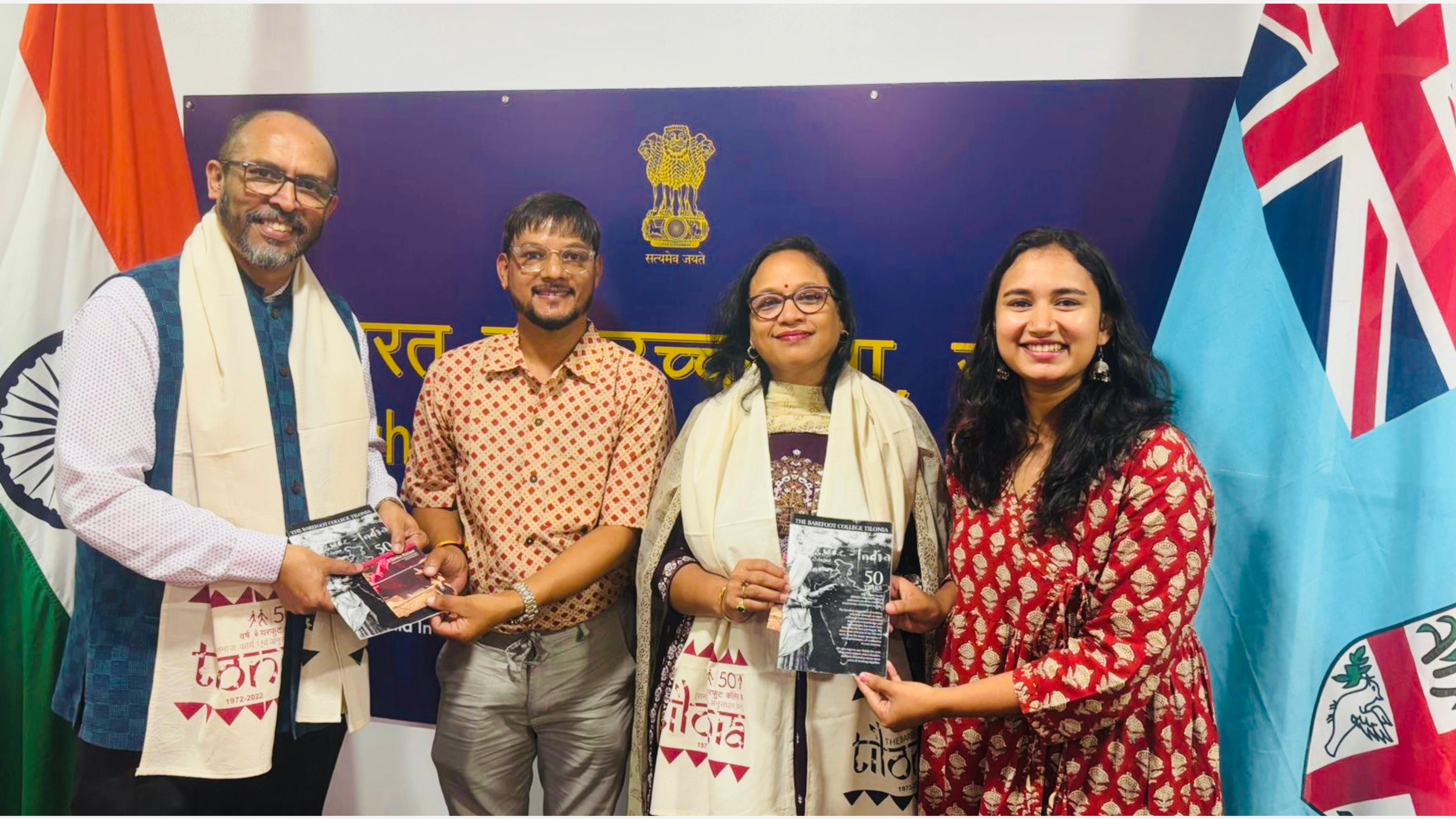 What could have remained a logistical challenge became a lesson in collective leadership. The successful implementation of the initiative reinforced her belief that leadership is not about individual certainty, but about trust, collaboration, and shared resolve.
For Dr Monalisa Padhee, the moment came in a space filled with uncertainty. Organising a community mela on sexual and reproductive health raised questions about participation and acceptance. Would girls feel comfortable enough to engage?
The answer came through her team of Swasthya Netris, grassroots leaders who stepped forward to co create the space. What unfolded was a powerful exchange. Girls spoke openly, shared experiences, supported each other, and found confidence in a space that allowed vulnerability.
That experience reshaped her understanding of leadership. It became less about directing outcomes and more about building teams that can take ownership, even in moments of doubt.
These experiences, though varied in scale and context, point to a shared philosophy of building for continuity rather than immediacy.
Building for the long term
Across their work, a common thread emerges. Scale, while important, is not the starting point. Purpose is.
For Dr Charvee, this begins with how problems are understood. Her approach to need assessment goes beyond data, incorporating conversations, focus group discussions, and an exploration of the social conditioning that shapes behaviour. This allows her to translate vision into both short term goals that sustain momentum and long term outcomes that define success.
At Barefoot College, Dhilsha’s work reflects a similar emphasis on sustainability through ownership. Programmes are designed so that communities themselves can manage and sustain them. This is achieved through hands on training, capacity building, and creating opportunities for rural women to step into leadership roles.
In her view, scale becomes meaningful only when knowledge, skills, and decision making power are rooted locally. Without that, expansion risks becoming superficial.
At Bindi International, Dr Monalisa Padhee challenges conventional definitions of scale altogether. For her, the organisation’s approach is about “scaling deep,” where impact is measured not only by reach, but by shifts in confidence, agency, and community norms.
This requires integrated interventions that address the interconnected realities of women’s lives, spanning health, education, climate leadership, and economic empowerment. It also requires investing in local leadership so that change continues beyond the lifespan of any programme.
Expanding leadership for women
While their work is grounded in communities, all three leaders recognise that institutional change must also address the structural barriers that shape leadership itself.
Dr Charvee emphasises that enabling women’s leadership requires acknowledging intersectionality. Barriers related to caste, class, culture, and access continue to shape opportunities, and addressing them demands more than intent. It calls for leadership rooted in kindness, integrity, and accountability, where women support each other while also creating space for growth and learning.
Dhilsha points to the importance of creating pathways that allow women, especially from rural and marginalised communities, to access education, skills, and decision making spaces. Equally important is recognising diverse forms of knowledge, including those that emerge from lived experience within communities.
At Bindi International, these ideas translate into institutional practices. Dr Monalisa Padhee highlights efforts to build more inclusive systems through policies such as menstrual health support, wellness leave, expanded parental benefits, and active mechanisms for workplace safety. Alongside this, mentorship networks are being strengthened to support women from diverse backgrounds.
At the heart of this work is a focus on building leadership pipelines that ensure women are not only able to enter the workforce, but also stay and grow into positions of influence.
The legacy they are building
When they speak of legacy, the focus shifts away from individual recognition to what continues beyond them.
For Dr Charvee, it is about inspiring women who doubt their own potential to see possibility in their journeys.
“If I am remembered for anything at all, let it be this: that I chose integrity when it was difficult, and kindness when it was easiest to forget,” she says.
Dhilsha’s vision centres on building institutions that remain accountable to communities, where trust, long term partnerships, and local capacity sustain progress beyond individual roles or projects.
For Dr Monalisa Padhee, legacy lies in normalising women’s leadership within institutions.
“It is about building institutions that do not just speak about empowering women, but actively create pathways for women to step into leadership and grow,” she says.
Taken together, their journeys offer a redefinition of leadership in the development sector.
A different way of leading
What connects these journeys is not just the SBI Youth for India Fellowship, but a shared commitment to building institutions that outlast individuals.
Their work reflects a form of leadership that is patient, grounded, and deeply rooted in trust. One that prioritises participation over control, and long term impact over immediate visibility.
They are not just solving problems. They are reshaping how solutions are created, who leads them, and how long they last.
And in doing so, they are not just building institutions, they are building the conditions for others to lead, long after they have stepped aside.



.JPG)