The Role of Social Enterprises in Building a Greener Future

The traditional manufacturing model, which relies on a linear "take-make-dispose" cycle, is increasingly becoming a strategic and environmental risk. Transitioning toward a circular economy is no longer merely a sustainability goal but a necessary economic shift, with the potential to unlock $4.5 trillion in new value globally by 2030. This evolution depends on a fundamental change in perspective: viewing discarded materials as valuable assets rather than liabilities.
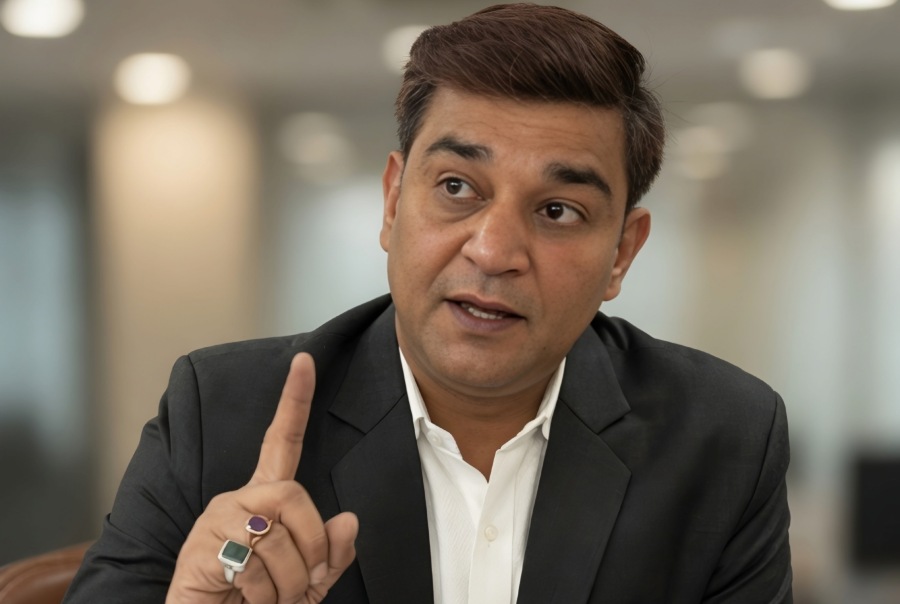
Social enterprises are currently proving that responsible upcycling is a practical business strategy that improves operational efficiency while reducing dependency on virgin resources. By converting waste into functional products, these organisations strengthen supply chains and create "green-collar" livelihoods within underserved communities. Shriyans Bhandari, Co-founder of Greensole Foundation, examines how circular design and cross-sector partnerships can replace traditional disposal methods with a scalable, waste-to-opportunity pipeline.
In a world increasingly defined by resource scarcity and environmental volatility, the traditional linear model of "take-make-dispose" is no longer just an ecological liability but a strategic blind spot. Every year, over 20 billion pairs of shoes are produced globally, and a staggering 90% eventually find their way into landfills. There, they sit for centuries, a silent testament to a manufacturing philosophy that views end-of-life as an end-of-value.
However, a new generation of visionaries is rewriting this narrative. The transition from a linear to a circular economy is projected to be a $4.5 trillion opportunity by 2030, and at the heart of this transformation are social enterprises. These organisations are not merely "doing well"; they are pioneering a sophisticated industrial evolution that turns the waste of yesterday into the capital of tomorrow.
Profitability through Circularity
For too long, people have framed sustainability as both a cost center and a moral tax on profitability. Data-driven results are dismantling this outdated perspective. Recent industry insights indicate that companies integrating circular strategies into their core operations have seen profit margin increases of up to 23% within three years. This improvement is not accidental. By treating waste as a resource, organisations reduce their dependency on volatile virgin material markets and insulate their supply chains from geopolitical disruptions.
The upcycling industry is a primary example of this shift. What was once a niche artisanal market is now a robust sector. The global upcycled footwear market, valued at nearly $1 billion in 2025, is projected to grow at a CAGR of 9.5% through 2034. The fundamental realisation that waste is simply an asset in the wrong place drives this growth. When a pair of shoes is refurbished, discarded, or upcycled into a durable school bag, enterprises are not just recycling; they are enhancing its value. They are extracting the maximum utility from every joule of energy and every gram of material already present in the ecosystem.
Such behaviour is the definition of efficiency. Scalability in this sector comes from the ability to standardise these upcycling processes, moving them from back-alley workshops to sophisticated, tech-enabled fulfilment centres that can process millions of units with the same precision as a traditional factory.
Leading Beyond Regulation
As governments across the globe intensify their enforcement of Extended Producer Responsibility (EPR) laws and ESG reporting mandates, the most influential leaders are actively setting industry benchmarks that surpass current regulatory requirements.
Leading a social enterprise means thinking ahead and seeing compliance as just the minimum standard. By choosing to use circular design principles, leaders are making their brands ready for the future. They are creating a space where the focus is on overall health rather than just small improvements. This proactive approach reduces risk and greatly enhances brand value.
Sustainability as an Aspiration, Not a Sacrifice
One of the greatest challenges in the green transition has been the "sacrifice" narrative, the idea that choosing the planet means settling for less. To build a greener future, we must flip this script. Sustainability must be positioned as aspirational.
This requires a marriage of traditional craft and modern design. The upcycled product of the future is not a "repaired" item; it is a "refined" one. It is a product with a story, a soul, and a design aesthetic that competes on any luxury stage. When a consumer chooses an upcycled product, they should feel they are stepping into the future of design, not settling for a secondhand alternative.
Building Climate-Resilient Livelihood Ecosystems
True sustainability is impossible without inclusivity. Environmental degradation and social inequity are intertwined issues. Therefore, a holistic approach to upcycling must focus on building climate-resilient livelihood ecosystems. Social enterprises are the most important link between global environmental goals and economic empowerment at the local level. Organisations, which have spent a considerable number of years perfecting the "waste-to-opportunity" pipeline, best exemplify this model.
The impact of such models is inherently twofold. On one hand, repurposing discarded materials across categories textiles, plastics, electronics, and more helps reduce environmental and public health risks while restoring dignity to underserved communities. On the other, the creation of decentralized skill centres fosters an inclusive workforce by equipping individuals from marginalized backgrounds with repair, refurbishment, and recycling capabilities using modern technologies. This has led to the emergence of “green-collar” jobs that are locally rooted, demand-driven, and relatively resilient to economic fluctuations.
Over the past decade, these integrated models have scaled across multiple states in India, demonstrating that well-structured social enterprises can achieve both reach and efficiency comparable to large corporations.
The Power of Cross-Sector Collaboration
No single organisation can solve the waste crisis on its own. The new economy will largely depend on the social entrepreneurs who create opportunities to connect disparate worlds together. There is a new level of synergy being realised by combining high technology advancement with old-world craftsmanship.
Businesses including Attero Recycling recovering precious metals from discarded electronics, closing the loop back into manufacturing supply chains, mirroring the footwear upcycling logic at industrial scale. Enterprises like Fabrics of Life and Patagonia, which collect post-consumer garments, upcycle them into new products, and embed marginalised artisans in the process.
Social entrepreneurs are developing the roadmap for a greener future. Three critical considerations should define the next decade: radical transparency, limitless innovation, and unwavering inclusivity. Therefore, the message to the masses should be: your selection of upcycled products is a vote for a world without waste. Legislators and business executives should also take the implementation of "green" practices seriously, without waiting for the "right timing". The infrastructure for a circular future already exists in the networks of social enterprises that have been doing this work for years.



.JPG)