Beyond CSR: Catalytic Capital for a Viksit Bharat

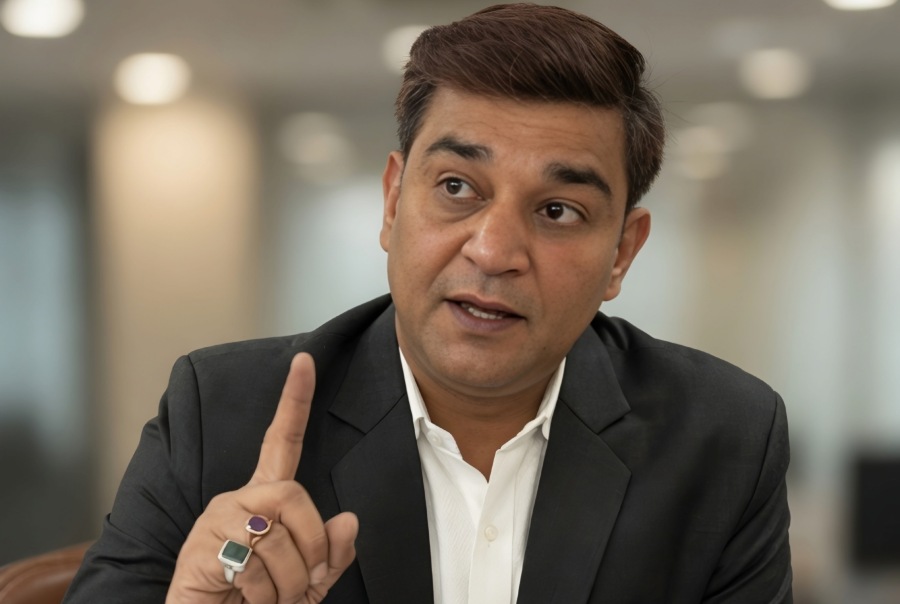
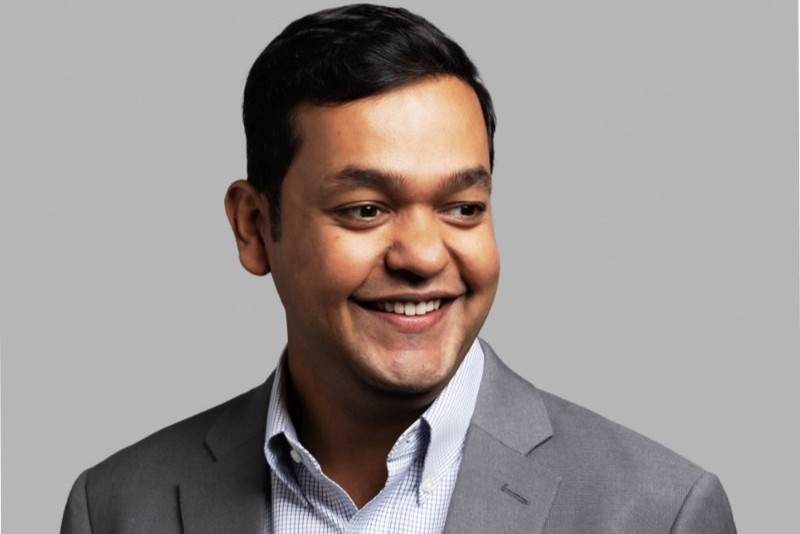
As India marks over a decade of mandated Corporate Social Responsibility, the conversation is shifting from how much is spent to how effectively it is deployed. In this thought-provoking piece, Vivek Agarwal, Country Director for India of the Tony Blair Institute for Global Change, brings a rare blend of policy insight and global development experience to the table. Having advised senior government leaders, including Heads of State, and worked closely with institutions such as the World Bank and IMF leadership, Vivek draws on years of hands-on engagement across continents. His work at the intersection of governance, strategy, and impact delivery lends credibility to a central question: can Indian philanthropy move beyond compliance to become truly catalytic? Alongside Kanupriya Rungta, Founder of Neeyah, a strategic philanthropy advisory platform that curates giving opportunities for donors, he examines how disciplined, strategic capital can help bridge widening social funding gaps and unlock scalable, systemic change.
Beyond CSR: Catalytic Capital for a Viksit Bharat
India introduced its Corporate Social Responsibility (CSR) provisions exactly eleven years ago. There is near universal agreement today that Indian philanthropy has matured. There is, however, little consensus about its cumulative effect.
The numbers invite celebration. FY2024 saw total CSR spend cross ₹34,909 crore – growing at a steady CAGR of 8-9%. Compliance is now near perfect: 98% of eligible listed companies met their commitments last year, up from hardly half a decade ago. Family offices have increased sevenfold since 2018. Azim Premji has donated more than $29 billion in Wipro stock to his foundation. By some estimates, Jamsetji Tata is the largest philanthropist of the last century – larger than Rockefeller, larger than Carnegie.
 There is nothing nascent about India’s philanthropic instinct. It never was.
And yet, good intentions can calcify into ritual. Too much serves the spreadsheet mistaking activity for results, creating parallel delivery systems that flourish for a season and die. Ultra-high net worth individuals in India give 0.1-0.15% of the value of their fortunes compared to 1.2-2.5% in United States. Over half of Indian NGOs work with less than three months of financial cushion. Bain-Dasra India Philanthropy Report estimates that India faces a funding gap of approximately ₹14 lakh crore against NITI Aayog's projected social sector demand.
But here is what Indian philanthropy hasn’t internalized clearly enough: The world outside has changed in such a way that incremental progress is not enough.
The world model for social funding is being smashed. Once the world’s largest bilateral development agency, USAID has been effectively shuttered. The $1.2 billion it spent in India over the past decade is now either orphaned or vanished. The UK aid budget has been reduced to 0.3% of its GNI. Germany cut humanitarian emergency assistance 53%. Total Official Development Assistance dropped 7% in real terms across the major Western donors in 2024, and is expected to fall further this year.
This matters for India in ways that have not yet been fully accounted for. India’s challenged social funding gap isn’t just an internal resource mobilization challenge – it’s part of an unravelling of the worldwide safety net that often helped domestic efforts for decades. Local governance, administrative reform, institution-building – these have always been the most difficult things to fund internationally, and they’re growing harder still.
So, what does real philanthropy look like in this environment? It resembles a discipline that separates catalytic capital from the present well-meaning variety.
 The first is de-risking discovery. What government cannot regularly do is fund pilot projects that may fail, rigorously assess them, and generate evidence that the state can then take to scale. Pratham’s Teaching at the Right level grouped children by intrinsic learning ability, not age. Targeted instruction followed. J-PAL evaluations found large, reproducible gains. State governments adapted the model and took it to millions. Pratham did not create a parallel school system. It generated evidence the state could possess. Discover, absorb, exit: not in rhetoric but as the actual activity design of the programme.
The second practice is leverage – money that brings in more money rather than replacing it. A philanthropic rupee structured as a first-loss guarantee, a recoverable grant or an outcomes-based payment can do something that a straight grant cheque cannot. The REVIVE Alliance used first-loss guarantees to attract banks and NBFCs towards women informal workers who are new-to-credit during the pandemic. One instrument, structured correctly, opened a door that direct grant-making would simply have bypassed. But far too much Indian philanthropy remains pure grant-making – no crowding-in, no multiplier effect for the money.
Third, institutional anchoring: embed innovation within the machine. Projects that are sited within public institutions alter the state’s production function; projects that sit next to them tend only to change headlines. The Union government’s DIKSHA platform is powered by Sunbird, an open-source stack donated by the EkStep ecosystem – built from philanthropic capital, absorbed into the state apparatus, now functioning at population scale free of reliance on a custom vendor. Compared with a splashy app launch, it is glamor-free. It is precisely this boring plumbing that makes true absorption possible.
Which brings us to the accountability question and here the evidence is truly uncomfortable. While 75% of the funders surveyed by Bridgespan’s Pay-What-It-Takes India Initiative say they give money to help NGOs build their institutions, 70% of NGOs say that funders are not meeting these needs effectively. This is the overhead myth at work: the argument that donated rupees flow only to “programme costs” while those doing the work are starved of talent, technology and systems. An organisation with no funding model cannot report properly. One that cannot report properly breeds funder mistrust. And funder mistrust sustains the very myth that caused the problem. The overhead myth persists partly because most donors lack the capacity to conduct due diligence, evaluate organizational health, or structure blended instruments – and that's where professional philanthropy advise comes in. Transparency is not moral varnish. It is the price of legitimacy for private capital operating in public space.
Finally, alignment. Where elected leadership has strong political will, philanthropy can go further and must not shy away from it. The Gates Foundation’s technical assistance to Swachh Bharat Mission worked in precisely because the political system wanted sanitation and could sustain it after grants ended. More recently, the Azim Premji Foundation's teacher capacity work shows the same logic operating in education: philanthropic expertise absorbed into policy, not parked beside it. What philanthropy brought was evidence and capacity; what the state brought was mandate and scale. That combination is the most powerful configuration available to a private funder – provided the philanthropist remembers that their role is to supply capacity, not to claim credit for the mandate.
The shift needed of India’s deep-pocketed donors is not one of scale, but rather one of orientation – from philanthropy as conscience to philanthropy as discipline. It means hiring expertise, asking for evidence, and rejecting the vanity of doing it alone. Most importantly, it means knowing how to read the political landscape for what it really conveys: where a government has made an announcement of ambition but not yet established the implementation capacity to deliver on it, that gap is a philanthropist’s entry point. That is where disciplined private capital compounds the most.
The trade-offs are real: pilots will fail, dashboards will become theatre, and some alignment will tip into capture. But the alternative that is a state of permanent parallelism, an archipelago of good-hearted projects that never get absorbed, promises headlines with no durability.
India’s philanthropy had indeed matured. The question is whether it is moving quickly, and strategically, enough for a moment when the global architecture on which it once leaned quietly is dismantling itself in real time. That is a narrower window than the numbers acknowledges; and tighter windows, generally speaking, don’t wait.




.JPG)