Powering Viksit Bharat: NITI Aayog’s Net-Zero Pathway Signals Opportunities for Policy, Investment and Corporate Action
India’s ambition to become a developed economy by 2047 and achieve net-zero emissions by 2070 will depend significantly on the transformation of its power sector. According to a recent NITI Aayog report, :Scenarios Towards Viksit Bharat and Net Zero – Sectoral Insights: Power’, the country will need a carefully planned expansion of clean electricity capacity alongside major investments in grid infrastructure and system flexibility. The analysis offers important direction for policymakers, industry and corporate sustainability stakeholders.
The report highlights that electricity will be central to both economic growth and decarbonisation. As India expands its manufacturing base, urban infrastructure and digital economy, and as sectors such as transport, buildings and industry move toward electrification, power demand is expected to rise sharply. Ensuring reliable, affordable and progressively cleaner electricity will therefore be critical for improving quality of life, strengthening industrial competitiveness and reducing emissions across the economy.
Growing Demand and a Renewable-Led Future
India’s power sector has already undergone rapid transformation over the past decade, with significant expansion in renewable energy and transmission infrastructure. Non-fossil sources now account for a growing share of installed capacity, reflecting the country’s accelerated clean energy deployment.
Looking ahead, demand growth is expected to be driven by rising cooling needs, electric mobility, green hydrogen production, data centres and continued urbanisation. Integrating large volumes of renewable energy into the grid will require not only additional generation capacity but also investments in energy storage, transmission expansion and advanced grid management systems.
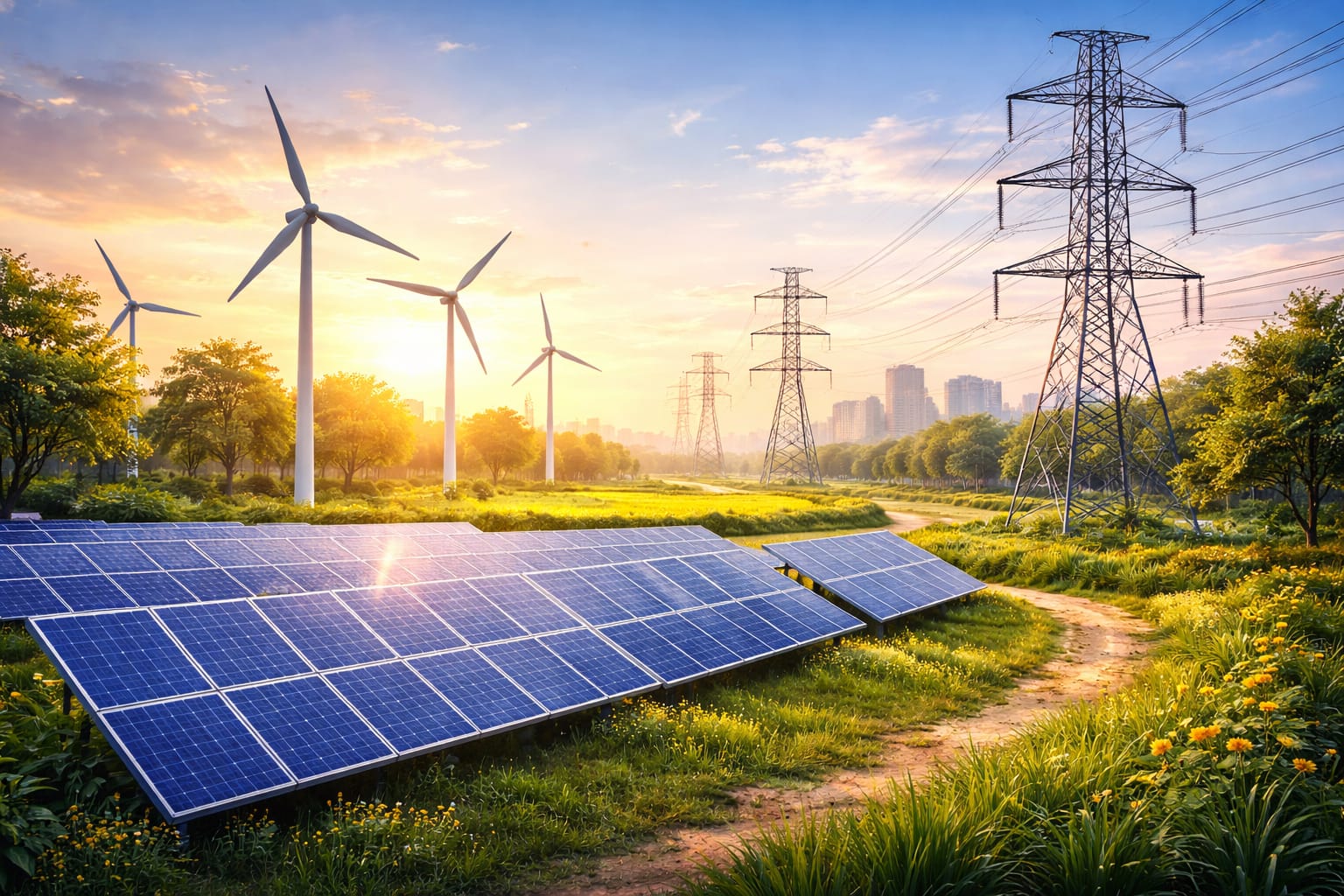
The report presents two broad pathways—a trajectory based on current policy momentum and a more ambitious pathway aligned with India’s net-zero commitment. Both scenarios suggest that solar and wind will form the backbone of future capacity additions, supported by battery storage, pumped hydro and more flexible system operations.
Balancing Reliability During the Transition
While renewable energy is expected to dominate long-term expansion, the report takes a pragmatic view of system stability. Conventional thermal power, particularly coal, is likely to continue playing a role in the near and medium term to ensure reliability during peak demand and periods of low renewable generation. At the same time, improving the efficiency, flexibility and environmental performance of existing plants will be important to avoid long-term carbon lock-in.
The transition will also require clean firm power sources that can operate independent of weather conditions. Nuclear energy is expected to play a stabilising role in a high-renewable system, with emerging technologies such as advanced and small modular reactors offering potential long-term support.
Investment Needs and Structural Reforms
A key takeaway from the report is the scale of investment required across the power value chain. Beyond adding generation capacity, strengthening transmission networks, reducing technical and commercial losses, and improving the financial health of distribution companies will be critical.
Distribution sector reforms, digitalisation, improved data systems and stronger governance are identified as priorities to enhance efficiency and attract private investment. Competitive procurement and market-based mechanisms will also help manage costs as the energy mix evolves.
The transformation will have wider implications for land use, water resources and financing requirements, underscoring the need for integrated planning and coordinated policy implementation.
Implications for CSR and Corporate Sustainability
For businesses and CSR leaders, the power sector transition represents one of the most effective levers for reducing operational and value-chain emissions. As the grid becomes cleaner, corporate electrification, renewable procurement and energy efficiency initiatives will deliver greater climate benefits.
The evolving energy landscape also creates opportunities for corporate engagement through long-term renewable energy sourcing, investments in decentralised energy systems, support for energy access in underserved areas, and partnerships focused on skill development and just transition in fossil fuel-dependent regions.
With renewable purchase obligations, voluntary climate commitments and new market instruments gaining traction, corporate sustainability strategies are expected to align more closely with national energy transition priorities.
Enabling Inclusive and Sustainable Growth
Decarbonising the power sector offers multiple co-benefits, including improved energy security, reduced dependence on fossil fuel imports, growth in domestic manufacturing and new employment opportunities. Most importantly, a cleaner and more reliable electricity system will enable low-carbon growth across sectors, making the power transition central to India’s broader development vision.
For stakeholders tracked by TheCSRUniverse, corporates, foundations, investors and development partners, the message is clear: India’s net-zero journey will be powered by electricity, and meaningful climate action will increasingly depend on how organisations engage with and support the country’s evolving power ecosystem.









.JPG)