Can India’s Social Stock Exchange Deliver on Inclusive Finance? A Practitioner’s View
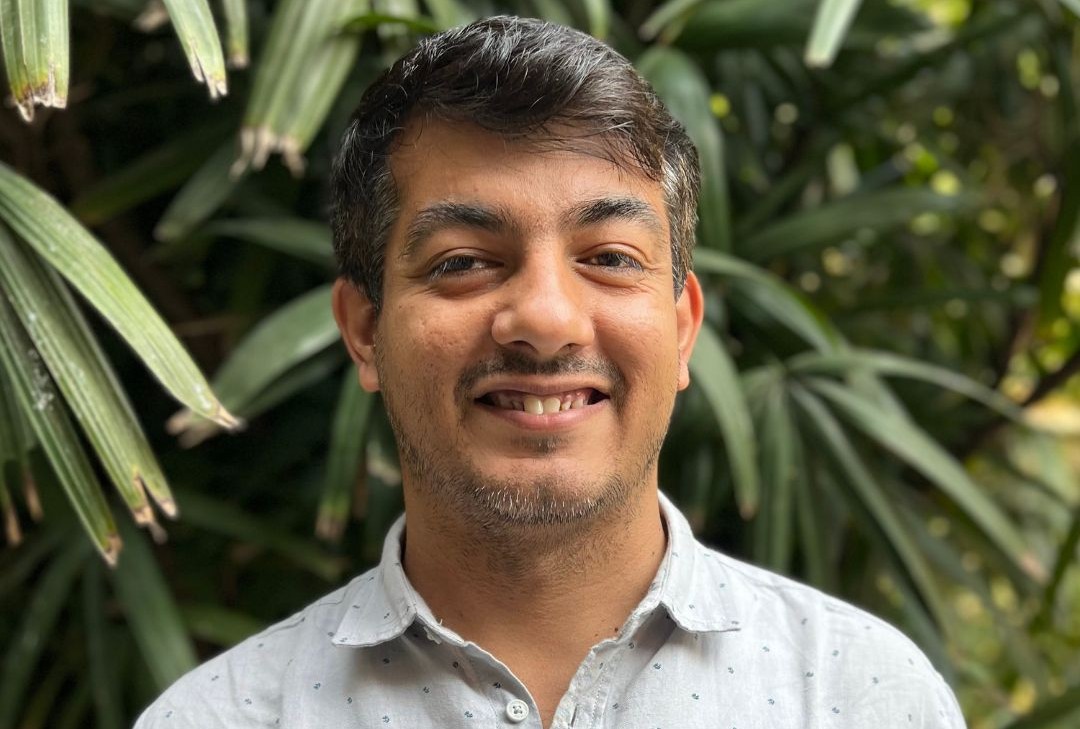
As India’s development landscape matures, the Social Stock Exchange (SSE) has emerged as a landmark shift from traditional charity to institutionalized, transparent social financing. In this exclusive feature for TheCSRUniverse, Neeraj Ahuja, Practice Director at Transform Rural India (TRI), offers a practitioner’s perspective on whether this platform can truly democratize access to capital.
A seasoned social impact leader with over 15 years of experience, Neeraj transitioned from a corporate start at Infosys to serving as a Prime Minister’s Fellow, eventually leading TRI’s historic listing on the SSE. His expertise in the "Whole of Economy" framework and his role in mobilizing private capital provide him with a unique vantage point on market-driven rural prosperity. Here, Neeraj explores the friction and the promise of the SSE, analyzing early milestones and questioning whether this nascent market can move beyond symbolic gestures to deliver genuine inclusive finance for India’s most underserved geographies.
Read on for the full perspective.
Unlike other countries, India’s state-initiated Social Stock Exchange (SSE) model is a unique and ambitious attempt to connect capital markets with social impact. It moved from idea to institution in 2024 and now sits inside the country’s most trusted market institutions – NSE and BSE. The promise is attractive: bring transparency, discipline and scale to social financing, while allowing investors to support measurable impact through listed instruments.
Having led Transform Rural India Foundation’s listing on the SSE, I have seen both the promise and the friction from close quarters. The SSE is not just another fundraising window. It forces an organisation to sharpen its theory of change, strengthen compliance, define measurable outcomes and tell a credible story to investors. It is more of an institutional discipline than a financial act.
But the larger question remains - Can the SSE deliver inclusive finance in a country where access to capital is still deeply uneven across geography and purpose? And will it be able to truly scale?
Early evidence suggests movement, but not yet momentum. As of early 2026, 87 Nonprofit Organizations (NPOs) were registered on BSE SSE and 144 on NSE SSE. However, fewer than 20 organizations have listed their social impact projects, collectively, raising approximately ₹44 crore. These projects covered areas such as education and skill development, livelihood & economic empowerment, sustainable agriculture, entrepreneurship promotion, and healthcare.
These are modest numbers compared to India’s mainstream capital markets, but SSE should not be judged by IPO-type volume at this stage. The more useful test is whether it is showing signs of early traction – repeatability, issuer diversity and investor trust. On that count, the picture is cautiously encouraging.
Some organization, like Transform Rural India, SGBS Unnati Foundation, Swades Foundation, have returned to the platform for follow up listings. Repeat issuances matter because they show that the SSE is not merely a one-time reputational event. For many NPOs organisations, it may become a recurring channel for project finance.
The diversity of issuers is also beginning to widen. Listed NPOs have included organisations working on girls’ education, employability, tribal livelihoods, education, healthcare, anti-trafficking, etc. This suggests that the SSE is not confined to one sector. Yet it remains too early to say that it is reaching the full breadth of India’s social economy.
The bigger concern, however, is whether SSE-led finance will become inclusive across geography and social purpose. The first real test is whether capital can be raised, but more important test is whether it can be directed to places and problems that rarely attract it—remote rural geographies, systems strengthening interventions, and sectors where outcomes are hard to package and harder to sell.
This is where intermediation becomes central. Inclusive finance through SSE will not be proven by the number of listings alone. It will be proven when capital moves to underserved rural geographies and actors which needs finance that does more than fund projects. It needs finance that strengthens local enterprise ecosystems, builds institutional capacity, supports critical infrastructure and absorbs early-stage risk.
There is also the question of investor appetite. At present, the Zero Coupon Zero Principal instruments (ZCZPs), are closer to regulated donations than conventional investments. They offer no financial repayment, but provide social return, transparency and tax benefits. This means investor appetite will evolve slowly. The first wave is likely to come from philanthropy-adjacent capital: development financial institutions, family foundations and mission-aligned high-net-worth individuals. A broader retail market will need strong communication, easier investment methods and credible impact reporting.
SEBI’s recent reduction of the minimum application size to ₹1,000 was aimed at widening participation. But smaller ticket sizes alone will not create a market. Investors must understand that wider financial returns are linked to country’s inclusive growth and that they need to invest in social projects also - not for charity but for better financial returns as well. They will also need credible information, comparable impact reporting and confidence that funds are being used meaningfully.
Further, Institutional appetite for outcome-linked instruments is also critical. It is likely to evolve in stages. The first stage is philanthropic capital seeking transparency. The second is impact capital seeking measurable outcomes. The third, and some distance away, could be blended finance structures where grants, guarantees, outcome payments and SSE instruments work together. This would be especially relevant for rural livelihoods, skilling, enterprise incubation, health and climate resilience, where outcomes take time and risks are uneven.
In conclusion, the SSE is beginning to show early signs of traction. It has credible issuers, repeat participation, regulatory responsiveness and growing visibility. But the scale remains modest, investor participation is still nascent, and the financial inclusion test is far from settled. For SSE to become truly scalable and inclusive, three shifts are needed.
First, creating a real market for SSE. This will require moving beyond listings to sustained investor demand. For retail investors, appetite will build only if participation is simple, trusted and meaningful. Clear communication and credible, easy-to-read impact reporting can help convert curiosity into action. Distribution is equally important - Integration with mainstream investing platforms, nudges through tax incentives, and storytelling that links investments to real outcomes can gradually normalize impact participation.
Second, for institutional investors, there is need for blended finance structures and outcome-linked frameworks that align SSE instruments with CSR mandates, impact funds and development finance. Credit enhancements, first-loss guarantees and co-investment models can reduce perceived risk and unlock larger capital flows.
Third, the market needs stronger intermediaries. It needs institutions that can translate grassroots work into investable, measurable and auditable propositions. Without this layer, SSE may remain confined mainly to larger NGOs.
The SSE should therefore be seen neither as a breakthrough nor as a symbolic gesture. It is a promising experiment in social finance. However, its success will be measured not only by the volume of projects it funds, but by a harder test: whether it shifts capital toward those who have traditionally been left out of the system. The next phase will decide which path it takes.