From Bank Accounts to Business Growth: Why India’s Next Financial Inclusion Mission Must Empower Small Entrepreneurs
India’s financial inclusion journey has often been celebrated through the lens of scale, crores of Jan Dhan accounts opened, digital payments expanded, and banking access extended to previously excluded populations. But as India advances toward its Viksit Bharat ambitions, a larger and more urgent question is emerging: can access to banking truly translate into sustainable economic mobility without access to enterprise capital?
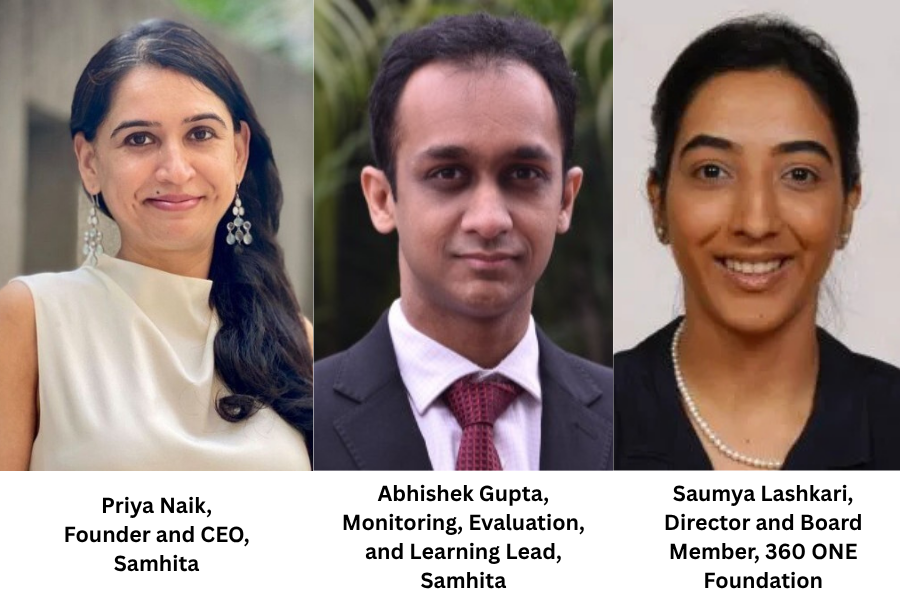 In this thought leadership piece, Saumya Lashkari of 360 ONE Foundation, along with Priya Naik and Abhishek Gupta of Samhita, argue that India’s next phase of financial inclusion must move beyond opening bank accounts to building financing pathways for small entrepreneurs, women-led enterprises, farmers, and informal businesses. The authors highlight the ₹20–25 lakh crore credit gap that continues to limit the growth potential of India’s micro and small enterprises despite significant progress in financial inclusion.
India’s development conversation is increasingly centred on one question: how do we finance the country’s next phase of growth?
When Nirmala Sitharaman recently announced the formation of a high-level committee on Banking for Viksit Bharat, she emphasised that India’s growth will depend on credit and banking services reaching the common citizen. The statement reflects a broader recognition that economic growth cannot rely only on large corporations and infrastructure investments. It must also be powered by the millions of small entrepreneurs, producers and workers who sustain local economies.
Yet the financial architecture that supports this segment remains incomplete. Expanding access to credit requires more than increasing the volume of loans. It requires designing financing systems that reflect how small enterprises actually grow.
What will it take to unlock the next stage of economic growth?
India has made remarkable progress in expanding financial access over the past decade. Initiatives such as Pradhan Mantri Jan Dhan Yojana have brought hundreds of millions of citizens into the formal banking system. In the last 11 years, over 56 crore bank accounts have been opened under PMJDY schemes, with nearly 56% of them being women-owned accounts.
Schemes like these mark an important step toward financial inclusion, but the next frontier of financial inclusion is not opening accounts. It is ensuring that entrepreneurs can access the capital required to grow their businesses.
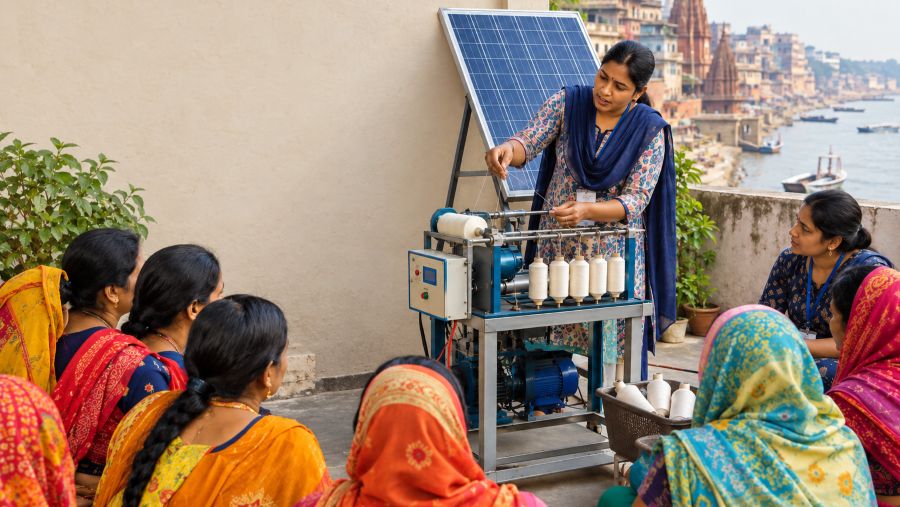
Across rural and peri-urban India, small enterprises often reach a point where growth is possible, but financing is not available. Farmers require capital before the sowing season. Street vendors need working capital ahead of festival demand. Home-based businesses require modest investments in equipment or packaging to expand their market reach. What is holding them back from achieving scale? A ₹20–25 lakh crore wide credit gap.
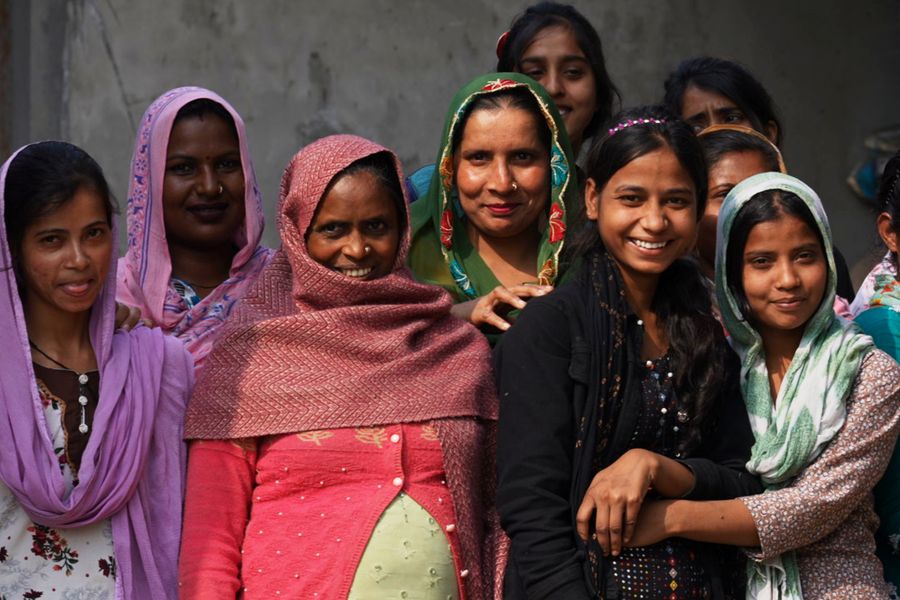
Women entrepreneurs face this challenge particularly sharply. Many run micro-enterprises in food processing, tailoring, retail, agriculture or services. These enterprises often operate successfully at a small scale, but struggle to grow. Women-run MSMEs receive 26% of the credit received by the sector, and while this number indicates an almost 5x increase since 2017, most of them still remain unable to access formal credit because they lack collateral, formal credit histories or documented cash flows. As a result, businesses that could grow and generate employment remain trapped at subsistence levels.
Financing Pathways, Not One-Size-Fits-All Credit
For small entrepreneurs, financing is rarely a single transaction. It is a journey.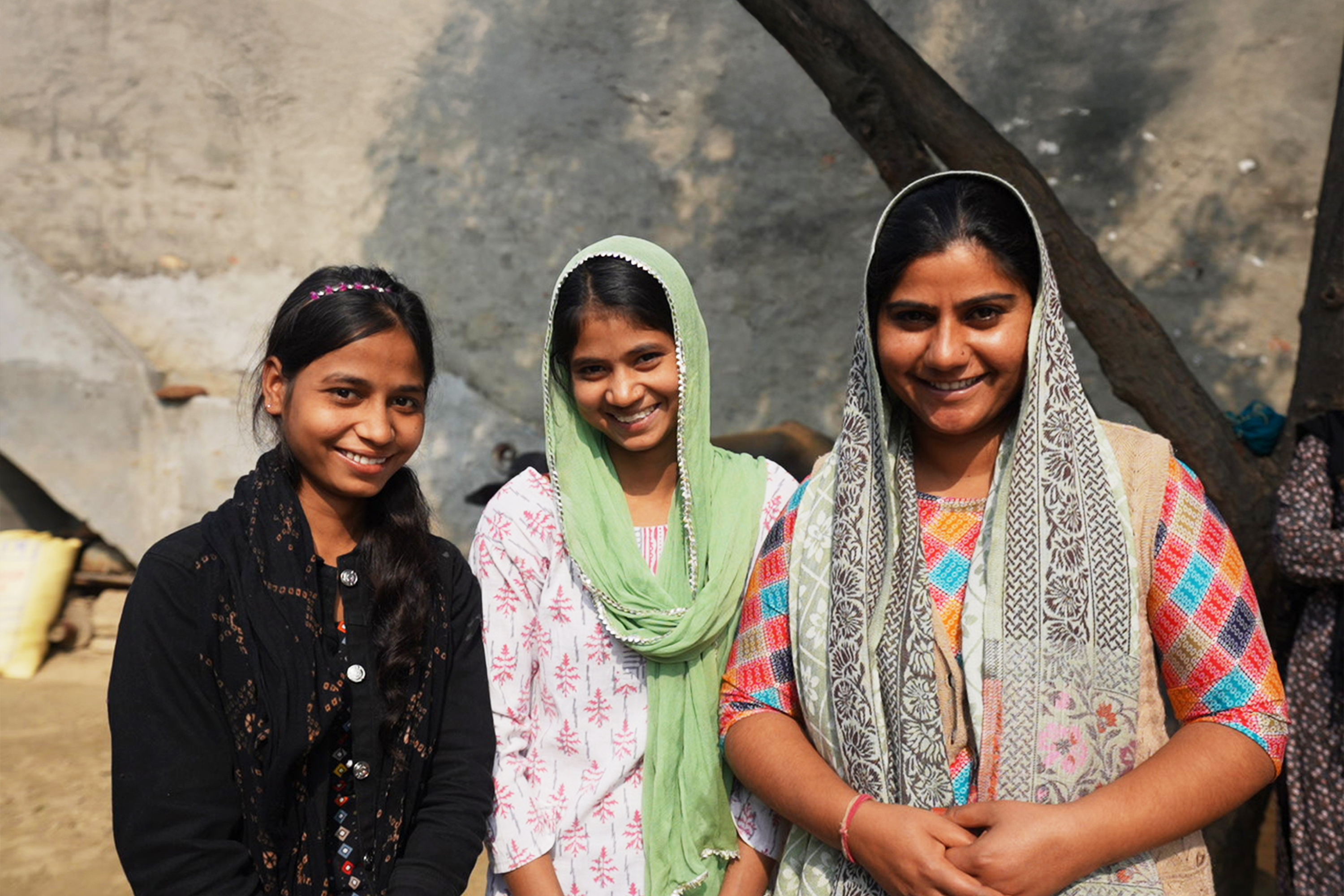
Early-stage enterprises often require small amounts of flexible capital that help stabilise income and support working capital needs. As businesses mature, they require larger loans to invest in assets, increase production capacity or expand distribution. Over time, these enterprises can transition into conventional banking products and supply chain finance.
A financing system that supports these stages allows entrepreneurs to build financial track records and repayment histories gradually. It also reduces risk for lenders by enabling borrowers to demonstrate credit discipline before accessing larger loans.
India already has several policy instruments that support this progression. Collateral-free lending under Pradhan Mantri Mudra Yojana enables first-time entrepreneurs to access small loans. Risk-sharing mechanisms such as Credit Guarantee Fund Trust for Micro and Small Enterprises encourage banks to extend credit to smaller borrowers.
Digital public infrastructure is also expanding opportunities. Platforms such as Open Network for Digital Commerce allow small enterprises to access new markets, while procurement systems like Government e-Marketplace enable them to participate in government supply chains.
However, these instruments must work together as part of a coherent financing pathway rather than as isolated schemes.
Financing the Missing Middle Requires Collective Action
Unlocking financing for India’s smallest entrepreneurs cannot rest on banks alone. It requires coordinated action across multiple stakeholders including government, financial institutions, development partners, philanthropic organisations, and private capital.
Banks and NBFCs have the capacity to scale lending once enterprises demonstrate stability. Government programmes can provide guarantees and policy support that reduce lending risks. Digital platforms can expand market access and formalise business activity.
But the earliest stages of enterprise growth often require risk-tolerant capital that traditional lenders are not structured to provide. Catalytic capital from corporate social responsibility programmes, philanthropy, and impact investors can help bridge this gap by absorbing early risks or supporting credit guarantees.
When deployed strategically, relatively 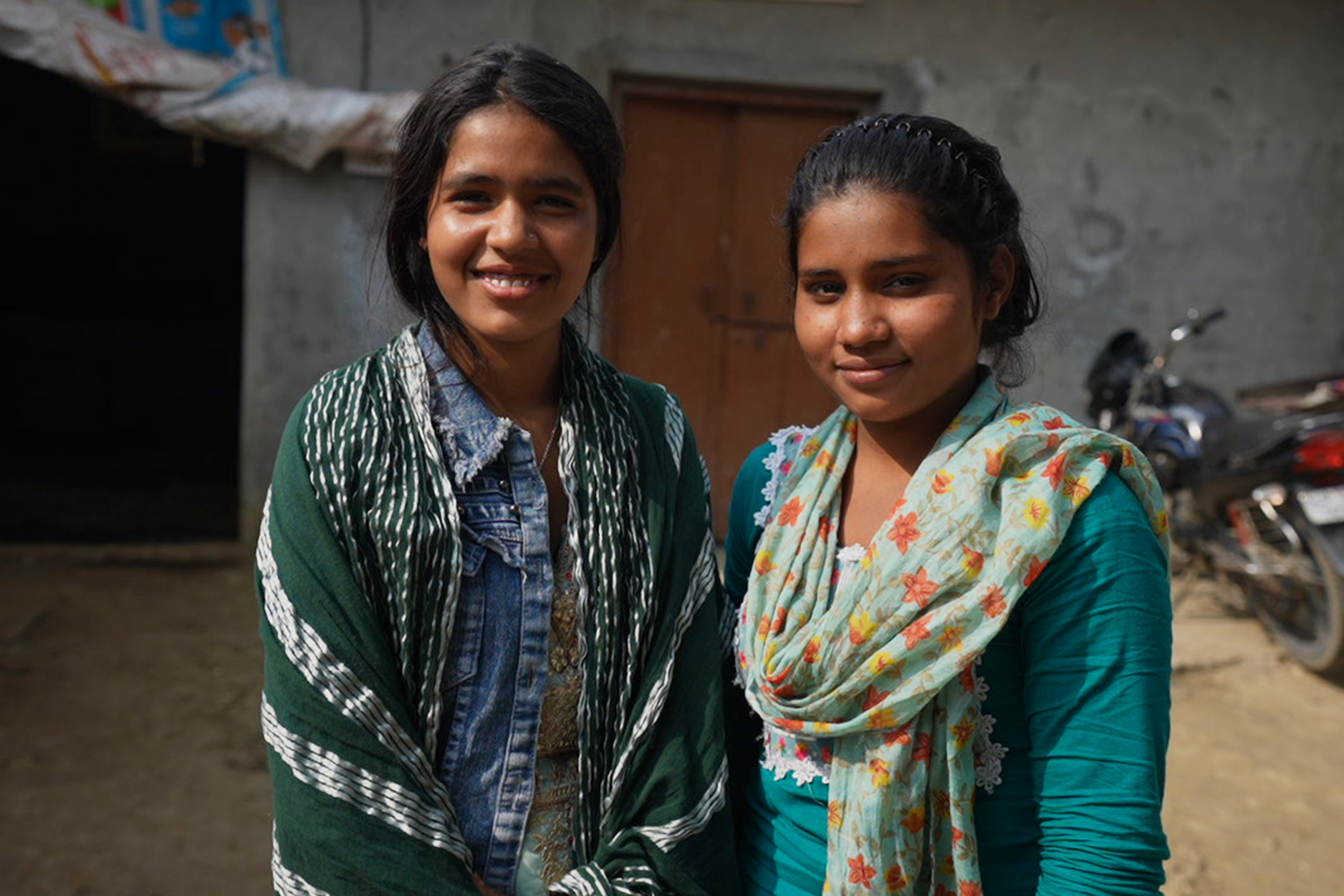 small pools of catalytic capital can unlock significantly larger volumes of commercial lending. This approach allows financial institutions to reach entrepreneurs who might otherwise remain outside the formal credit system.
India’s ambition of becoming a developed economy will depend on whether financing reaches the smallest entrepreneurs as effectively as it reaches the largest corporations.
This is particularly true for women entrepreneurs, who operate a large share of India’s micro-enterprises but receive only a small fraction of formal credit. Expanding financing pathways for women-led businesses is not only an inclusion agenda but an economic imperative.
When women entrepreneurs gain access to capital, household incomes rise, local employment expands and communities become more resilient.
The committee on Banking for Viksit Bharat offers an opportunity to rethink how capital flows across India's economy. The goal should not simply be to expand credit, but to design financing systems that enable small enterprises to grow, formalise and participate fully in the country's economic transformation.
India opened bank accounts for half a billion citizens in a decade. The next decade must be defined by what those citizens were able to build with them. That ambition demands a financial system designed not just for scale, but for the street vendor, the smallholder farmer, and the woman stitching garments in her home. Entrepreneurs who are not waiting for opportunity, but for the capital to meet it.
About the Authors:
Saumya Lashkari is Director and Board Member at 360 ONE Foundation. Priya Naik is Founder and CEO of Samhita. Abhishek Gupta is Monitoring, Evaluation and Learning Lead at Samhita.