Building India’s Non-Profit Unicorns: Inside Change Engine’s Blueprint for Scalable Social Impact
.jpg)
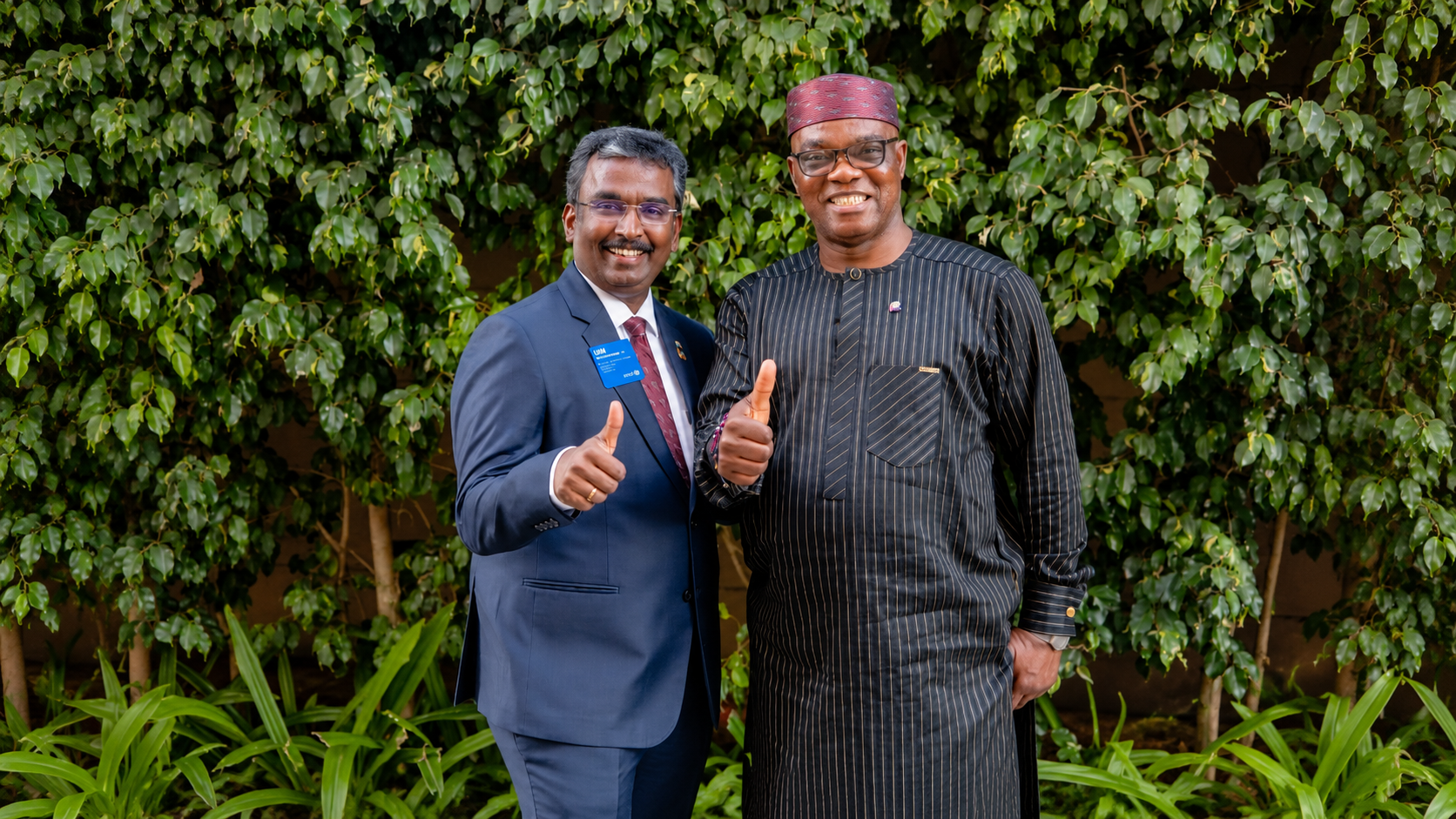
At a time when India’s social impact ecosystem is brimming with intent, talent, and capital, a critical gap still persists—the absence of structured, scalable playbooks for mission-driven organisations. In this exclusive interaction with TheCSRUniverse, Mr. Varun Aggarwal and Mr. Shubham Bansal, Co-founders, Change Engine, shed light on how their founder-led accelerator is addressing this structural challenge by bringing startup-style thinking to the non-profit sector.
The conversation explores how Change Engine is enabling high-potential organisations to scale through strategic clarity, evidence-based decision-making, and innovative funding approaches. From its flagship accelerator programme to research-led advocacy like the ‘Ease of Doing Good’ reports, the organisation is working to unlock systemic barriers that have long constrained impact at scale.
Scroll down to read more:
Q. What inspired the creation of Change Engine, and what gap did you see in India’s innovation or social impact ecosystem that led to the launch of this initiative?
A. India's development sector sits at an interesting intersection right now. Many well-intentioned, highly motivated and talented young people want to work on social problems. A new generation of startup-era philanthropists wants to give back. Digitisation and technology have made the last-mile reach more achievable than ever. All the ingredients for scale are present, yet many non-profits and social enterprises remain stuck well below their potential.
The reason we found is structural: while playbooks for tech startups are abundant, there are almost none for mission-driven organisations tackling complex social problems. The ambition and strategic clarity that venture-backed companies take for granted simply doesn't exist for the non-profit world.
That gap is what Change Engine is built to fill. We are a founder-led accelerator that works with high-potential nonprofits, applying the same frameworks and strategic thinking as venture-backed startups, but oriented entirely around social impact. Our goal is to help create 100 non-profit unicorns in five years: organisations that reach a million people, or at least 5% of their target population.
Q. Could you walk us through the major focus areas and flagship programs that currently define the organisation’s work?
A. Change Engine currently has three focus areas:
- The Accelerator Programme is our core. We identify high-potential founders and work closely with them to find scaling levers, test them, and set them on the path to becoming a non-profit unicorn. We do this through a unique sandbox model that combines support for leveraging data and evidence, partnering with the government and applying product and tech expertise. Each cohort organisation receives seed capital of up to Rs 25L alongside the strategic support.
- Research and Knowledge Products are how we build the field. We've published ‘The Playbook for Non-Profit Unicorns' and the 'Ease of Doing Good' report series — a set of studies examining the systemic barriers preventing non-profits in India from starting up, innovating, and scaling. Our inaugural report, 'The Flexible Funding Gap for Non-Profit Unicorns,' makes the case for unlocking $750M over the next 5 years in innovation funding.
- We also host the Mission Billion Summit to help drive the conversation on scaling impact. Our latest convening brought in 250+ founders, funders and sector leaders.
To date, we've worked with 10 organisations that have collectively raised over $2M in follow-on catalytic funding.
Q. Change Engine emphasizes first-principle thinking when addressing complex problems. Could you explain how this philosophy shapes the way the organization identifies challenges and designs solutions for large-scale impact?
A. We take a first principles approach whenever we partner with a non-profit. Let me take an example to illustrate this.
Careleavers Inner Circles (Clic), part of our latest cohort, works on helping young adults transition to independent adult life as they age out of child care institutions / orphanages when they turn 18. When we started working with them, we tried to map out how many such institutions are there across the country and what’s the size of this pool of youth that ages out from here, what are the biggest challenges they face, what are the policy structures to support them and the work that has been done by other non-profits in the space. Since founders, Anisha and Girish are themselves care leavers they have a lot of in-depth understanding of the challenges. Asking founders the question, what makes this problem hard to solve and what factors contribute to it, can pave the way for deeper understanding.
Once we have a clearer understanding of the problem from both a micro and macro perspective, we began to map out different approaches and interventions and stack rank for their impact, cost effectiveness and ease of implementation. We particularly look for which of the approaches is amenable to scale. Based on our Playbook for Non-profit Unicorns, this usually means either there is a way to collaborate with the government, or use technology as a core offering or leverage community groups for last mile distribution.
Q. How critical is evidence-based decision-making in achieving large-scale social transformation?
A. It's fundamental in two ways. Organisations need to have a clear north star metric for the impact they hope to see. These numbers can directly quantify the state of the problem (say, percent women in jobs) and/or be leading measures of it (ex: percent women educated.). North star metric is what will guide the intervention design and strategy.
The second set of metrics organisations should track is data around their existing model that clearly captures the depth and scale of their current impact. For example, an organisation that runs a coding bootcamp for women to get into tech should track - not only learning outcomes, but placement and retention rates. Ideally, they would also track program cost per student. This can give insights into what needs to change to make progress on the north star metric at scale.
Q. Could you share some examples of organizations or startups supported by Change Engine that demonstrate the kind of impact or innovation you aim to create?
A. These are some of the organisations that exemplify what non-profit unicorn-level ambition looks like in practice:
Project Deep: India’s only non-profit focused on strengthening direct cash transfers for inclusive growth. Through their pilots, Project Deep was able to show that carefully designed cash transfer programs can help poor households move out of poverty traps by allowing them to invest in productive assets - livestock, small business, farming. They are now assisting two state governments improve the design, delivery, and fiscal sustainability of cash transfers, with the goal of increasing the economic mobility of the bottom 20% of households.
Careleavers Inner Circle (CliC): CliC supports young people aged 18+ transitioning out of child care institutions (CCIs/orphanages). Currently these young people (called careleavers) face daunting challenges once they are out of CCIs - they don’t have access to basic documents, housing and social support systems to start their independent lives. CliC works closely with the government to make sure all careleavers have access to essential documents (Aadhar, Pan, Voter Card) and link them to existing welfare schemes for vulnerable youth (Mission Vatsalaya and others). The model leverages a dedicated tech platform and a national helpline to serve members. In a short span of time, they are already working closely with 4 state departments. They have built a community of 3000+ careleavers and supported 1000+ careleavers transition from CCIs to adult life.
Scholarlify: Scholarlify is building the digital stack to connect deserving students with scholarships from corporates, foundations and government. It streamlines the full scholarship lifecycle — discovery, application and management — for both students and funding organisations. The platform reduces friction allowing funders to launch a scholarship within 24 hours and provide automated tracking. In a short span of 1.5 years, they have already unlocked ₹50Cr+ in scholarships unlocked for 20,000+ students.
Saarthi Education: Saarthi Education is focusing on India's most overlooked education failures: the practice gap. Government school students get an average of just 1 arithmetic question per day versus 20–40 in high-income schools. This gap in quantity and quality of practice is a root cause of poor numeracy outcomes. They are building a rigorous evidence base on the best way to design and implement “practice” as core part of teaching pedagogy, then scaling through improvements to education policy, curriculum and government programs
All these organisations are solving different problems. But they have found one (or more) scaling lever - partnering with government, technology or community groups - to reduce the marginal cost of distribution and scale their impact.
Q. What have been some of the biggest hurdles—whether in funding, policy, or adoption—and how is Change Engine addressing them?
A. In the first report in the “Ease of doing good” series we looked at flexible funding which seems to be one of the major bottlenecks to building non-profit unicorns.
- 80% of non-profits we surveyed struggle to scale because they lack startup-style innovation capital. Half have less than 10% of their budget in unrestricted funds — making it near-impossible to invest in growth.
- Cheque sizes are too small and too short. 60% of organisations report that typical grants are under Rs 10 lakhs, and most are one-time. Only 4 in 10 domestically funded organisations have ever received a multi-year grant.
- While CSR represents Rs 34,000 crores in annual funding, that capital largely remains inaccessible for the kind of flexible, growth-oriented support non-profits need to scale.
We estimate that $750M in flexible funding is needed over the next 5 years to produce 100 non-profit unicorns from the country. This is $150M annually and only 1% of the current private philanthropic capital. It’s not the lack of capital but how it is given. And at Change Engine we want to work closely with both the private sector and government to make the shift towards more flexible funding.
Q. Looking ahead, what are Change Engine’s key priorities over the next five years in terms of expanding programs, scaling impact, or supporting new categories of innovators?
A. Over the next 5 years, we want to catalyse the ecosystem and help build India’s 100 non-profit unicorns. Our strategy is simple. First, we aim to directly partner with 40-50 organisations through our accelerator program. Given the success rates, we have seen with previous cohorts we estimate 20-25 of these will be on the path to scaling. Second, we will continue to find structural barriers to building and scaling non-profits, and work with relevant stakeholders to remove those barriers through data led research, advocacy and Mission Billion Summit (our annual public convening). If we can build the momentum towards unlocking additional $750M in flexible funding over the next 5 years, that will be a big win for the ecosystem.
Q. Finally, what advice would you give to entrepreneurs, researchers, or social innovators who want to solve large systemic problems but may not know where to start?
A. We would say start with the EPIC (Evidence, Public Goods, and Intervention for Change) framework in our Playbook for Non-Profit Unicorns. To elaborate it further
Evidence for Problem: We find social entrepreneurs generally understand their problems well qualitatively, but having a quantitative idea of the problem is as important. It helps set a quantitative goal for your organization – what must the numbers be for you to have achieved or substantially progressed in your mission. These numbers can be directly on the state of problem (say, percent women in jobs) and/or leading measures (percent women educated/aware of jobs, etc.).
Public Goods: Most problems of interest are large and complex enough for one organization to tackle. Even if you find a great intervention, you may need more folks to replicate the intervention or act around the intervention, in the value chain, forming an ecosystem to deliver the full impact. This means you need to find ways to multiply yourself!
Intervention for Change: Here you implement something to solve a problem of mammoth scale with the limited capacity, any single non-governmental organization can command. What is the narrow intervention, that when combined with the power of narrative and public goods, can in due course help move the needle on your north star metric. This could be done through policy intervention, strategic program design for government, augmenting government implementation capacity, public advocacy and awareness, finding market ready solutions, and more.




.png)