Beyond Charity: Reimagining Development Through Dignity, Trust & Community Ownership
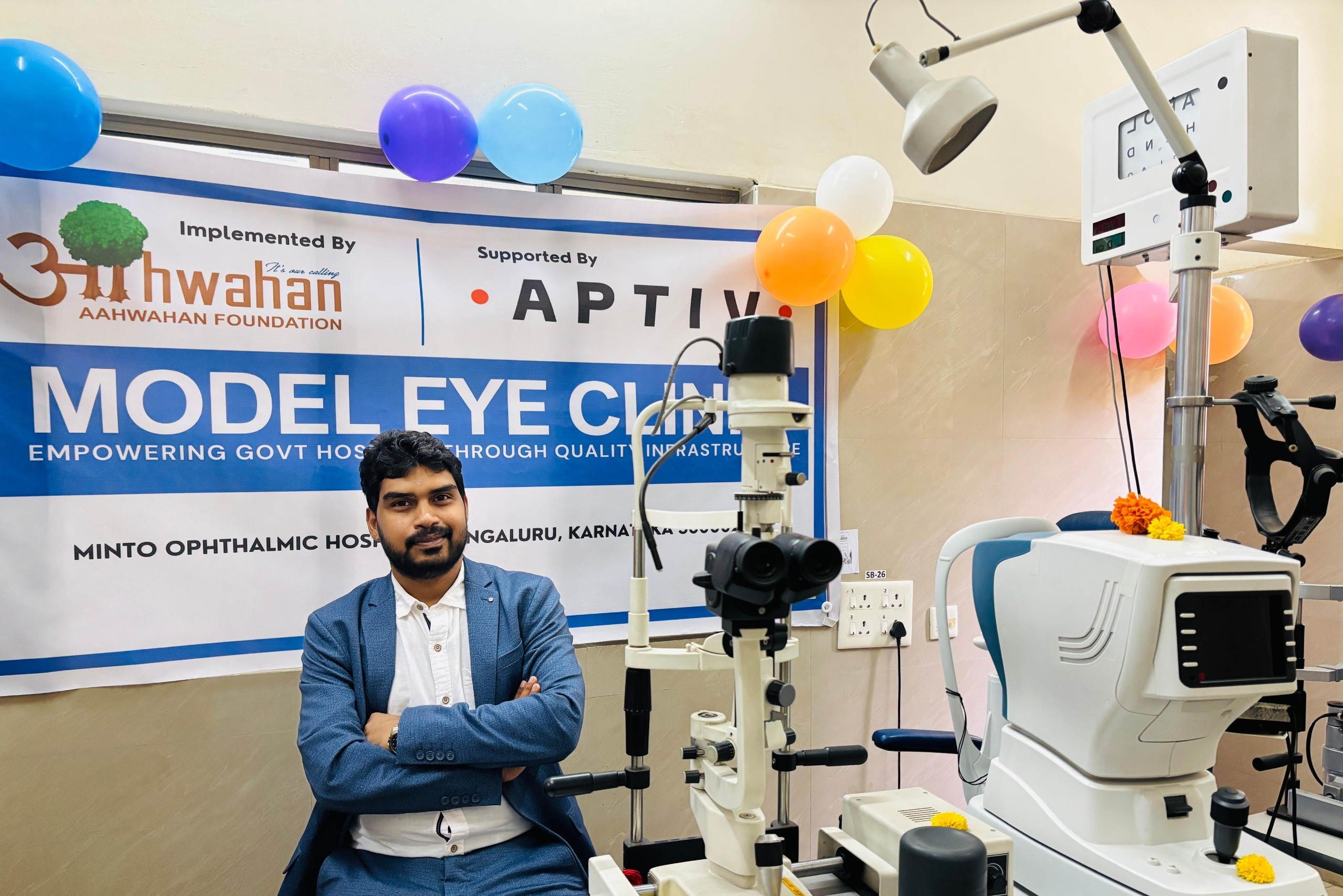
At a time when India’s development discourse is increasingly shaped by scale, statistics, and policy ambitions, the deeper realities of inequality, access, and dignity often remain hidden beneath the surface. In this exclusive interaction with TheCSRUniverse, Mr. Braja Kishore Pradhan, Founder and CEO, Aahwahan Foundation offers a deeply reflective and unfiltered perspective on what meaningful grassroots transformation truly demands.
As the Founder and CEO of Aahwahan Foundation, Pradhan speaks not only about interventions in education, healthcare, women’s empowerment, and environmental sustainability, but also about the emotional and systemic realities that continue to shape underserved communities across India. From adopting over 200 government schools and launching Education on Wheels, to advancing menstrual dignity through Pink Rooms and scaling cervical cancer vaccination efforts, the conversation moves beyond conventional impact narratives to explore the importance of trust, community ownership, and long-term social change.
Scroll down to read the full interview:
Q. What motivated the creation of Aahwahan Foundation, and what were some of the key gaps in development that you wanted to address when the organisation began its journey?
A. Honestly? Frustration. And love. Both at the same time.,You travel across this country — and India has a way of breaking your heart and filling it simultaneously. You see a child sitting under a streetlight doing homework because there's no electricity at home, and she's still doing it. Still doing it. That kind of resilience shouldn't have to exist. That child shouldn't have to fight that hard just to learn. But she does. And somewhere in that image is both the problem and the answer.
What makes Aahwahan's story a little unusual is who's asking these questions. These are people who walked out of IITs, IIMs, XLRI — institutions that the world considers gateways to the most coveted careers. People who had every so-called reason to look away. And they chose to look closer instead. That choice — deliberate, eyes-open — matters. Because it says something about a generation that refuses to accept that ambition and conscience have to live in separate rooms. The sharpest analytical minds in the country asking not how do I build wealth but how do I build the nation — that energy is at the heart of what Aahwahan is.
When we started asking serious questions about why development in India moves the way it does — slowly in some places, not at all in others — we kept arriving at the same uncomfortable truth: the gaps aren't accidental. A child who is malnourished cannot learn well. A woman who has no agency over her own health cannot raise a healthy family. A community that is destroying its local water body for short-term livelihood cannot sustain itself long-term. These things are all connected. Deeply, stubbornly connected. And yet for decades, we've been treating them as separate problems with separate budgets, separate departments, separate organisations.That fragmentation — that's one of the most honest gaps we wanted to confront.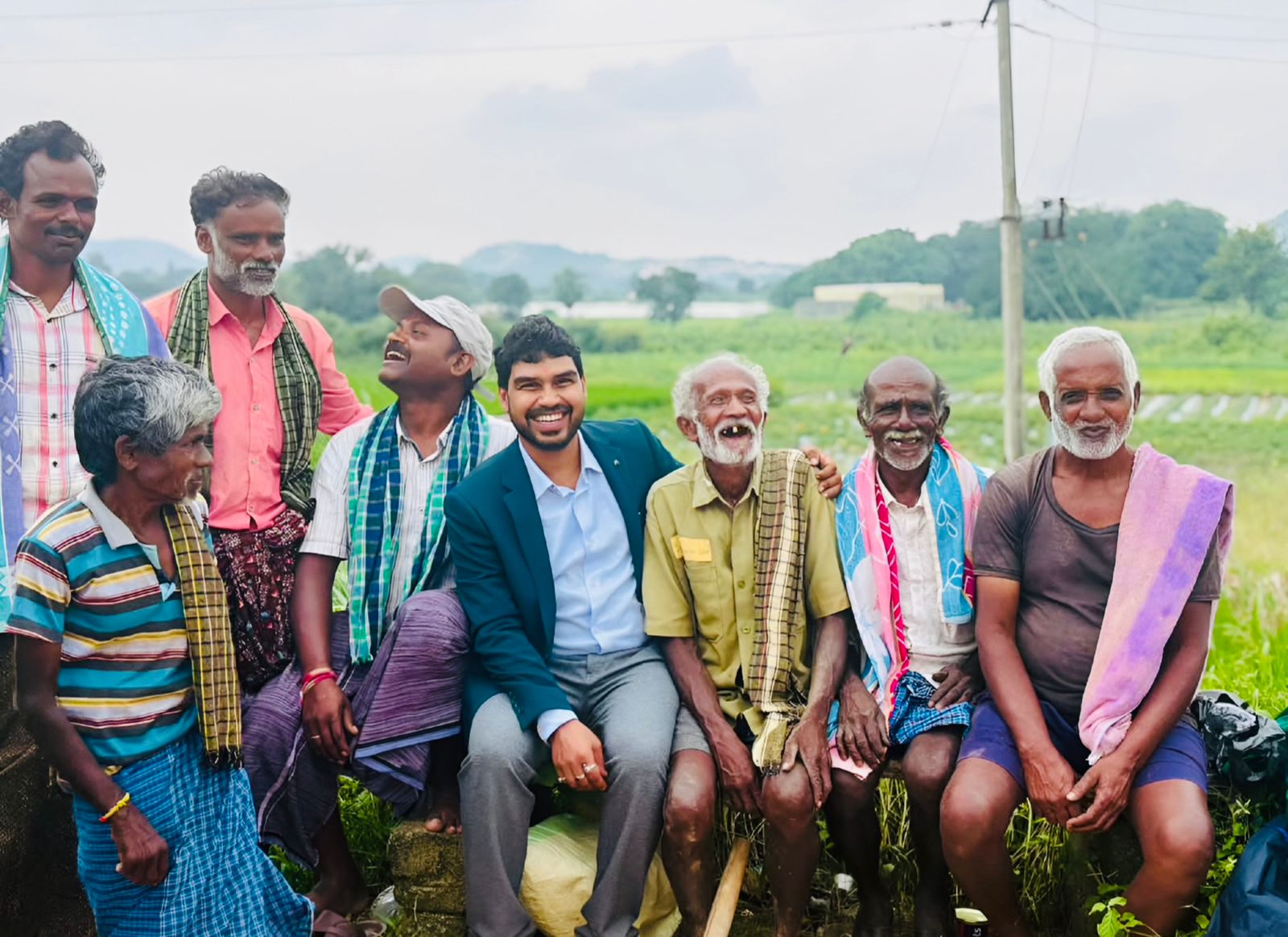
India doesn't lack compassion. It doesn't lack schemes, policy documents, or people who want to do good. What it often lacks is integration. A family in a tribal hamlet in Jharkhand doesn't need five different organisations visiting them five different times with five different agendas. They need someone to sit with them and understand their life as a whole — their hunger, their daughter's schooling, the dying well, the mother who hasn't seen a doctor in three years, the young woman who has a dream but no road to walk on.
That's what Aahwahan means to us at its core. Aahwahan — a calling, a summoning. We felt called to work across education, health, environment, women's empowerment, and community development not because it's a neat list of five things, but because real life doesn't come in neat compartments.
And there's something else — something people don't say loudly enough. In this country, there is an enormous amount of work being done for communities and very little being done with them. The village is treated as a beneficiary, not a stakeholder. The woman is handed a pamphlet, not a platform. That condescension — however well-meaning — has quietly hollowed out so many development efforts. People stop owning the change because the change was never really theirs.
We wanted to build something different. Something where the community isn't the audience — it's the author. And we wanted to bring the same rigor, the same systems thinking, the same fierce problem-solving that our top institutions train people for — and point it at the ground realities of India. That's what keeps driving us. Not statistics. Not targets. But the belief that every person in this country, regardless of where they were born or what they were born into, deserves a life of dignity. And that dignity isn't charity. It's a right. We're just here to help clear the road.
Q. Your work spans education, healthcare, environment, agriculture and women’s empowerment. How do you decide which issues or regions to prioritise, especially when resources are always limited?
A. The question of prioritisation in development is often framed as a logistical problem — a resource allocation puzzle that smart people with spreadsheets can solve. And yes, data matters. Vulnerability indices matter. District-level health and education statistics matter. We use all of it. The IIT and IIM trained minds in our team are not decorative — they bring genuine analytical rigour to how we map need, assess impact, and deploy resources. That part is real and necessary.
But data alone has never told us where the human urgency is. Numbers don't capture the exhaustion in a woman's eyes who has walked six kilometres to a primary health centre only to find it locked. Numbers don't capture what it means for an entire village to watch its only water source dry up year after year while nobody in any government office seems to connect that to the migration happening from the same village. You have to be on the ground for that. You have to listen for that. So our prioritisation, honestly, lives at the intersection of two things — evidence and proximity. Where does the data point to concentrated, compounding deprivation? And where do we have the trust, the relationships, the ground presence to actually do something meaningful rather than just show up, take photographs and leave?
That second part — trust — is more precious than any budget line. Communities in deeply underserved regions have been visited by well-meaning outsiders for decades. Promises have been made. Projects have been launched and quietly abandoned. There is a fatigue, sometimes even a quiet cynicism, that you encounter when you first arrive. And rightfully so. We've learned that we'd rather go deep in fewer places than go shallow everywhere. Because shallow work doesn't change lives. It just changes reports.
.jpeg.jpeg) On the question of which issues within a region get attention first — again, it's never one thing in isolation. But if we're being raw about it, we follow what blocks everything else. If children are severely malnourished, education is a distant second priority — you cannot pour knowledge into a body that is fighting to survive. If women in a community have no voice within their own households, every other intervention has a ceiling — health decisions, agricultural decisions, environmental decisions all flow through that unaddressed power structure. So in many ways, women's empowerment and basic health are not just two items on a list — they are often the foundation on which the rest becomes possible.
On the question of which issues within a region get attention first — again, it's never one thing in isolation. But if we're being raw about it, we follow what blocks everything else. If children are severely malnourished, education is a distant second priority — you cannot pour knowledge into a body that is fighting to survive. If women in a community have no voice within their own households, every other intervention has a ceiling — health decisions, agricultural decisions, environmental decisions all flow through that unaddressed power structure. So in many ways, women's empowerment and basic health are not just two items on a list — they are often the foundation on which the rest becomes possible.
Environment and agriculture entered our focus because we kept seeing the same pattern — communities being pushed into poverty not just by lack of access, but by ecological collapse happening right beneath their feet. Degraded soil. Erratic rainfall. Disappearing forests. And nobody connecting those dots to the hunger, the debt, the distress migration. If you care about the long-term dignity of a community, you have to care about the land they live on. And yet — and this is the part we sit with uncomfortably — we know we can't be everywhere at once. So we make choices. We make them as carefully and as honestly as we can. We make them with humility, knowing we will get some of them wrong. And we try to build in enough community feedback, enough self-correction, enough honesty in our internal conversations to course-correct when we do.
What we refuse to do is let the limitation of resources become an excuse for the limitation of ambition. The work is pan-India in vision. The execution is disciplined, grounded and one community at a time. Both of those things are true simultaneously — and holding that tension is, perhaps, the most honest definition of what Aahwahan is trying to do.
Q. You have adopted more than 200 government schools. Beyond infrastructure improvements, what meaningful changes have you observed in student learning, attendance or community participation?
A. Infrastructure was never really the point. A painted wall and a new toilet — those matter, but they don't make a child want to come to school. What makes a child want to come to school is feeling like the school belongs to them. That shift — from a government building the community is indifferent to, to a space the community is proud of — that's the real work. And that's also the harder work to measure. What we've seen on the ground is quieter than headlines, but far more significant. Teachers who were going through the motions beginning to show up differently — not because someone is watching, but because the environment around them changed. Parents who never once stepped inside a school boundary attending meetings, asking questions, holding the system accountable in small but real ways. And children — especially girls — whose attendance was fragile, inconsistent, dependent on a hundred household variables, beginning to come more regularly. Not because of a scheme or an incentive, but because something in the school started feeling safe and alive.
There's one thing we didn't fully anticipate. When you invest genuinely in a government school — not as charity but with real intention — it sends a signal to the entire community. It says: your children are worth this. That message, in villages and urban pockets where people have spent generations feeling invisible to the system, lands very differently than any policy announcement ever could. That said — we hold our observations honestly. Learning outcomes in the deepest sense take years to surface. We're not in the business of manufacturing feel-good numbers. What we can say with confidence is that something shifts in a community when their school stops being a symbol of neglect and starts being a symbol of possibility. And that shift, however difficult to put in a report, is the foundation everything else is built on.
Q. The Education on Wheels program is an innovative way of reaching remote communities. What have been the biggest challenges in taking digital learning to rural areas, and what lessons have you learned from the experience?
A. The idea sounds almost poetic when you describe it — a school on wheels, driving into villages that education forgot, carrying a computer lab, a science lab, an interactive panel, live teaching, recorded lessons, even JEE and NEET coaching. And it is meaningful. Deeply so. But poetry and ground reality have a way of colliding hard in rural India. The first challenge nobody tells you about is not technology — it's trust. When a vehicle parks in a remote community and says we're here to teach your children, the instinctive response from parents, especially for girls, is suspicion. Reasonably so. Because strangers have arrived with promises before. So before the first lesson was ever taught, we had to earn the right to be there. That took time, conversations, showing up consistently even when turnout was three children, not thirty.
Then there's the infrastructure reality. You can put the most sophisticated digital learning tools inside a vehicle, but if connectivity drops every twenty minutes, if the road to reach the village damages the equipment regularly, if power supply is unreliable — the technology becomes a frustration rather than a promise. We've had to build enormous operational resilience into the program. Offline content libraries, redundant systems, educators who can pivot from digital to hands-on without missing a beat. The most important lesson? That the device is never the point — the relationship is. Children in remote areas don't lack intelligence. They lack consistent, caring, high-quality academic attention. When they realise that someone has driven to their village to help them crack JEE or NEET — examinations that their urban counterparts have entire coaching ecosystems built around — something changes in how they see themselves. That self-belief, that expansion of what they think is possible for their own life, is the real curriculum. We've learned to be humble about pace. Digital learning in rural India isn't a switch you flip. It's a bridge you build — carefully, slowly, with the community walking alongside you.
Q. Initiatives like the Pink Room focus on menstrual health and dignity for schoolgirls. How did communities initially respond to the idea, and what strategies helped break the silence around menstruation in schools?
A. Let's start with the truth that most institutions won't say out loud — menstruation is one of the single largest hidden reasons girls disappear from schools in India. Not dropout in the formal sense. Just quietly, gradually, stop coming. Because there is nowhere to go when the pain hits. No private space. No clean washroom. No one to even acknowledge that what they are experiencing is normal and that they deserve to be comfortable while experiencing it. The Pink Room was born from exactly that reality. A dedicated space inside government schools and colleges — a cot to rest on, a clean washroom, proper ventilation, a fan, lighting, a hot water bag, basic medicines. Things that cost very little in absolute terms. Things that say everything in human terms.
The initial response from communities? Deeply uncomfortable. And that discomfort came from all directions. Some male staff members found the entire conversation awkward and unnecessary. Some parents, ironically including mothers, were resistant — decades of conditioning had taught them that menstruation is something you endure silently, not something institutions should acknowledge or accommodate. Several school administrations were worried it would "invite attention" to something they preferred kept invisible. That resistance itself told us everything about why the work was necessary.
What broke the silence wasn't a campaign or a workshop. It was the girls themselves, once the rooms existed. When a girl who would have gone home or sat through hours of silent pain instead walked into a clean, private, dignified space — and came back to class — her classmates noticed. Her teachers noticed. Word travelled. The room became proof that someone considered her comfort worth building a room for. That is not a small thing in environments where girls are routinely made to feel like their presence is secondary. We learned that with issues this deeply cultural, you don't argue people into openness — you demonstrate what dignity looks like, and let it speak. The Pink Room doesn't lecture anyone about menstrual health. It just exists, quietly and firmly, as a statement that every girl in that school matters. Fully. Without exception.
Q. Your healthcare work includes mobile medical units, dialysis services and vaccination drives. From your experience on the ground, what are the most critical gaps that still exist in rural healthcare delivery?
A. The gap isn't always a missing doctor or a missing medicine. Very often, the gap is inside people's heads. And that's the hardest kind of gap to close.
We've reached villages with mobile medical units carrying qualified doctors, diagnostic equipment, medicines — everything. And people don't come. Or they come only after three days of a fever have already become dangerous. Or the woman comes, but only if her husband permits it. Or the elderly man comes but refuses to discuss what's actually wrong because the symptoms involve something he considers shameful to speak about. That's the invisible wall that no government scheme addresses and no infrastructure investment solves.
Taboo in rural healthcare runs extraordinarily deep. Tuberculosis patients hiding symptoms because a diagnosis means social stigma. Women not disclosing gynecological problems to a male doctor — or to anyone at all — until it's become something far more serious. Mental illness not even being recognised as illness — just weakness, or bad fate, or something to be handled by a faith healer. We've sat across from families where a member has been suffering for months, sometimes years, and the barrier wasn't distance or cost — it was the crushing weight of what the community would think. Then there's the trust problem. Rural India has a complicated relationship with institutional medicine. It's not irrational — it's earned through years of being turned away, misdiagnosed, overcharged, spoken to with condescension, or simply ignored. When the public health system repeatedly fails people, they don't just stop trusting that system. They stop trusting the idea that medicine can help them. They go back to what they know — local remedies, faith healers, waiting and hoping. We don't judge that. We try to understand it. Because until you understand why the distrust exists, you cannot begin to rebuild it.
The dialysis work showed us another brutal gap — the gap between survival and dignity. Patients needing dialysis multiple times a week, travelling hours each way on bad roads, missing wages, exhausting family members who accompany them. Even when the service exists, the cost of accessing it in terms of time, energy, lost income — can make people quietly give up. Healthcare access in rural India is often measured as a yes or no — does the facility exist? The more honest question is — can a real person, with a real life, actually use it without it destroying that life in the process? What we keep arriving at is this: rural healthcare needs to be not just available but believable. Believable that it will help, not harm. Believable that the person will be treated with respect. Believable that showing up won't result in shame or loss or disappointment again. Building that belief — one mobile unit visit, one honest conversation, one healed patient who tells their neighbour — is slower than building a clinic. But it is, in the end, the only thing that actually works.
Q. The cervical cancer initiative aims to vaccinate a very large number of girls by 2030. What role have partnerships with government bodies, hospitals, or CSR donors played in scaling this effort?
A. Cervical cancer is almost entirely preventable. That sentence should stop people in their tracks — because in India, it is still one of the leading causes of cancer deaths among women. Not because we lack the science. Not because the vaccine doesn't exist. But because the distance between a life-saving intervention and the girl who needs it is filled with broken systems, absent awareness, and a deeply uncomfortable silence around anything connected to a woman's reproductive health.
You cannot bridge that distance alone. Nobody can. And that's where partnerships stop being a strategic choice and become an absolute necessity.
The government brings what no NGO ever can — legitimacy, reach, and the ability to move at scale through existing infrastructure. When a state health department stands behind a vaccination drive, it changes how communities receive it. The mother who was suspicious of an organisation she'd never heard of will listen differently when the same message comes through the local ANM, the PHC, the school headmaster. That institutional trust — however imperfect the institutions themselves may be — is irreplaceable, and we've worked hard to earn our place alongside it rather than in parallel to it.
Hospitals and medical partners bring clinical credibility. When a qualified oncologist speaks to a group of parents about why this vaccine matters — not in medical jargon but in plain, human language — the resistance softens. We've seen it repeatedly. The conversation shifts from suspicion to curiosity to action.
CSR partnerships bring the fuel. But we've been deliberate about how we engage with corporate donors. A vaccination number on an annual report is not the goal. What we push for — and what the best CSR partnerships have honoured — is long-term commitment to a geography, not a transaction. Because a girl vaccinated today is a statistic. A community that understands why she was vaccinated, that will bring its daughters next year and the year after — that's a movement.
The honest truth about scaling anything in public health in India is that no single actor has the complete answer. The government has reach but limited agility. NGOs have agility but limited reach. Corporates have resources but limited ground presence. When these three genuinely collaborate — not just on paper, but in practice, with shared accountability — something real becomes possible. That's the architecture we're trying to build, one district at a time, before 2030.
Q. Many organisations report impact through beneficiary numbers. How does Aahwahan Foundation track deeper outcomes such as improvements in health, education or quality of life in the communities you serve?
A. Beneficiary numbers are the development sector's most comfortable lie. Not always intentional — but a lie nonetheless. Because counting how many people you reached is fundamentally different from understanding whether their lives actually changed. And somewhere along the way, the sector got very good at the first thing and very comfortable avoiding the second.
We've had to fight that temptation within ourselves. When a donor asks for impact, the easiest answer is a large number. It feels good to say. It looks good in a report. But if we're honest — a number without context is just noise dressed up as evidence.
What we try to track instead are shifts. Did the girl who received menstrual health support actually stay in school through the academic year — not just attend once? Is the child in an adopted school performing differently in assessments six months later, not just enrolled? Is the woman who went through our empowerment program making decisions in her household that she wasn't making before — about her children's health, about her own income, about her own body? These questions are harder to answer. They require returning to the same communities repeatedly. They require building relationships where people tell you the truth, including when something didn't work.
We also track what we call invisible regressions — things that didn't get worse. A community that maintained its water source through a drought year. A village where girl child dropout rates held steady despite economic stress in the region. Prevention doesn't announce itself loudly. But it's often the most important story.
The IIT and IIM minds in our team have pushed us to build more rigorous longitudinal frameworks — baseline assessments, follow-up cycles, community feedback loops that aren't just tick-box exercises. That rigour matters. But we balance it with something equally important — the qualitative, the human, the story that no survey captures. A mother telling us her daughter now wants to become a doctor. A farmer saying he slept better last year because his soil held water differently. That's data too. Just a different kind.
The most honest thing we can say is this — we are still building the muscle for deep impact measurement. The entire sector is. Anyone who tells you they have it fully figured out is either measuring the wrong things very precisely, or not telling you the whole truth. What we commit to is not perfection in measurement, but honesty about what we know, what we don't, and what we are still learning.
Q. Could you share one story from the field that best reflects the kind of change your work has brought to an individual or community?
A. There's a village in the interior where we first arrived to assess a government school. The building was there. The blackboard was there. A teacher was technically posted there. But when we visited on a Tuesday morning, there were eleven children in a school that had an enrollment of over a hundred and forty. Eleven.
We started asking why. And the answers came slowly, the way honest answers always do in communities that have learned to be careful around outsiders.
The girls stopped coming around class six or seven — partly because there was no toilet, partly because nobody had ever spoken to them about what was happening to their bodies, and partly because their mothers saw no point. Their mothers hadn't finished school either. The boys came irregularly because their families needed them in the fields. And the parents — most of them — had quietly decided that this school was just a building the government had put there for appearances. Not for their children. Not really.
We didn't launch a program. We sat with people first. For weeks.
A year later — after the school was adopted, after a Pink Room was built, after Education on Wheels started parking there twice a week with its science lab and its interactive panels, after mothers started coming to the school not to drop children but to actually sit in meetings and speak — something shifted that we hadn't fully planned for.
One girl. Fifteen years old. First in her family to have ever used a computer. She had been among the eleven that first Tuesday. She started staying back after Education on Wheels sessions, asking the educator questions long after the other children had left. Her name means "light" in her language, and everyone in her village had spent her entire life treating her like she was meant to stay in the shadows.
She told our educator one evening — quietly, almost like she was confessing something — that she wanted to become a nurse. That she had wanted it for years but had never said it aloud because it had always felt like wanting to touch the sky.
We don't know yet where her story ends. She's still in school. Still showing up. Her mother — who hadn't stepped inside an educational institution in over two decades — now sits on the school's parent committee.
That's not a number we can put in a report. But that is, without question, why we do this work.
Q. Environmental efforts like tree plantation and lake restoration often struggle with long term maintenance. How do you involve local communities so that these initiatives remain sustainable over time?
A. India has planted billions of trees on paper. A fraction of them are alive today. That gap — between the photograph taken on plantation day and the reality six months later — is perhaps the most honest metaphor for what's broken in how we approach environmental work in this country. It looks like action. It feels like progress. And then quietly, without announcement, it dies.
The reason is almost always the same. The community wasn't the owner. They were the audience.
When an outsider — an NGO, a corporate CSR team, a government department — arrives, plants trees, takes photographs and leaves, those trees belong to nobody. Nobody's identity is tied to them. Nobody's pride lives in them. So when the rains don't come or an animal damages them or it's simply inconvenient to water them, they're gone. And nobody feels responsible because nobody was ever made to feel responsible.
Our approach starts much further back than plantation day. Before a single sapling goes into the ground, we spend time understanding the community's relationship with that land. What did this lake mean to the village thirty years ago? Who remembers when it had water year-round? Who used to fish there? Who carried water from it? We're essentially excavating memory — because environmental restoration is most powerful when it feels like reclaiming something that was yours, not receiving something that was given to you.
When an elderly farmer tells us that this lake fed his family for generations and watching it die has been like watching a relative die slowly — that man becomes our most committed guardian. Not because we paid him. Because we reminded him that this was his.
We also work deliberately against the idea that environment is a separate issue from livelihood. Communities will protect what feeds them. So we connect lake restoration to groundwater recharge, to irrigation, to agricultural yield. We connect tree plantation to fodder, to fruit, to shade for livestock. The moment the tree becomes economically and emotionally meaningful to a family — it stops being a sapling we planted and starts being their asset. Their future. Something worth protecting.
The hardest lesson we've learned is that sustainability has nothing to do with what we build and everything to do with who we build it with. The most durable environmental intervention is a community that has decided — with full understanding and full ownership — that this land is worth fighting for.
That decision, once made, doesn't need maintenance. It maintains itself.
Q. Collaboration is increasingly important in the development sector. Can you share how partnerships with corporates, local governments or community groups have helped amplify the impact of your work?
A. There's a version of partnership that exists on letterheads and in MoU signing photographs. Everyone smiles. A press release goes out. And then both sides return to doing exactly what they were doing before, occasionally invoking each other's names in grant applications. The development sector has normalised that version of collaboration to the point where it's almost expected.
That's not what we're talking about when we talk about partnerships. And honestly, it took us some hard early experiences to learn the difference.
Real partnership starts with a very uncomfortable question — what does the other party actually need, not just what are they willing to give? Corporate CSR, for instance, comes with its own pressures. Quarterly visibility. Board-level narratives. Annual report numbers. If you resent that reality rather than working honestly within it, you'll build transactional relationships that neither side fully believes in. We've learned to have direct conversations upfront — here's what we're doing, here's the depth of commitment it requires, here's what genuine partnership looks like versus a cheque and a photograph. The corporates who stay after that conversation are the ones worth building with.
With local governments the dynamic is entirely different. The relationship requires patience that can feel almost unreasonable. Bureaucratic cycles are slow. Priorities shift with political changes. Files move in ways that defy logic. But government also carries something irreplaceable — systemic reach. When a district administration decides to formally back a school adoption program or a vaccination drive, it doesn't just add resources. It adds legitimacy that changes how every single community in that district receives the work. That legitimacy cannot be bought or replicated. It has to be earned slowly, through consistent presence, through demonstrating that you're not there to embarrass the system but to strengthen it.
Community groups are where the real architecture of sustainability gets built. Because governments change, corporate priorities shift, NGOs come and go — but a self-help group of women who have learned to collectively manage a resource, advocate for their rights, hold local systems accountable — that doesn't go away when we leave. That outlasts everyone. Our most meaningful partnerships at the community level are the ones where our role has gradually become unnecessary. Where we've worked ourselves out of the equation. That's not a loss — that's the whole point.
What ties all of this together is one principle we keep returning to — collaboration only creates impact when every partner brings something the others genuinely cannot. The moment it becomes about visibility, about credit, about who gets named first in the report — the actual work suffers. The communities at the centre of all this don't care whose logo is on the vehicle. They care whether someone showed up and whether it made a difference.
That clarity keeps us honest in every partnership we build.
Q. As you look ahead, what are the next priorities for Aahwahan Foundation, and where do you believe NGOs can play the most meaningful role in India’s development landscape?
A. India is at a genuinely unusual moment. The economy is growing. The infrastructure is visibly improving. The global narrative about this country is more optimistic than it has been in generations. And yet — underneath that narrative — there are hundreds of millions of people for whom that growth is something they read about, not something they live. The distance between India and Bharat is not closing as fast as our headlines suggest. That distance is where we work. And if anything, the urgency has grown.
For Aahwahan, the immediate priorities are about going deeper, not just wider. We want to consolidate what we've built — make the school adoptions more academically rigorous, push Education on Wheels into more unreached geographies, take the cervical cancer mission closer to its 2030 target, and build community-level environmental ownership that genuinely outlasts our presence. Scale matters, but not at the cost of depth. We've seen too many organisations sacrifice the second for the first.
We also want to invest seriously in building the next generation of change-makers from within the communities we serve. Not just beneficiaries. Leaders. Young people from these villages and urban pockets who understand the ground reality from the inside and have the tools, the confidence, and the support to drive change themselves. That's a longer horizon but it's the most important investment we can make.
On the larger question — where NGOs can play the most meaningful role in India's development landscape — I think we need to be honest about both our potential and our limitations.
NGOs are not governments. We cannot replace systems. We should not try to. Our role is not to build parallel structures that make the state comfortable with its own inadequacy. Our most meaningful role is to demonstrate what's possible, hold systems accountable, and then push hard for those demonstrations to become policy, to become norm, to become the government's own program at scale. If something we do works — the goal should be that it eventually doesn't need us anymore.
Where NGOs are truly irreplaceable is in the last mile. In the trust that formal institutions can't build quickly enough. In the ability to sit with a community through failure, not just show up for success. In the willingness to work on problems that don't have clean, photogenic solutions. Menstrual dignity. Intergenerational poverty. Caste-based exclusion. Ecological grief in farming communities. These are not problems that respond to large budgets and short timelines. They respond to consistent, humble, human presence.
And perhaps most importantly — NGOs need to get far more comfortable with speaking difficult truths to power. Not just implementing programs but naming what's broken. Advocating loudly. Using what we see on the ground to influence what gets decided in rooms we're often not invited into.
India's development story will not be complete unless the people furthest from power are moved to its centre. That's a political project, a social project, and a deeply human project all at once.
Aahwahan exists because we believe that project is possible. Not inevitable — possible. And possibility, in the end, is all you need to keep going.



.png)