
Beyond World Environment Day: Why Climate Resilience Is Emerging as India's Development Imperative
Editor's note: As conversations around sustainability evolve beyond environmental compliance and awareness campaigns, climate resilience is increasingly emerging as a defining development challenge. Drawing on perspectives from leaders across the CSR, sustainability, corporate, and social impact sectors, this feature explores how climate change is reshaping livelihoods, nutrition, water security, public health, urban development, and economic opportunity. It also examines why resilience is becoming essential to achieving inclusive and sustainable development outcomes in India.
World Environment Day has come and gone. The social media campaigns have ended, saplings have been planted, and sustainability pledges have been renewed. Yet for millions of Indians confronting another year of extreme heat, water scarcity, erratic rainfall, and declining livelihood security, the environmental crisis remains anything but symbolic.
Across rural landscapes and rapidly expanding cities, climate change is no longer a distant environmental concern. It is reshaping economies, disrupting livelihoods, deepening hunger, and amplifying inequalities. Increasingly, it is becoming one of the defining development challenges of our time.
This shift demands a new conversation.
For decades, environmental protection and socio-economic development were often discussed as separate agendas. Today, that distinction is rapidly disappearing. Climate change is affecting food systems, labour productivity, public health, migration patterns, water security, and household incomes. The consequences are particularly severe for communities that depend directly on natural resources for survival.
As India reflects on the significance of World Environment Day, a growing consensus is emerging across the corporate, development, sustainability, and social impact sectors: climate resilience must become central to India's development agenda.
Why Climate Resilience Now Shapes Every Development Outcome
For many years, climate action was viewed largely through an environmental lens, focused primarily on emissions, conservation, pollution control, and ecosystem protection. While these remain critical priorities, the climate conversation today extends far beyond environmental management.
Climate resilience is increasingly influencing outcomes across nearly every major development sector. A child struggling with malnutrition is affected not only by access to food but also by climate-induced disruptions to agricultural production and household income. A farmer's livelihood depends on rainfall patterns that have become increasingly unpredictable. Urban workers face growing exposure to extreme heat, affecting both productivity and health. Water scarcity influences education outcomes when children, particularly girls, spend hours collecting water rather than attending school. Public health systems are increasingly responding to heat stress, vector-borne diseases, and climate-related emergencies.
In this sense, climate resilience is no longer a standalone sustainability objective. It is becoming a foundational requirement for progress across health, education, livelihoods, gender equality, food security, and economic development.
The scale of the challenge is difficult to ignore. India is home to nearly 18 percent of the world's population but has access to only about 4 percent of global freshwater resources. At the same time, climate change is increasing pressure on natural resources and exposing communities to more frequent and intense environmental shocks.
India's policy framework increasingly reflects this reality. The National Action Plan on Climate Change, state-level climate action plans, Mission LiFE, Jal Shakti initiatives, renewable energy missions, and climate-resilient agriculture programmes all point toward a growing recognition that development and climate resilience can no longer be pursued separately.
When Climate Change Becomes a Development Crisis
The relationship between climate change, poverty, hunger, and livelihoods is becoming increasingly visible across India.
According to the National Family Health Survey (NFHS-5), 35.5 percent of children under five are stunted, 19.3 percent are wasted, and 32.1 percent are underweight. While these outcomes stem from multiple factors, climate stress is increasingly worsening nutritional vulnerabilities by affecting food production, incomes, and access to essential services.
The broader climate context reinforces these concerns. Extreme weather events, including heatwaves, floods, droughts, and cyclones, are increasingly disrupting agricultural production, infrastructure, local economies, and essential services. More than half of India's agricultural land remains rain-fed, making millions of farmers vulnerable to changing rainfall patterns and climate variability.
Climate risks are also becoming more visible at the national level. These events not only damage crops and assets but also affect labour productivity, household incomes, and public resources. For low-income communities with limited savings and social protection, recovery from repeated shocks can become increasingly difficult.
For development practitioners, this reinforces an important reality: climate vulnerability and socio-economic vulnerability often overlap. Communities already facing poverty, nutritional deficits, inadequate infrastructure, or limited access to services are frequently the same communities most exposed to climate risks.
 Neeraja Kudrimoti, Practice Director, Climate Action at Transform Rural India, describes climate change as a "risk multiplier" that deepens existing inequalities. In states such as Bihar, Jharkhand, Madhya Pradesh, Rajasthan, and Assam, where poverty and malnutrition remain persistent challenges, climate shocks are intensifying vulnerabilities that communities already face. She notes that rising temperatures reduce labour productivity, affect calorie intake, destabilise incomes, and ultimately weaken access to food and nutrition.
Dhruvi Shah, Executive Trustee and CEO of Axis Bank Foundation, sees climate change increasingly shaping the economic realities of rural India. Agriculture, livestock, forests, and natural resources remain the backbone of rural livelihoods, yet erratic rainfall, floods, land degradation, and rising temperatures are making these systems more fragile. She points to projections suggesting that India's agricultural output could decline significantly because of changing rainfall patterns, creating substantial livelihood risks across rain-fed regions.
 Dr. Rajeev Gautam, President of HORIBA India, echoes this concern. He notes that even a single poor agricultural season can trigger a chain reaction where reduced incomes lead to food insecurity, poor nutrition, weakened health, and deeper poverty. Climate change, he argues, is no longer merely an environmental issue. It has become a livelihood and food security challenge requiring urgent attention.
Heat, Hunger and the New Face of Vulnerability
India's experience over the past few years has demonstrated how climate impacts are increasingly translating into human impacts.
Extreme heat is reducing the number of productive working hours available to farmers, construction workers, and daily wage earners. The International Labour Organization has warned that heat stress could significantly affect labour productivity globally, with countries in South Asia among the most vulnerable.
Heat is rapidly emerging as one of India's most significant climate risks. Rising temperatures affect not only outdoor workers but also students, elderly populations, pregnant women, and people with pre-existing health conditions. Heat stress can reduce productivity, increase healthcare costs, and disrupt local economies.
For businesses, this creates an emerging workforce challenge. For development organisations, it raises important questions around social protection, occupational safety, healthcare preparedness, and community resilience. What begins as an environmental event can quickly cascade into a broader development concern.
For communities already living close to economic margins, this loss of income can have immediate consequences. Neeraja Kudrimoti observes that agricultural workers in many regions are routinely exposed to temperatures exceeding 38 degrees Celsius. As working hours shrink and productivity declines, incomes fall. Families are often forced to reduce both the quantity and quality of food they consume, further exacerbating nutritional challenges among women and children.
According to Dhruvi Shah, climate stress creates a vicious cycle. Reduced agricultural productivity and declining wage opportunities weaken household incomes, forcing families to compromise on dietary diversity and nutrition. Repeated environmental shocks then erode savings, increase debt burdens, and trigger distress migration.
 Prof. Sudha Chandrashekar, CEO of Swasti, has consistently advocated for viewing climate, health, nutrition, and livelihoods as interconnected systems rather than isolated issues. Her perspective reflects a growing understanding within the development sector that resilience can only be achieved through integrated interventions that address multiple vulnerabilities simultaneously.
Women often bear a disproportionate share of these burdens. Climate-related water scarcity increases the time spent collecting water. Food shortages increase unpaid care responsibilities. Migration and livelihood disruptions can weaken traditional support systems and increase social risks. Across many regions, climate resilience has therefore become inseparable from gender resilience.
Financing Resilience: The Emerging Development Imperative
Building resilience at scale requires more than awareness. It requires sustained investment. Across the world, governments, development institutions, philanthropic organisations, and private sector actors are increasingly directing resources toward climate adaptation and resilience. Unlike mitigation initiatives that focus primarily on reducing emissions, resilience investments seek to strengthen the ability of communities, ecosystems, and institutions to withstand and recover from climate shocks.
In India, this financing landscape is evolving rapidly. CSR programmes, philanthropic foundations, impact investors, ESG-linked investments, and development finance institutions are increasingly supporting initiatives related to water security, regenerative agriculture, renewable energy, livelihood diversification, ecosystem restoration, and community preparedness.
For the social sector, this shift presents a significant opportunity. Climate resilience is emerging as a unifying theme that connects environmental sustainability with social development outcomes. Investments in water conservation, sustainable livelihoods, natural resource management, women's empowerment, and climate-smart agriculture can simultaneously strengthen adaptation and inclusive development.
The challenge now lies in ensuring that resilience investments reach the communities most vulnerable to climate impacts while generating long-term, measurable outcomes.
Water: The Foundation of Climate Resilience
Few issues illustrate the climate-development nexus more clearly than water.
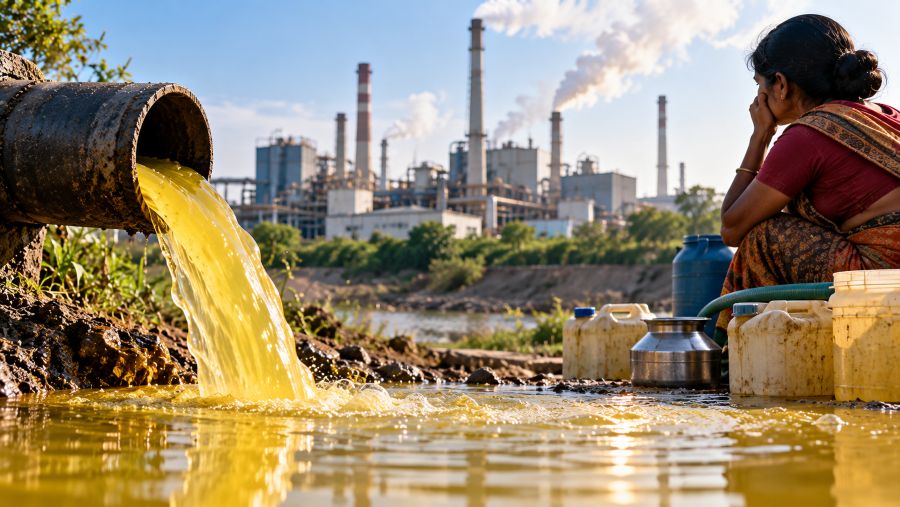
Changing rainfall patterns, declining groundwater levels, and rising demand are placing unprecedented pressure on India's water systems.
According to NITI Aayog's Composite Water Management Index, nearly 600 million Indians face high to extreme water stress. The report further warns that by 2030, India's water demand could be twice the available supply if current trends continue. Such projections underline the scale of the challenge facing both policymakers and development practitioners.
K. Ganesh, Director, Sustainability and Corporate Affairs, Bisleri International, believes water stewardship must be viewed as a shared responsibility involving businesses, communities, and policymakers. Through initiatives such as Project Nayi Umeed, the company has focused on rainwater harvesting, groundwater recharge, and watershed restoration, recognising that water security underpins both environmental sustainability and economic resilience.
Srinidhi Rao, Head of Sustainability at Diageo India, similarly emphasises the importance of collective water stewardship. The company has invested in watershed development, water replenishment, rainwater harvesting, and community engagement programmes aimed at improving long-term water resilience.
The emphasis on water is not unique to India.
Singapore's globally recognised NEWater  programme has transformed wastewater into a strategic resource, helping the city-state strengthen water security despite limited natural freshwater resources. Israel has demonstrated how treated wastewater can be extensively reused in agriculture, while countries such as Vietnam are increasingly investing in climate-resilient water management systems to support agricultural adaptation.
These examples highlight an important lesson: climate resilience often begins with water resilience. They also demonstrate that resilience is not simply about responding to crises. It is about creating systems capable of anticipating risk, adapting to change, and continuing to provide essential services despite environmental stress. Whether through groundwater recharge in rural India or advanced wastewater recycling in urban centres, resilient water systems form the backbone of resilient communities and resilient economies.
Rethinking Livelihoods for a Climate-Constrained Future
As environmental risks increase, livelihood diversification is emerging as one of the most effective forms of climate adaptation.
Communities dependent on a single source of income remain highly vulnerable to droughts, floods, crop failures, and extreme weather events.
The vulnerability is particularly pronounced in rural India, where agriculture continues to support millions of livelihoods. Climate variability can affect crop yields, livestock productivity, water availability, and wage opportunities simultaneously, creating cascading risks for households that lack diversified income streams.
Axis Bank Foundation's livelihood programmes illustrate how diversified income streams can reduce vulnerability. Through interventions spanning agriculture, livestock, natural resource management, traditional crafts, self-employment, vocational training, and organised employment, the Foundation has worked to strengthen household resilience across thousands of villages. Dhruvi Shah notes that diversified livelihoods not only reduce economic risk but also improve household confidence and reduce distress migration.
Transform Rural India has adopted a similarly integrated approach. Through its Neighbourhoods of Care framework, the organisation combines climate adaptation, nutrition, health, water security, renewable energy, and women's empowerment. The model seeks to strengthen local institutions while enabling communities to build resilience from within.
Development experts increasingly argue that livelihood resilience should be viewed as a core climate adaptation strategy. Households with multiple income streams are generally better equipped to absorb environmental shocks, avoid distress migration, maintain children's education, and protect nutritional outcomes during periods of crisis.
This perspective represents an important shift in thinking. Rather than treating climate adaptation solely as an environmental intervention, organisations are increasingly approaching it as an economic resilience strategy that strengthens community capacity over the long term.
 Sunil Balakrishnan, Chief Values Officer at UST, has emphasised the importance of community-centred development approaches that recognise the interconnectedness of livelihoods, biodiversity, nutrition, and social wellbeing. His perspective reflects a broader shift toward development models that balance environmental stewardship with human development outcomes.
The Corporate Sector's Expanding Role
Corporate India is increasingly recognising that climate resilience is not solely a CSR responsibility. It is becoming a business imperative.
This shift is being driven by multiple factors. Climate risks increasingly affect supply chains, infrastructure, resource availability, workforce productivity, investor expectations, and long-term business continuity. As a result, resilience is increasingly being viewed as an essential component of sustainable growth.
The evolution is particularly significant in India, where many CSR programmes operate in geographies that are highly exposed to climate risks. By integrating resilience into community development initiatives, companies can simultaneously strengthen social impact outcomes and contribute to long-term regional stability.
Shaina Ganapathy, Head of Community Outreach Initiatives at Embassy Group, advocates moving beyond isolated sustainability interventions toward long-term community resilience. She argues that investments in livelihoods, skills, education, infrastructure, and environmental restoration must work together to create meaningful impact.
At HORIBA India, Dr. Rajeev Gautam highlights the importance of investing in education, skill development, research, and community health. The organisation's support for crop protection research at IIT Roorkee and its focus on skill-based education aim to create more resilient communities while reducing dependence on climate-sensitive livelihoods.
For development practitioners, this evolution is significant. It signals a move away from short-term philanthropy toward strategic investments that address structural challenges.
Dhruvi Shah argues that climate resilience, livelihoods, financial inclusion, and community capacity building should no longer be treated as separate themes. Instead, CSR programmes must adopt systems thinking, integrating natural resource management, income generation, access to finance, and institution building into a cohesive development framework.
Building Sustainable Cities
While rural communities often dominate climate discussions, India's cities are also confronting mounting environmental pressures. Rapid urbanisation is increasing demand for land, water, energy, housing, and infrastructure. As cities expand, questions about resource efficiency and climate resilience become increasingly urgent.
India is expected to add millions of urban residents over the coming decades, making the design of resilient cities a critical development challenge. Urban flooding, heat islands, water scarcity, waste management pressures, and energy demand are becoming increasingly interconnected concerns. The future of urban resilience will depend not only on infrastructure investments but also on how effectively cities integrate climate considerations into planning, housing, mobility, water management, and public service delivery.
 Ayashkanta Rout, Head Sustainability & CSR at Oberoi Realty Ltd. at Oberoi Realty, believes sustainability must be embedded across the entire real estate lifecycle. From land acquisition and planning to design, construction, operations, and stakeholder engagement, ESG considerations are becoming central to long-term value creation. He notes that sustainable buildings are increasingly demanded by tenants, investors, and occupiers who are pursuing their own sustainability commitments.
Oberoi Realty has established goals including water positivity by 2030, net zero waste to landfill by 2030, and net zero Scope 1 and Scope 2 emissions by 2040. The company's focus on renewable energy, water stewardship, biodiversity assessments, and climate risk management reflects the broader direction in which the sector is moving.
Dr. Yogesh Bhatia, Founder and CEO of LML Realty, similarly advocates for future-ready infrastructure that integrates environmental responsibility with economic growth. As climate risks intensify, sustainable urban planning is becoming essential not only for environmental protection but also for long-term business resilience.
Circularity and Resource Efficiency
Another important dimension of climate resilience lies in how societies manage resources. India's waste challenge presents both environmental and economic opportunities.
 Ishita Bansal, Co-Founder and Chief Operating Officer of Plannex Recycling, believes circular economy principles can simultaneously address waste management, resource efficiency, and livelihood generation. By integrating recycling ecosystems with employment opportunities, circularity can create environmental and social value.
Countries such as Japan and South Korea have demonstrated how circular economy models can reduce resource consumption while supporting innovation and economic growth. For India, where informal waste workers play a critical role in recycling systems, circularity also offers a pathway toward more inclusive development.
The Path Forward
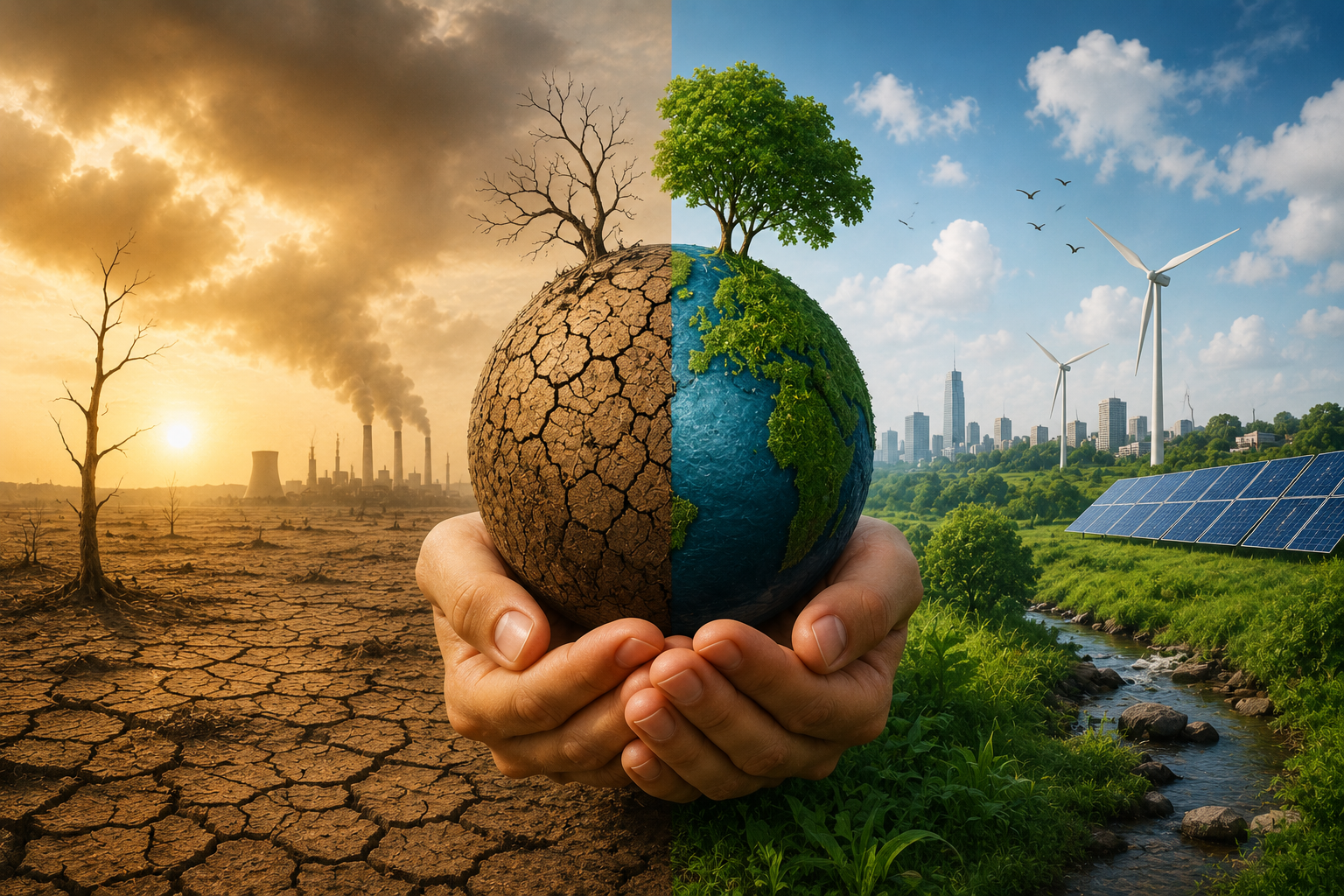
The discussions that emerged around World Environment Day this year reveal an important shift in perspective. Climate change is no longer a challenge that can be addressed solely through environmental programmes or sustainability campaigns. It is increasingly influencing the foundations of development itself.
From nutrition and public health to agriculture, livelihoods, education, gender equality, water security, urban planning, and economic growth, climate resilience is becoming a prerequisite for long-term progress. This is why governments, businesses, development organisations, philanthropies, and communities are increasingly converging around a common objective: building systems capable of withstanding and adapting to a changing climate.
Across sectors, a common message emerges from the voices of Shaina Ganapathy, K. Ganesh, Prof. Sudha Chandrashekar, Srinidhi Rao, Dr. Yogesh Bhatia, Sunil Balakrishnan, Dr. Rajeev Gautam, Dhruvi Shah, Neeraja Kudrimoti, Ayashkanta Rout, and Ishita Bansal: resilience cannot be built through fragmented interventions.
The future requires integrated solutions that connect climate adaptation with livelihood security, nutrition, water stewardship, education, health, renewable energy, ecosystem restoration, and community leadership.
The urgency is evident in the numbers. Hundreds of millions of Indians already face water stress, climate variability continues to affect agriculture and livelihoods, and environmental shocks are increasingly influencing public health and economic outcomes. These trends suggest that climate resilience is no longer simply an environmental aspiration. It is rapidly becoming a development necessity.
For India, the challenge is immense. Yet so is the opportunity. The country's development trajectory over the coming decade will increasingly depend on its ability to build communities that are not only economically productive but also environmentally resilient. The success of this effort will not be measured solely by emissions reduced or trees planted. It will be measured by whether farmers can withstand droughts, whether workers can earn dignified livelihoods despite rising temperatures, whether women spend less time fetching water, whether children grow up healthy and nourished, and whether communities can thrive in an increasingly uncertain climate.
World Environment Day may be observed once a year. Building climate resilience, however, is the work of every day that follows.