Building Compassion at Scale: How Pukaar Animal Sewa Helpline Is Redefining CSR Through Systemic Animal Welfare
As India’s corporate social responsibility ecosystem matures, the conversation is steadily moving beyond transactional philanthropy towards long term, systems driven interventions that can create sustained social impact. Across sectors, companies are increasingly recognising that meaningful change requires not just funding, but the creation of collaborative ecosystems rooted in awareness, accountability, and community participation. In this evolving framework, compassion itself is emerging as a powerful pillar of sustainability.
Animal welfare, often overlooked within mainstream CSR discourse, is now finding relevance within broader conversations around public health, humane education, urban sustainability, and ethical responsibility. Structured initiatives that combine rescue operations with preventive care, legal advocacy, and citizen engagement are beginning to demonstrate how compassion can be institutionalised into scalable systems.
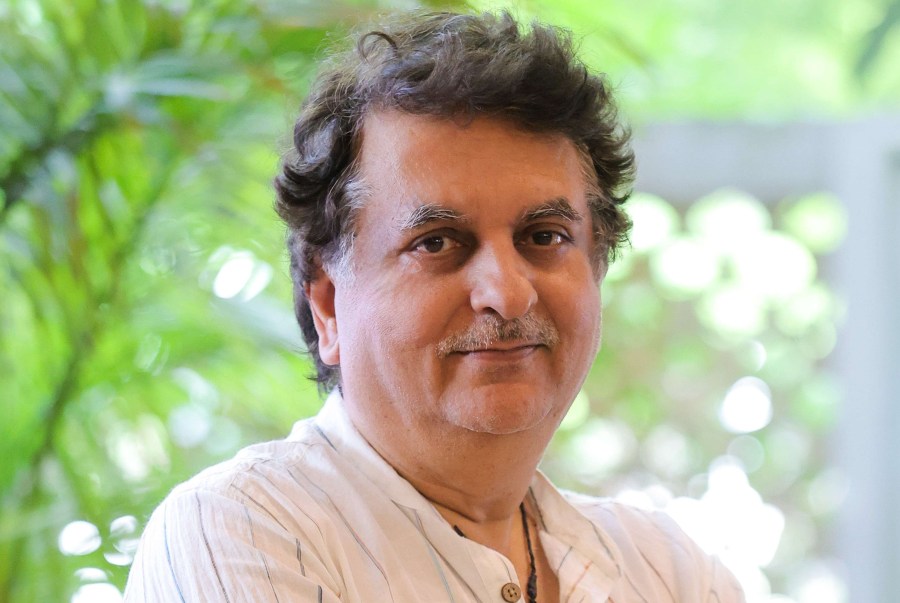
In this conversation, Ranjan Chopra, Founder of Team Computers and Pukaar Animal Sewa Helpline, speaks about the need to move from isolated acts of empathy towards organised, sustainable response mechanisms for animal welfare. He reflects on how initiatives like Pukaar are building networks of rescuers, veterinarians, shelters, educators, and citizens to create dependable support systems for animals in distress. From preventive healthcare and humane education to citizen participation and policy advocacy, Chopra outlines a larger vision where CSR becomes a catalyst for building compassionate ecosystems capable of delivering measurable and lasting change.
Scroll down to read the interview:
Q. How do you see structured CSR-led initiatives like Pukaar redefining the role of corporates in building sustainable compassion ecosystems?
A. The UNDP Sustainable Development Goals gave both schools and companies a common direction. Schools use them to teach children about responsibility, while companies use them to shape their CSR efforts in a more meaningful way. When you really look at it, sustainability is not just about policies or targets. It comes down to how we treat each other, animals, and the environment. Without basic tolerance and respect, none of this works. Over time, this way of thinking builds what we see as lasting compassion.
Pukaar is built around a straightforward idea. When an animal needs help, there is a call. Our job is to make sure that call is heard and answered. To do that, we are building a network of vets, paravets, rescuers, feeders, advocates, and educators who can work together and respond quickly. This is not about one-off help or charity. It is about creating a system where people share responsibility and support becomes consistent and dependable.
Q. What inspired the transition from individual empathy to an institutionalised response system, and how has this shaped your long-term vision?
A. It started with a very basic problem. If you came across an injured animal in a city like Delhi, there was no clear system to help. No single number to call, and no guarantee that help would reach in time. We realised that while people care, individual effort is not enough. Empathy alone does not scale. What’s needed is a system that people can rely on. Our purpose is to reduce the number of animals suffering through our system. This includes rescue, advocacy, humane education, and sanctuary support. Pukaar Animal Sewa Helpline is working to build that system. We are creating a network that not only responds to emergencies but also helps us understand where and what kind of issues are happening - across street animals, farm animals, birds, and reptiles.
This helps us move from reacting to planning better responses over time. The vision is simple. No animal should suffer just because there was no system in place to help.
Q. How important is the shift from donation-based giving to systems-building in addressing urban animal welfare challenges?
A. The answer comes down to one word: sustainable. Donations can solve a problem for a short time. Systems solve it for the long term. One rescue helps one animal, but a system reduces the chances of that situation happening again. What gives us confidence is the number of people who genuinely care. There are people across age groups who want to help, but they often don’t know how to do it in a structured way. What they need is guidance, training, and a system that supports their efforts.
Our role is to build that system and make it proactive. It also means creating real career paths. Animal welfare cannot depend only on volunteers. It needs people who can commit to it as full-time work. When that happens, the effort becomes steady and reliable. It moves beyond one-time help and starts creating long-term impact.
Q. How does Pukaar balance immediate rescue operations with long-term preventive care?
A. We work on two tracks at the same time - rescue and prevention.
Rescue is immediate. When an animal is in distress, there has to be a quick and reliable response. That is what Pukaar Animal Sewa Helpline focuses on, making sure help reaches in time. Prevention is about reducing how often these situations happen. As the saying goes, prevention is better than cure. Through vaccinations, deworming, and sterilisation, we try to reduce future suffering and also ease the pressure on already crowded shelters.
A big part of prevention is humane education, especially for children. When empathy is built early, it changes how people treat animals over time. Both sides matter. Rescue handles the urgency, while prevention reduces the need for rescue in the future. Change like this takes time. It may not fully happen in our lifetime, but the work has to start now.
Q. What have been the key challenges in scaling Pukaar across Delhi NCR, and how have CSR resources helped address them?
A. The biggest challenge has been the lack of coordination. There are many individuals and groups trying to help animals, which is a good thing. But when too many people are working separately with limited resources, it can lead to overlap, confusion, and sometimes even conflict. In the end, it is the animals that suffer.
Everyone means well, but without working together, the impact gets reduced. Our approach is simple. We do not speak against anyone. We focus on building synergies and working with anyone who is willing to collaborate.
CSR support has helped us build the basic system needed to do this—bringing people together, training responders, and ensuring that cases are handled properly. The goal was never to replace existing efforts. It is to connect them and make the overall response stronger. When people work together instead of in isolation, the system becomes more effective for animals.
Q. Pukaar's inclusive approach covers multiple species often overlooked. How does this reflect your ethical framework?
A. Only about 2% of animals live in the wild. Around 4% are companion animals like dogs and cats. Nearly 94% are factory farmed - cows, pigs, fish, goats, rabbits. Yet most welfare funding goes to a very small group.
That 94% are living in conditions where even basic freedom is missing. Their suffering is largely unseen and rarely talked about. We see it as our responsibility to be a voice that answers their Pukaar. For us, compassion cannot be selective. It has to include all animals. This also starts within the organisation. We are running awareness sessions to help people understand these issues and reflect them in their daily choices.
The idea is simple. We want people to be more aware, more responsible, and kinder in how they think and act. Our aim is to build a company where kindness is not just a value on paper, but something people actually practice every day.
Q. How do you see citizen engagement shaping the success and sustainability of CSR initiatives like Pukaar?
A. When a citizen sees an animal being abused, injured, or in distress, they have a choice. Either to ignore it or to act. Animals cannot ask for help. So every Pukaar is actually a human’s call for kindness and compassion. And when we ignore cruelty, whether towards animals or people, we are allowing it to continue.
That is why citizen involvement is so important. Every call we receive means someone chose not to look away. That is what drives this system every day. On the ground, we work with NGOs, vets, shelters, and labs. Wherever possible, we treat animals on the spot so they don’t have to be moved to already overcrowded shelters. This helps reduce pressure on the system while ensuring faster care.
Together, this network is already working as a sustainable system. What we need now is to grow it. Citizens are not peripheral to this work. They are the system. Without them, there is no Pukaar worth building.
Q. How have your interventions translated into tangible improvements on the ground?
A. We are starting to see real change. In Chandigarh, cruelty towards working equines has reduced sharply. Overloading has dropped from 87% to 4%, and the use of spiked bits has come down from 99% to 1%. Sales of spiked bits are now banned across Punjab and Chandigarh. More than 500 horses have been vaccinated, and we are now working on starting free hoof care support. We are also seeing progress beyond equines. Municipal Corporation Chandigarh has begun vaccinating around 500 dogs every month. Over 1,000 dogs have been sterilised, and more than 4,500 dogs and pups vaccinated. Across Delhi and Chandigarh, we have treated over 3,000 animals and taken around 350 cruelty cases to court. We have also conducted over 1,000 humane education sessions in schools to build awareness early.
Many rescued animals, including horses, sheep, rabbits, chickens, pigs, and calves, have been moved to safe sanctuaries. These are early results, achieved within just one year. Long-term change takes time, but the direction is clear. When a proper system is in place, you start to see measurable impact. We are also pushing for larger change, with public interest litigations focused on improving conditions for slaughter animals, bovines, and working equines.
Q. What long-term shifts do you anticipate from sterilisation and preventive healthcare interventions?
A. Sterilisation is not an easy subject. Making decisions for another living being is never ideal. But when you compare it to the cruelty animals face on the streets, or the neglect caused by unchecked breeding, it becomes the lesser of two evils. Right now, for dogs and cats, it is the most practical and effective way to control population and reduce human-animal conflict. It also helps improve their overall health and reduces suffering over time.
Other species are much harder to manage. Animals like monkeys and cattle cannot be handled in the same way. They are difficult to catch, and large-scale sterilisation is not always practical. So while sterilisation is important, it is also species-specific. It is not a one-size-fits-all solution.
In the long term, the real change will come from how we treat animals in general - especially reducing practices where animals are used purely for human benefit. Sterilisation helps reduce immediate problems. But long-term impact depends on changing human behaviour.
Q. How important is narrative-building, the podcast, as a pillar of modern CSR strategy?
A. Narrative-building, whether through a podcast or any other format, is very important today. It is not an extra. It helps the work reach people. A lot of what happens in animal welfare is not visible. People don’t see the challenges, the decisions on the ground, or the effort behind each case. A podcast gives us a way to share these stories in a more honest and detailed way.
For us, it does three things. First, it helps people understand the problem better. They start to see why systems matter, not just one-time help.
Second, it encourages people to act. When someone hears a real story, they are more likely to report a case, support the work, or get involved. Third, it brings different people onto the same page - vets, rescuers, policymakers, and citizens. Everyone begins to see the issue in a similar way.
In simple terms, if systems help the work grow, stories help people connect to that work. Without that connection, it is hard to scale any effort.


.png)