India’s RUDHRA Enters James Dyson Award Global Top 20
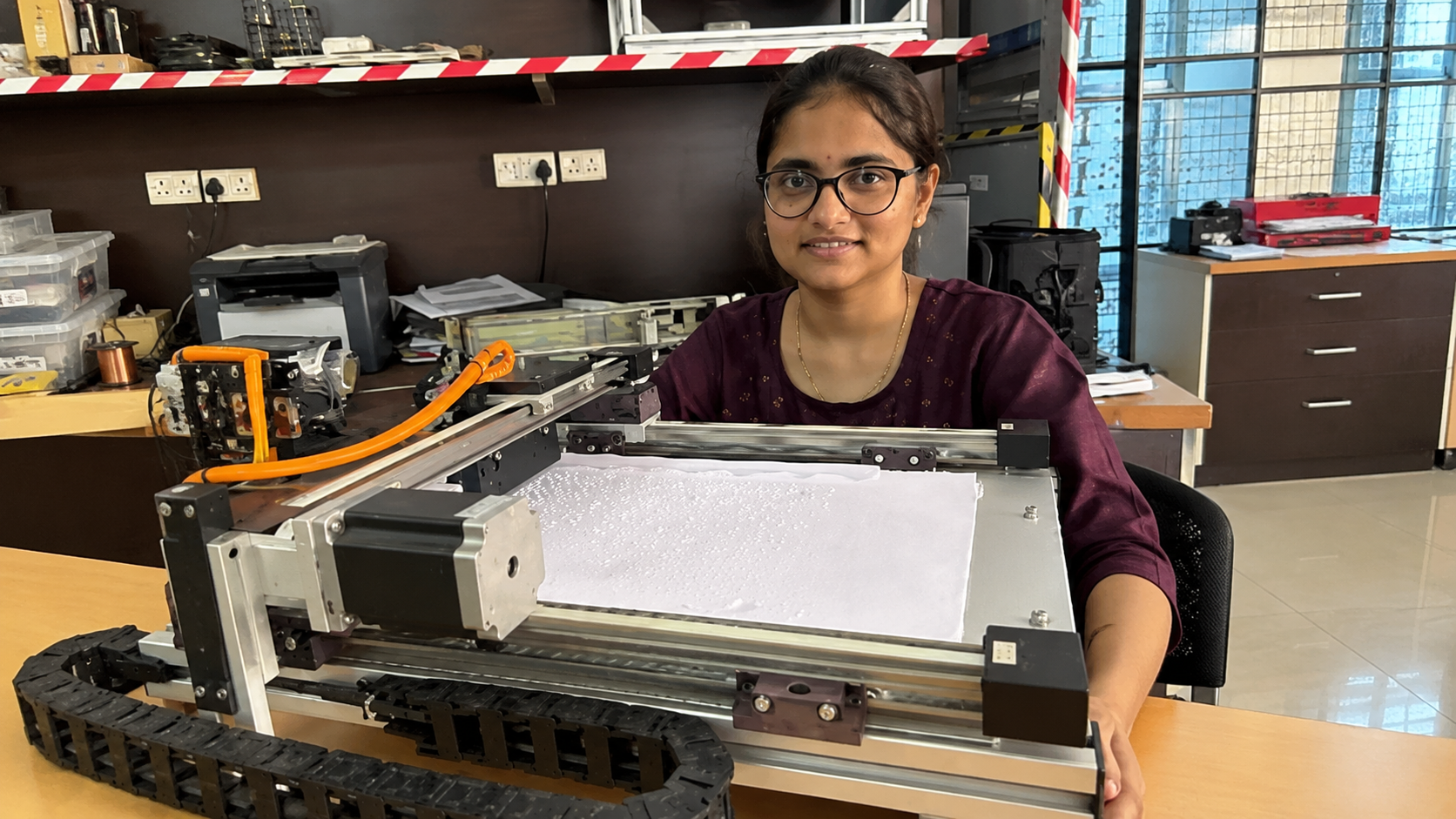
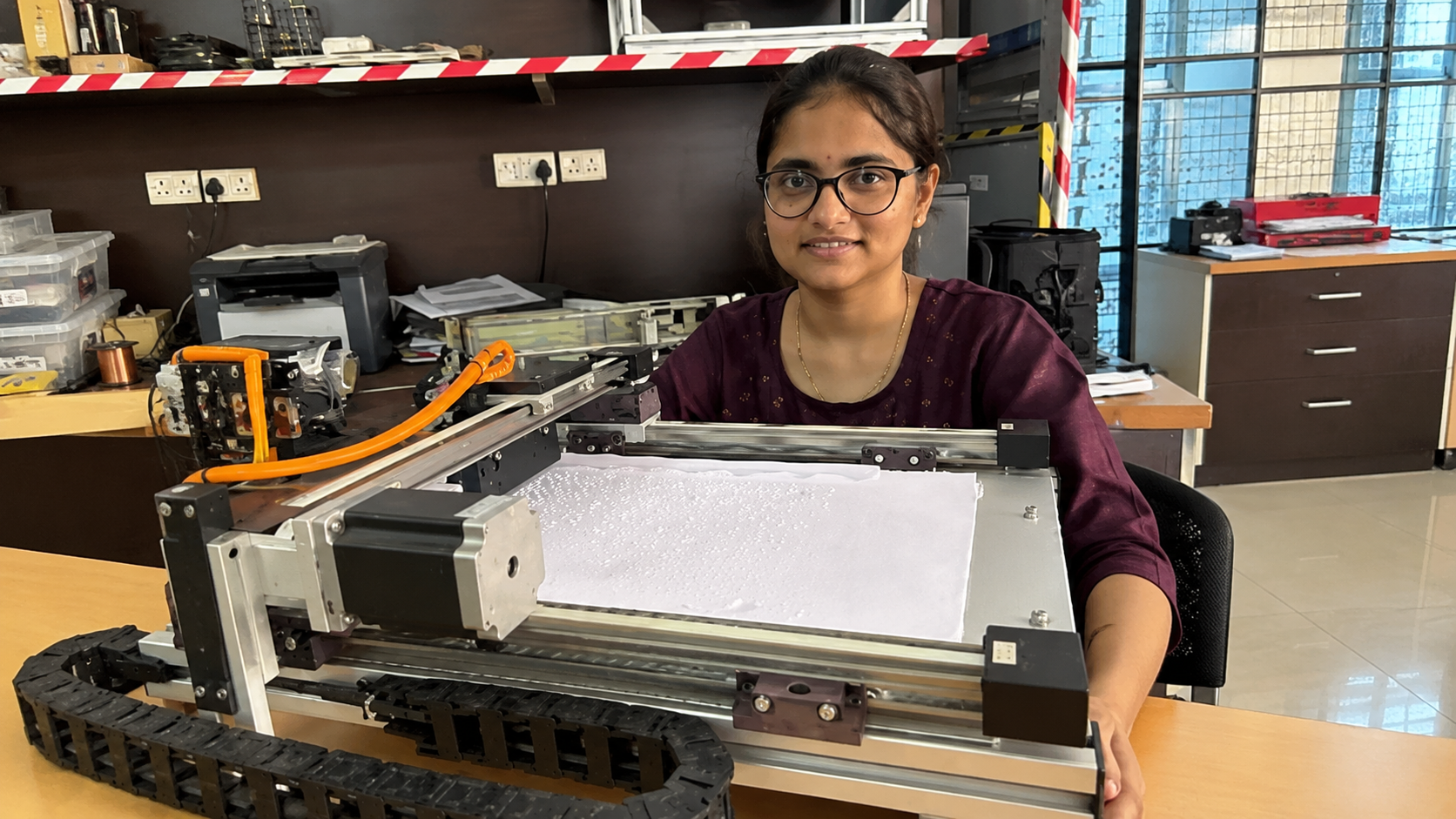
India | October 14, 2026: RUDHRA, a voice-enabled Braille printer developed by 20-year-old Lingampalli Himaja of Shri Vishnu Engineering College for Women, has been shortlisted among the global top 20 finalists of the James Dyson Award 2026. The device aims to help visually impaired people create Braille documents independently by converting spoken words into Braille.
Himaja developed the idea after visiting a school for visually impaired students and observing the challenges associated with traditional Braille writing. Following the development of an initial prototype, a student’s question, “Why should I type when I can speak?”, inspired her to develop the voice-enabled device.
RUDHRA is designed to reduce the complexity of traditional Braille typing and make writing more accessible for visually impaired students. Himaja plans to further develop the device by making it more compact, advanced and affordable through improvements to materials and manufacturing processes.
Himaja Lingampalli, creator of RUDHRA, said: “I feel incredibly grateful and proud to have this opportunity through the James Dyson Award. Representing India on an international platform is a meaningful milestone for me and gives RUDHRA the opportunity to reach a much wider audience. I see this as an important step towards taking RUDHRA further - making it more compact, more advanced, and more accessible, with the long-term goal of enabling visually impaired students to use it independently.”
The project will now proceed to the final stage of the James Dyson Award, where Sir James Dyson will review the global finalists. The winners are scheduled to be announced on November 4, 2026. Winning inventions will receive £30,000 to support further development and commercialisation.
The global top 20 finalists were selected by a panel of 12 Dyson engineers based in the UK, the US, Singapore, Malaysia and the Philippines. Entries were assessed on functionality, design process, originality and commercial viability.
Kay Yeong, Principal Engineer and James Dyson Award Top 20 Judge, said: “The James Dyson Awards always attracts entries from a broad spectrum of areas, and this year no less so! This keeps things interesting, but it can be difficult to choose between say a children’s health device and a geoengineering structure. My favourite entries are those that surface problems that I didn’t know needed solving and this is something that a lot of the top 20 have in common. It is precisely these kinds of thought-provoking insights that are needed to help us invent practical, everyday solutions to improve lives. I’m excited to see who takes home the global prize.”
The James Dyson Award invites students from 30 countries to develop practical solutions to real-world problems using engineering and design. RUDHRA’s selection places Himaja among the international finalists competing for the 2026 global award.