From Policy to Practice: Rethinking Wildlife Conservation in India

India’s conservation story today is defined by a paradox. Protected areas are expanding on one hand, while ecological security continues to shrink on the other. As infrastructure grows and land use changes accelerate, the gap between policy ambition and on-ground reality is becoming increasingly visible.
India remains one of the world’s most biologically rich nations. It hosts nearly 8 percent of global biodiversity despite occupying just 2.4 percent of the Earth’s land area. This diversity spans forests, grasslands, wetlands, and coastlines. Yet, the pressures on these ecosystems are intensifying. The country’s conservation journey now sits at a critical intersection. While flagship species have shown recovery and legal frameworks remain strong, deeper structural challenges persist. Increasingly, the development sector, including philanthropy, CSR, and grassroots organisations, is stepping in to address these gaps.
A Strong Framework, Uneven Execution
India’s conservation laws are robust. The Wildlife Protection Act continues to provide a strong legal foundation. The country has over 1,000 protected areas covering more than 1,78,000 square kilometres. However, implementation varies widely.
According to Rushikesh Chavan, Director, The Habitats Trust, the challenge lies in what he describes as a “friction of implementation.” Institutional capacity constraints, fragmented governance, and weak coordination often slow down progress. In his view, the issue is not intent but the complexity of translating policy into practice.
This concern is echoed across the development sector. Siddharth Agarwal, Foundation Lead, Upadhyaya Foundation, points to gaps in trained personnel, rescue infrastructure, and long-term rehabilitation systems. He adds that frontline agencies are often stretched, particularly in conflict-prone regions.
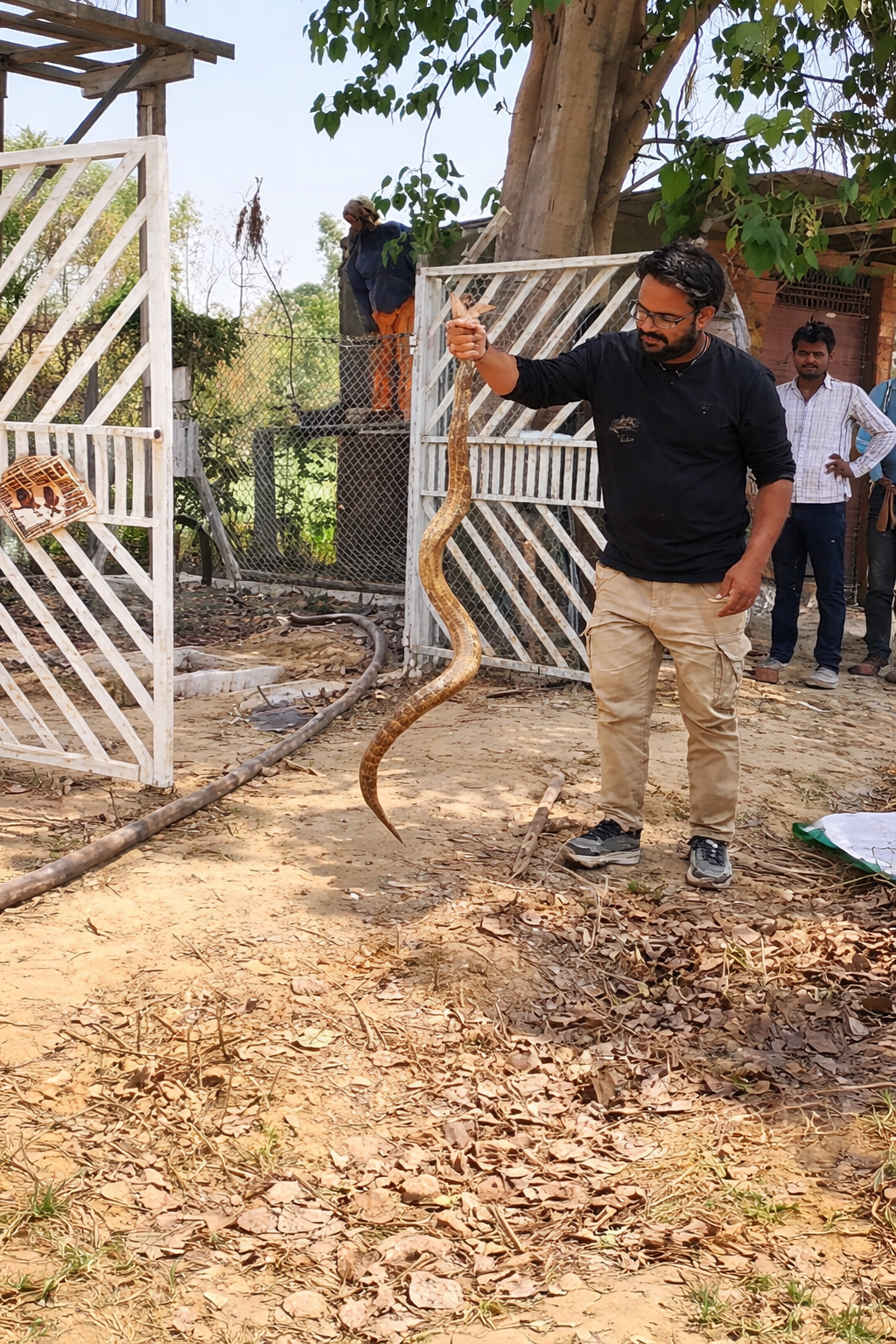 Similarly, Rishabh Shukla, Founder, Faith Foundation, highlights the role of civil society in filling these gaps. In many situations, NGOs and volunteers act as first responders during wildlife emergencies. Their presence ensures immediate action where formal systems may be delayed.
Together, these perspectives reveal a clear pattern. India’s conservation system is structurally strong but operationally strained. CSR and philanthropy are increasingly stepping in as enablers, strengthening last-mile implementation rather than duplicating government efforts.
Habitat Fragmentation and the Need for Scale
Habitat fragmentation is one of the most serious threats to wildlife today. Roads, railways, and transmission lines are breaking ecosystems into smaller, disconnected patches. This not only isolates species but also increases human–wildlife encounters.
A long-term study in the Western Ghats recorded more than 6,500 animal deaths across 239 species due to road collisions over a 26-year period. The numbers highlight the ecological cost of unplanned development. According to Chavan, the perceived trade-off between development and conservation is outdated. In his view, India has the opportunity to design growth models that work with nature rather than against it. He adds that philanthropy can act as “risk capital,” enabling innovative, landscape-level solutions. Agarwal builds on this by stressing the importance of wildlife corridors. These corridors allow animals to move between habitats and maintain genetic diversity. He notes that corporates can support mapping, restoration, and mitigation measures such as wildlife underpasses. Shukla brings attention to the human dimension. Corridors often pass through villages and farmlands. In his view, conservation efforts must actively involve local communities. Without their participation, long-term success remains difficult.
This shift toward landscape-level thinking marks a significant transition. Conservation is no longer confined to protected areas. It is increasingly integrated into broader development planning.
Human–Wildlife Conflict: Shifting the Lens
Human–wildlife conflict continues to dominate conservation discourse. However, experts caution against treating it as a standalone issue.
“Conflict is an outcome, not the underlying challenge,” Chavan explains. It stems from habitat loss, resource competition, and changing land-use patterns. In his view, reactive approaches such as compensation or translocation are insufficient.
CSR initiatives are now focusing on preventive solutions. Technologies such as GPS tracking, AI-based monitoring, and early warning systems are helping communities anticipate wildlife movement. These tools reduce risk before conflict occurs. At the same time, community-led strategies are gaining ground. Agarwal highlights the importance of awareness and behavioural change. Shukla adds that practical measures such as solar fencing, bio-fencing, and secure livestock enclosures can significantly reduce incidents. Livelihood support is another critical piece. By promoting alternative income sources, CSR programmes reduce dependence on forest resources. This helps shift communities from conflict to coexistence.
Beyond Flagship Species
India’s conservation efforts have traditionally focused on flagship species. While this has driven public attention, it has also led to uneven funding. Ecosystems such as grasslands, wetlands, and marine habitats remain underfunded. Grasslands are often misclassified as wastelands. Wetlands continue to shrink due to urbanisation and pollution. Yet, both are critical for biodiversity and climate resilience.
According to Chavan, this flagship-first approach is no longer sufficient. In his view, conservation must move toward ecosystem-level thinking. The Habitats Trust has actively supported lesser-known species and neglected habitats.
One notable example is the conservation of the Great Indian Bustard. CSR support from Diageo India has contributed to breeding success and habitat protection, highlighting how targeted investments can deliver results. Another example comes from landscape restoration efforts supported by philanthropic organisations in central India. These initiatives focus on reconnecting fragmented forest patches to support species movement. Similarly, several CSR programmes across coastal states are supporting mangrove restoration, strengthening both biodiversity and climate resilience. These examples demonstrate a clear shift. Conservation is expanding beyond species to include entire ecosystems and landscapes.
The Data Gap Challenge
Reliable data remains a major challenge in conservation. Many regions lack consistent information on species populations and habitat health.
In recent findings, over 600 new animal species were recorded in India in a single year. This highlights how much biodiversity remains undocumented. Without strong data systems, conservation planning becomes difficult.
Chavan believes monitoring should be built into the design of every intervention. At The Habitats Trust, data is used not just to measure outcomes but to guide strategy.
CSR can play a key role here. According to Agarwal, investments in tools such as camera traps, satellite imagery, and GIS mapping can significantly improve data quality. Shukla adds that long-term research funding is essential for tracking ecological trends.
Strong data systems are critical in a changing climate. They enable adaptive and evidence-based decision making.
Strengthening Capacity on the Ground
Capacity constraints remain a persistent challenge. Forest departments and grassroots organisations often operate with limited resources. According to Chavan, philanthropy must move beyond funding and act as a systemic collaborator. This includes supporting governance improvements, technology adoption, and knowledge sharing.
CSR initiatives are already contributing in this space. They are funding rescue vehicles, veterinary facilities, and training programmes. Agarwal points out that corporate expertise can also improve operational efficiency.
Shukla stresses the importance of continuity. In his view, multi-year partnerships provide stability and allow organisations to build long-term programmes. Strengthening institutions is essential for sustained conservation impact.
The Need for Collaboration
India’s conservation challenges require collective action. No single stakeholder can address them alone.
Chavan identifies trust as the most critical factor. In his view, stronger alignment between government, corporates, NGOs, and communities is essential. India’s global biodiversity rankings indicate the urgency of this issue. At the same time, global wildlife populations have seen significant declines over the past five decades.
These trends underline the need for integrated solutions. Experts point to wildlife corridors, ecosystem restoration, and coexistence models as key areas for scale.
From Intent to Impact
India has the frameworks, the expertise, and a growing network of stakeholders. What remains is effective execution. According to Chavan, vision is only a small part of the equation. The real work lies in implementation. Agarwal and Shukla echo this sentiment, highlighting the importance of sustained investment and collaboration.
The development sector is uniquely positioned to bridge the gap between policy and practice. It connects science with communities and funding with implementation. The future of conservation in India will depend on how well these systems work together. Not in silos, but as an integrated whole. Because ultimately, conservation will succeed not when it is protected from development, but when it is built into it.