Ujaas at Four: How Dialogue, Data, and Community Voices Are Rewriting India’s Menstrual Health Story
Menstrual health in India is often shaped as much by silence and stigma as by access and awareness. Addressing this complex challenge requires more than one-time campaigns- it calls for sustained engagement, community trust, and evidence-backed action. This feature traces the journey of Ujaas- an initiative by Birla Education Trust- capturing how dialogue, data, and community voices are driving measurable behavioural change. While the impact of this initiative is clearly reflected through impressive statistics, this story includes glimpses of courageous moments from the ground that carry the essence of the mindset shift most awareness programs intend to achieve.
Ujaas at Four: How Dialogue, Data, and Community Voices Are Rewriting India’s Menstrual Health Story
In classrooms, homes, and communities across India, conversations around menstruation are still shaped by silence, stigma, and deeply held beliefs. Over the last four years, Ujaas—an Aditya Birla Education Trust initiative- has been working steadily to change that reality by strengthening menstrual health awareness, access, and dignity across diverse geographies. As the programme marks its fourth anniversary, its journey offers a compelling look at how sustained, community-led interventions can translate awareness into measurable behavioural change.
What began as an effort to normalise conversations around menstruation has grown into a pan-India movement rooted in data, dialogue, and on-ground engagement. Through 14,485 structured awareness sessions, Ujaas has directly reached 589,917 beneficiaries across urban, rural, and semi-urban communities. This includes 422,971 girls and women, 79,011 boys, 86,871 women, 596 teachers, and 468 men- underscoring Ujaas’s core belief that menstrual health is not just a women’s issue, but a shared social responsibility.
This emphasis on collective understanding is reflected in the programme’s most visible outreach effort- the Ujaas Menstrual Health Express. A first-of-its-kind nationwide initiative, the Express has travelled across 25 states and 106 cities, covering more than 10,000 kilometres. By combining education, distribution, and on-ground research, it has enabled Ujaas to collect real-time insights that inform its interventions while challenging entrenched myths surrounding menstruation.
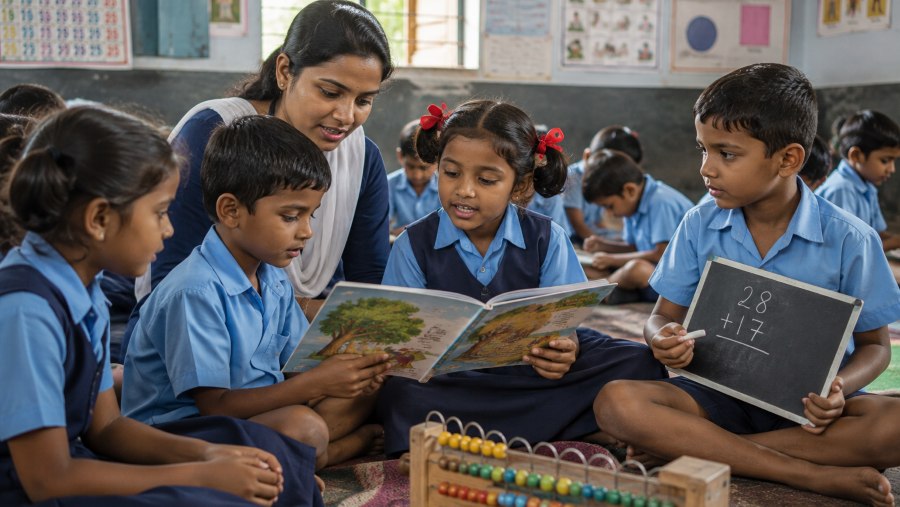
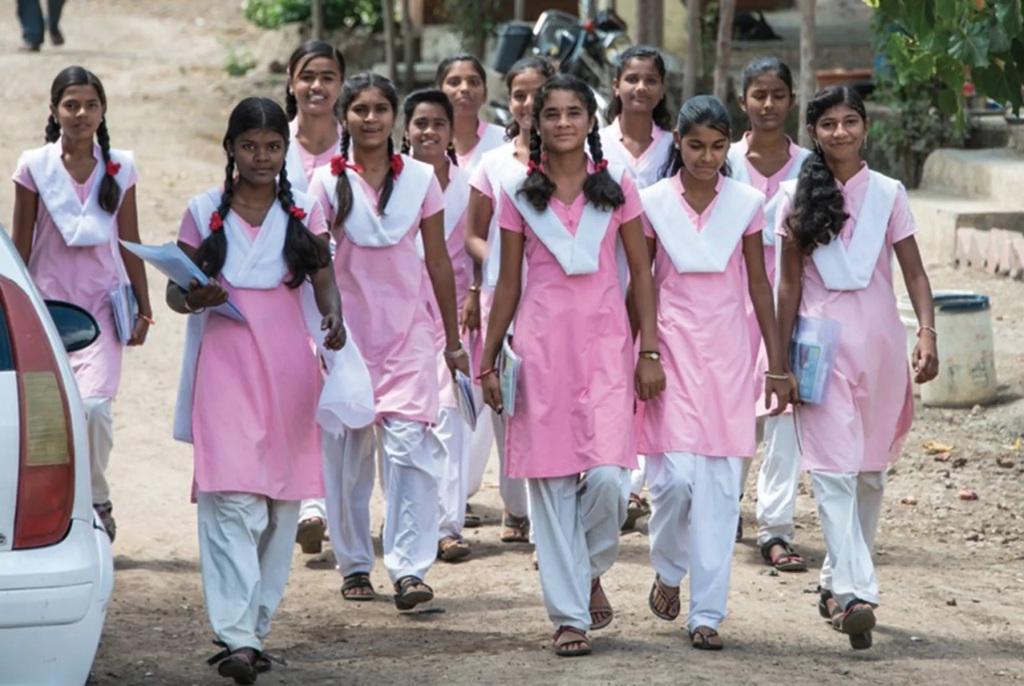
For many schools, these conversations have led to tangible shifts. At ISO Zilla Parishad High School in Malhara, Amravati district, teachers noticed a troubling pattern- girls in Grades 6 and 7 were missing school every month. Located in a farming community where most parents work as daily labourers, the school served families from the local Mana community who valued education but followed long-standing cultural practices around menstruation.
Discussions with parents revealed that girls were isolated at home during their periods due to misconceptions, resulting in repeated absenteeism and learning gaps. In response, the school organised a parent-awareness meeting led by teachers and supported by Archana Bankar from the Aditya Birla Education Trust. The session focused on breaking myths, explaining reproductive health, and reinforcing that menstruation is a natural and healthy part of life.
Alongside this, girls participated in interactive activities where they openly discussed physical and emotional changes, hygiene practices, and personal experiences- often for the first time. The impact was visible: attendance improved, parental support increased, and community attitudes began to shift. The school’s efforts were later recognised through the Chief Minister’s My School, Beautiful School award, reflecting the outcomes of collaboration between educators, the NGO, and families.
In Baramati Taluka, this transformation began with a single question. At Navmaharashtra School & Junior College, introducing a menstrual hygiene session initially faced hesitation. The newly appointed principal, however, recognised its importance and offered full support. During the second session, two girls approached the facilitator. One of them, overcome with emotion, asked, “If menstruation is natural, why are we treated differently at home? Why are we made to feel ashamed?”
As she spoke, tears rolled down her cheeks- capturing the silent struggles of many adolescents. Reassured by the facilitator, the girl made a simple but powerful request: “Please talk to our mothers too. Help them understand.”
That moment became a turning point. The school soon formed the Sakhi Savitri Forum and strengthened its Parent-Teacher Association to sustain dialogue around menstrual health and adolescent well-being. The committees unanimously agreed to organise dedicated sessions for parents, extending awareness beyond the classroom and into homes. What began as one girl’s courage evolved into a school-wide shift towards empathy, understanding, and support.
Equally significant is the programme’s focus on evidence-backed impact. Baseline studies conducted by Ujaas revealed alarming gaps in menstrual health knowledge. Post-intervention data, however, showed improvements of up to 500 per cent in awareness indicators- demonstrating how consistent, localised education can drive lasting behavioural change.
While awareness is a critical starting point, Ujaas’s approach extends beyond conversations. Over the last four years, the programme has distributed more than 2.5 million sanitary pads, addressing period poverty while promoting safe menstrual practices. At the same time, it has encouraged the use of eco-friendly reusable cloth pads, linking menstrual health with environmental sustainability.
This model has also created livelihood opportunities. By training over 25 women from Self-Help Groups to produce reusable pads and setting up manufacturing units, Ujaas has enabled economic empowerment alongside health outcomes- ensuring that solutions are both sustainable and locally owned.
As Ujaas completes four years, its journey illustrates how dignity, data, and community ownership can come together to rewrite narratives around menstruation. Backed by partnerships with government bodies, global foundations, CSR leaders, and youth networks, the initiative continues to demonstrate that meaningful change is built not through one-time interventions, but through sustained engagement that places communities- and their voices- at the centre.