Arun Jain: From Fintech Pioneer to Champion of Rural Transformation
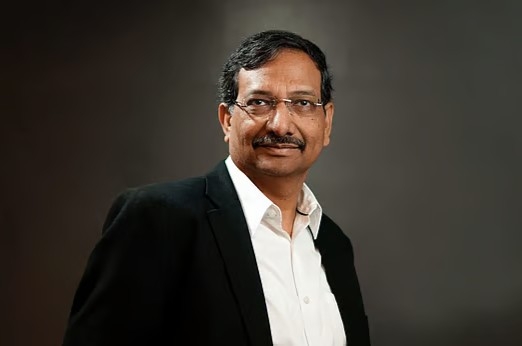
For most of his professional life, Arun Jain was known as a technology entrepreneur who helped shape India’s financial software industry. Today, the Chairman and Managing Director of Intellect Design Arena is focused on a different challenge — how to revive India’s villages.
Jain, 66, spent decades building global technology companies. But over the past several years, his attention has increasingly turned toward rural development through Mission Samriddhi, an initiative that seeks to transform villages through a structured model of community-led growth. His approach draws on Design Thinking, a problem-solving method widely used in the technology world but rarely applied to rural development.
 Early Entrepreneurial Journey
Arun Jain’s entrepreneurial journey began in the mid-1980s, when India’s software industry was still in its infancy. In 1986, he co-founded Nucleus Software with two partners, focusing on software solutions for financial institutions. A few years later, in 1993, he launched Polaris Software Lab, which grew into a major technology company serving banks and financial firms around the world. The company expanded internationally and built a reputation for developing specialised software for the banking sector.
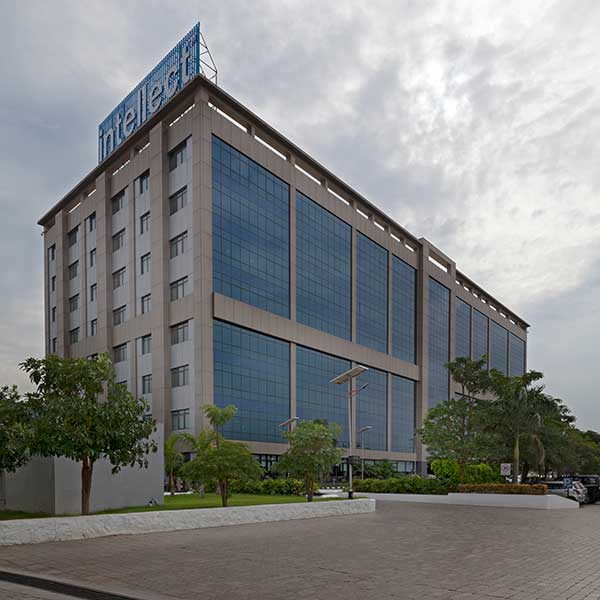
In 2011, Jain spun off Intellect Design Arena from Polaris. The company focused on building digital platforms for banks, insurers and financial institutions. In 2016, after selling Polaris, Jain faced a windfall of 200 crores. It was a significant amount and he initially considered using the money to build schools and hospitals.
Turning to Rural Development
“But then I asked myself a simple question,” Jain recalls. “What difference would 10 more schools or hospitals make in a country of this scale?”
That question eventually pushed him toward a broader challenge — rural poverty. Rather than launching development programmes immediately, he chose to spend time understanding the issues on the ground.
Around 2016, Jain began visiting villages in Yavatmal, a district that has often been associated with farmer distress and suicides. “We spoke to farmers, local officials and community members. We wanted to understand why distress persists despite so many schemes,” he says.
Over time, the discussions revealed a complex web of challenges like water shortages, limited livelihood opportunities, fragmented development programmes and weak local institutions. instead of focusing on individual welfare projects, Jain attempted a more integrated approach to rural development.
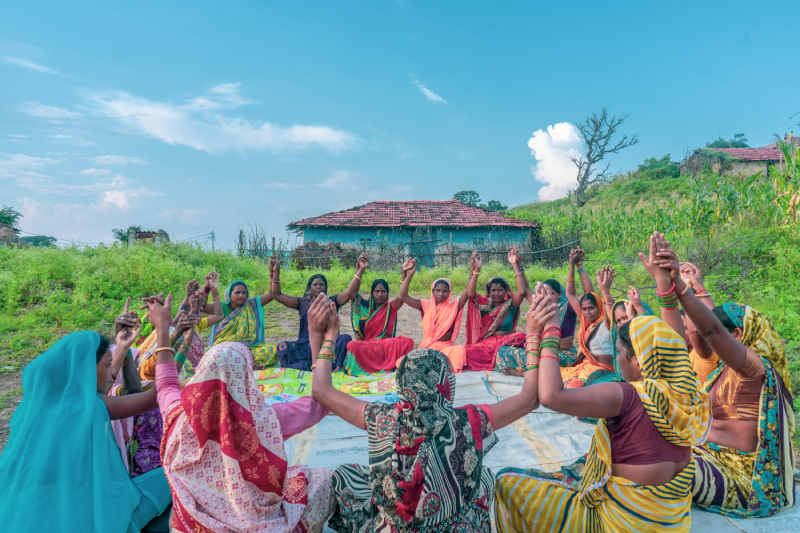 Mission Samriddhi: A Holistic Approach
Those early conversations eventually led to the creation of Mission Samriddhi, an initiative supported by the AAUM Trust and the Polaris Foundation.
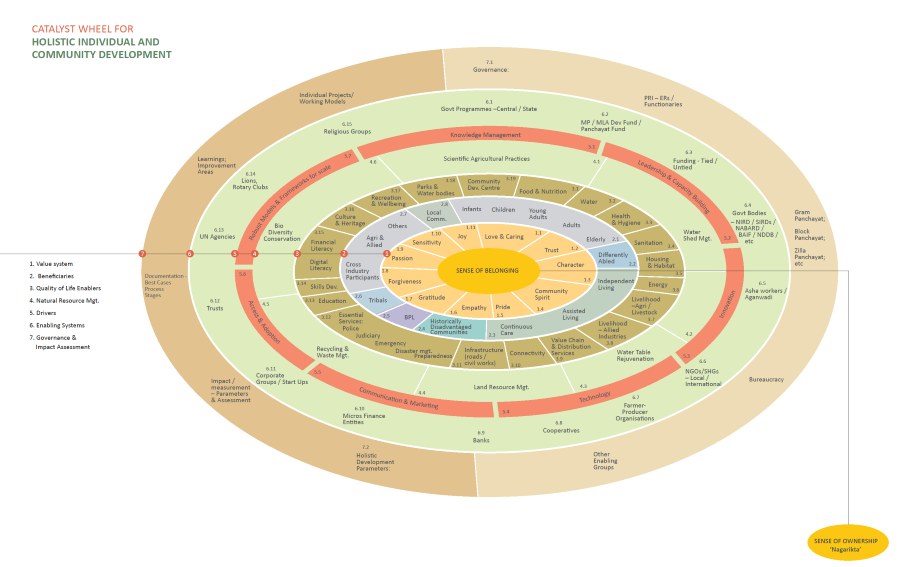
Mission Samriddhi works across five broad areas- personal development, social cohesion, economic opportunity, ecological sustainability and institutional strengthening. Jain says the goal is to help villages become self-reliant rather than dependent on external aid.
“A village cannot change through CSR projects alone,” he says. “Real change happens when people begin to see possibilities for themselves.”
Design Thinking in Rural Transformation
One of the distinctive features of Mission Samriddhi is the use of Design Thinking. Jain explains Design Thinking as a modern rebranding of ancient Indian wisdom, and ties it directly to transforming rural villages by shifting mindsets and aspirations. He starts by linking it to personal and communal change. "We can only change something by changing the 'Darshan' (vision/perspective). If the vision changes, knowledge changes. And when knowledge changes, character changes." He references Jainism's concepts of Samyak Darshan (Right Vision), Samyak Gyan (Right Knowledge), and Samyak Karya (Right Action), calling this "old knowledge, not new." He reframes it simply: "We have just given it a new name- Design Thinking. So, 'Darshan,' if translated into English, is 'how to design your thinking'—that is Design Thinking."
And how does Design Thinking happen? He explains that it happens when the thinking of the villagers changes. A village can never change through CSR (Corporate Social Responsibility) alone.
“Villages will only change when the spirit within them is awakened. Their aspirations have to change. Nobody can change any human being unless that human being wants to change himself. No village can be changed unless internal permission is granted,” he adds.
Workshops and Community Engagement
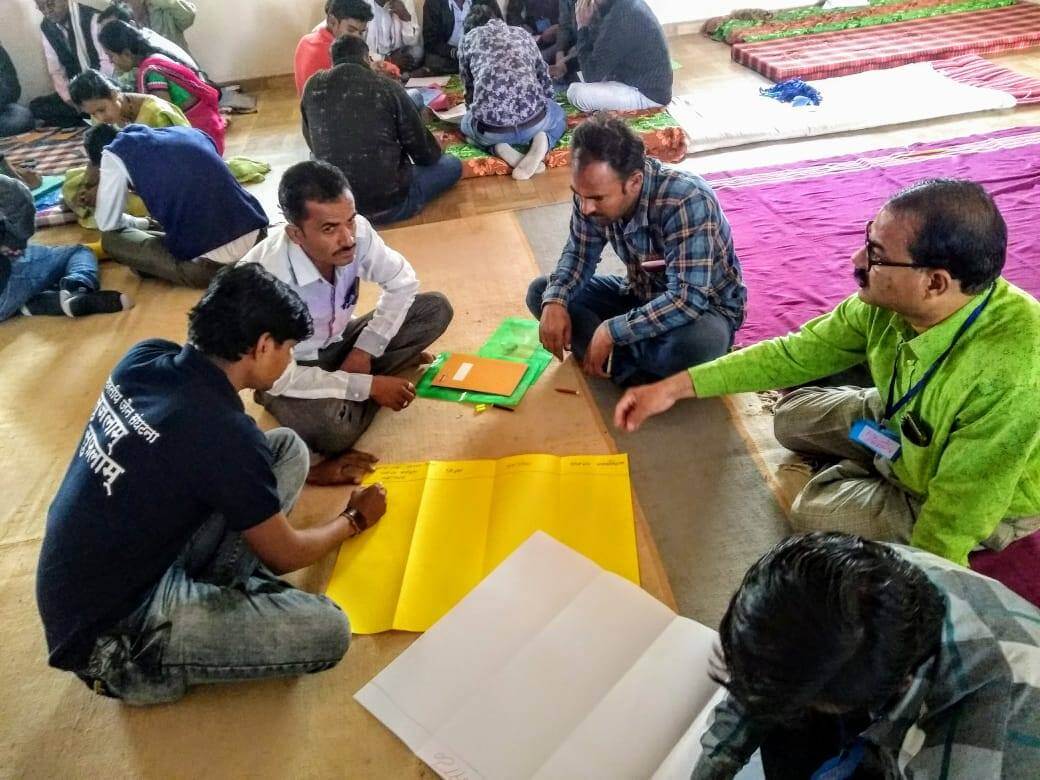
Before launching programmes in any village, the organisation conducts workshops with residents, farmers, local leaders and civil society groups. These workshops aim to generate aspirations and build self-confidence amongst the selected group of people while fostering collaborative problem-solving approach. These interactions reject a top-down interventions while encouraging and empowering communities to become agents of their own change.
In some early pilot areas, nearly 40 such workshops were held before development plans were finalised. The process, Jain says, is designed to ensure that villagers themselves participate in both - defining the problems and finding the solutions.
“It is not about outsiders deciding what villages need,” he explains. “It is about helping communities discover their own solutions.”
Expanding Reach and Impact
 Over time, Mission Samriddhi has expanded its footprint across several states, including Assam, Bihar, Odisha, Maharashtra, Tamil Nadu, Uttar Pradesh, West Bengal, and Jammu and Kashmir.
According to the organisation, the programme now works in more than 80 clusters covering around 500 panchayats. The initiative also tracks development progress through a detailed monitoring framework that assesses various indicators such as income, water availability, education and community participation.
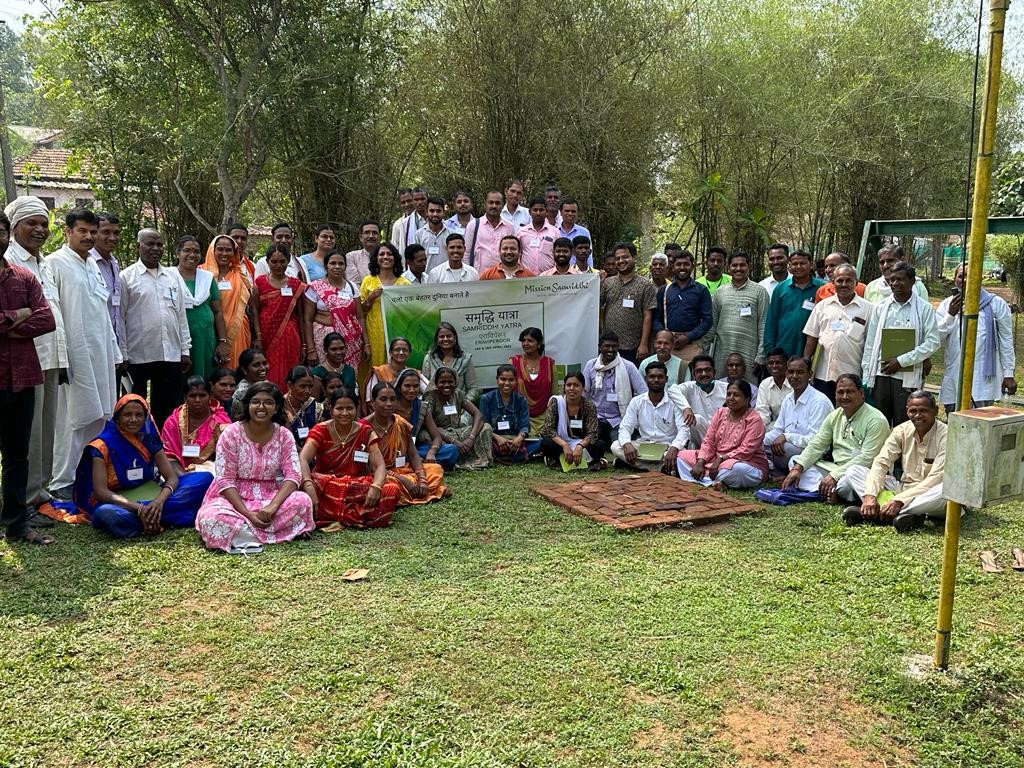
The goal is not just incremental improvement but long-term structural change in rural economies, building confidence and aspirations. Many of Mission Samriddhi’s activities focus on changing perceptions and building confidence among villagers. Through "Samridhi Yatras" groups visit successful villages in states like Maharashtra or Kerala to see thriving models firsthand. Seeing these examples firsthand often changes how people think about possibilities in their own communities, Jain says. “When people see what is possible elsewhere, it expands their imagination,” he explains. This exposure helps participants recognize their own potential, moving them from survival mode to entrepreneurial thinking.
There are workshops, such as "Unmukt" sessions where villagers discuss resources they have and good works done over the past decade, often uncovering hidden strengths. "Everyone has done something, small or large, but it hasn't translated into self-belief," Jain notes. These build a growth mindset, aligning with Mission Samriddhi's five dimensions of development—Personal (fostering constitutional values and self-worth), Social (integrated community progress), Economic (livelihood enhancement), Ecological (sustainable practices), and Institutional (strengthening local governance like Panchayats and Gram Sabhas).
Fostering Entrepreneurship in Villages
Jain often argues that rural residents are natural risk-takers, particularly farmers who deal with uncertainty every season. “Farmers are entrepreneurs,” he says. “But we rarely recognise them that way.”
Jain has also become an outspoken critic of development models that rely heavily on subsidies.
While acknowledging the importance of government support, he argues that long-term prosperity requires local enterprise and self-reliance.
He often questions why terms such as “startup” are commonly used in cities but rarely applied to rural businesses.“Why shouldn’t villages have companies?” he asks. “Why should entrepreneurship be seen as an urban idea?”
Mission Samriddhi encourages rural enterprises ranging from collective farming and local processing units to small-scale manufacturing. Some initiatives also focus on improving water management and promoting climate-resilient agriculture.
 A Personal Journey of Learning
For Jain, the shift from corporate leadership to rural development has also been a personal journey. In the years after launching Mission Samriddhi, he and his wife Manju spent many weekends visiting villages across states such as Jharkhand, Uttar Pradesh, and Bihar.
The visits challenged many of their own assumptions about rural life.
“Villagers innovate all the time because they have to work with constraints,” Jain says. “In many ways, the mindset is already entrepreneurial.”
Mission Samriddhi also works with a wide network of non-governmental organisations, corporate foundations and development agencies. Jain believes collaboration is essential because rural development efforts are often fragmented. “If ten organisations work separately in a village, the impact is limited,” he says. “But if they work together, the results can be very different.”
The Bigger Picture: Scaling Rural Prosperity
As India continues to urbanise rapidly, Jain believes the future of the country will still depend heavily on the prosperity of its villages. His hope is that Mission Samriddhi can demonstrate models that can be scaled through partnerships with governments, corporations and civil society groups. “Villages already have enormous potential,” he says. “What they need is the right systems and the confidence to build their own future.”
 For a man who once spent his career designing software for global banks, the shift to rural transformation may seem unexpected. But Jain sees the two worlds as connected.
“In technology, we solve complex problems through systems thinking,” he says. “Rural development also requires the same approach.”
And for him, the work in villages may ultimately prove to be the most meaningful chapter of his career.



.png)