Youth Co-Governance: A Missing Link in India’s Sexual and Reproductive Health Outcomes

 India stands at the centre of one of the largest youth transitions in the world. With nearly half its population under the age of 30, the country’s policy choices today will shape the health, agency, and opportunities of an entire generation. Yet a striking disconnect persists: the institutions that design and implement these policies are largely led by decision-makers decades older than the people most affected by them. This generational gap becomes particularly visible in the realm of Sexual and Reproductive Health (SRH), where policies and programmes influence deeply personal aspects of young people’s lives- from access to information and healthcare services to bodily autonomy and social mobility. While youth are often included in awareness campaigns and consultations, their participation rarely extends to the spaces where decisions are actually made.
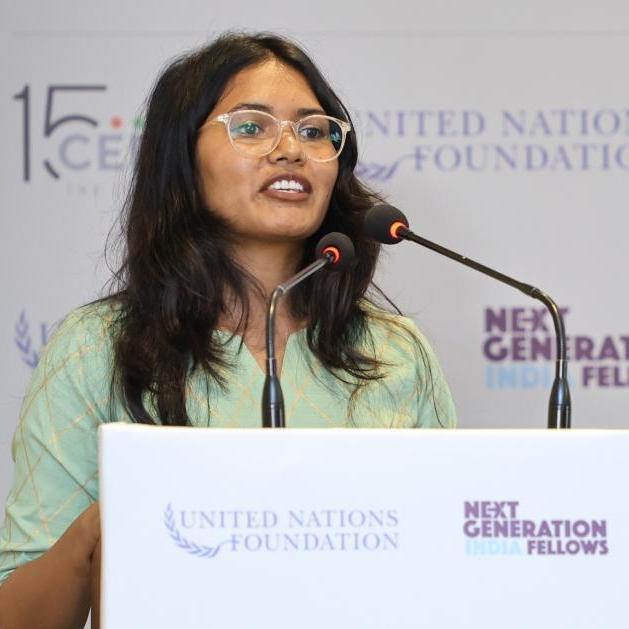 In this article, Vinay Jha, a development professional working at the intersection of CSR, ESG, and youth policy (currently with with Coca-Cola – Kandhari Global Beverages), and Ansuiya Kushwaha, a first-generation scholar from Bundelkhand and a technology consultant committed to community empowerment, argue that meaningful progress in SRH requires moving beyond tokenistic youth engagement. Drawing on field experiences and grassroots examples from across India, they advocate for a shift toward youth co-governance- embedding young people directly within local decision-making structures to ensure that policies reflect lived realities and produce lasting impact.
Youth Co-Governance: A Missing Link in India’s Sexual and Reproductive Health Outcomes
India is one of the youngest democracies in the world, with nearly half its population under the age of 30. Yet, the average age of those who sit in the Lok Sabha and Rajya Sabha—shaping policies that govern young lives—ranges between 54 and 60. This generational gulf has material consequences. Nowhere is this more evident than in the domain of Sexual and Reproductive Health (SRH). While young people bear the most immediate and lifelong consequences of SRH policies—covering early pregnancy to bodily autonomy—they remain largely absent from the rooms where crucial decisions are made. Youth participation in SRH initiatives is visible, but limited: young people are invited to consultations, awareness drives, and campaigns, yet when decisions are taken, on clinic timings, outreach strategies, or budget priorities, their presence disappears. This gap between consultation and authority reduces youth engagement to a formality, risking SRH outcomes that lock young lives into cycles of neglect, vulnerability, and preventable harm.
From our years of working with young people across rural and urban India, one lesson has become unmistakably clear: sexual and reproductive health outcomes improve only when young people are trusted as co-governors, not just as symbolic participants. Real impact emerges with youth co-governance, embedding young people within decision-making structures, supporting existing youth platforms, and inviting youth to shape policies and programmes across both rural and urban contexts in India.
Youth Co-Governance with Decision-Making Authority
Advisory roles assume that youth only need to share opinions, while adults retain decision-making power. In practice, this often means youth concerns are acknowledged but not acted upon. For instance, in many districts, adolescents have raised issues about lack of privacy at Adolescent Friendly Health Clinics (AFHCs). These concerns are discussed repeatedly, yet clinics remain unchanged because youth are not part of planning or review authority. A more effective approach is to formally integrate youth into existing decision-making platforms. Groups such as MyBharat volunteers, National Service Scheme (NSS) units, and Bharat Scouts & Guides (BSG) already have structured memberships, trained youth, and local credibility. These platforms should be formally recognized as sources of youth representatives in Block Health Committees, RKSK review meetings, and Urban Health Society forums under the National Urban Health Mission (NUHM).
In one urban district, NSS volunteers attached to a government college were invited to attend ward-level health reviews. Their feedback on clinic timings clashing with college schedules led to a pilot evening clinic once a week. The change resulted in increased adolescent footfall, especially among boys, who were earlier absent from services.
Authority, in this context, started with formal inclusion and documented participation, and then expanded based on results.
Decentralized Governance at Block, Panchayat, and Urban Ward Levels
Sexual and reproductive health (SRH) challenges in India are deeply shaped by local realities. Rural adolescents often confront early marriage, menstrual stigma, and restricted mobility, while urban youth—especially in slums and migrant settlements—grapple with misinformation, unsafe relationships, and the absence of trusted spaces. While national frameworks and policies are essential to articulate long-term goals and rights-based commitments, SRH cannot be effectively addressed through centralized, uniform models alone. As a quality-of-life issue rooted in culture, gender norms, and power relations, SRH requires bottom-up interventions that are locally designed and community-owned. Decentralized governance at the block, panchayat, and urban ward levels allows SRH initiatives to be culturally responsive, build local trust, and drive the slow but necessary process of social transformation rather than mere information delivery.
Rural and Urban Implementation
Effective SRH interventions must move beyond programmatic delivery and become a core concern of local elected representatives, who shape budgetary priorities and social norms at the grassroots. In rural areas, panchayat members and block-level leaders play a critical role in legitimizing conversations around menstruation, early marriage, and adolescent health. When young Indians raise SRH concerns through formal local governance platforms, these issues gain political visibility and are more likely to be reflected in resource allocation and inter-departmental coordination. In urban contexts, ward councillors and urban local bodies are similarly positioned to influence access to safe spaces, health services, and credible information for adolescents, particularly in informal settlements. Youth-led SRH initiatives such as peer facilitation, community mapping of service gaps, and locally tailored digital outreach have shown that when young people are treated as knowledge-holders rather than beneficiaries, interventions become more relevant and sustainable.
Moving Beyond Tokenistic Participation to Structural Power
One effective step is making youth participation mandatory to record and respond to. In a district in Uttar Pradesh, block meeting minutes introduced a separate section for “Youth Inputs and Action Taken.” Youth representatives from NSS and MyBharat groups raised concerns about lack of contraceptive awareness among newly married youth. Because these points were formally recorded, the block initiated targeted sessions through ASHAs and peer educators.
Another critical shift is giving youth limited control over resources. In a Karnataka block, ₹40,000 was earmarked for youth-led IEC activities. NSS and MyBharat volunteers jointly decided to conduct street plays and short videos instead of the usual mode of posters. The content resonated more strongly, and ASHAs reported better follow-up conversations. This small budgetary authority changed how officials perceived youth—from helpers to partners. Structural power, in India, grows through responsibility, documentation, and results, only once young people are equipped with decision-making power.
Existing Best Practices Show the Way Forward
India already has strong foundations for youth-led SRH governance. Nationwide platforms such as NSS, BSG, and MyBharat combine scale with disciplined structures, while initiatives like RKSK Peer Educators demonstrate that adolescents can deliver credible and effective SRH outreach. Internationally, countries with comparable demographic profiles, such as Bangladesh, Indonesia, and Ethiopia, have shown that embedding youth groups within local governance and health systems improves service uptake and policy responsiveness. Rather than creating new youth bodies, India can strengthen impact by activating existing youth platforms as formal governance partners, linking grassroots insight with decision-making power.
What must change is the assumption that young people are only beneficiaries or consultees. They need to be formally embedded in local governance structures with defined roles in planning, budgeting, monitoring, and feedback. This shift is urgent, because India’s largest-ever youth cohort is navigating SRH challenges shaped by rapid digital exposure, migration, and persistent social stigma—realities existing systems are failing to keep pace with. The pathway forward is clear: mandate youth representation in local health and governance committees, devolve limited but real decision-making powers at the block and ward levels, and institutionalize accountability mechanisms that translate youth insight into action.