
Building With the Land: How Basalt Hills Reimagines Sustainable Luxury Through Native Materiality
As sustainability becomes central to modern real estate, developers are rethinking how luxury can align with ecological responsibility. In this article, Karan Bahl, Founder and Director, Ascenta, highlights how Basalt Hills embraces this shift through native materials, low-density planning, and a design philosophy that works in harmony with the land.
Read the full article below.
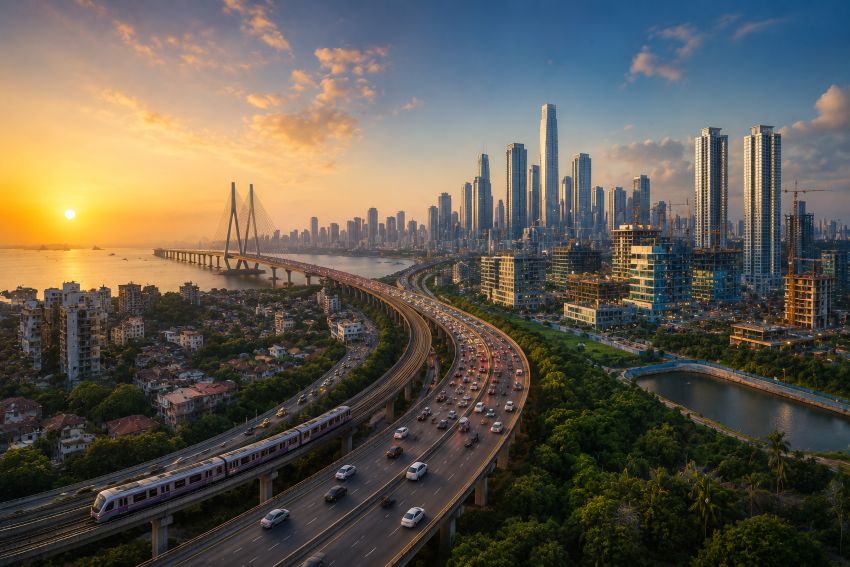
As Mumbai’s urban footprint expands into the emerging Mumbai 3.0 corridor, sustainability is no longer an afterthought but a defining principle in responsible development. With transformative infrastructure such as the Navi Mumbai International Airport and the structured planning vision of NAINA, this region offers a rare opportunity to shape growth with foresight, restraint, and ecological sensitivity. At Basalt Hills, Ascenta approaches this responsibility with a quiet, deliberate philosophy: to build with the land, not over it.
Set across 20 acres of a naturally contoured basalt hillscape, Basalt Hills is envisioned as a low-density private villa estate where the terrain dictates design, not the other way around. Rather than engaging in aggressive land flattening or importing homogenized materials, the project follows a circular construction approach rooted in native materiality. Basalt rock, uncovered during site preparation, is not treated as debris but as an asset carefully extracted, processed, and reintegrated into the development. It finds expression in retaining structures, architectural elements, pedestrian pathways, and curated landscape features, ensuring continuity between the natural and the built.
 This materially conscious approach significantly reduces construction waste, which is a critical yet often overlooked environmental challenge in large-scale developments. By minimizing dependence on externally sourced materials, Basalt Hills reduces transportation loads, fuel consumption, and the carbon footprint typically associated with construction logistics. The result is not just efficiency, but a form of understated luxury where every element feels grounded, authentic, and inherently connected to its surroundings.
Beyond material reuse, the planning philosophy extends to preserving the site’s natural intelligence. The development respects existing contours, allowing natural water flow and drainage patterns to remain largely undisturbed. This reduces the risk of soil erosion while supporting groundwater recharge and long-term land stability. The landscape design works in tandem with this approach, integrating native vegetation and allowing open spaces to evolve organically rather than being artificially imposed.
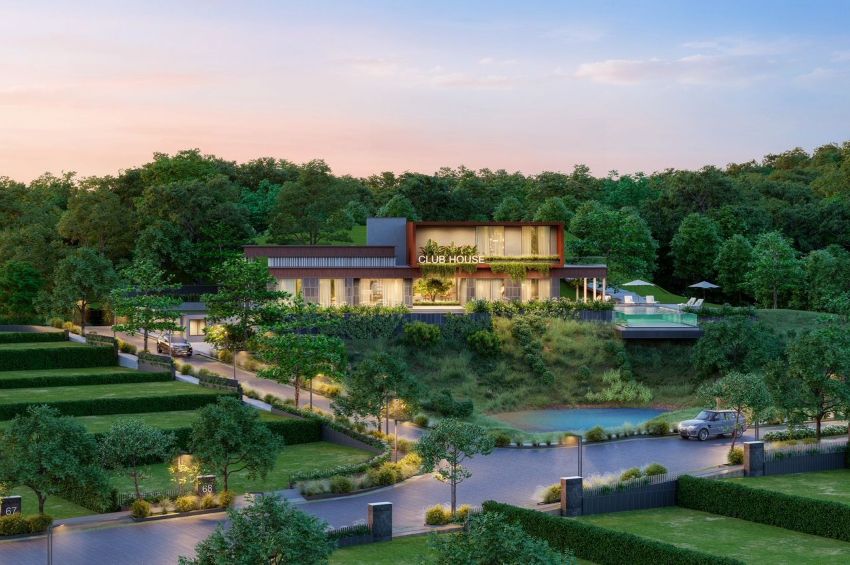 Low-density planning further reinforces this ethos. With expansive plots and a consciously restrained built footprint, Basalt Hills ensures that green cover, light, and spatial openness remain defining characteristics of the environment. The emphasis is not on excess, but on balance: creating a setting where architecture recedes, and nature takes precedence.
In a market increasingly driven by scale and speed, Basalt Hills offers a more considered alternative where sustainability is expressed through material honesty, contextual design, and long-term ecological thinking. As Mumbai 3.0 continues to evolve, it stands as a quiet benchmark for how luxury living can be redefined not through opulence, but through harmony with the land itself.